DRIFT AUDIO
Listen to this story
Choose a voice, then press play.
Two Chinese startups crossed billion-dollar valuations this week alone, part of a funding wave that’s pulled in more money this year than all of 2025 combined — and with over 140 companies now competing, the real fight is just beginning
In This Story
- Two New Unicorns, One Very Crowded Field
- The Money Behind the Machines
- Why China Is Winning the Numbers Game
- The IPO Wave Building Behind the Startups
- The Shake-Out Everyone Sees Coming
- Washington’s Response, and Why It Hasn’t Slowed Things Down
- What Happens Next
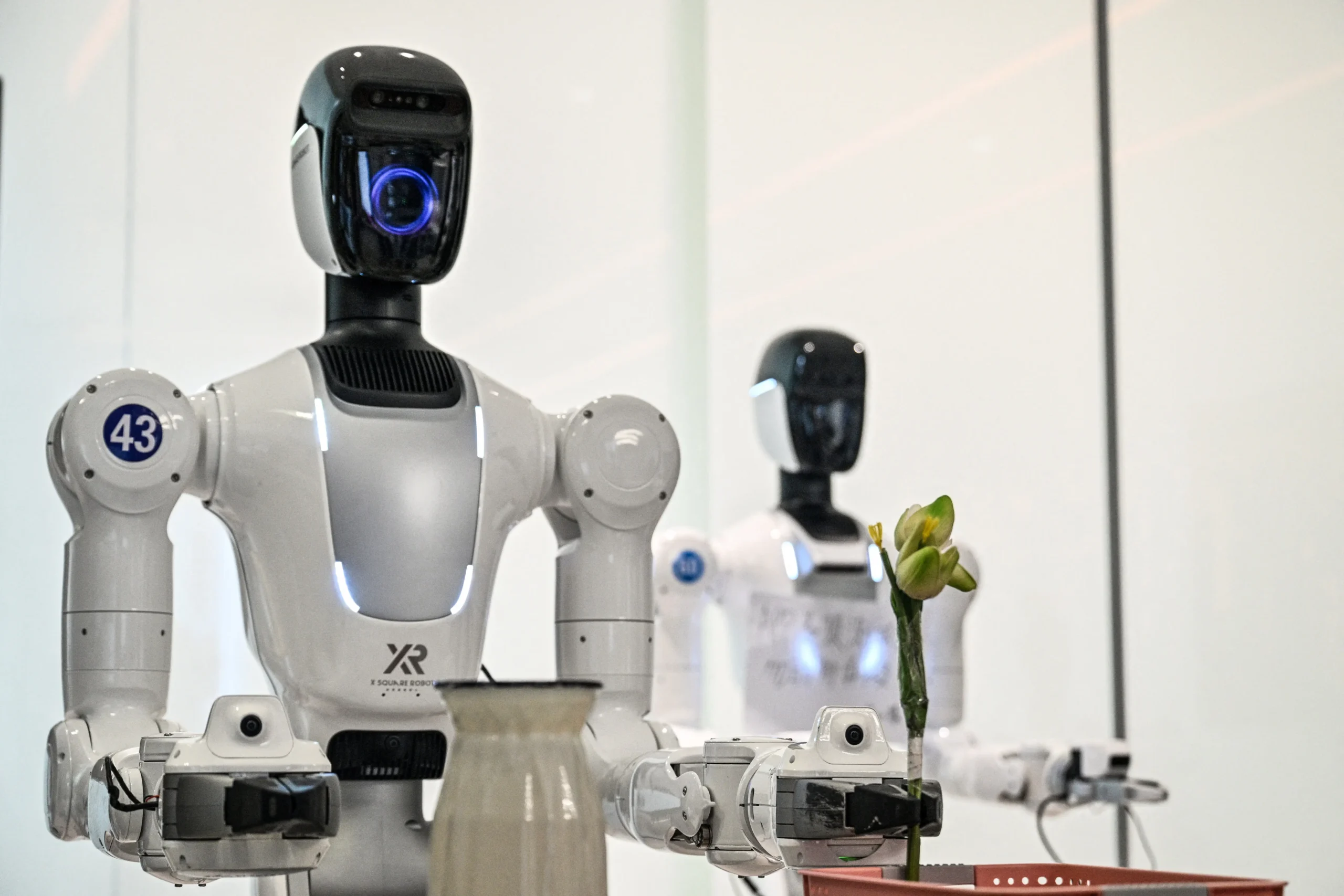
China added two more billion-dollar robotics companies to its books this week. AI² Robotics, a Shenzhen-based general-purpose robotics startup, raised nearly 5 billion yuan (roughly $736 million), while Alibaba-backed X Square Robot closed back-to-back funding rounds without disclosing the total amount raised. Both companies now carry valuations north of 20 billion yuan — a threshold reached by only a handful of firms in a field that has grown almost absurdly crowded.
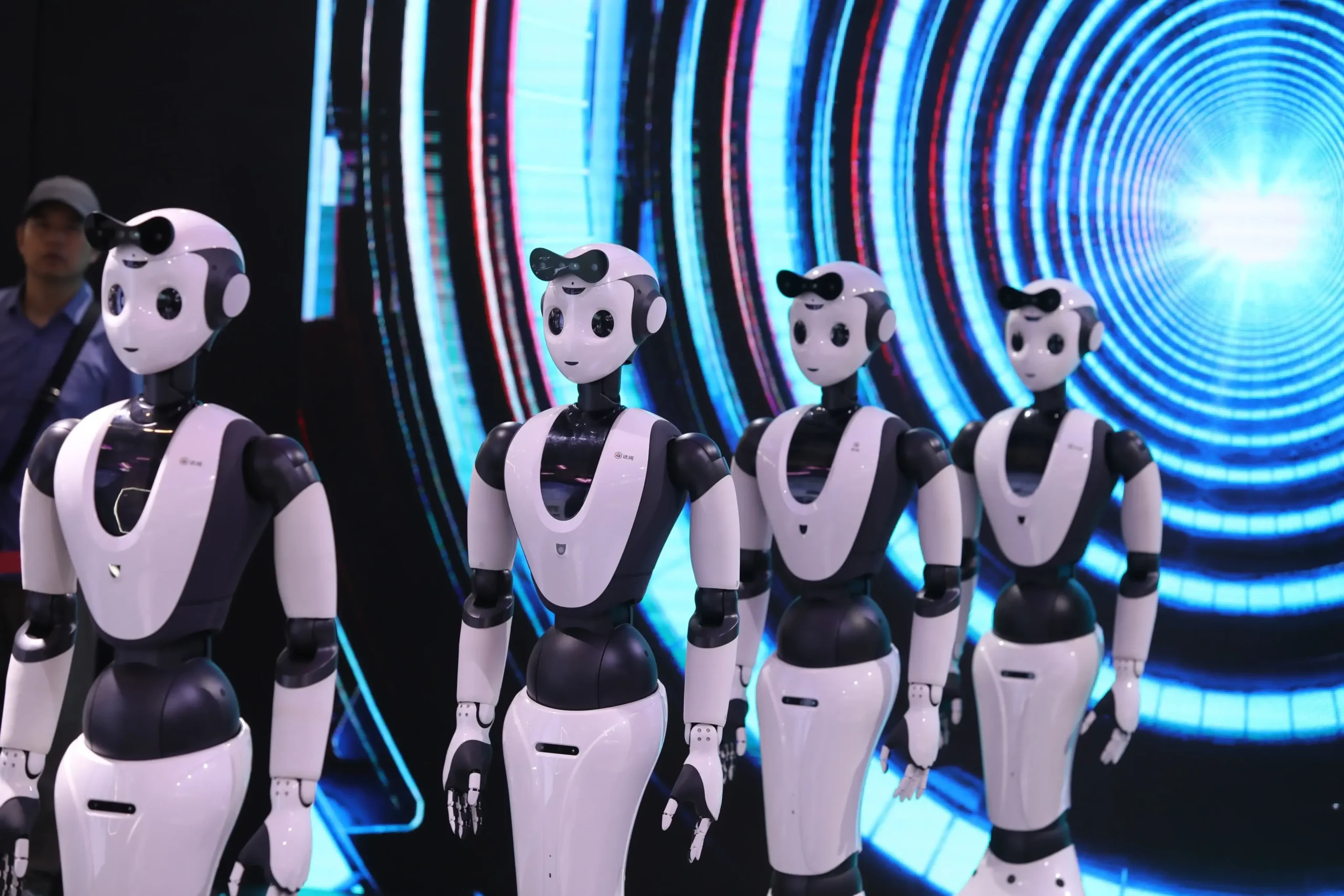
That crowding is the real headline. More than 140 companies in China have now announced humanoid robotics platforms, releasing upward of 330 distinct models between them. The sector has pulled in at least 46 billion yuan in funding so far this year, already surpassing everything raised across all of 2025. Two new billion-dollar companies in a single week isn’t an outlier in this market — it’s closer to the baseline pace.
AI² Robotics, founded in April 2023 by researcher Yandong Eric Guo, builds general-purpose robots under its AlphaBot line, powered by an in-house foundation model it calls AlphaBrain. The company has positioned its robots for deployment across automotive manufacturing, semiconductor fabrication, biomanufacturing, and elder care, framing general-purpose robots as the next major computing platform after smartphones. X Square Robot, meanwhile, is chasing a different vision entirely: home robotics. The Shenzhen-based company, backed by Alibaba, ByteDance, Meituan, and Xiaomi, has built its business around the WALL family of embodied AI models and a wheeled humanoid platform called Quanta X2, and says it plans to begin placing robots into real households within the next several weeks.
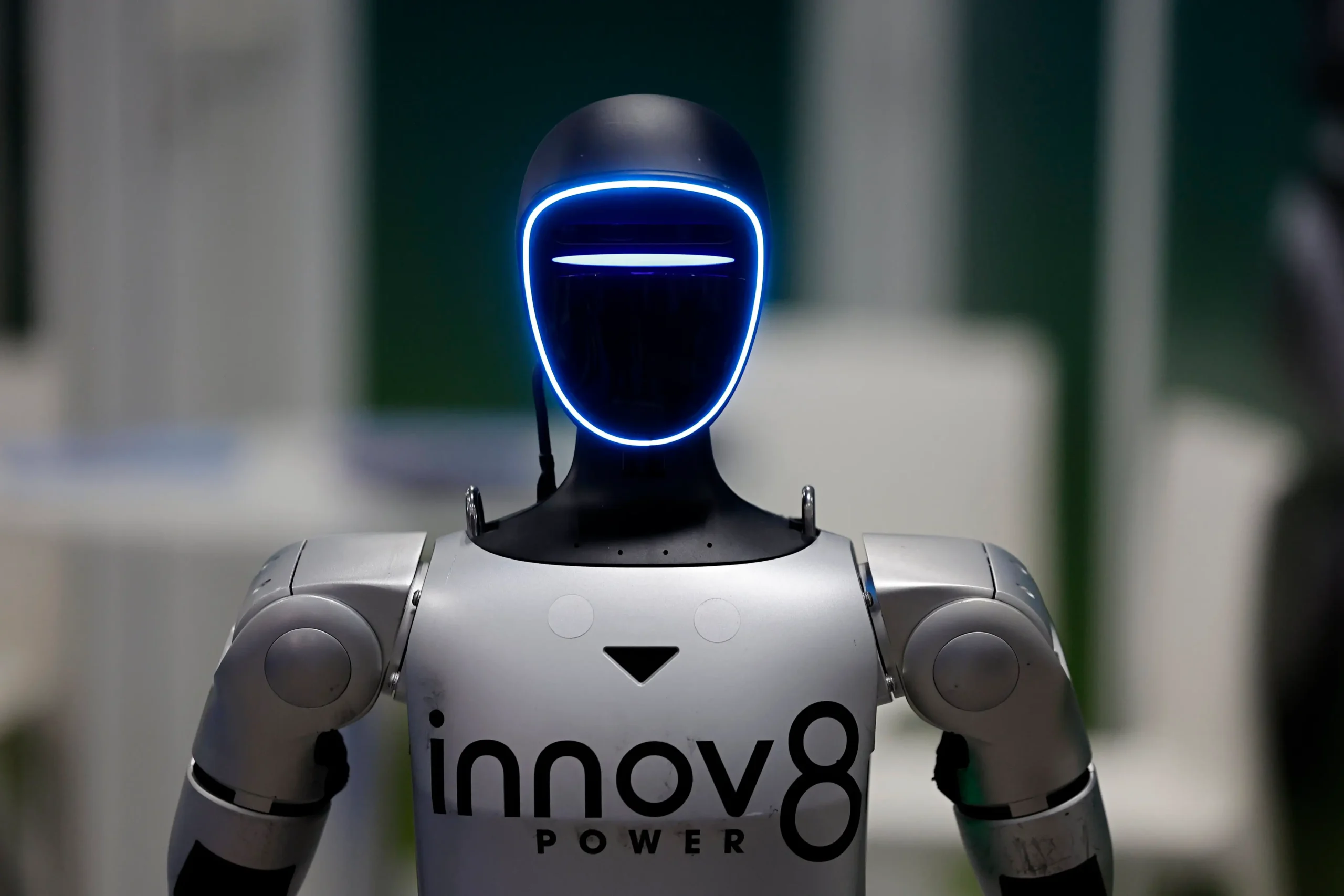
Humanoid robot from Innov8 Power featuring a sleek silver body and illuminated blue LED face, highlighting futuristic AI robotics and next-generation automation.
stir
The robotics boom is one visible piece of a much larger surge in Chinese startup funding. China now counts 381 unicorns — privately held companies valued at $1 billion or more — according to the 2026 Hurun Global Unicorn Index, up 38 from the year before. At the current pace, the country is minting a new unicorn roughly every five days, twice as fast as a year ago.
Robotics isn’t the only sector drawing outsized bets, but it’s arguably the most visible one right now, competing for attention with the AI foundation-model labs that have dominated headlines for the past several years. Nvidia CEO Jensen Huang has taken to calling the category “physical AI” — the idea that intelligence built for the digital world eventually has to move into the physical one to unlock its next phase of value, whether that’s a robotic arm on a factory floor or a wheeled assistant navigating a cluttered kitchen. Investors appear to be treating that thesis as close to settled, funneling capital into hardware-and-model combinations at a pace that shows no sign of slowing.
why
By sheer output, China’s humanoid robotics sector isn’t just leading — it’s lapping the field. Chinese manufacturers shipped roughly 90 percent of all humanoid robot units sold globally in 2025, and market researcher TrendForce projects the country’s total humanoid output will grow 94 percent year-over-year in 2026. Analysts attribute China’s edge to a combination of factors that reinforce each other: decades of investment in high-end manufacturing capability, an increasingly competitive domestic AI stack running from foundation models down to chip production, and — perhaps most distinctively — real demand from state-owned enterprises willing to deploy robots at scale well before the technology has fully matured.
That last point has become explicit policy. Earlier this month, China’s Ministry of Industry and Information Technology and the State-owned Assets Supervision and Administration Commission issued a directive requiring 10,000 humanoid robots to be actively working — not demonstrating, but working — in factories, warehouses, hospitals, and disaster-response operations by the end of the year. Local governments have been ordered to submit deployment plans, with progress reports due in November. The framing matters: Beijing isn’t describing this as an aspirational target. It’s calling it the industry’s transition into “work mode.”
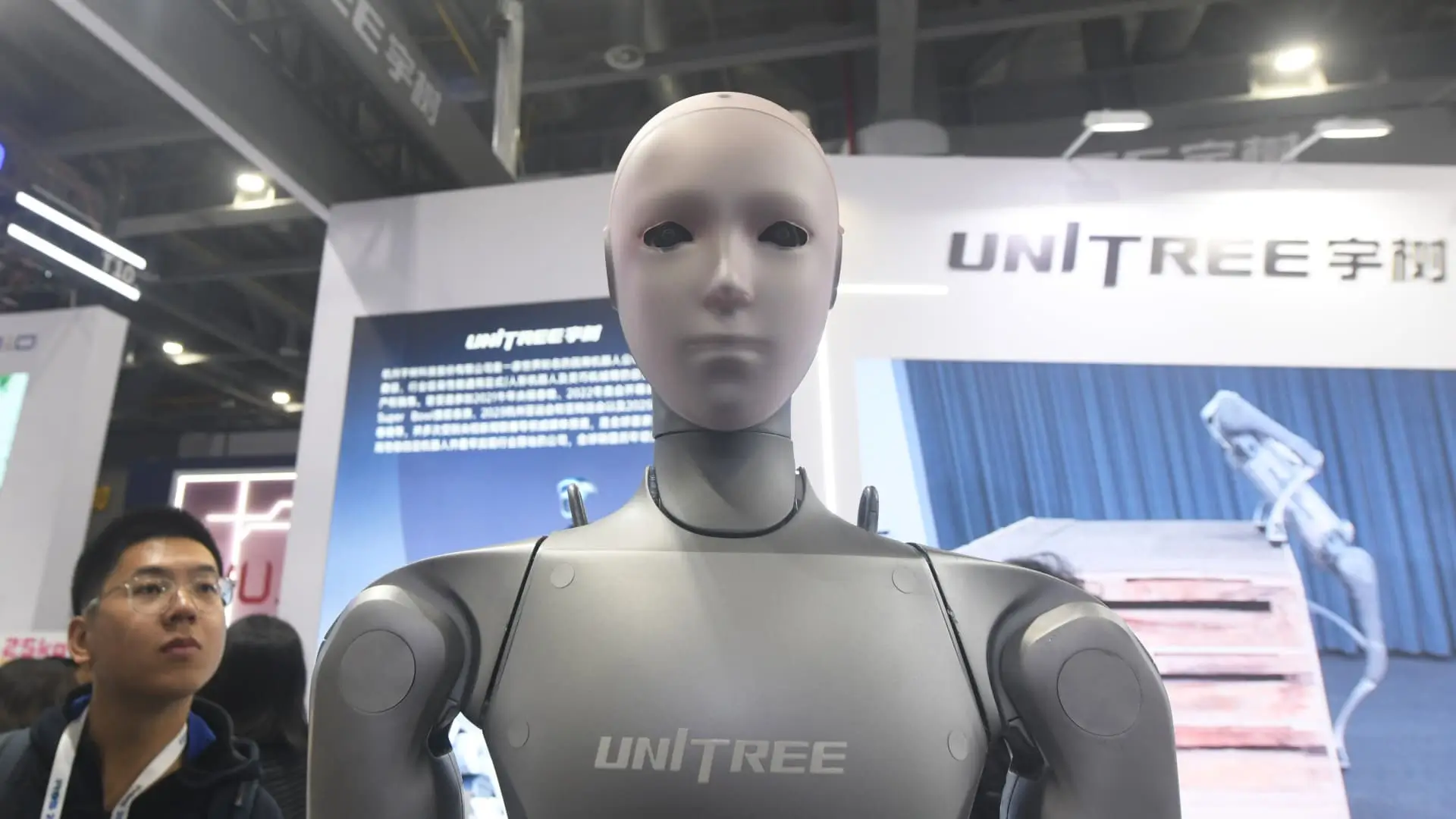
Pricing has followed the same aggressive trajectory as everything else in the sector. Unitree Robotics, the market’s most visible player, priced its H2 humanoid below $30,000, with rival Kepler targeting a similar range — figures that undercut Western competitors by a wide margin. Unitree’s own numbers illustrate how fast that pricing has moved: the average price of its humanoid robots fell from roughly $85,000 in 2023 to around $25,000 last year, even as the company’s gross margin improved to nearly 60 percent, aided by in-house manufacturing of core components like joint modules and motors.
huh
Funding rounds are only half the story. A cluster of China’s most advanced humanoid robotics companies are now racing toward public listings, and the order in which they arrive matters almost as much as the fact that they’re happening at all.
Unitree Robotics has moved furthest. The Hangzhou-based company filed for a Shanghai STAR Market IPO in March, seeking to raise roughly 4.2 billion yuan (about $610 million), and cleared the exchange’s listing committee review on June 1 — the first “embodied AI” company approved for China’s A-share market, with a targeted valuation near $6.2 billion. Unitree’s prospectus revealed a business growing fast on paper: revenue jumped 335 percent in 2025, with humanoid robots climbing from 28 percent of total revenue the year before to more than half. Notably, over 70 percent of the humanoid units it sold last year went to research and educational buyers rather than commercial deployments — a detail worth sitting with given how the company markets itself.
AgiBot, widely seen as Unitree’s closest rival by shipment volume, is preparing a separate Hong Kong listing, reportedly targeting a valuation between HK$40 billion and HK$50 billion (roughly $5.1 billion to $6.4 billion). Its investor list reads like a roster of China’s biggest tech names — Tencent, BYD, Mirae Asset, and LG Electronics among them — and the company appointed CICC, CITIC Securities, and Morgan Stanley to lead the offering. Beyond the two frontrunners, Beijing-based Linkerbot, which makes the dexterous robotic hands used across much of the industry’s humanoid hardware, is seeking a $6 billion valuation in its next round, doubling the figure it reached in a funding close last week backed by Alibaba’s Ant Group and Sequoia spin-off HongShan Group.
Further back in the pipeline, companies including Galbot, Galaxea AI, Robot Era, and Spirit AI have all completed shareholding restructurings this year in preparation for eventual listings, while smaller players like CloudMinds and Leju Robotics have begun IPO tutoring processes of their own. The competitive jockeying has spilled into unusually public territory: Unitree recently issued a statement disputing third-party shipment data from research firm Omdia, insisting its actual 2025 humanoid shipments exceeded the figure researchers had credited to rival AgiBot — a dispute less about methodology than about who gets to claim the title of the industry’s top seller heading into its IPO season.
scope
Not everyone believes the current pace is sustainable, and the skepticism is coming from serious places. Morgan Stanley has doubled its 2026 delivery forecast for the Chinese humanoid market to 28,000 units — a 133 percent increase over 2025 — while simultaneously warning of an approaching shake-out among the roughly 150 companies now competing for that demand. The bank’s own survey work found that only 23 percent of enterprises buying or evaluating humanoid robots reported being satisfied with the products currently available, a gap between hype and usability that analysts say production numbers are starting to mask rather than solve.
Part of the concern is structural. Morgan Stanley analysts have noted that current production volumes likely exceed genuine commercial sales, because major manufacturers are building robots internally for training and verification purposes rather than shipping finished units to paying customers. China’s National Development and Reform Commission has issued its own warnings about overcapacity in the sector, and the timing of Unitree’s IPO inspection — launched just twelve days after its STAR Market application was accepted — has been read by some analysts as a sign that regulators are watching the sector’s fundamentals as closely as its fundraising headlines.
Industry veterans see the current environment as an early, deliberately over-populated phase rather than a stable equilibrium. One robotics-focused analyst covering the space has predicted the market will consolidate from well over 100 active humanoid companies down to a few dozen once the current wave of IPOs plays out — a filtering process that tends to reward the companies that solve real deployment problems over those that have simply raised the most money or generated the most attention.
respond
China’s robotics surge hasn’t gone unnoticed in Washington, and the policy response has been unusually bipartisan for a contentious moment in U.S. politics. Senators Tom Cotton and Chuck Schumer introduced the American Security Robotics Act in March, which would bar federal agencies from purchasing or operating unmanned ground systems — including humanoid robots — made by companies tied to foreign adversaries. The House Select Committee on the Chinese Communist Party followed in June with the GUARD Act, directing national security agencies to review robots produced by adversary nations and ban those judged to pose unacceptable risk. The scrutiny has real substance behind it: Unitree’s own IPO filings disclosed funding connections to programs tied to the People’s Liberation Army.
So far, though, the broader pattern of U.S. pressure on China’s technology sector appears to be producing the opposite of its intended effect. China’s AI funding surge extends well beyond robotics — DeepSeek closed a record $7.4 billion round this year, the largest first-time raise by any Chinese startup, at a valuation above $50 billion, after founder Liang Wenfeng concluded that competing with the most advanced frontier AI systems would require far more capital than his lab had previously needed. That reasoning echoes across the broader Chinese startup landscape: each new round of American restrictions appears to be giving Chinese firms and their investors a fresh, urgent reason to spend rather than retreat, with Beijing increasingly treating its most capable AI and robotics companies as strategic national assets rather than ordinary private businesses.
extent
The next several months will test whether China’s humanoid robotics sector is building toward genuine commercial maturity or toward the kind of correction that tends to follow any market this overcrowded and this well-funded. Unitree and AgiBot’s IPOs, expected to value the two companies at a combined $13 billion or more, will serve as the first real public referendum on whether investors believe the underlying technology justifies the spending — a verdict that Chinese venture capital, so far, has answered with an emphatic yes.
Whatever the market ultimately decides, the scale of the current moment is hard to overstate. A country that shipped roughly 90 percent of the world’s humanoid robots last year, backed by more than 140 active companies and a government mandate to put 10,000 units to genuine work by December, isn’t simply participating in the humanoid robotics race. For now, at least, it’s setting the pace the rest of the world is racing to match.
That pace creates its own kind of pressure on everyone watching from outside China, including the American companies most often cited as its rivals. Figure AI holds a private valuation near $39 billion despite shipping a fraction of the volume its Chinese counterparts manage, while Boston Dynamics only began commercial production of its electric Atlas robot in January, with plans to reach 30,000 units annually by 2028 — a timeline that looks conservative next to Unitree’s current output. Tesla’s Optimus, still without a confirmed retail launch, remains the most-watched wildcard in the field precisely because it hasn’t yet had to prove itself against real deployment numbers the way its Chinese competitors already have. Whether scale ultimately beats software, or the other way around, is the question the next year of earnings reports, IPO filings, and factory floors will start to answer.
From the DRIFT archive: Cornell Team Develops Ultrablack: The “Darkest Fabric Ever” That Reflects Close to No Light · The Supercar Stroller: Inside Silver Cross × Lamborghini
Related Articles

Under Rue de Castiglione, Liaigre Gives Hôtel Costes a Spa With No Hard Corners
A 20-meter lap pool, eight treatment rooms and not one sharp angle: Studio Liaigre’s spa […]