DRIFT AUDIO
Listen to this story
Choose a voice, then press play.
The four rings haven’t fielded a true supercar in three years. What just arrived at the French Riviera isn’t just a replacement — it’s a declaration of war against mediocrity.
In This Story
- A Ghost Walks Back In
- The Name Carries Weight
- What It Actually Is Under the Skin
- Quattro Predictive Ride and the F1 Transfer
- The Radical Next: A Design Reset That Actually Matters
- Inside: Against the Tide of Screens
- 499 Units, No Derivatives, No Apologies
- Why This Is Bigger Than One Car
The last Audi R8 rolled off the line in 2023. For two years, one of the most important supercar nameplates of the twenty-first century sat in the past tense — a nameplate Audi confirmed it had no plans to revive. What arrived instead on June 4, 2026, announced in the lush gardens of the Hotel du Cap-Eden-Roc on the Côte d’Azur with two Formula 1 drivers stepping out of the driver’s seat, wasn’t expected by almost anyone in the motoring world.
The Audi Nuvolari is here. It is real. It is limited to 499 units. And it starts at 590,000 euros.
That last number alone tells you something has shifted at Ingolstadt. The R8 was the enthusiast’s entry point into the mid-engine supercar world — a Lamborghini for people who preferred understatement. The Nuvolari is not that. It is the most expensive, most powerful, and fastest production car Audi has ever built, slotting into territory that nudges hypercar pricing while drawing on technology directly borrowed from Formula 1. The company describes it as a technological flagship. What it actually is, looked at more carefully, is a brand reset wearing a supercar’s body.
stir
Tazio Nuvolari drove for Auto Union — one of the four brands that would eventually merge into what is now Audi — through the late 1930s, winning races in grand prix machinery at a time when the sport was genuinely dangerous. Ferdinand Porsche described him as “the greatest driver of the past, the present, and the future.” For the four rings to resurrect that name now, on what will be their most consequential production vehicle in a generation, signals that this project was never treated as routine product planning. It was mythologizing from the start.
Audi previously invoked Nuvolari’s name in 2003 at Geneva, on a twin-turbo V10 concept that previewed the design language for the first-generation A5 but never entered production. That machine was a styling exercise. This one is different — confirmed for production the same day it was revealed, with order books opening in late 2026 and first deliveries scheduled to begin in early 2027.
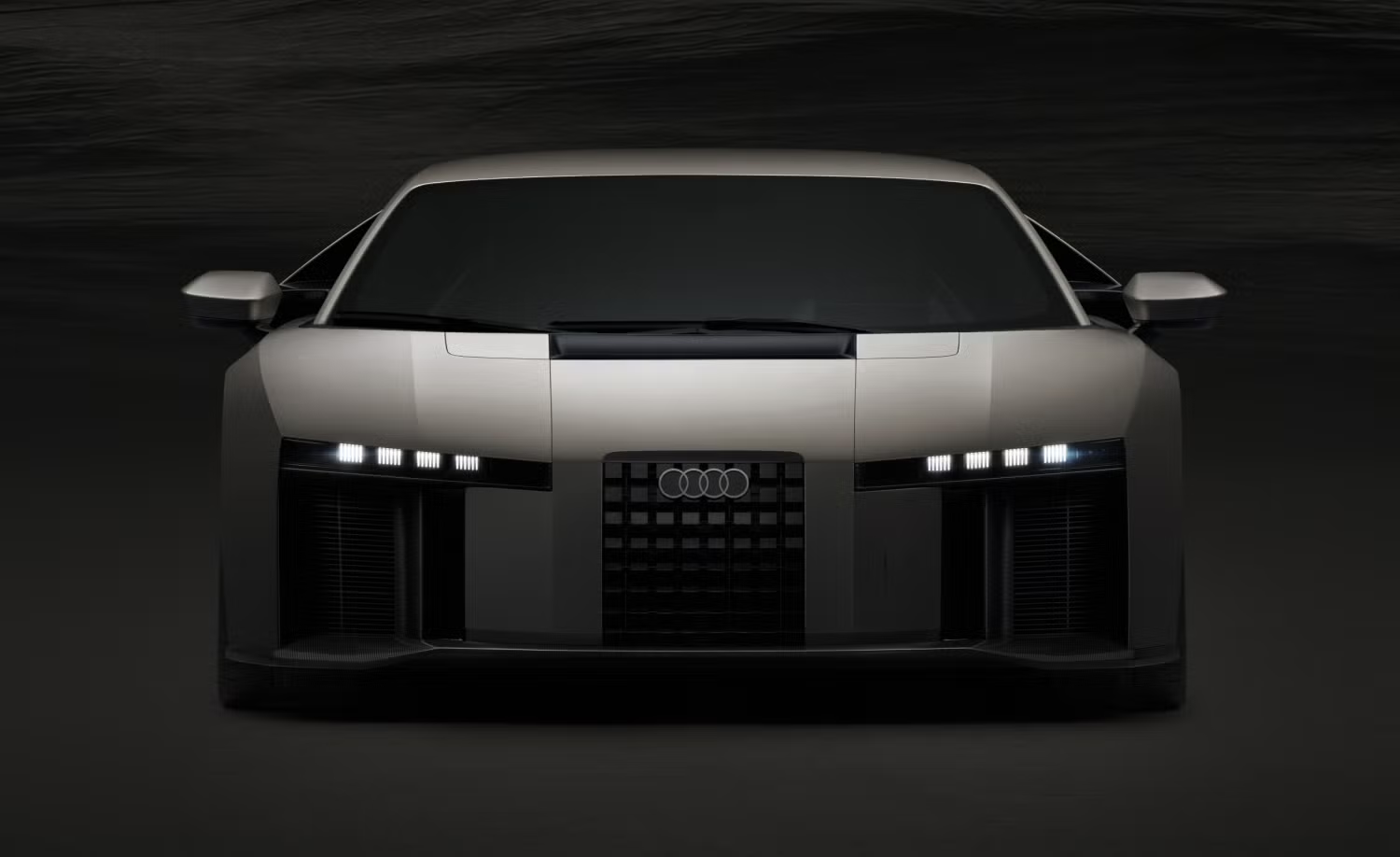
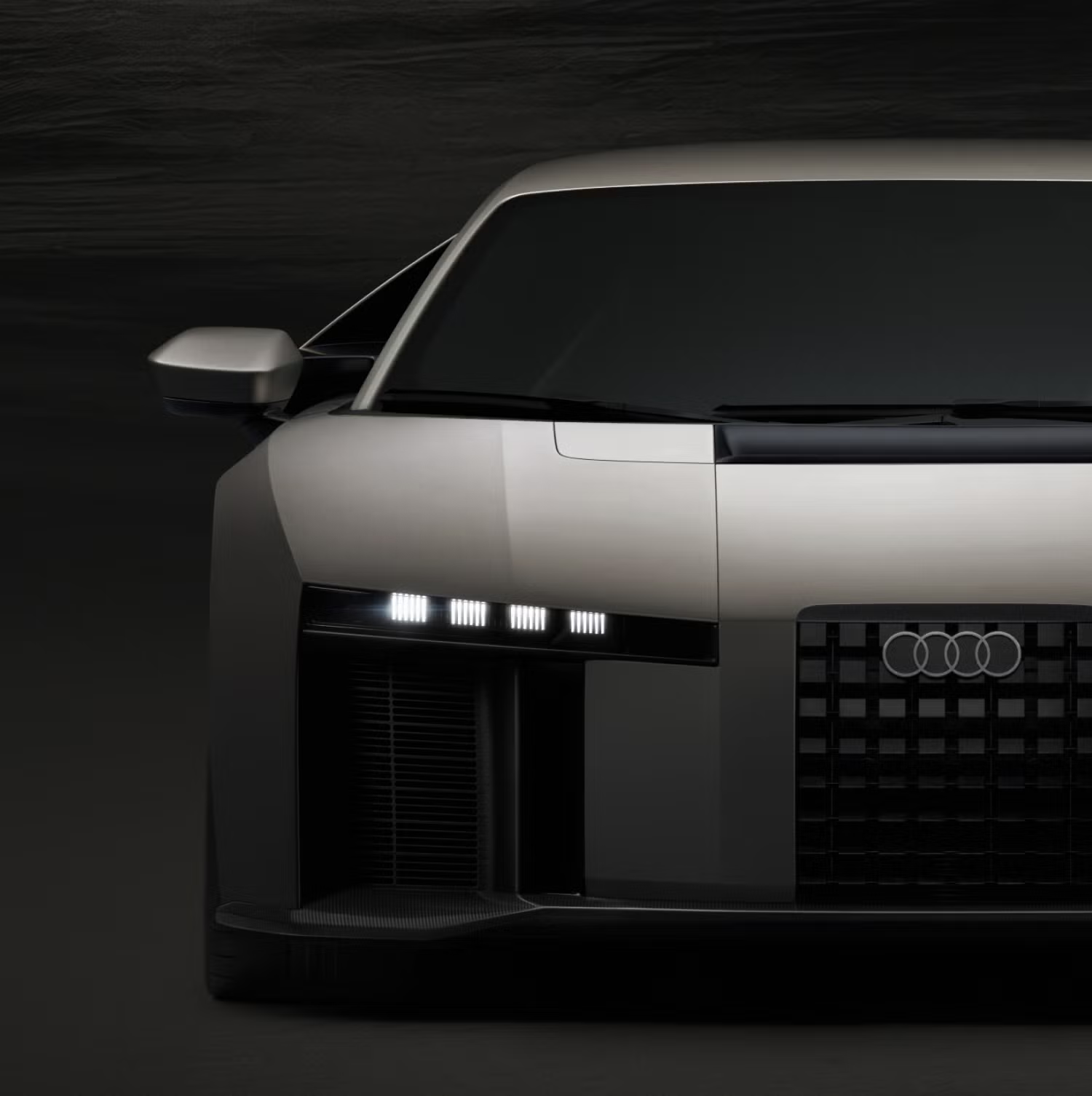
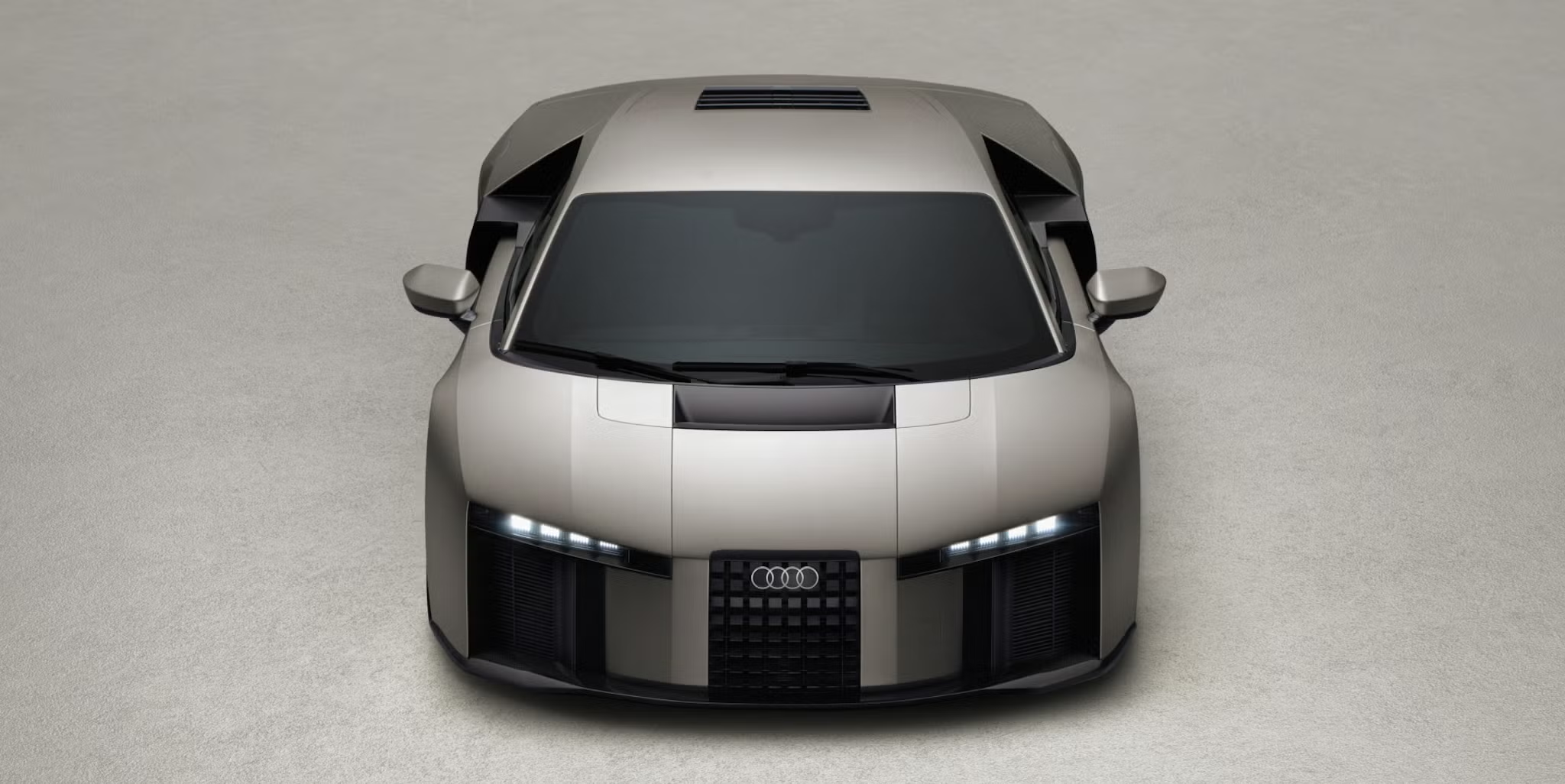
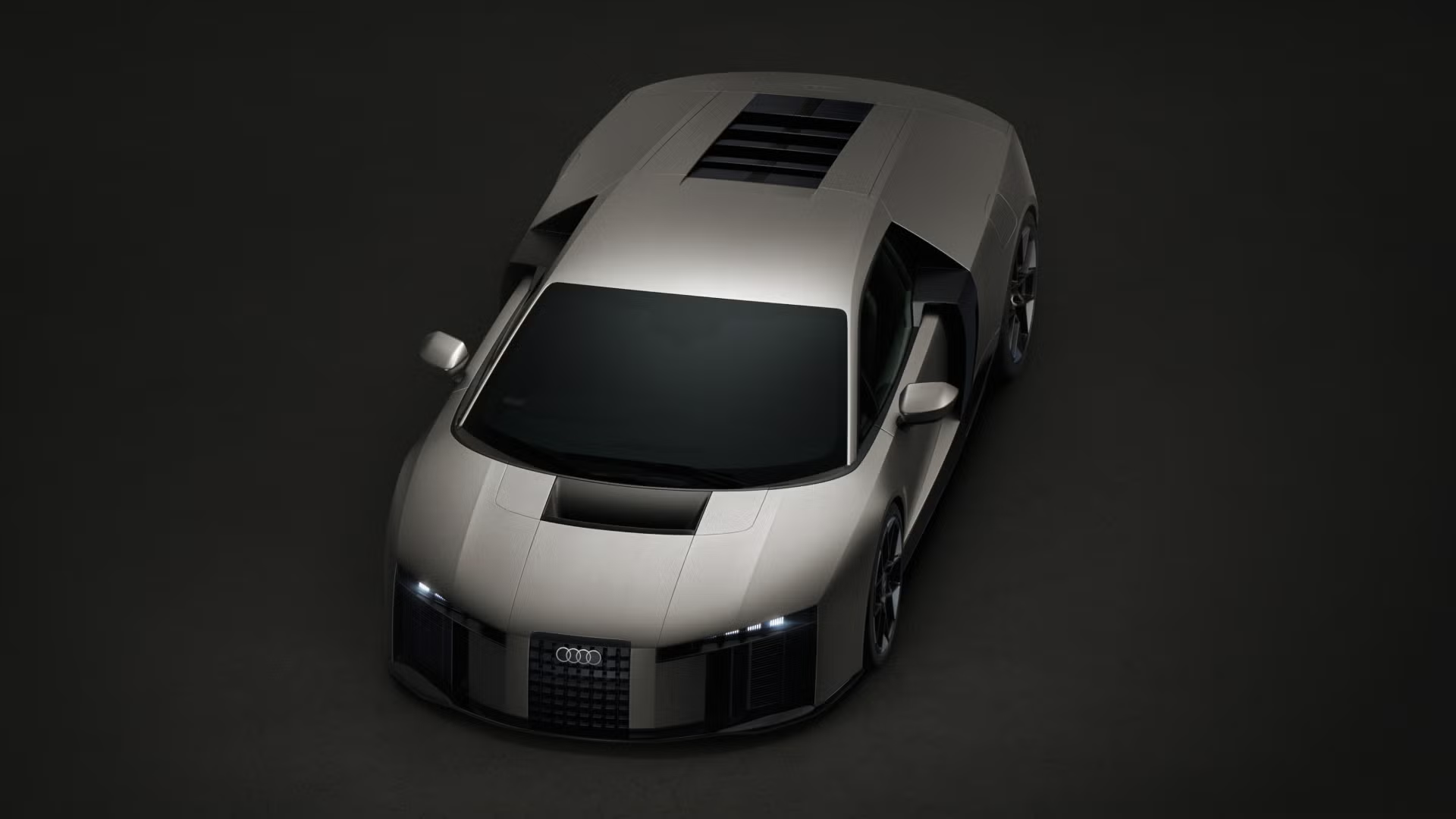
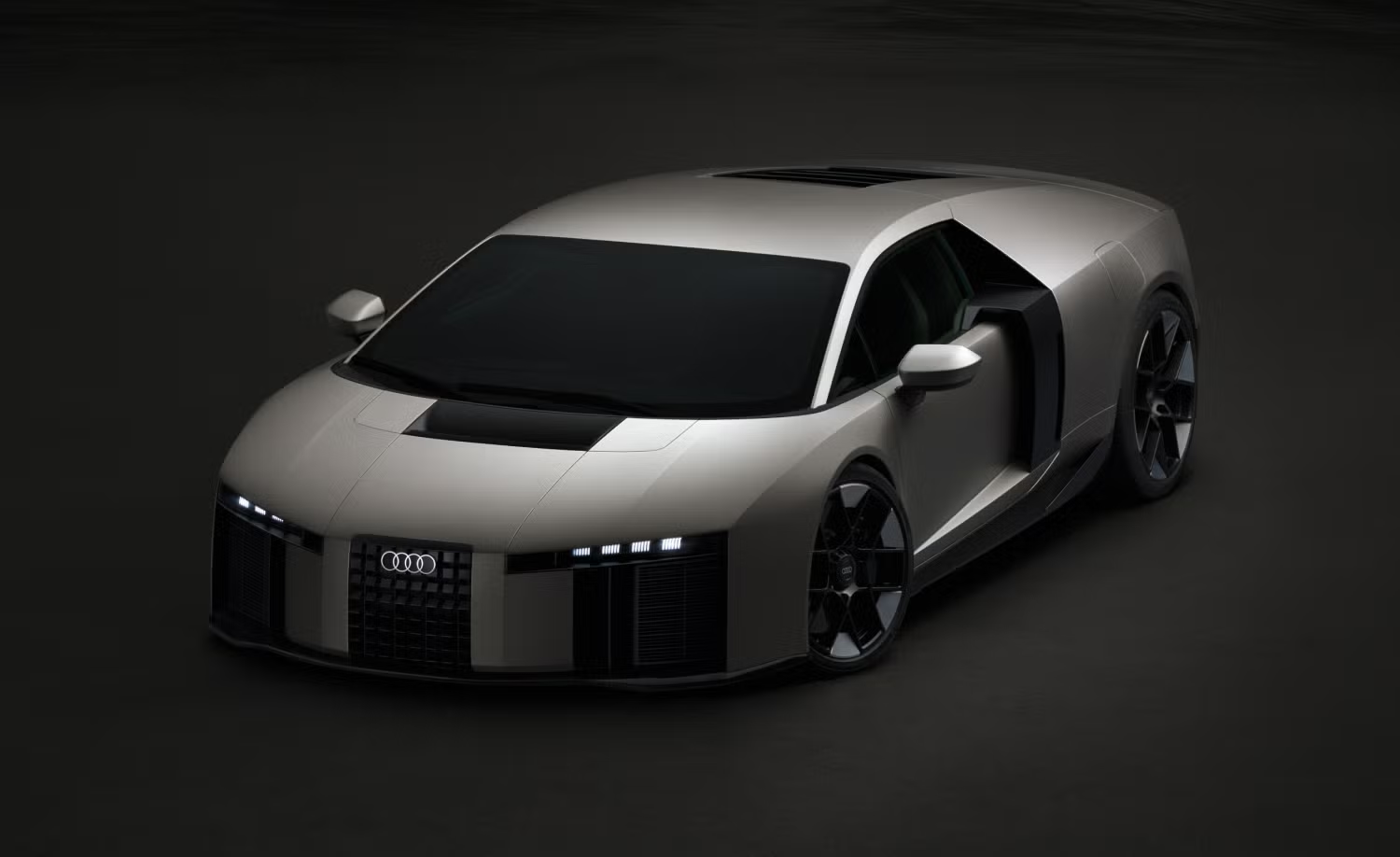
Audi’s Nuvolari concept reimagines the brand’s grand touring legacy with razor-sharp lighting, minimalist surfacing, and a futuristic performance-focused front fascia.
in
The Nuvolari is a mid-engine plug-in hybrid coupe. Its powertrain is close in architecture to the Lamborghini Temerario, Audi’s sister brand having developed the core hardware for its own 2024 supercar. The central component is a 4.0-liter twin-turbocharged V8 — built by Lamborghini and codenamed L411 — producing 800 PS (589 hp) and spinning to a 10,000 rpm redline. Three axial-flux electric motors, each rated at 110 kW, supplement the combustion engine: two on the front axle for torque vectoring, one mounted between the V8 and the eight-speed dual-clutch transmission. Combined system output lands at 736 kW — a round figure of 1,001 PS, or 987 hp — which is 80 PS more than the Temerario’s already formidable total.
The performance numbers that result are significant even by supercar standards. Zero to 100 km/h in 2.6 seconds, zero to 200 km/h in 6.8 seconds, and a top speed in excess of 350 km/h (217 mph), making it the fastest street-legal production vehicle Audi has ever released. For context, the final R8 — with its naturally aspirated 5.2-liter V10 producing 611 hp — hit 62 mph in 3.4 seconds and topped out at 199 mph. The Nuvolari is in a different performance category entirely.
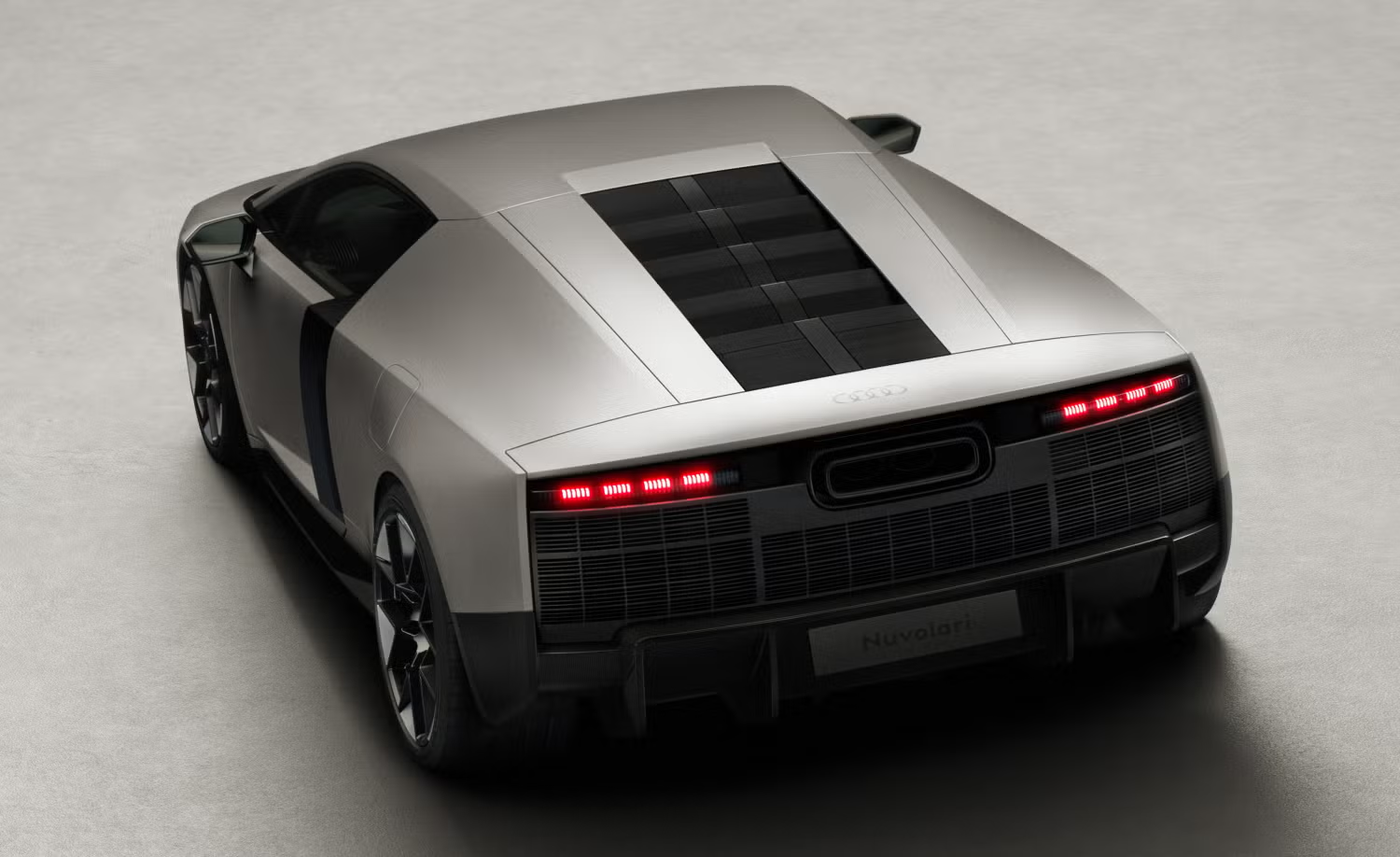
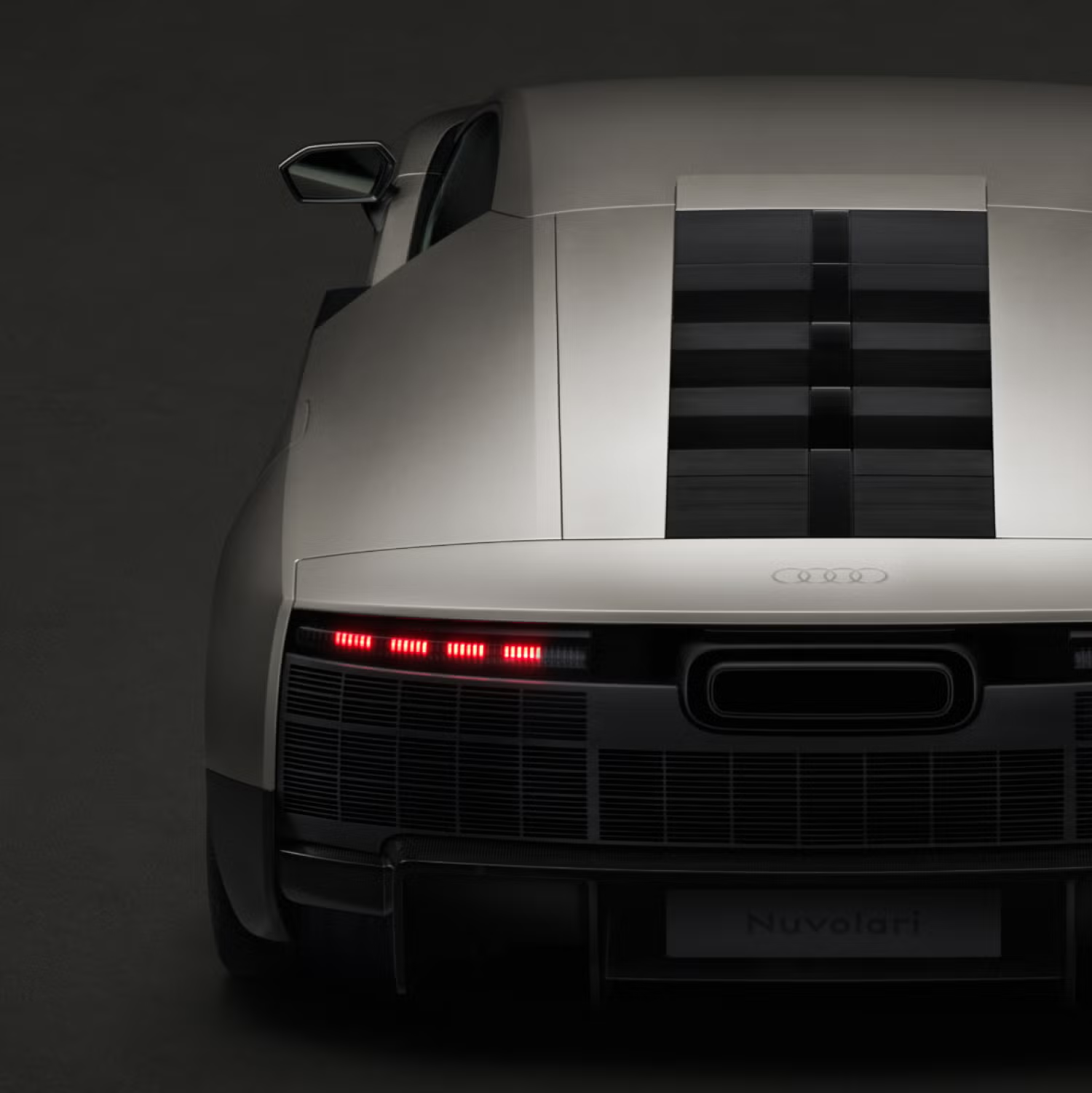
The body is constructed using Audi’s Space Frame technology combined with a carbon exterior — a combination new to the brand. Almost every exterior panel is carbon fiber reinforced polymer, developed using prepreg autoclave processes drawn from Audi’s F1 program. The result is a structure optimized for both low weight and exceptional torsional stiffness — the structural foundation that allows the active aerodynamics and torque vectoring systems to work with the precision they require.
The 7.3 kWh battery pack also enables a limited electric-only range, and the plug-in hybrid setup gives the Nuvolari a weighted combined fuel consumption figure — though frankly, anyone purchasing a 590,000-euro limited-run supercar is unlikely to be consulting that particular number very carefully.
flow
The most technically significant innovation aboard the Nuvolari isn’t the engine. It’s a system Audi calls quattro predictive ride. Where most chassis management systems react to what the car is doing — correcting slides after the fact, applying brakes when grip is already lost — QPR operates predictively. It builds a continuous mathematical model of available grip using steering angle, acceleration, yaw rate, and lateral load data, then coordinates the electric motors, brakes, and active aerodynamic surfaces as a single unified response before traction loss occurs.
In practice, this means the Nuvolari’s front axle motors can redistribute torque vector-by-vector across individual wheels in milliseconds, while the rear wing and active aerodynamic panels adjust downforce proactively to maintain stability. Five selectable modes on the steering wheel allow the driver to shift the balance between comfort and full performance. The system is, in the language of the engineers who built it, the road-going translation of the real-time control logic Audi is developing for its F1 program — which began competition in the 2026 season.
That F1 connection is worth dwelling on. Audi entered Formula 1 partly as a technology development exercise, and the Nuvolari is the first road car to benefit directly from that program. The prepreg carbon manufacturing process, the energy management strategies, the aerodynamic development protocols — these were either shaped by or developed in parallel with the racing program. For an industry that sometimes over-promises on the technology transfer between motorsport and road cars, this is a case where the pipeline is demonstrably real.
scope
Whatever else the Nuvolari is, it is the first production car to fully embody Audi’s new design philosophy — a program internally titled “The Radical Next,” established under Chief Creative Officer Massimo Frascella and built on four stated pillars: clear, technical, intelligent, emotional.
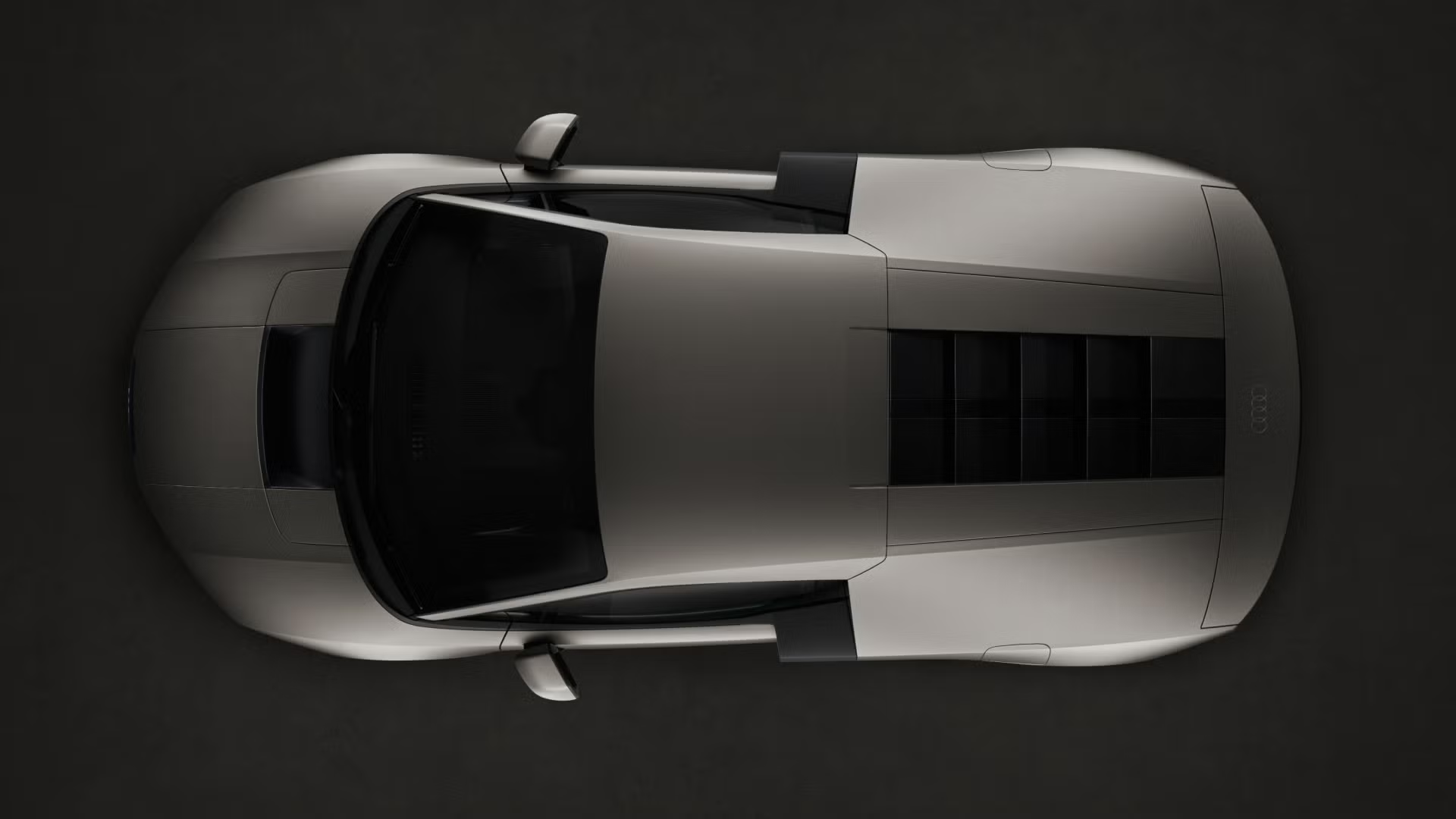
Frascella, who arrived at Audi from a career spanning Bertone, Ford, Kia, and Jaguar Land Rover, is not attempting to make Audi more dramatic through visual complexity. The logic runs in the opposite direction: emotion through reduction. The Nuvolari’s exterior operates on the principle that nothing decorative should exist — every surface, every opening, every grille serves an aerodynamic or structural function. The dominant visual element is what Audi calls the Vertical Frame, an upright front grille composed of 64 precisely angled tiles engineered to channel air through a concealed S-duct. It will become the brand’s hallmark identity element across the full lineup going forward.
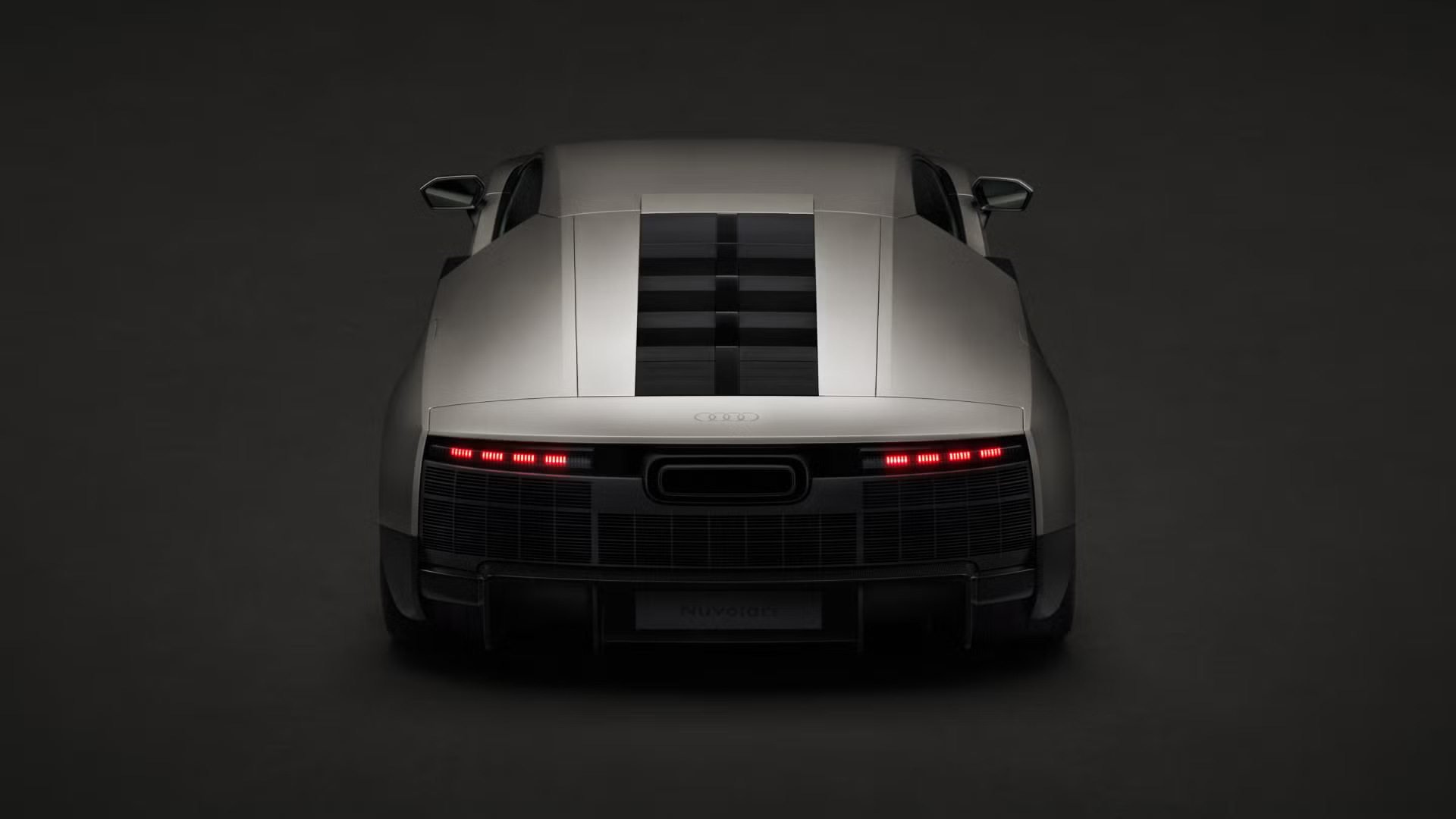
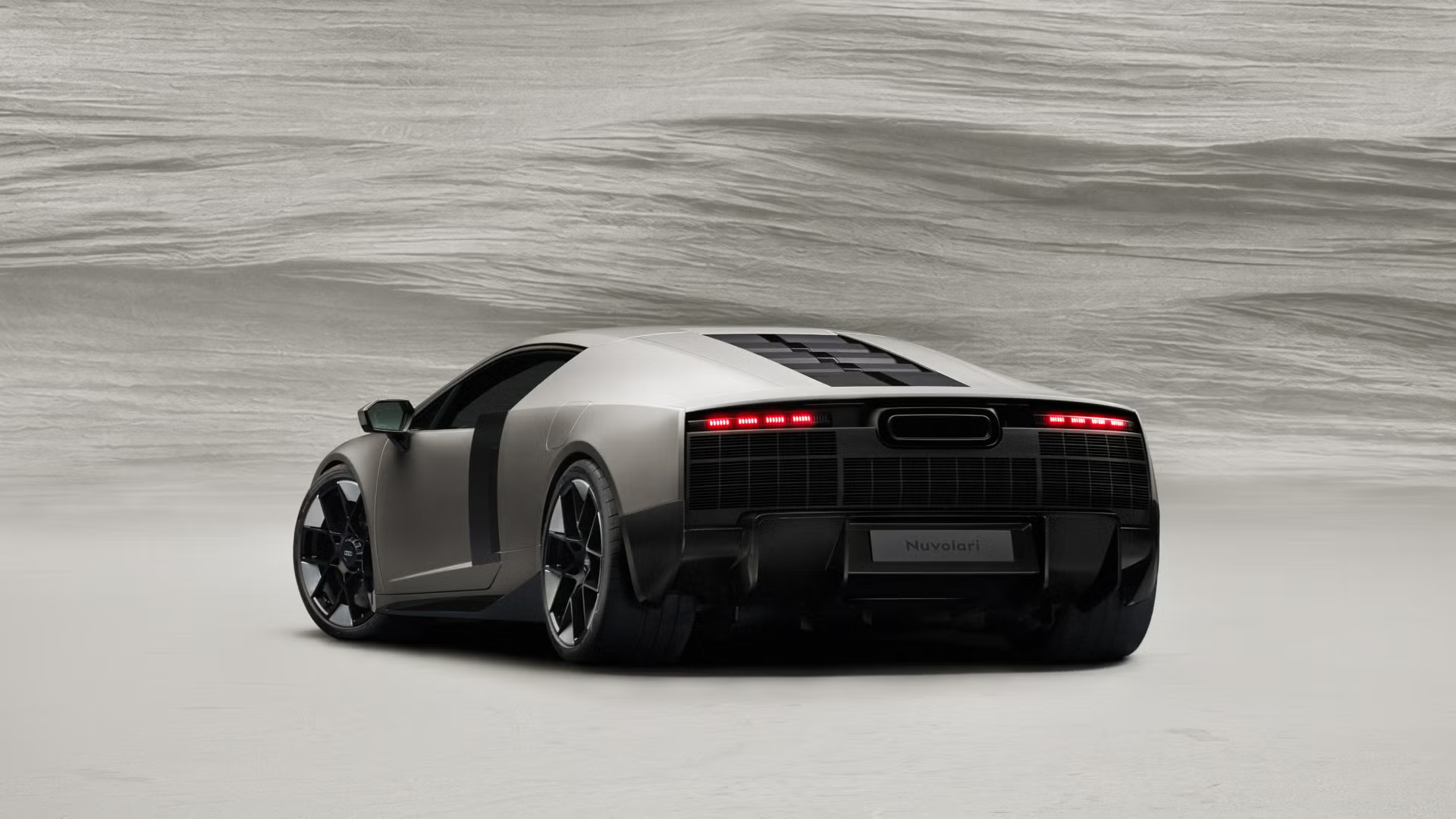
The launch vehicle was finished in Titanium — a new signature color used identically on the Audi Concept C that previewed this design direction in 2025 and on Audi’s F1 machinery. Carbon fiber is available as an option; reportedly at a substantial premium of around £100,000. The rear window has been eliminated entirely in favor of side-mounted air intakes. Four horizontal lighting elements at front and rear create a visual signature that, in photographs, reads as simultaneously aggressive and restrained. Critics have drawn comparisons to Luc Donckerwolke’s Phase I Lamborghini Murciélago — a compliment of the highest order in mid-engine design terms.
What Frascella is doing is identifiable and deliberate: returning Audi to the visual language that made the brand genuinely distinctive in the early 2000s. The original TT. The first A5. The early A7. Cars that were immediately recognizable from a distance not because of theatrical details but because of the authority of their proportions and the quality of their surface resolution. The intervening years of creased bodywork, decorative grilles, and increasingly busy styling had eroded that identity considerably. The Nuvolari is the stake in the ground that says it is over.
example
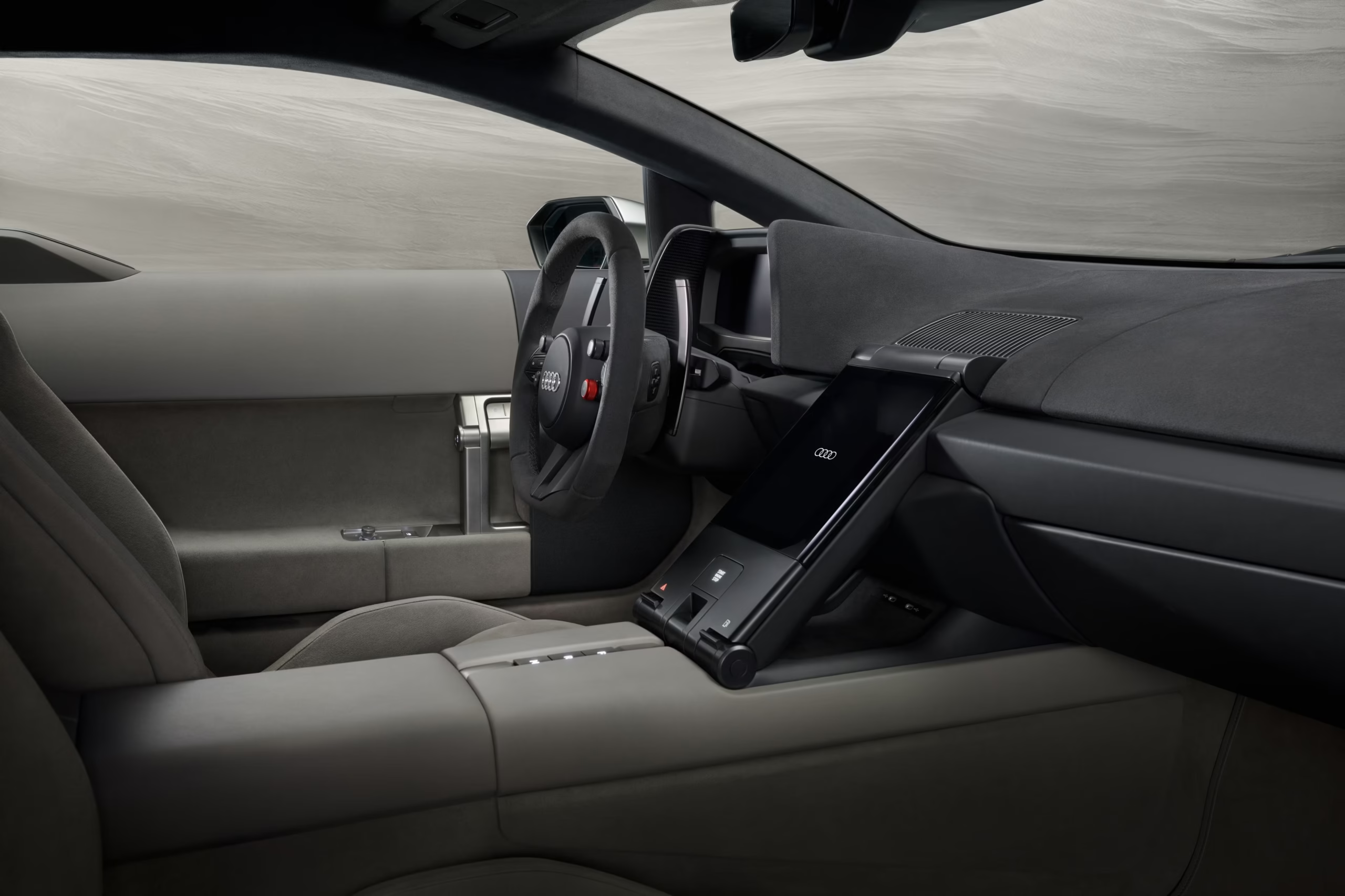
The interior situation at most premium German manufacturers is well understood: screens everywhere, physical buttons minimized in the name of modernity, the UX increasingly optimized for product photography rather than actual driving. Audi itself has not been immune. The interior of the Nuvolari represents a direct counter-argument.
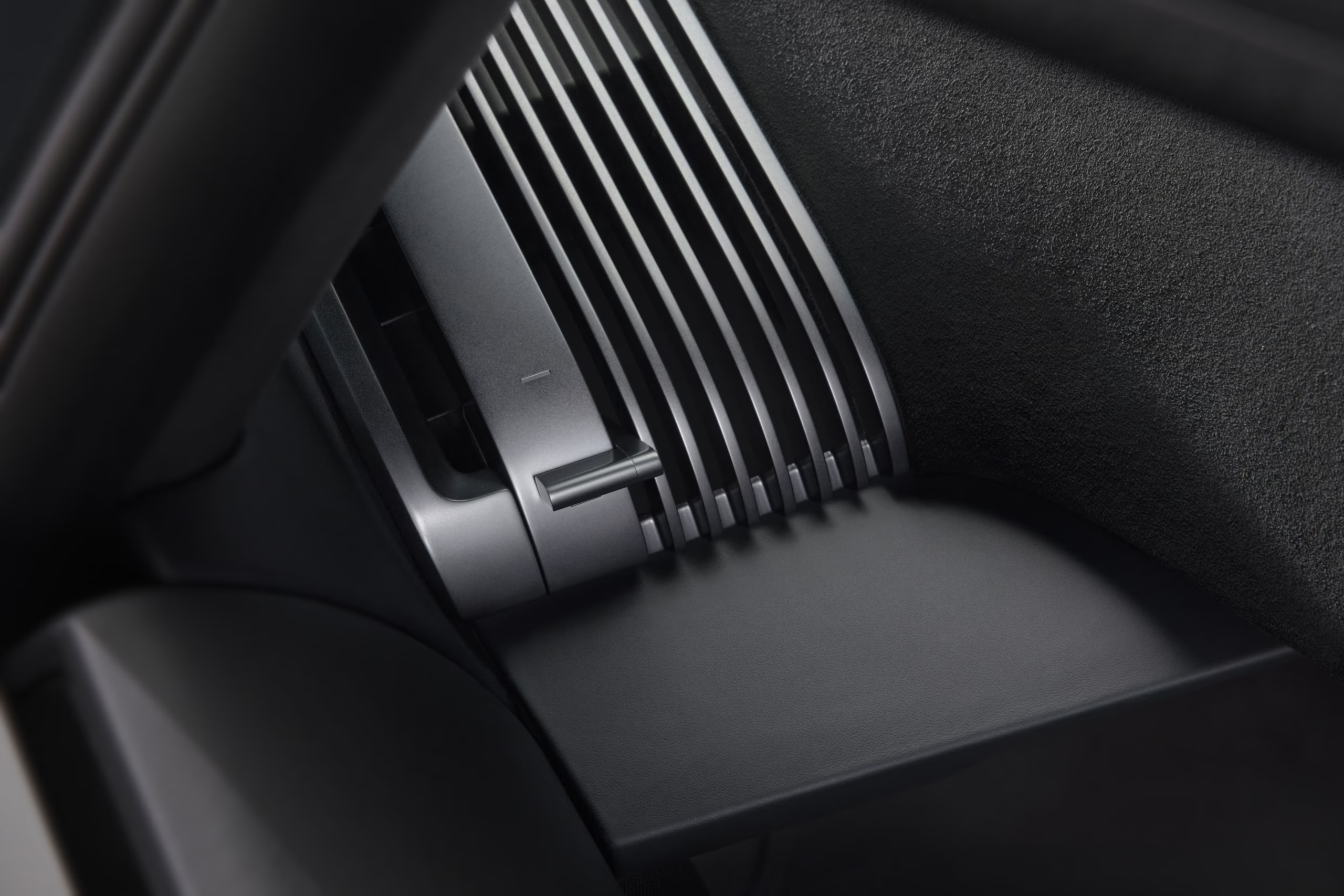
Every essential function is placed within the driver’s line of sight. Physical controls have returned, with aluminum used throughout — for the air vents, door handles, interior controls. The tactile quality of individual switches and rotary controllers, something Audi once understood better than almost anyone in the industry, is back as a design priority. There are no large touchscreens dominating the architecture. The cockpit is organized around the act of driving, not around demonstrating what the human-machine interface is capable of.
Frascella has described the principle as “extreme solidity and absolute simplicity.” The Globe and Mail, covering the Monaco reveal, noted that the interior is “mercifully free of the shiny black plastic and big screens that clutter the dashboards of many Audi models.” Whether that translates with full integrity into the production-spec interiors of volume Audis — the Q5s and A6s that will be expected to adopt the Radical Next language from 2028 onward — remains the real test. But the intention as demonstrated on the Nuvolari is unambiguous.
Red smiley cap straight from the fresh shipment — bold and playful streetwear energy.
dilution
Audi has been explicit: exactly 499 units of the Nuvolari will be built, all in left-hand drive. There will be no roadster variant, no track edition follow-up, no higher-powered special. Production is planned at a rate of around three cars per day from the fourth quarter of 2026, with the assembly process partially taking place at Lamborghini’s facility in Sant’Agata Bolognese — a structural element of the partnership that has existed in various forms since the R8 and Gallardo shared a platform in 2006.
At 590,000 euros — roughly $685,000 in North American markets — the Nuvolari is priced significantly above the Lamborghini Temerario, which starts at approximately $432,000. The reversal of the traditional relationship is pointed. For twenty years, the Lamborghini was the more expensive and exclusive of the two sister-brand supercars; the R8 was the accessible footnote to the raging bull. With the Nuvolari, Audi is explicitly asserting technological and commercial superiority over the hardware it shares. The Audi beats the Lamborghini it is based on — by 80 PS in output, one-tenth of a second to 62 mph, and $250,000 at the sticker.
The production limitation also functions as a brand signal. Audi has faced genuine difficulty in recent years — North American sales fell 27 percent in the first quarter of 2026, and the company announced plans to cut up to 7,500 jobs in Germany by 2029. Against that backdrop, the Nuvolari is not simply a halo car built to improve showroom traffic. It is a statement of direction from a brand that recognized its design identity had become blurred and is now using the supercar format — the highest-stakes context in automotive product development — to demonstrate what it has decided to become.
why
Four hundred and ninety-nine buyers will own a Nuvolari. Millions more will feel its influence in the coming decade, because the Radical Next design philosophy and the interior philosophy demonstrated in this car will cascade down through the entire Audi lineup. The Concept C evolves into a production electric sports car in 2027, the first volume model to carry the new language. From 2028, the architecture expands to SUVs and sedans. If the execution holds — and that is the crucial qualification — this supercar is the opening argument in a sustained rebrand.
It is also, in automotive terms, a historically interesting moment. The Nuvolari arrives not as a pure electric vehicle but as a plug-in hybrid, at a time when Audi’s own CEO reversed the company’s earlier commitment to ceasing combustion engine development after 2026. The V8 revs to 10,000 rpm and was built by Lamborghini. The electric motors make it quicker and cleaner than it would otherwise be. That combination does not read as compromise — it reads as pragmatism in service of driver experience, which is exactly the logic “Vorsprung durch Technik” was supposed to embody all along.
From the DRIFT archive: PANTONE’s 2026 Color of the Year Takes Shape With Play-Doh and Post-It Editions · Tactical Elegance: Inside Bramford London Aqua Blue Three-Pocket Watch Roll
Related Articles
Under Rue de Castiglione, Liaigre Gives Hôtel Costes a Spa With No Hard Corners
A 20-meter lap pool, eight treatment rooms and not one sharp angle: Studio Liaigre’s spa […]