Way U Move: A Couture of Rhythm — by JD Cliffe

April 18, 2026
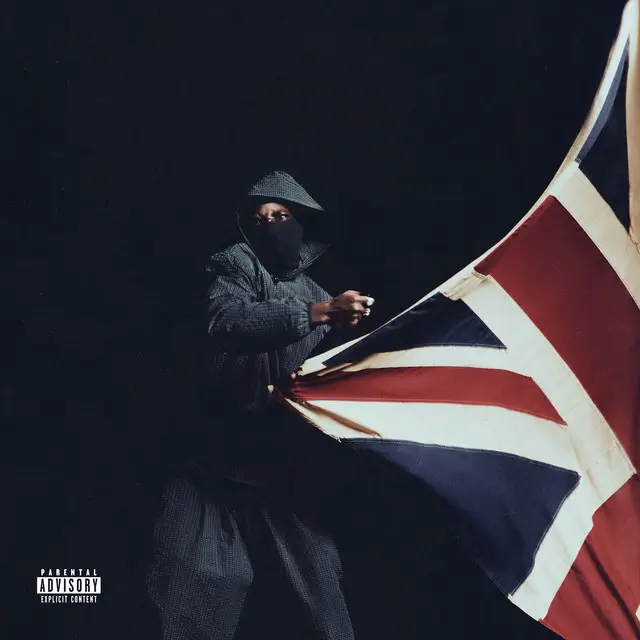
No soft entry point into Way U Move. The track doesn’t introduce itself—it lands mid-motion, already in progress, already committed to its own velocity. What you hear first isn’t narrative. It’s impulse. A rhythm that behaves like a reflex rather than a decision.
This is where JD Cliffe positions himself most clearly: not as a storyteller in the traditional sense, but as a conductor of response. The body registers the track before the mind catches up. Shoulders, head, breath—tiny adjustments begin before the hook has even completed its first cycle.
“Way U Move” isn’t asking to be understood. It’s asking to be mirrored in a sense.
stir
At surface level, the track is deceptively simple. A tight rhythmic loop, minimal melodic interference, and a vocal line that prioritizes cadence over density. The title phrase—way you move—functions less as a lyric and more as a structural anchor.
Everything bends toward it.
The production avoids clutter. There’s space between the elements, but it’s not emptiness—it’s controlled restraint. Each beat lands with intention, giving the vocal enough room to feel immediate without being crowded. The result is a track that feels precise but not rigid, loose but never unfocused.
You’re not overwhelmed. You’re pulled in.
flow
There are two systems running at once:
The first is physical. Rhythm, repetition, tempo. The architecture that moves the listener without asking permission. This is the system that operates in clubs, in cars, in headphones at night—anywhere movement is instinctive.
The second is perceptual. Tone, delivery, the slight shifts in vocal emphasis. This is where personality enters. Not through heavy lyricism, but through micro-decisions—how a word lands, how a phrase stretches, where the voice tightens or relaxes.
Most tracks prioritize one system over the other.
Way U Move keeps them aligned—until it doesn’t.
That’s the breakdown.
Not a dramatic drop, not a sonic collapse, but a subtle divergence. The beat continues as expected, but the vocal begins to shift, slightly off-center, introducing tension without disrupting flow. It’s barely noticeable on first listen, but it’s what gives the track replay value.
You return to locate it.
loop
Repetition is often mistaken for simplicity. Here, it’s strategy.
The hook loops, but it doesn’t flatten. Each return feels slightly altered—not in structure, but in context. By the second or third cycle, the phrase “way you move” stops describing someone else and starts implicating the listener.
You’re inside the track now.
This is where JD Cliffe’s approach separates itself. The song doesn’t escalate in the traditional sense. It intensifies through familiarity. The more you hear it, the more it feels like it’s already been part of your rotation.
Not new. Not old. Just immediate.
View this post on Instagram
scope
There’s a broader pattern in how emerging artists are shaping releases in 2026—less emphasis on narrative-heavy singles, more focus on modular, replay-driven tracks that live comfortably across platforms.
Way U Move fits that pattern, but it doesn’t feel manufactured. It feels aware.
The runtime, the structure, the restraint—it all points to an understanding of how music is consumed now. Short loops, high retention, strong identity in minimal time. But instead of overloading the track with ideas, JD Cliffe commits to one and refines it.
That discipline matters.
engine
There’s no attempt here to dominate the production. The vocal sits inside the beat, not above it. It behaves like another percussive element—rhythmic, clipped, intentional.
This is where the track gains its texture.
Instead of long, stretched-out melodies, you get tight phrasing, almost conversational in delivery but sharpened by timing. It’s controlled without sounding mechanical. The human element remains intact, but it’s been disciplined into form.
You hear personality without excess.
lang
The title does more work than it appears to.
“Way U Move” isn’t just observation—it’s translation. Movement becomes a form of communication, one that bypasses explanation entirely. There’s no need for backstory, no need for context-heavy verses.
The message is already visible.
This aligns with a larger shift in music where feeling precedes meaning. You don’t decode the track first—you experience it, then assign interpretation after the fact.
JD Cliffe leans into that order.
fin
Way U Move operates on a principle that feels increasingly rare: do less, but do it precisely.
The phrase “parallel systems breakdown” becomes a useful lens—not because it’s officially attached to the track, but because it captures what’s happening beneath the surface. Two systems, running in sync just long enough to feel stable, then straying away slow apart to create tension.
Not chaos.
Not disruption.
Just enough shift to keep the listener engaged.
JD Cliffe doesn’t overstate the moment. He lets the track exist in its own scale—compact, controlled, and built for rep.
And in that restraint, it finds its identity.
Related Articles
Sean Leon Cuts Loose On “Link Some,” A Breakup Anthem Built For Letting Go
Sean Leon trims a relationship down to its final gesture on a new two-minute single, […]