
DRIFT AUDIO
Listen to this story
Choose a voice, then press play.
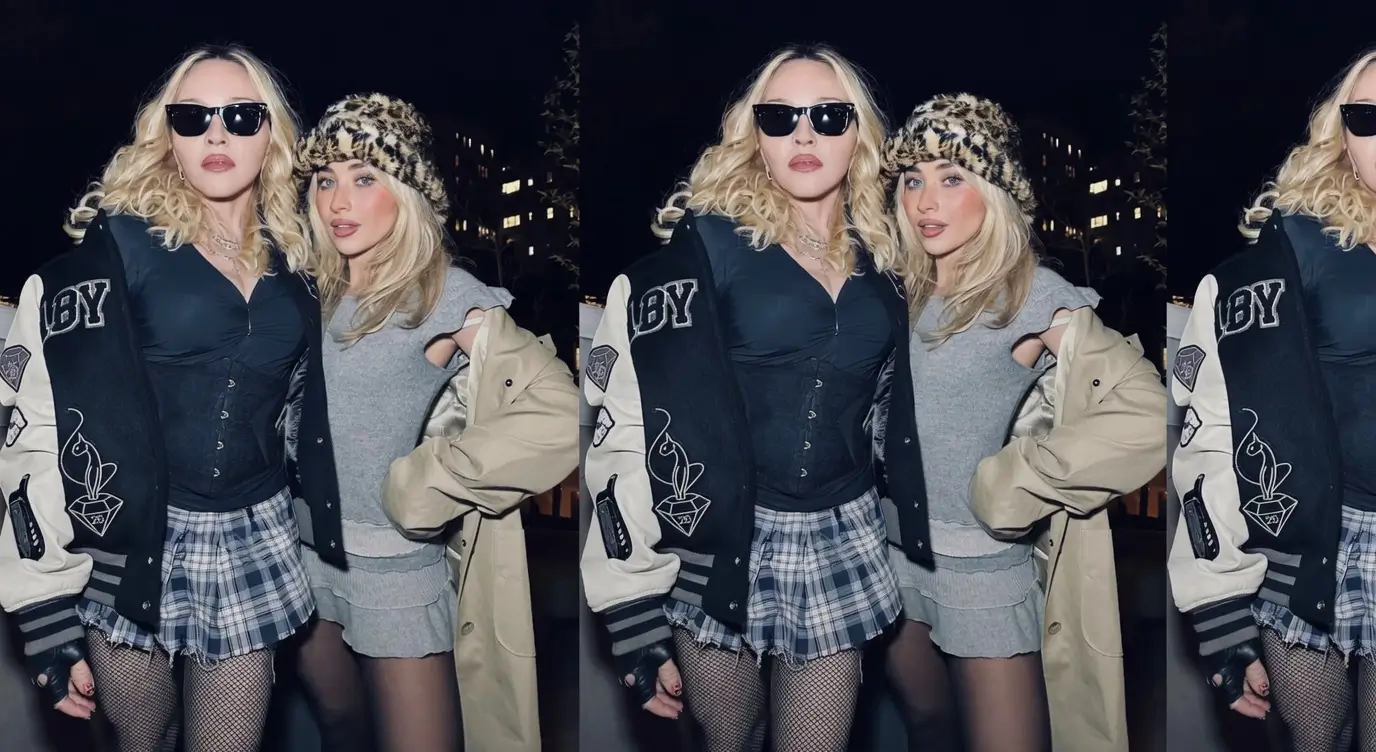
In a grainy, nighttime snapshot that feels equal parts red-carpet glamour and downtown rebellion, Madonna stands shoulder-to-shoulder with Sabrina Carpenter. Oversized sunglasses shield the icon’s gaze while a varsity jacket emblazoned with “BABY” and diamond motifs drapes her frame. Beside her, Carpenter beams in a leopard-print hat and layered neutrals, the two blondes radiating the easy confidence of women who know exactly who they are and what they’re here to say.
This image isn’t just a photo op—it’s a view manifesto for one of the most electric intergenerational moments in recent pop history. Their new collaboration, “Bring Your Love,” released April 30, 2026, as the lead single from Madonna’s long-awaited Confessions II, crystallizes a rapport built on mutual respect, shared audacity, and an unapologetic command of the dance floor. There’s something deliberate in the stillness of the image. It doesn’t chase spectacle—it holds it. A pause before motion.
stir
The track didn’t arrive in a vacuum. On April 17, during Sabrina Carpenter’s headlining set at Coachella Weekend Two, the 26-year-old pop supernova paused mid-“Juno,” struck a pose, and summoned the 67-year-old Queen of Pop from beneath the stage. What followed was pure pop alchemy: “Vogue,” a premiere of “Bring Your Love,” and a roof-raising “Like a Prayer.”
Twenty years after Madonna’s last Coachella appearance, the desert air crackled with history. Fans who grew up on Confessions on a Dance Floor stood shoulder-to-shoulder with Gen Z devotees of Short n’ Sweet. Phones waved like lighters at a rock show. For one glistening hour, pop felt less like a relay race and more like a continuum—fluid, shared, uninterrupted.
Importantly, this wasn’t nostalgia as retreat. It wasn’t legacy packaged for safe consumption. It was confrontation—past meeting present without dilution. A refusal to shrink either voice. The staging itself carried symbolic weight: Madonna rising from below the stage during a moment of poised defiance in Carpenter’s set. It wasn’t an intrusion; it was an invitation. The crowd’s roar wasn’t manufactured—it was recognition. Here were two artists who understand the theater of pop, the power of gesture, and the electricity that happens when eras refuse to remain separate.
mutual
This wasn’t calculated stunt-casting. It was the culmination of years of quiet admiration meeting a cultural moment hungry for exactly this kind of bridge-building. Sabrina has name-checked Madonna for years—covering “Like a Virgin” impromptu at an SNL 50 afterparty, echoing her boundary-pushing visuals, and channeling that same blend of sex, smarts, and spectacle. Madonna, ever the talent scout with an almost supernatural eye for cultural shift, recognized in Carpenter a worthy counterpart: technically gifted, visually fearless, and unafraid to weaponize charm as both armor and weapon.
Their post-Coachella exchange—cheek-to-cheek black-and-white portraits captioned “We’ve got something to say about it”—felt less like promotion and more like alignment. Not mentorship in the traditional sense. Not hierarchy. Recognition. A moment where lineage isn’t explained—it’s understood. In interviews and social media, the warmth feels unforced. Sabrina speaks of Madonna with reverence that never tips into obsequiousness. Madonna, in turn, engages Carpenter as peer, not project. This flattening of traditional power dynamics is rare in an industry that often thrives on clear succession narratives. Here, the throne is wide enough for both.
devout
“Bring Your Love” is no mere feature. Clocking in as a propulsive house-disco banger co-produced by Madonna and Stuart Price—the same architect behind the original Confessions—it pulses with that unmistakable early-2000s Madonna DNA while sounding entirely 2026. The beat rides a relentless “Vogue”-adjacent thump layered with modern synth stabs and garage-house flourishes. It’s built for clubs, festivals, and late-night drives with the windows down. But the real heat comes from the vocal interplay.
Madonna opens with a spoken-word invocation that directly echoes her own philosophy of autonomy: “Ask yourself this / What are you doing it for? / Is it for you? Is it for them?” Sabrina slides in seamlessly, their voices braiding like longtime collaborators rather than generational opposites. The verses bristle with defiance: “Don’t comment on my ideas / I don’t want your judgment or your expectations / Don’t wind me up like a toy / Your vision of me is a killer of joy.” Pre-choruses land like controlled detonations—“I know where the bodies are buried / Don’t try to shut me up / Don’t try to distract me with numbers / I did it all for love.” The chorus—less explosion, more declaration—feels like a manifesto: “Bring your love ’cause you cannot shake me / Bring your love ’cause you’ll never break me / Bring your love ’cause you cannot take me down.”
It doesn’t chase immediacy. It builds presence. A four-minute argument for longevity in a culture obsessed with the next thing. The production choices reinforce this. Price’s touch translates rather than replicates the past. There are echoes of Chicago house, Detroit techno soul (as noted by Kevin Saunderson himself in approving comments), and contemporary dance-pop precision. The result is neither throwback nor trend-chasing. It feels lived-in yet forward-facing.

written
This is Madonna at her most Madonna: refusing diminishment, demanding authenticity, and doing it all under the banner of love—not softness, but strength forged through decades of battle. Sabrina matches her energy without trying to eclipse it, instead amplifying the message with precision and restraint that reveals deep musical intelligence. The song interpolates Madonna’s own archive while nodding to foundational house structures. It’s self-referential without collapsing into nostalgia. Empowering without resorting to cliché.
In an era dominated by brevity and algorithmic pacing, “Bring Your Love” feels almost radical in its insistence on presence. Not just something to consume—but something to stand inside. The track rewards repeated listens. The interplay between voices reveals new textures. The emotional arc—from questioning to declaration to unbreakable chorus—mirrors the very journey both artists have taken: from scrutiny to sovereignty.
imagery
The connection between Madonna and Sabrina transcends a single track. It responds to a larger cultural absence—the loss of visible lineage in pop. Madonna built her empire on reinvention without apology. Sabrina operates within acceleration—TikTok velocity, digital saturation, constant content demands—but shares that same instinct: control the narrative or be consumed by it. Both have been scrutinized relentlessly over bodies, choices, ambition, and staying power. Both have turned that scrutiny into propulsion.
Their collide arrives at a moment when pop feels fragmented—micro-genres splintering audiences, AI-assisted production raising questions of authenticity, attention spans collapsing into seconds. Yet audiences are searching for something more durable. Not permanence in the rigid sense, but continuity. A thread that connects the underground clubs of the ’80s and ’90s to the global stadiums of today. “Bring Your Love” provides that thread, woven with defiance and joy.
respect
Critics have reached for the easy “mother-daughter” framing. It’s an understandable narrative, but an incomplete one. This is peer-to-peer respect across timelines. Two artists who understand performance as power, image as language, control as survival, and risk as necessity. Sabrina’s public acknowledgment—grateful, energized, but not deferential—captures the shift. She doesn’t shrink beside Madonna. She expands with her. That difference matters. Because it signals a cultural evolution: reverence without diminishment, admiration without erasure.
imply
Historically, female pop stars have been positioned in opposition—manufactured rivalry as marketing tool. Britney vs. Christina, Taylor vs. Katy, the list goes on. This collection rejects that scarcity model entirely. Madonna amplifies. Sabrina reciprocates. There is no competition for oxygen here. Just expansion. The industry, often cynical about such gestures, would do well to take note. Genuine cross-generational collaboration can create bigger moments than isolated dominance.
Lines like “Don’t try to distract me with numbers” read as quiet resistance against metrics culture—streams, views, engagement as reductive measures of worth. “I did it all for love” reframes the conversation entirely. Not performance for validation. Performance as expression. In doing so, the song pushes back against the commodification of art while still thriving within the commercial sphere. A delicate, necessary balance.
bridge
Musically, the track operates as a bridge between eras without nostalgia’s trapdoors. Stuart Price’s production doesn’t recreate the past—it translates it into the present tense. Sabrina’s vocals cut clean and contemporary, bright and agile. Madonna’s delivery grounds the track in weight, experience, and lived authority. Together, they produce something that avoids both retro pastiche and desperate trend-chasing. It doesn’t sound old. It doesn’t sound forced. It sounds inevitable—like the logical next step in a conversation that began decades ago.
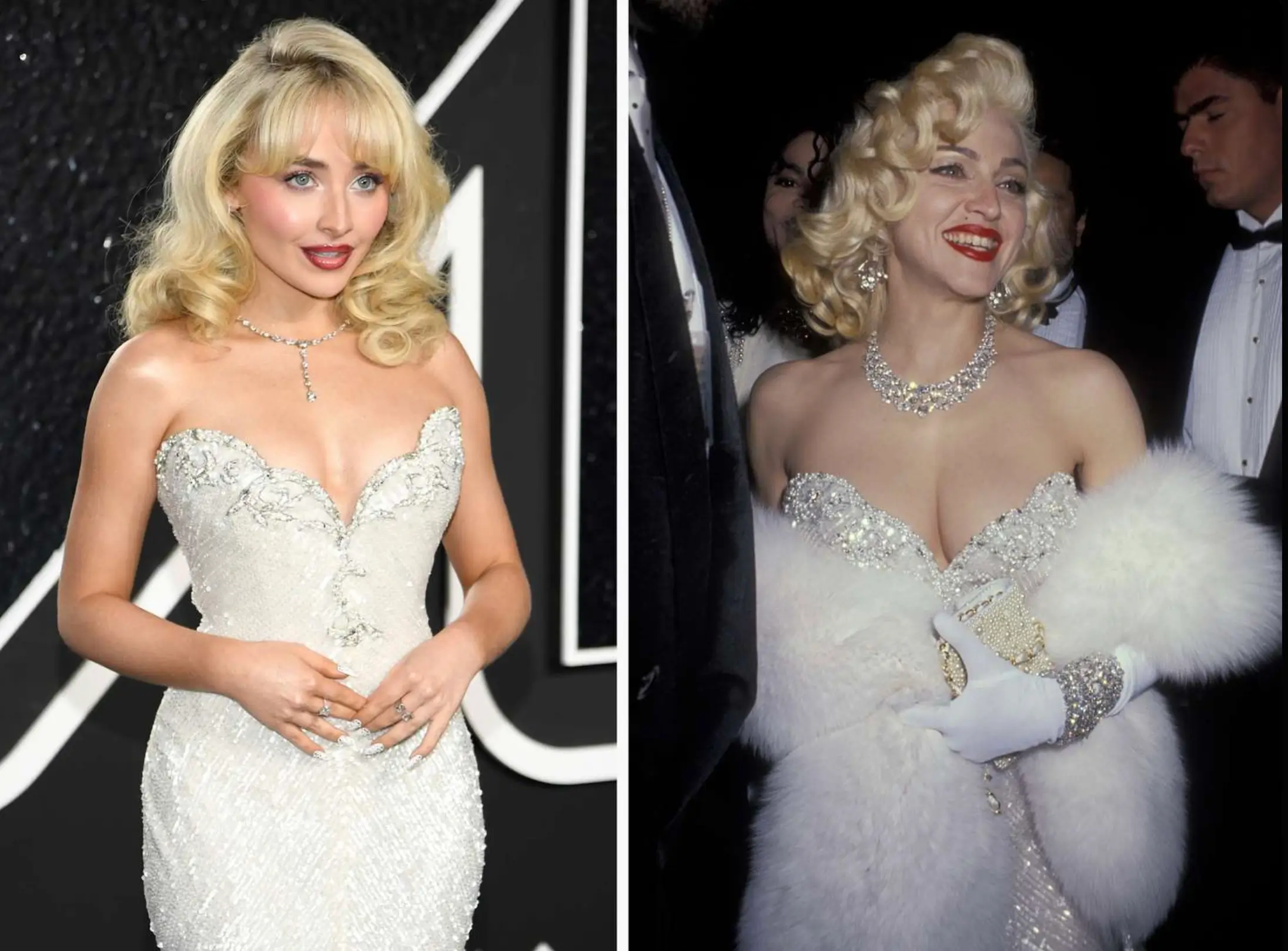
Sabrina Carpenter Channeled Madonna in Vintage Bob Mackie
leg
Madonna’s career has never been about preservation. It has always been about forward motion. From the Material Girl provocations of the ’80s through the spiritual explorations of Ray of Light, the dance-floor evangelism of Confessions on a Dance Floor, and the boundary-testing of Madame X, each phase resisted containment. Confessions II continues that trajectory. Not as nostalgic sequel, but as living continuation. Bringing Sabrina into that space isn’t symbolic—it’s structural. It reinforces the idea that legacy isn’t static. It evolves through collaboration, not isolation.
Sabrina, in turn, moves beyond momentary relevance. This isn’t just a co-sign or a career highlight. It’s positioning. Not “next,” but now. Her generation faces pressures Madonna could scarcely have imagined—constant visibility, algorithmic judgment, the blurring of public and private. Yet in stepping onto that stage and into this recording, Carpenter demonstrates the same resilience that defined Madonna’s longevity.
refusal
The collision also reframes the conversation around aging in pop. Madonna at 67 isn’t transitioning into legacy status or “elder statesman” role. She’s actively shaping the present, releasing music, performing at elite levels, and still taking creative risks. Sabrina at 26 isn’t navigating mere entry—she’s consolidating position while honoring those who cleared the path. Together, they disrupt the idea that relevance is time-bound. That innovation belongs only to youth, or authority only to experience. Here, both exist simultaneously, enriching each other.
This matters beyond music. In a culture that often discards women past a certain age while demanding perpetual novelty from the young, their partnership offers a different model. Vitality and wisdom are not opposites. They are complementary forces.
show
Beyond the performance, there’s an underlying intimacy. The visuals, the interactions, the shared moments—they don’t feel transactional. In an industry defined by strategic alignment and calculated optics, this reads as something quieter. More personal. Madonna has long spoken about the loneliness at the pinnacle of fame. Sabrina, despite her youth, has already tasted the isolating side of rapid ascent. Their connection offers something rare: mutual reinforcement without dilution. A space where both can be fully themselves.
fin
The image that began this reflection—Madonna and Sabrina standing side by side in the night—captures something essential. Not contrast. Not comparison. Continuity. In their posture, their expressions, their shared gaze toward the camera, there is no tension. Only clarity. They are different artists from different moments, yet driven by the same imperative: express, assert, remain unshaken.
This is what legacy looks like—not fixed, not preserved, but active. Madonna didn’t hand over anything. She expanded the space. And Sabrina stepped into it—not as successor, but as equal participant. Together, they remind us why pop still matters. Because when it works—when it aligns voice, movement, intention, and defiance—it doesn’t just entertain. It liberates. It connects. It endures.
In a cultural landscape increasingly fractured by trends, technology, and tribalism, “Bring Your Love” and the moment it represents offer something profoundly hopeful: the possibility that the best of pop isn’t behind us or ahead of us, but happening right now, whenever two generations decide to dance together on the same floor.
From the DRIFT archive: Jodie Foster Narrates Morgan Neville’s Breakdown: 1975: A Cultural Autopsy of the Most Radical Year in American Cinema