McDonald’s Monopoly 2025: The Iconic Game Returns Digitally After a Decade

September 30, 2025
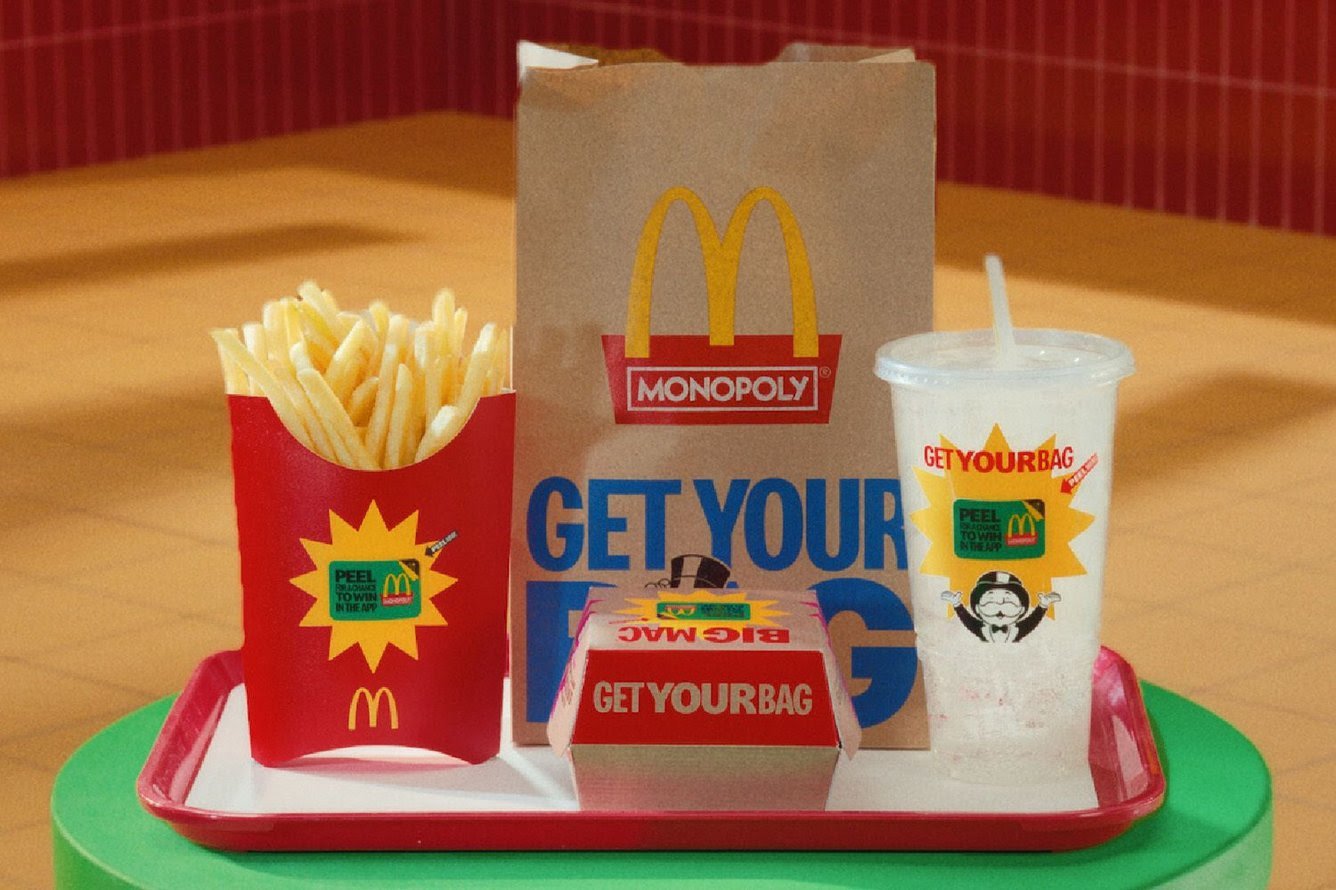
Few corporate promotions have managed to blur the lines between everyday consumption and cultural ritual quite like McDonald’s Monopoly. For generations, peeling tiny stickers from soda cups or French fry boxes was more than just a chance to win prizes—it became a ritual of possibility, a communal act of dreaming big while chomping down on a Quarter Pounder. Now, after more than a decade of absence in the United States, McDonald’s is bringing Monopoly back. Only this time, the game has shed its analog quirks and stepped firmly into the digital era.
Starting Monday and running through November 2, U.S. customers will once again chase the dream of fast-food fortune. But instead of hoarding paper game pieces in a messy cup holder or wedging them into the folds of a wallet, players will now be required to scan pieces into McDonald’s rewards app. The stakes remain—cash, cars, and the occasional comically low-tier prize—but the method reflects the chain’s broader digital-first push. And perhaps most importantly, new safeguards are being built in to avoid repeating one of the wildest corporate frauds in American history: the infamous McMillions scandal.
The Origin
McDonald’s Monopoly was first introduced in 1987. Its genius lay in its simplicity: mimic the structure of Monopoly, the Parker Brothers board game that had long been a family favorite, but adapt it for fast food. Customers collected property stickers—Boardwalk, Park Place, Illinois Avenue—by purchasing McDonald’s menu items. Completing a set could net huge prizes, ranging from instant wins like free food to six-figure payouts and luxury cars.
The timing was impeccable. America in the late 1980s was saturated with mall culture, cable television, and a consumer-driven optimism. A gamified fast-food experience resonated deeply, turning everyday meals into high-stakes rituals. Parents and children alike strategized, trading duplicate pieces across kitchen tables or convincing themselves that a Big Mac run might finally yield the elusive Boardwalk.
By the 1990s, the promotion had achieved near-mythical status. Television ads glorified million-dollar winners; McDonald’s stores became treasure troves of possibility. The fact that most customers never came close to major prizes only added to the thrill—the chase itself became the reward.
When Greed Overpowered the Game
Of course, the Monopoly game’s history isn’t just about family fun. Between 1989 and 2001, the contest became the centerpiece of one of the most brazen corporate frauds in U.S. history.
The scheme revolved around Jerome Jacobson, a security officer at Simon Marketing, the company hired by McDonald’s to oversee the game pieces. Jacobson exploited his access to high-value pieces—Boardwalks, instant-win millions, cars—and funneled them to relatives, acquaintances, and eventually an entire underground network. These winners, often coached on how to fake their excitement for McDonald’s cameras, split their prizes with Jacobson and his cohorts.
By the time the FBI cracked the case, more than $24 million in prizes had been stolen. The scandal became the subject of widespread media coverage and later the HBO documentary McMillions (2020), which recounted the almost cinematic blend of mob ties, small-town scheming, and corporate naivety. For McDonald’s, the fraud was a major reputational blow, sparking lawsuits and a reassessment of how the contest could ever return.
Why Now? Timing the Comeback
For over a decade, Monopoly has been absent from U.S. McDonald’s menus, though it continued in other countries such as the U.K. and Canada, where it retained popularity. The American reintroduction isn’t happening in a vacuum—it aligns with McDonald’s strategic digital expansion.
In August, CEO Chris Kempczinski revealed that customers who joined McDonald’s rewards app more than doubled their visits. The app is not merely a coupon delivery system—it’s a data-gathering, loyalty-building ecosystem designed to anchor McDonald’s as more than just a fast-food pit stop. By 2027, the company aims to hit 250 million global loyalty members, a massive jump from the 185 million reported during Q2 of 2025.
Reintroducing Monopoly in digital form does double duty: it feeds nostalgia while nudging customers into the digital funnel. Every scanned piece means more app downloads, more user data, and ultimately, more repeat visits. In effect, McDonald’s is resurrecting Monopoly not only as a game but as a vice for digital transformation.
Reinventing the Game
The biggest change in 2025’s version of Monopoly is the elimination of the traditional paper game board. Gone are the days of taping stickers to cardboard backings or keeping crumpled fry box clippings in glove compartments. Now, players must scan their pieces into the McDonald’s app, where digital tracking ensures transparency and helps prevent fraud.
This transition serves multiple purposes:
Fraud Prevention – By digitizing the system, McDonald’s limits the chance of physical piece theft or inside jobs similar to McMillions. Each piece is linked directly to a user account, reducing anonymity.
Customer Retention – The app becomes indispensable. Even customers with casual interest in Monopoly must interact with the digital ecosystem, exposing them to other promotions, push notifications, and location-based deals.
Data Insights – Every scan offers McDonald’s more consumer data: when people visit, what they order, and how often they return. This information feeds into personalization strategies that extend beyond Monopoly season.
Convenience & Engagement – A digital board allows for instant tracking of what properties customers own, reducing confusion and encouraging ongoing participation without clutter.
It’s less tactile, perhaps less romantic, but far more aligned with McDonald’s long-term goals.
The Psychology of Peel-and-Win
Why does Monopoly work in the first place? It comes down to the mechanics of scarcity and chance. In game theory terms, Monopoly is essentially a lottery with a twist. Instead of buying a ticket outright, you earn chances by purchasing food items. Each piece carries the thrill of immediate gratification (free fries!) or the dangling carrot of a long-term goal (collecting a full color set).
The clever psychology lies in the “almost wins.” Customers often ended up with multiple common pieces—think Mediterranean Avenue, Baltic Avenue, or St. Charles Place—while the rare pieces (Boardwalk, Pennsylvania Avenue) were distributed sparingly. This sense of just missing out encouraged repeat purchases. The addition of instant-win prizes added another dopamine rush, keeping casual players engaged even without long-term success.
Digitizing the game doesn’t change this fundamental psychology. If anything, it heightens it: push notifications remind you that you’re “one piece away,” nudging you toward another meal. The system plays on the same mechanics that drive mobile gaming addiction, blending the fast-food ritual with digital gamification.
Learning from McMillions
Axios has reported that McDonald’s is implementing new safeguards to prevent a repeat of the McMillions debacle. While details remain under wraps, the digital infrastructure itself is a safeguard: centralized data, account-level oversight, and audit trails make it significantly harder for a rogue employee to siphon pieces.
Still, skepticism remains. Customers old enough to remember the scandal may eye the return of Monopoly with suspicion. McDonald’s will need to balance its nostalgic marketing with transparent communication about fairness and security. The company cannot afford a déjà vu of fraud, especially at a time when consumer trust in corporations is already fragile.
Fast Food as Memory
Part of the excitement surrounding Monopoly’s return stems from cultural nostalgia. Millennials and Gen Xers, who grew up in the heyday of the promotion, now approach it with both irony and sentimentality. The jokes about parents becoming “ruthless landlords” at the dinner table, the memories of hoarding stickers, the thrill of believing that Boardwalk might finally show up—these are more than promotional gimmicks; they’re shared cultural memories.
Gamification
McDonald’s Monopoly isn’t returning in isolation. It’s part of a broader trend where brands gamify everyday experiences to drive engagement. Starbucks uses digital challenges in its Rewards app. Airlines gamify loyalty tiers. Even grocery stores use digital punch cards and sweepstakes to encourage spending.
The return of Monopoly reflects this shift from analog promotions to app-based ecosystems. The consumer doesn’t just eat a burger; they enter a data-driven cycle of rewards, status, and digital nudges. The game is no longer Monopoly itself—it’s participation in McDonald’s loyalty infrastructure.
Impression
The 2025 return may only be the beginning. Imagine future iterations where augmented reality integrates with Monopoly: scanning your Big Mac wrapper could reveal a 3D property floating above your phone, or an AI-generated McDonald’s mascot might congratulate you personally. With AI personalization, one customer’s Monopoly might look very different from another’s, tailored to order history and geographic location.
The possibilities extend even further: collaborations with Hasbro for limited-edition digital boards, NFT integrations for collectors, or even cross-promotions with delivery apps. McDonald’s Monopoly could evolve into more than a promotion—it could become a permanent, seasonal tradition woven into the digital fast-food experience.
Related Articles
The $960,000 Jacket: How Jensen Huang’s Leather Uniform Became a Collector’s Item
A worn Tom Ford jacket with a $60,000 ceiling closed at $960,000 on Friday, and […]