The White House Gets a Mini-Me: Melania Trump’s Elegant New Beehive on the South Lawn
April 27, 2026
0
DRIFT AUDIO
Listen to this story
Choose a voice, then press play.
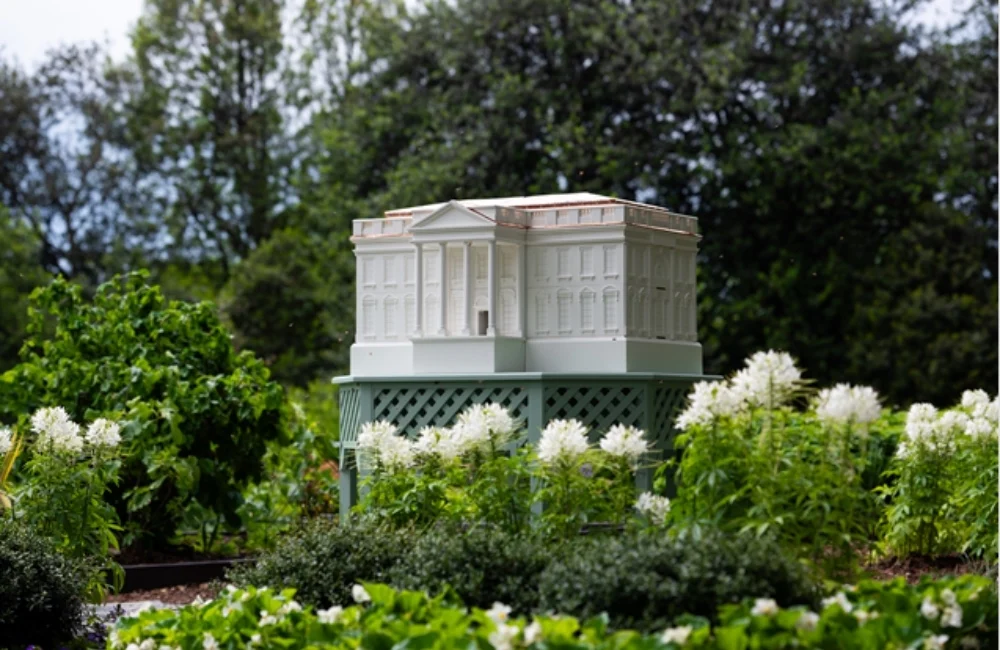
Melania Trump has expanded the White House honey program with a handcrafted, fully functional beehive placed near the Kitchen Garden. Built by a Virginia artisan, the structure is modeled after a miniature version of the White House itself.
This charming addition, unveiled on April 24, 2026, isn’t just a whimsical photo op—it’s a thoughtful extension of a long-standing White House tradition of sustainability, education, and quiet environmental stewardship. In an era of high-stakes politics and global headlines, the gentle hum of thousands of new bees offers a refreshing reminder of simpler, sweeter pursuits right on the grounds of 1600 Pennsylvania Avenue.
stir
The White House beekeeping program traces its modern origins to 2009, when First Lady Michelle Obama launched it alongside her celebrated Kitchen Garden. Those first hives symbolized a push toward healthier eating, local food production, and pollinator health at a time when colony collapse disorder was making national news. Honey from those bees has since graced White House tables, been used in state dinners, and served as diplomatic gifts to foreign leaders.
Subsequent First Ladies, including Melania Trump in her first term, continued and adapted the program. Now, in the current administration, Mrs. Trump has breathed new life into it with this architecturally ambitious expansion. The new hive adds two fresh colonies to the existing two, potentially boosting annual honey production by around 30 pounds. That might sound modest, but for the White House kitchen and gift-giving, it’s a meaningful increase.
The hive itself stands out. Designed by White House Executive Residence staff and meticulously handcrafted by a Virginia artisan, it replicates the iconic neoclassical facade of the presidential mansion in miniature. Complete with tiny columns, windows, and roof details, it blends seamlessly into the historic landscape while serving its practical purpose. Positioned near the Kitchen Garden on the South Lawn, it enhances pollination for vegetables, herbs, flowers, and even broader National Mall vegetation.
.@FLOTUS @MELANIATRUMP announced the expansion of the @WhiteHouse honey program with the addition of a newly installed and fully functioning beehive on the South Lawn.
Hand-crafted by a local artisan in the image of the White House, the beautiful, new hive will add two new bee… pic.twitter.com/5lJpdzXcRY
— Office of the First Lady (@FirstLadyOffice) April 24, 2026
idea
Virginia has a rich tradition of artisanal woodworking and folk crafts, making it a fitting home for the creator of this unique structure. While the White House has not publicly named the artisan (likely to keep the focus on the initiative rather than commercial spotlight), sources describe the work as blending traditional beekeeping techniques with fine architectural modeling. The hive uses sustainable, bee-friendly materials that allow for proper ventilation, insulation, and easy honey harvesting without compromising the colony’s health.
Beekeepers familiar with the project note that replicating the White House form required careful engineering. Standard Langstroth or top-bar hives prioritize function, but this one demanded aesthetic precision while maintaining structural integrity against weather, pests, and the natural activity of Apis mellifera—the European honey bee commonly used in such setups. The result is both art and apiary: a functioning home for bees that doubles as a living sculpture.
Visitors and staff lucky enough to get a close look describe it as delightful. The scale is substantial enough to house thriving colonies yet compact enough to feel like a charming garden feature rather than an industrial operation. Photos released by the White House show bees busily entering and exiting the tiny “portico,” creating a scene that feels almost storybook-like.
why
This expansion arrives at a pivotal moment for pollinators. Honey bees and other insects face threats from habitat loss, pesticides, climate change, and disease. The White House, with its expansive grounds and prominent platform, has long used its garden and hives to highlight these issues.
By adding colonies, Mrs. Trump underscores several key messages:
Pollination Power: A single hive can support the pollination of thousands of plants. On the South Lawn and nearby areas, these bees contribute to a healthier ecosystem that produces fresh produce for the First Family and events.
Educational Value: The program often includes tours or demonstrations for school groups, teaching children about biology, environmental science, and the interconnectedness of nature.
Sustainability in Action: White House honey is harvested and used in everything from teas and desserts to official gifts. It’s a tangible product of the grounds rather than something imported.
Bipartisan Continuity: Notably, this continues work started under previous administrations, showing how certain initiatives transcend politics.
Experts in apiculture applaud the move. “Any high-profile effort to support bees helps raise awareness,” says one veteran beekeeper not affiliated with the White House. “The symbolic design makes it memorable—people will talk about the ‘White House hive’ long after they forget statistics about colony loss.”
a day
Imagine a typical morning near the Kitchen Garden. Groundskeepers move quietly, mindful of the hives. Beekeepers in protective suits—likely from a local Virginia or D.C.-area apiary service—perform regular inspections. They check for queen health, varroa mites, and honey stores. Smoke is used gently to calm the bees during maintenance.
The new miniature White House hive, with its detailed craftsmanship, requires the same care as any Langstroth box but adds a layer of pride. Harvest time brings particular excitement: frames are gently extracted, honey spun out in a centrifuge, and then bottled. White House honey often features unique floral notes from the diverse plants on the grounds—cherry blossoms in spring, perhaps basswood or clover influences.
This honey doesn’t just stay domestic. It has appeared in gift baskets for dignitaries, symbolizing American agriculture and hospitality. One can picture future state dinners where a dessert incorporates a touch of South Lawn sweetness, tying the meal back to the very land surrounding the table.
lady
Melania Trump’s “Be Best” initiative in her first term focused on children’s well-being, online safety, and opioid awareness. This beehive project aligns with themes of environmental health and legacy-building. It complements the Kitchen Garden’s ongoing role and adds a distinctive personal touch—elegant, practical, and visually striking.
Unlike more policy-heavy endeavors, this feels intimate and approachable. It invites Americans to consider what they can do in their own backyards: plant pollinator-friendly flowers, support local beekeepers, or even start a hive if conditions allow.
Critics might dismiss it as minor or symbolic amid larger national challenges. Supporters counter that small, visible actions matter—especially when they endure across administrations and engage the public with wonder. In a polarized time, a buzzing beehive offers rare common ground: who doesn’t love honey?
fin
With the new colonies established, expectations are high for a productive season. Spring 2026 has already seen active foraging, and summer swarms could further strengthen the apiary if managed well. Long-term, the program may inspire similar efforts at other government sites or encourage private landowners.
The Virginia artisan’s creation may also spark interest in architectural beekeeping—blending form and function in creative ways. Could we see more landmark-inspired hives in public gardens nationwide?
For now, the South Lawn hums along. As dusk falls and the bees return home to their miniature White House, one can’t help but appreciate the poetry: a symbol of democracy, industriousness, and nature’s resilience, all in one elegant structure.
This isn’t just about honey. It’s about continuity, craftsmanship, and the small wonders that persist even in the seat of power. In the coming months, as tours resume and events unfold, expect more “buzz” around this delightful addition. Visitors might catch a glimpse of the hive, sample the honey, or simply pause to watch the bees at work—a tiny, tireless workforce mirroring the larger efforts happening inside the real White House just steps away.
The expansion reminds us that leadership includes nurturing the literal ground beneath our feet. And in that sweet, golden harvest, there’s a bit of hope for us all.
Read Drift’s related feature, A Blossoming Legacy: First Lady Melania Trump and the Spring Garden Tours of the White House.
Related Articles

American Horror Story Opens the Vault for a Thirteen-Episode Reunion of Its Own Ghosts
Three half-hour episodes land September 24 on FX and Hulu, with Jessica Lange, Sarah Paulson […]