DRIFT AUDIO
Listen to this story
Choose a voice, then press play.
On May 13, 2026, Miu Miu transformed the reopening of its Ginza flagship store in Tokyo into something far beyond a retail event. Rather than staging a conventional haute launch party, the brand unveiled the Miu Miu Jazz Club — a one-night-only immersive cultural program that mixed fashion, live music, Japanese history, and female creative expression into a multilayered experience unfolding across the city. The evening operated simultaneously as store reopening, performance series, historical tribute, and brand manifesto, reinforcing Miu Miu’s long-standing ability to position fashion inside broader cultural narratives rather than separate from them.
The event unfolded across three distinct locations, beginning inside the newly redesigned Ginza boutique before expanding outward into historic Tokyo music venues including Dance Hall Shinseiki and Tokyo Kinema Club. Throughout the night, guests encountered live performances, curated listening experiences, cocktails, archival atmosphere, and an exclusive preview of the 2026 Miu Miu Upcycled collection. Artists including Grammy-winning pianist Hiromi, multi-instrumentalist Lily, trumpeter Reiya Terakubo, and singer-songwriter Arlo Parks shaped a program centered around improvisation, movement, and contemporary interpretations of Japanese jazz culture.
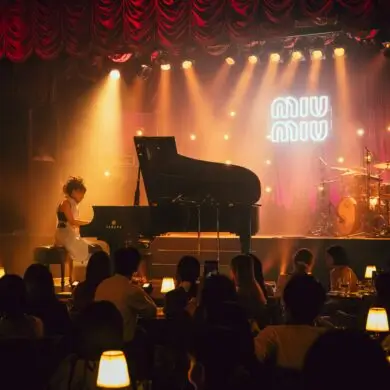
Warmly lit jazz club performance featuring a pianist seated at a grand piano onstage beneath glowing Miu Miu signage, with audience members gathered at candlelit tables in a vintage-inspired venue.
View this post on Instagram
imagine
The evening began inside Miu Miu’s reopened Ginza flagship, now redesigned with a softer and more intimate architectural language. The three-floor concept introduces a pale blue interior palette accented by solid oak surfaces, producing a space that feels simultaneously nostalgic, elegant, and distinctly residential. Unlike many haute boutiques that emphasize monumentality or spectacle, the store leans into warmth and hospitality, reinforcing the emotional sensible often associated with Miu Miu’s identity.
Importantly, the redesign also includes the brand’s first VIP salon in Japan, reflecting Miu Miu’s knowing of the local market’s appreciation for personalized retail experiences and discreet haute environments. Rather than functioning solely as a commercial space, the boutique increasingly behaves like a culture salon — a place where fashion, conversation, and atmosphere intersect.
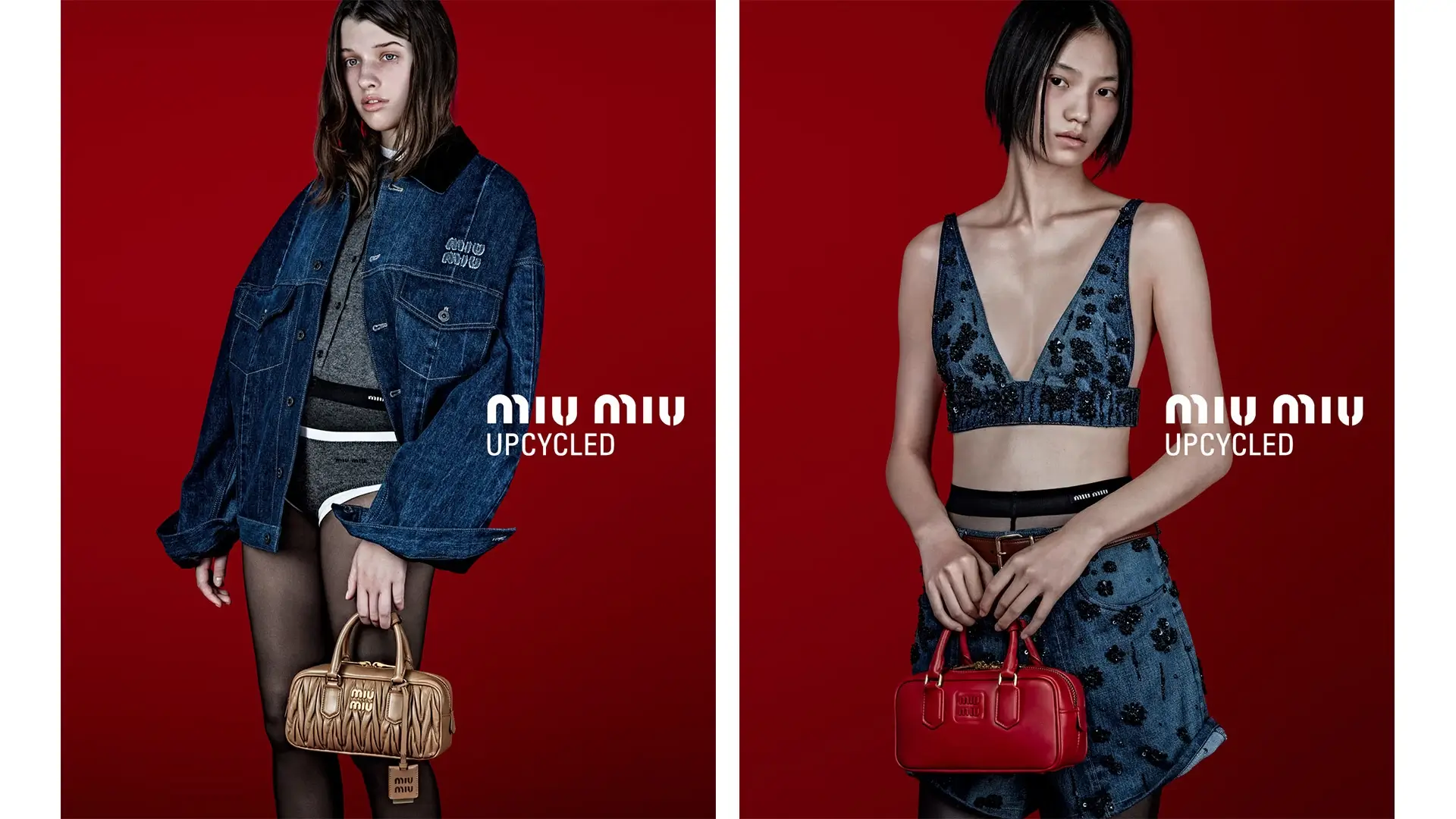
Guests arriving for the reopening preview encountered velvet seating arrangements, green hydrangeas, Laurent-Perrier champagne, Saicho sparkling tea, and jazz vinyl selections curated by DJ Nina Yamada. Within that environment, the 2026 Miu Miu Upcycled collection quietly debuted through pieces such as embellished cotton vests, miniskirts adorned with glass beadwork, and reconstructed garments that merged delicacy with subtle irregularity. The collection’s presentation reinforced the evening’s broader themes of reinterpretation and preservation — central ideas not only within upcycling, but within jazz itself.
listen
The Miu Miu Jazz Club drew heavily from Japan’s deep and often underappreciated jazz history. Since the 1920s, jazz has occupied a unique culture space within Japan, evolving through dance halls, postwar listening cafés, and kissaten culture into something distinct from its American origins. Jazz kissaten — intimate cafés centered around attentive vinyl listening — cultivated a form of musical appreciation based on concentration, atmosphere, silence, and emotional nuance.
Miu Miu’s decision to frame the reopening through that tradition was especially deliberate. The brand aligned itself not with spectacle-driven nightlife, but with listening culture itself. In doing so, the event embodied principles often associated with Japanese jazz interpretation: ma, the significance of pause and space, and shizen, a sense of naturalness and intuitive flow.
The emphasis on women’s contributions to jazz history also connected directly to Miu Miu’s broader identity. Women were positioned throughout the evening not merely as performers or guests, but as innovators shaping creative direction and emotional atmosphere. That framework mirrors Miuccia Prada’s long-standing approach to Miu Miu as a platform for multidimensional femininity — intellectual, high-spirited, emotionally layered, and resistant to rigid categorization.
flow
After the boutique reception concluded, attendees moved into one of the evening’s most atmospheric locations: Dance Hall Shinseiki, Japan’s last remaining Showa-era dance hall. Originally opened in 1948, the venue retains much of its postwar character through mirrored interiors, velvet curtains, vintage lighting, and preserved ballroom detailing. The transition from luxury boutique to historical dance hall fundamentally altered the energy of the night, shifting the experience from curated retail intimacy toward physical movement and sonic immersion.
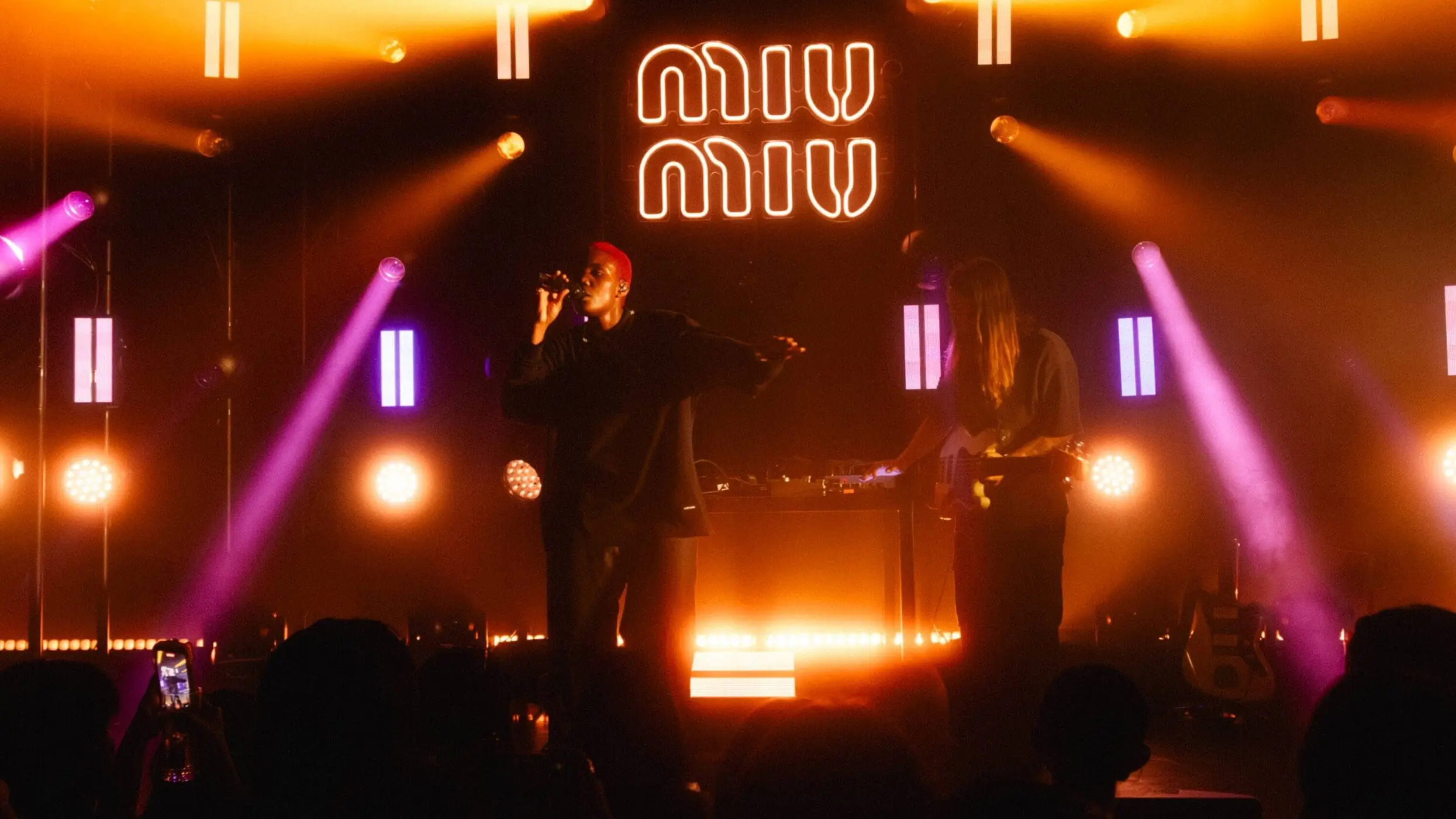
The performances themselves reflected that progression. Tokyo-based multi-instrumentalist Lily delivered a vinyl-driven set blending jazz, deep house, soul, and rare grooves, emphasizing the fluidity between archival music culture and contemporary nightlife. Trumpeter and producer Reiya Terakubo followed with a performance that merged jazz improvisation with hip-hop, house, funk, and R&B structures, representing a younger generation reshaping Japanese jazz language through hybrid experimentation.
The emotional centerpiece of the evening, however, emerged through Hiromi’s performance. Known globally for her virtuosic piano compositions and explosive stage presence, the Grammy-winning artist delivered a set that moved between delicacy and intensity with remarkable fluidity. Her show embodied precisely the kind of improvisational energy Miu Miu sought to channel through the event: disciplined yet spontaneous, intellectual yet emotionally immediate.
theme
The final chapter of the evening unfolded at Tokyo Kinema Club, a historic venue whose layered identity as former cinema, cabaret, and music hall deepened the event’s atmosphere further. Here, British singer-songwriter Arlo Parks delivered a more intimate and emotionally grounded performance, allowing the night to conclude through softness rather than climax.
Her voice moved gently through the historic interior while guests continued the celebration with champagne and yuzu cocktails into the early hours. The transition from the explosive energy of Hiromi to Parks’ introspective calm mirrored the broader pacing of the event itself — a carefully orchestrated movement between intensity, stillness, nostalgia, and reinvention.
straddle
The guest list reinforced the multidimensional positioning of the event. Miu Miu ambassador Jang Wonyoung of IVE drew considerable attention upon arrival, while Japanese artists and personalities including Asuka Saito, Chara, Elaiza Ikeda, Haru Kuroki, Hikari Mori, Non, and HARVEY of XG further emphasized the intersection between fashion, music, and contemporary Japanese cultural influence.
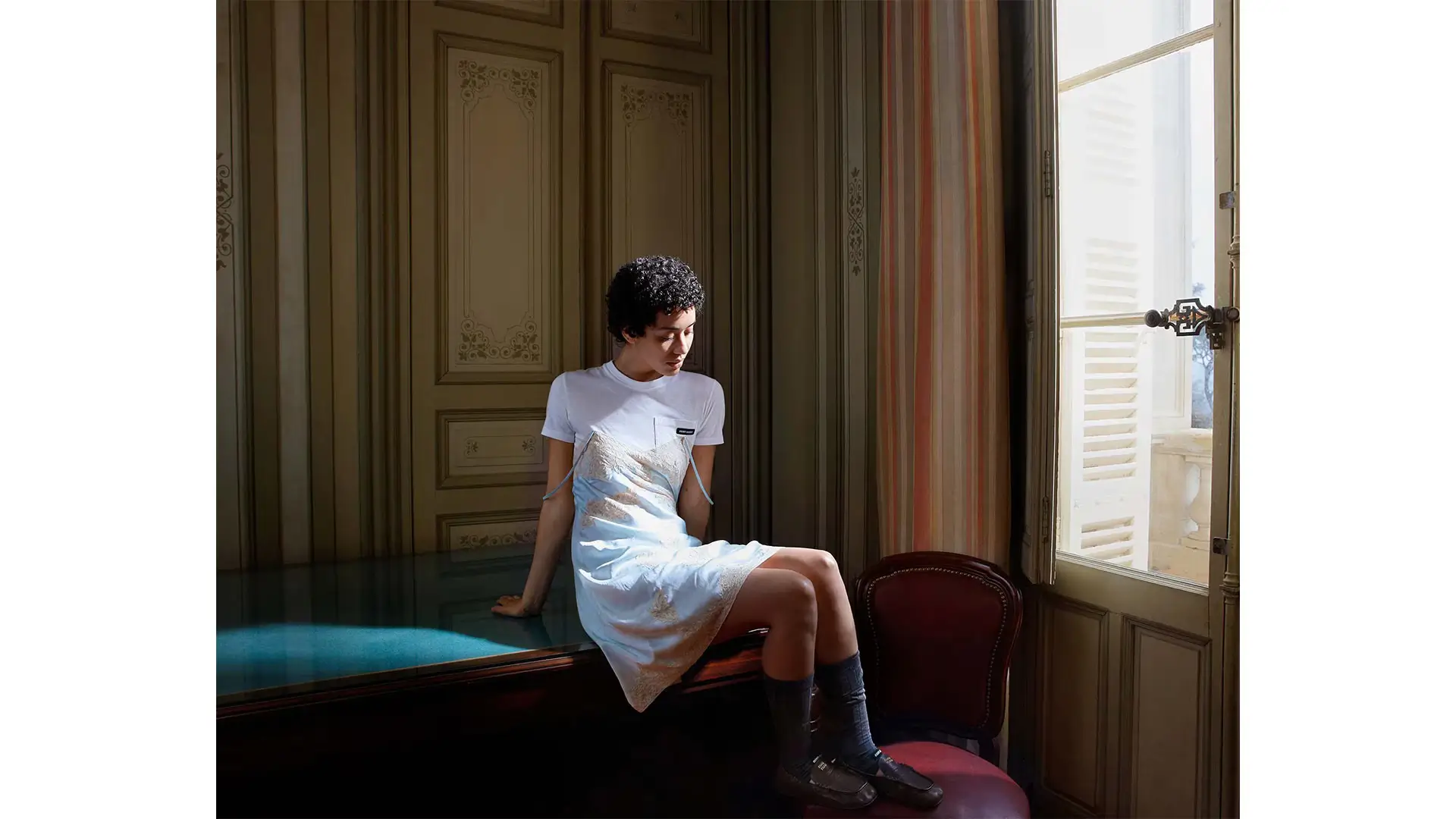
Stylistically, attendees reflected the brand’s ongoing embrace of eclectic femininity. Sequined skirts, crystal embellishments, apron dresses, handkerchief tops, and kitten-heel loafers collectively produced an aesthetic language that felt intentionally inconsistent in the best possible way — elegant without rigidity, nostalgic without costume, youthful without immaturity.
This ability to embrace contradiction remains one of Miu Miu’s defining strengths. The brand consistently allows femininity to exist in fragmented, evolving forms rather than fixed archetypes. The Jazz Club functioned as a live manifestation of that philosophy.
extent
The Tokyo activation also fits into Miu Miu’s broader strategy of positioning itself as a cultural institution rather than simply a fashion label. Over the past several years, initiatives including Women’s Tales, the Miu Miu Literary Club, and various interdisciplinary art and film collaborations have expanded the brand’s influence far beyond apparel.
Under Miuccia Prada’s direction, Miu Miu has become increasingly associated with culture programming that privileges conversation, intellect, and emotional nuance alongside commercial desirability. The Ginza reopening continued that trajectory by emphasizing local artistic history and genuine collaboration rather than superficial luxury branding exercises.
This distinction matters in an era where experiential retail has become nearly universal within luxury fashion. Many brands create immersive activations, but fewer succeed in embedding those experiences with authentic cultural context. Miu Miu’s focus on Japanese jazz traditions, women artists, and historical venues allowed the event to feel rooted rather than imported.
xp
The Miu Miu Jazz Club also highlights broader transformations occurring across luxury retail in 2026. Consumers increasingly expect fashion spaces to provide emotional and cultural engagement rather than transactional functionality alone. Flagship stores now operate as narrative environments where architecture, music, hospitality, performance, and identity merge into a unified brand ecosystem.
Miu Miu appears especially adept at navigating this evolution because its identity already exists between fashion and cultural commentary. The Ginza reopening did not abandon retail in favor of entertainment; instead, it expanded retail into something more atmospheric and emotionally resonant.
The Upcycled collection preview further reinforced that positioning by aligning sustainability conversations with craftsmanship and reinvention rather than moral messaging alone. Within the context of jazz, upcycling itself becomes symbolic — fragments of the past reorganized into new expression.
reason
Although the Miu Miu Jazz Club lasted only one evening, its impression extends well beyond the event itself. The reopening strengthened the brand’s relationship with Japanese audiences, amplified both emerging and established creative voices, and demonstrated how luxury fashion can engage local cultural histories meaningfully without diluting brand identity.
More importantly, the event reaffirmed something central to Miu Miu’s enduring appeal: its refusal to isolate fashion from the emotional and intellectual realities surrounding it. Music, architecture, memory, femininity, improvisation, hospitality, and design all coexisted fluidly throughout the evening.
In the mid of Tokyo’s Ginza district, Miu Miu transformed a flagship reopening into something far more ambitious — a temporary culture ecosystem built around listening, spontaneity, and shared atmosphere. Like jazz itself, the event thrived not through rigid structure, but through rhythm, tension, individuality, and unexpected harmony.
Related Articles
WACKO MARIA Brings Its Leopard Lining to the Big Leagues
Black nylon outside, leopard fur inside: WACKO MARIA’s first Major League Baseball collection reached Japan […]