
DRIFT AUDIO
Listen to this story
Choose a voice, then press play.
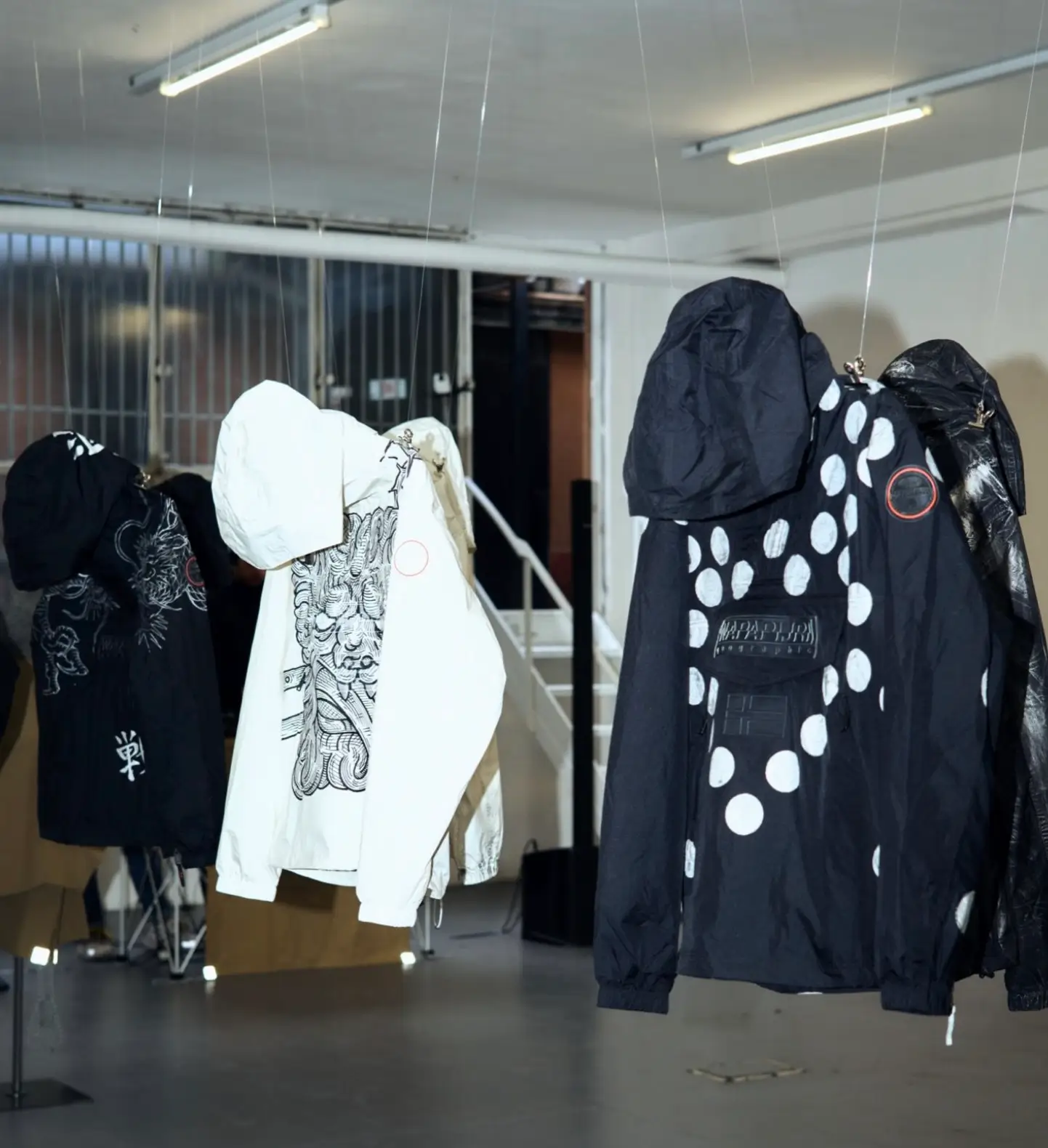
In the middle of Milan during Design Week 2026, where innovation pulses through every corner of the city, Napapijri and Studio E. Rancati joined forces to present a groundbreaking event that blurred the lines between fashion, art, and cinematic heritage. Titled “From Armour to Anorak: Between Protection and Imagination,” the evening at Spazio Fonte marked the launch of “ANORAK REFORGED”—a profound reinterpretation of two of Napapijri’s most iconic pieces: the Rainforest Anorak and The Raincape. These garments, long symbols of practical outdoor resilience, were elevated into sculptural works of art, inviting guests to explore the deeper symbolic power of protection.
The collide wasn’t merely a product launch; it was a know inquiry. What does it mean to be protected in an unpredictable world? How do objects—whether medieval armour, Hollywood props, or modern streetwear—become vessels for stories that transcend their utility? By partnering with the historic E. Rancati props workshop (founded in 1864), Napapijri wove its outdoor heritage into a richer tapestry of visual storytelling, where clothing becomes armour for imaginary heroes navigating both literal and metaphorical journeys.
View this post on Instagram
stir
Studio E. Rancati, a fifth-generation family business rooted in Milan’s theatrical and cinematic traditions, has been crafting props for over 160 years. Their workshop has supplied arms, armour, furniture, and artefacts for legendary productions including Gladiator, Braveheart, Game of Thrones, Pirates of the Caribbean, and collisions with artists like Madonna. The “Props Mastery” exhibition at Spazio Fonte—curated by Spazio Fonte and powered by Napapijri—brought these original pieces to life in a retrospective that celebrated prop-making as an invisible yet foundational language of storytelling.
Amid gleaming suits of armour, ornate weapons, and intricate set pieces, visitors encountered the reimagined Rainforest Anorak and Raincape. These weren’t standard retail samples. Transformed through artistic intervention—incorporating metallic accents, sculptural detailing, and narrative embellishments—they stood as contemporary protective artefacts. The Rainforest Anorak, first introduced in the 1990s and beloved for its kangaroo pocket, breathable yet weather-resistant construction, and versatile design, now carried echoes of ancient breastplates. The Raincape, with its flowing, enveloping form, evoked cloaks of mythical guardians.
This blend made perfect sense. Napapijri, since its founding in 1987, has embodied the spirit of the cultural adventurer—those who seek not just physical exploration but meaningful encounters with the world. The brand’s garments are designed for real journeys: rain-lashed mountains, urban explorations, and everything in between. By placing them alongside Rancati’s historic props, the exhibition highlighted a continuum: protection has always been both practical and symbolic, a shield against the elements and a canvas for identity.
flow
As guests arrived at Via dei Fontanili 13, Spazio Fonte revealed itself as far more than a venue—it was a portal. The industrial space, with its high ceilings and raw architecture, had been meticulously transformed into an immersive environment suspended between imagination and reality. Metallic surfaces reflected light in fragmented patterns, mimicking the sheen of armour and the iridescence of rain on technical fabrics. Evocative atmospheres—hazy lighting, strategic projections of epic landscapes, and subtle soundscapes—created a narrative thread of travel, protection, and transformation.
The DJ set by Pacome & Liana provided the sonic backbone. Their selections blended electronic pulses with organic rhythms, tribal undertones with futuristic synths, perfectly mirroring the event’s theme: the collision of ancient storytelling with contemporary innovation. Music filled the space like a living entity, guiding guests through different zones—armour displays, interactive storytelling corners, and the central altar featuring the reforged Anoraks.


One could wander from a suit of medieval plate armour, its articulated joints whispering tales of knights on crusade, to the modern Rainforest Anorak, its fabric engineered for breathability, water resistance, and durability. The juxtaposition invited reflection: today’s “heroes” might not slay dragons, but they navigate climate challenges, cultural shifts, and personal quests. Their armour? A well-designed jacket that protects while allowing freedom of movement and self-expression.
narr
The event’s curatorial vision extended beyond aesthetics into philosophy. Armour has historically been more than defense—it was status, identity, and narrative device. In cinema and theatre, a single prop can convey an entire character arc: the weight of a sword, the gleam of a helmet, the drape of a cape. Similarly, fashion, especially streetwear-infused outdoor gear, tells stories of resilience, community, and exploration.
Napapijri’s reinterpretations positioned the Rainforest Anorak and Raincape as “artefacts capable of telling new cultural adventures.” The Anorak, with its signature robust build and practical features, becomes a trusted companion for imaginary heroes—perhaps a cyberpunk explorer in a flooded metropolis or a modern nomad traversing digital and physical realms. The Raincape, more fluid and dramatic, suggests transformation: a garment that can envelop and shield, yet flow with the wearer’s motion, symbolizing adaptability.
This aligns with Napapijri’s broader ethos of “Culture Adventurers.” The brand has long championed those who go beyond physical distance to embrace learning, connection, and discovery. Limited editions, collaborations, and campaigns often highlight real-world journeys, from Mongol Rallies to artistic explorations. Here, the collaboration with Rancati elevated that narrative into the realm of myth-making.
Guests engaged with interactive elements: touchscreens displaying behind-the-scenes footage from Rancati’s workshop, VR experiences simulating journeys where view armour morphed into modern jackets, and storytelling sessions where designers and prop masters discussed the emotional weight of objects. Conversations flowed easily—fashion insiders, filmmakers, artists, and streetwear enthusiasts found common ground in the universal need for protection that doesn’t sacrifice style or story.
View this post on Instagram
innov
What makes the reforged pieces truly special is the marriage of high-tech functionality with handcrafted artistry. Napapijri’s Rainforest line has evolved over decades: Thermo-Fibre insulation, recycled materials, taped seams, adjustable hoods, and that iconic kangaroo pocket that doubles as storage and hand warmer. The reinterpretations preserved these elements while introducing artistic modifications—perhaps patina-like treatments evoking aged metal, embroidered motifs inspired by prop designs, or structural reinforcements that echo articulated armour plates.
Studio E. Rancati’s expertise shone through in the detailing. Their artisans, accustomed to creating items that must withstand the scrutiny of cameras and stages, brought precision and narrative depth. The result? Garments that function impeccably in the real world yet possess the aura of museum pieces or film props. They bridge streetwear’s accessibility and innovation’s cutting edge—waterproof yet breathable, durable yet expressive, practical yet in flow.
This approach reflects broader trends in contemporary design: the desire for objects with soul. In an era of fast fashion and digital detachment, consumers crave items imbued with history, craftsmanship, and meaning. By “reforging” its icons, Napapijri reaffirms its commitment to longevity and storytelling, turning everyday wear into cultural artefacts.
amb
As the night progressed under Pacome & Liana’s hypnotic sets, the space vibrated with energy. Metallic reflections danced across faces illuminated by wonder. Laughter mixed with thoughtful discussions. Attendees posed with the artworks, tried on limited pieces, and left with a renewed appreciation for the invisible threads connecting fashion to myth.
The event wasn’t just celebratory—it was generative. It sparked ideas for future collections: more crossovers between prop-making and garment design, expanded exhibitions, perhaps even wearable tech infused with narrative elements. For Napapijri, it reinforced its position as a brand that understands protection holistically—against weather, yes, but also against cultural homogenization, offering instead tools for personal and collective storytelling.
In the days following, social media buzzed with images of the metallic installations, the gleaming anoraks, and guests wrapped in the spirit of adventure. The Rainforest Anorak and Raincape, now reforged, stand as invitations: to explore boldly, protect wisely, and weave your own narrative into the fabric of culture.
clue
“ANORAK REFORGED” succeeded because it tapped into something primal. Humans have always sought protection—not just physical, but existential. We tell stories to make sense of chaos, craft objects to extend our capabilities, and adorn ourselves to signal who we are and what we value. Napapijri and Studio E. Rancati reminded us that the line between armour and anorak, between hero’s cloak and everyday cape, is thinner than we think.
As Milan Design Week 2026 faded into memory, the echoes of that evening lingered: the metallic shimmer, the rhythmic beats, the sense of possibility. In reimagining two iconic pieces, the collaboration didn’t just launch new interpretations—it invited us all to see our clothing, our journeys, and our stories anew. Between streetwear and high craft, protection and imagination, reality and myth, a new chapter in social adventure had begun.