DRIFT AUDIO
Listen to this story
Choose a voice, then press play.
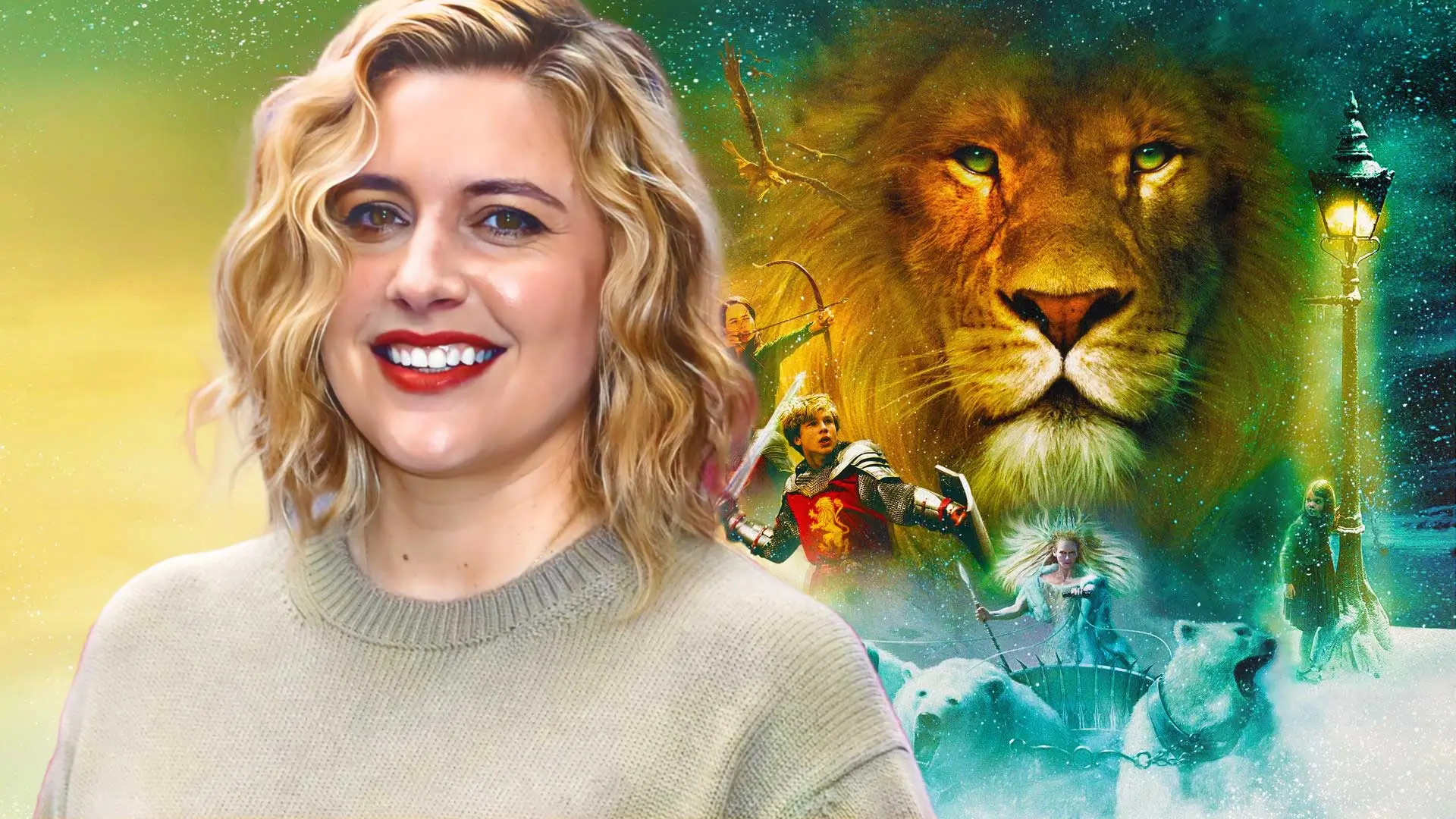
In a significant update announced on May 1, 2026, Netflix has shifted the release of Greta Gerwig’s adaptation of The Chronicles of Narnia—specifically Narnia: The Magician’s Nephew—into 2027. The film will now premiere in IMAX and wide theatrical release globally on February 12, 2027 (with sneak previews in IMAX starting February 10), followed by its Netflix streaming debut on April 2, 2027.
This marks a notable evolution from earlier plans targeting a Thanksgiving 2026 IMAX-exclusive run and Christmas streaming window. The expanded theatrical strategy and delay reflect Netflix’s growing commitment to event cinema, Gerwig’s influence as a blockbuster director post-Barbie, and a clear intention to position the film not as content, but as spectacle—something designed to be experienced, not just accessed.
stir
Netflix secured the rights to The Chronicles of Narnia in 2018 with ambitions spanning both film and series. The project gained decisive momentum in July 2023 when Greta Gerwig—fresh from the billion-dollar cultural imprint of Barbie—signed on to write and direct at least two films.
Unlike the earlier Walden Media/Disney trilogy (2005–2010), which began with The Lion, the Witch and the Wardrobe, Gerwig’s version starts with The Magician’s Nephew—the chronological origin story published in 1955. This decision is structural, not nostalgic. It reframes the narrative from inception: creation before conquest, myth before memory.
The story follows Digory Kirke and Polly Plummer as they move between worlds via enchanted rings, encountering Uncle Andrew, the Wood Between the Worlds, and ultimately witnessing Aslan sing Narnia into existence. It is less an adventure than a beginning—quietly philosophical, expansive in implication.
Gerwig has described her connection to the material with clarity and personal weight, recalling how the image of a lion creating a world through song reshaped her understanding of imagination itself. That motivation—intimate yet cosmic—sits at the core of this adaptation.
Narnia: The Magician’s Nephew will release in IMAX and wide globally in theaters on February 12, 2027, and on Netflix on April 2, 2027. Sneak previews only in IMAX will begin on February 10, 2027.
Written for the screen and directed by Greta Gerwig, the origin story for Narnia…
— Netflix (@netflix) May 1, 2026
flow
The shift to 2027 reflects both practical necessity and strategic recalibration. Principal photography wrapped in January 2026 after beginning in August 2025 at Shepperton Studios and across London. With a budget exceeding $200 million, the film demands time—time for visual effects, for world-building, for precision.
But more importantly, it signals intent.
Positioning the release in February avoids the compression of the holiday window and reframes the film as a standalone cultural moment rather than seasonal programming. The expansion from an IMAX-first rollout to a full global theatrical release reinforces this shift: the film is no longer being introduced—it is being staged.
Gerwig’s reported push for a substantial theatrical window suggests a filmmaker conscious of scale—not just visual, but experiential. The delay, then, becomes less about waiting and more about aligning the film with the conditions it requires to resonate fully.
people
The ensemble balances recognition with discovery:
- David McKenna as Digory Kirke
- Beatrice Campbell as Polly Plummer
- Emma Mackey as Jadis, the White Witch
- Carey Mulligan as Mabel Kirke
- Daniel Craig as Uncle Andrew
- Meryl Streep (likely voicing Aslan)
Supporting performances include Ciarán Hinds, Kobna Holdbrook-Smith, Denise Gough, and Susan Wokoma.
Behind the camera, the alignment is equally deliberate: cinematography by Seamus McGarvey, production design by James Chinlund, costumes by Jacqueline Durran, and VFX led by Paul Franklin. The intention is not excess, but immersion—practical detail enhanced by digital precision.
xp
Netflix’s historical model has leaned toward limited theatrical exposure. Here, that approach shifts.
The film moves from an initial IMAX footprint (approximately 1,000 screens) into a wide global release, acknowledging that fantasy—especially one rooted in creation myth—demands scale. The sound of Aslan’s voice, the stillness of the Wood Between the Worlds, the decay of Charn—these are not background details. They are environments meant to be inhabited collectively.
This hybrid model—IMAX previews, global theatrical run, then streaming—bridges two systems: cinema as event, streaming as permanence. It reframes Netflix not as a distributor of volume, but as a curator of moments.
culture
C.S. Lewis’s work has sold over 120 million copies globally. The Magician’s Nephew stands apart within that canon—not for its action, but for its ideas: creation, temptation, consequence.
For Gerwig, whose previous films navigate interiority and identity, this material offers a different scale without abandoning nuance. Expect a balance: myth rendered with emotional specificity, spectacle grounded in character.
Launching with the prequel also resets the franchise. It avoids repetition, allowing a new narrative arc to unfold—one that can expand into future adaptations while maintaining coherence from the beginning.
imply
This project signals a broader recalibration within Netflix’s strategy.
A $200M+ investment, a major theatrical rollout, and a director with proven cultural reach position Narnia not as an experiment, but as a statement. It competes directly with legacy studios in the fantasy space while redefining what a streaming-first company can produce and release.
For Gerwig, it extends her trajectory into franchise filmmaking without diluting authorship. For Netflix, it establishes a precedent: scale, when justified, belongs in theaters first.
sum
The delay to 2027, while initially perceived as distance, ultimately reinforces intention.
More time for refinement.
More space for anticipation.
More alignment between form and experience.
The film promises an origin story defined not by urgency, but by construction: London at the turn of the century, experiments that fracture reality, and a world brought into existence through sound.
In that sense, the motivation remains clear—unchanged beneath the logistical shifts:
to create something that feels discovered, not delivered.
For related casting context, read Drift’s earlier report on Mikey Madison, Greta Gerwig, and Narnia.
n
From the DRIFT archive: Dunkin’ Revisits the Munchkins’ Origin Story in a Tender, Holiday-Bright Animated Tale · The Quiet Mystery Behind Spotify’s Wrapped Cutoff Date
Related Articles

Master Chief Reports to Call of Duty Now: Inside Xbox’s Second Reset Wave
Twenty-five years after Halo launched the original Xbox, the next mainline game belongs to Activision. […]