DRIFT AUDIO
Listen to this story
Choose a voice, then press play.
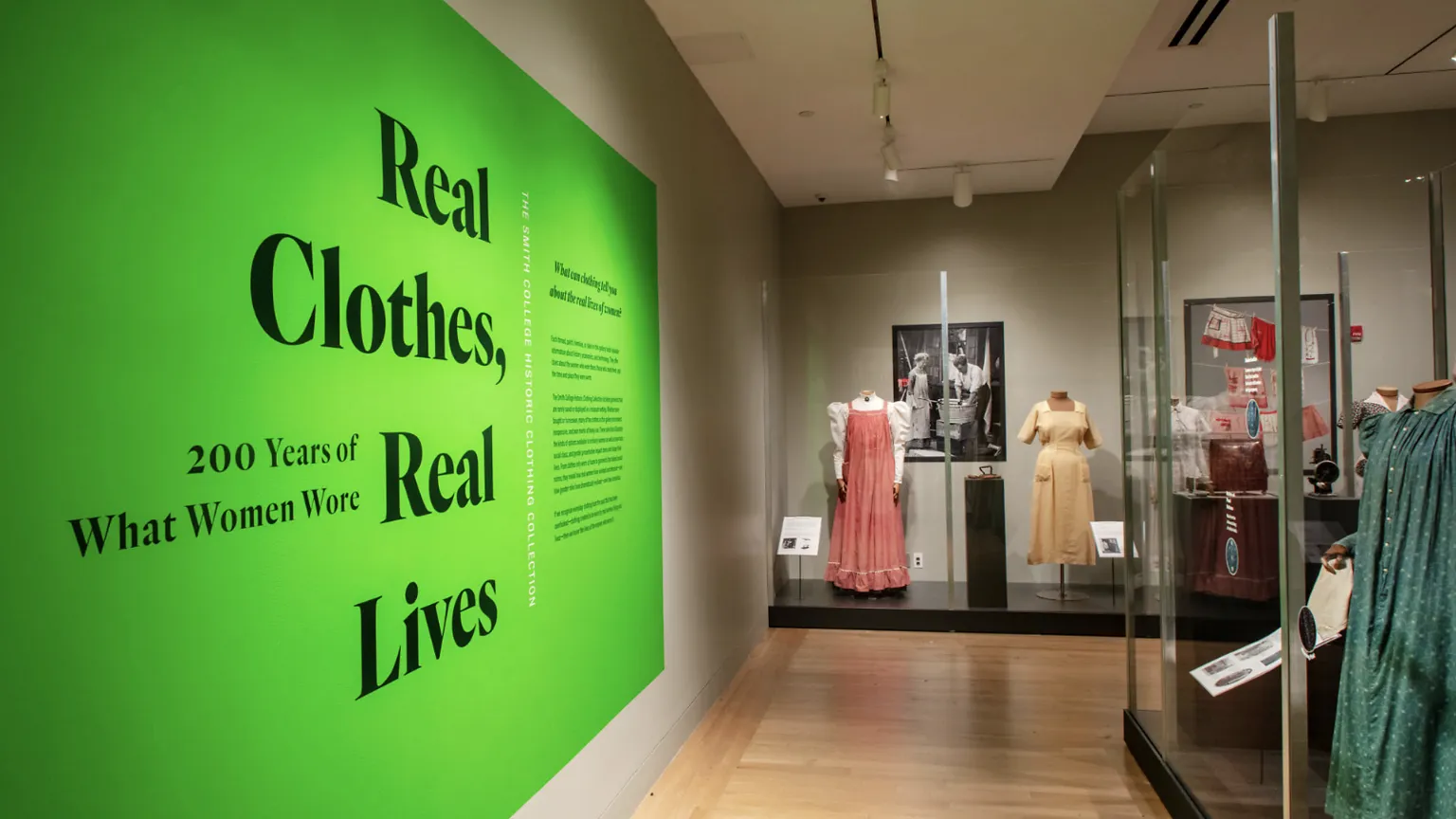
The New-York Historical Society’s new exhibit, “Real Clothes, Real Lives: 200 Years of What Women Wore,” is a refreshing departure from traditional fashion exhibitions that often highlight extravagant gowns and haute couture. Instead, this exhibit focuses on the everyday attire of American women, showcasing garments that reflect personal and societal histories. Spanning from the 19th century to today, it features pieces like a Depression-era housedress, a 1950s waitress uniform, and even a psychedelic mini dress from the 1960s. These pieces are drawn from the Smith College Historic Clothing Collection, which was curated by costume design professor Kiki Smith and includes over 4,000 items.
Organized thematically, the exhibit is divided into sections that explore various contexts in which women have worn these clothes—such as workwear, domestic attire, and garments that pushed societal boundaries. For example, the “Rebelwear” section highlights clothing that challenged norms, featuring items like a 1970s micro-mini and a bold Diane von Furstenberg wrap dress that signaled the shift toward modern, liberated fashion choices.
The show delves deeply into how clothes can serve as a medium for social commentary and personal expression, even when they appear ordinary at first glance. Through the thoughtful curation of Anna Danziger Halperin and Keren Ben-Horin, the exhibit uses these garments to tell stories of resilience, adaptation, and resistance. It features artifacts such as a McDonald’s maternity uniform from the 1980s, demonstrating how work uniforms were modified to accommodate pregnancy, and overalls that evolved from functional housework attire to chic, vacation-ready garments.
The exhibit challenges the notion that fashion is only about luxury or aesthetics, highlighting how everyday clothing serves as a reflection of individual experiences and broader cultural shifts. Visitors are invited to contemplate their own clothing choices and consider how their attire speaks to their roles in society. The show ultimately serves as a reminder that “we are all historical actors in our own time,” as Halperin notes, underscoring the relevance of these seemingly ordinary garments to the narrative of women’s history.
Related Articles

WACKO MARIA Brings Its Leopard Lining to the Big Leagues
Black nylon outside, leopard fur inside: WACKO MARIA’s first Major League Baseball collection reached Japan […]