DRIFT AUDIO
Listen to this story
Choose a voice, then press play.

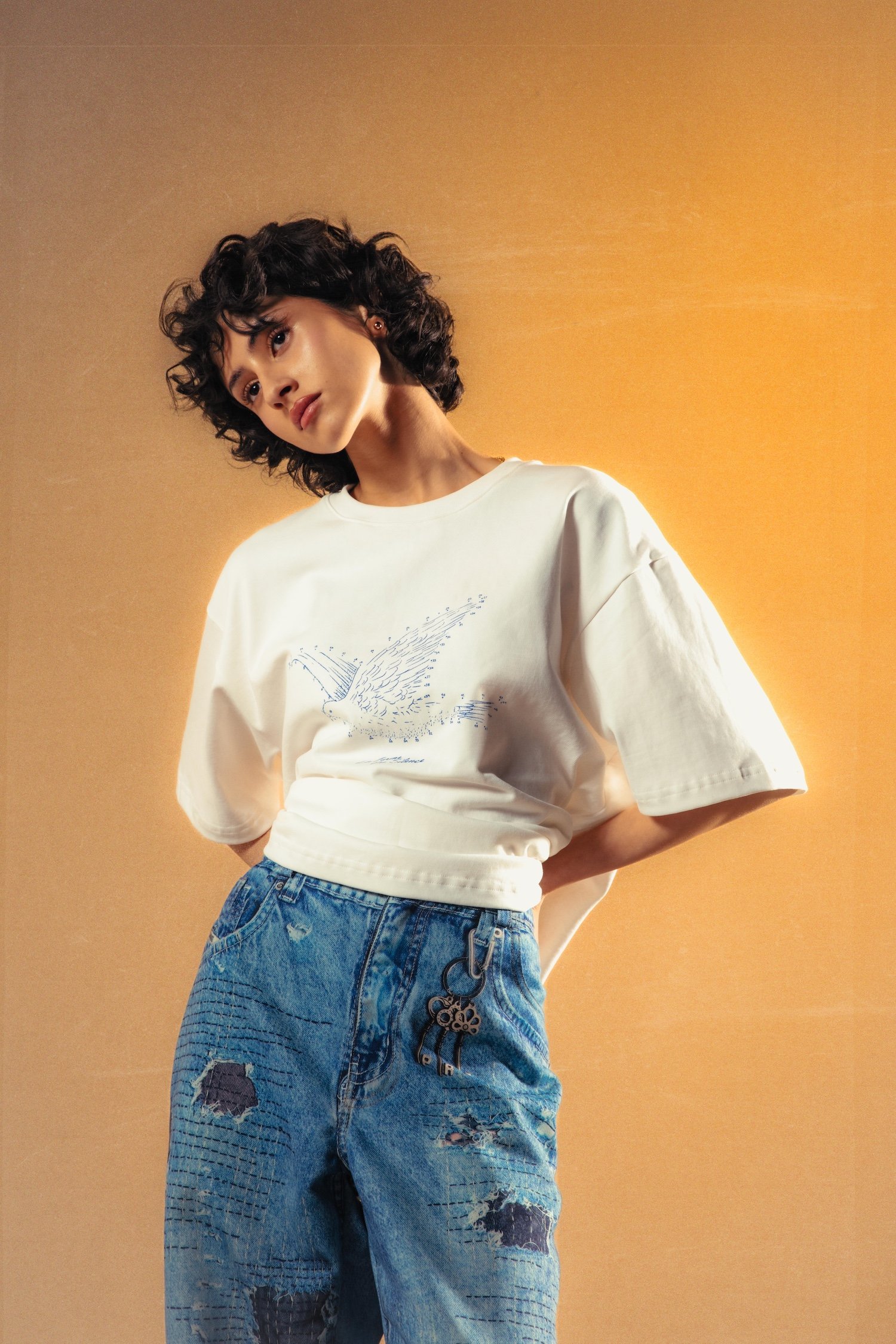
In a world perpetually hungry for newness, Pas Une Marque has consistently distinguished itself through a rare quality: restraint. Since its founding, the label has woven its narrative not through flashy gimmicks or disposable trends, but through a carefully crafted lexicon of materials, silhouettes, and stories. For Spring/Summer 2026, that story advances in daring yet elegant strides with “Point of No Return” — a collection that signals both a culmination and a new genesis for the brand.
At first glance, the title alone suggests finality, a crossing over, an irreversible departure from known territory. Yet in the context of Pas Une Marque, it’s not so much an abandonment as a transcendence — a deliberate shedding of past hesitations in favor of confident evolution. The result is a series of garments that reflect a brand stepping firmly into its future while paying careful homage to its roots.
A Historical Fabric of Storytelling
The DNA of Pas Une Marque has always been rooted in narrative. The label’s founder and creative director launched the brand on the premise that clothing could be more than mere adornment — it could serve as a conduit for deeply personal and cultural stories. Over the years, this ethos has manifested in collections that draw from Andean folklore, post-colonial Latin American art, and intimate autobiographical episodes.
One constant has been the label’s reverence for Peruvian textile traditions. For centuries, Peru has been home to some of the most sophisticated weaving cultures in the world. The Inca civilization, and even pre-Incan societies like the Paracas and Nazca, regarded textiles not only as clothing but as spiritual and social codifiers. In the modern era, artisans continue to weave by hand using techniques passed down through generations — a practice that Pas Une Marque has celebrated and preserved.
In “Point of No Return,” these historical threads are re-examined and recontextualized. Handwoven Peruvian alpaca makes a triumphant return, but this season it appears sleeker, cut into sharply tailored outerwear and soft, fluid knitwear. Rather than serving purely as rustic signifiers, these textiles are imbued with urban sophistication, showing the brand’s maturing grasp on global luxury language without sacrificing its soul.
A Contemporary Craft: Melding Art with Athletics
Perhaps the most striking development in this collection is the introduction of sportswear silhouettes. Tailored tracksuits and statement jerseys might seem an unexpected departure for a label so deeply invested in handcraft, but this juxtaposition is precisely where the genius of the collection lies.
Pas Une Marque’s expansion into sportswear is not about tapping into fleeting “athleisure” trends; rather, it’s a philosophical inquiry into motion, identity, and contemporary life. Our era is defined by constant movement — both literal and metaphorical. Cities pulse with kinetic energy; individuals oscillate between physical and digital spaces at dizzying speeds. By reinterpreting athletic garments through artisanal techniques, the label invites us to examine the cultural interplay between performance, leisure, and self-expression.
Key to this new vocabulary is the collaboration with Peruvian painter Lennin Vásquez, a longtime creative partner. His surrealist paintings, known for blending mythic Andean imagery with dreamlike abstractions, now find life on oversized jerseys and panelled jackets. The artworks depict human-animal hybrids, celestial motifs, and distorted landscapes, evoking a spiritual, almost shamanic vision. The prints do not merely decorate; they activate the garments, transforming each piece into a wearable canvas of postmodern mysticism.
The Tailoring Evolution: Controlled Fluidity
Beyond sportswear, “Point of No Return” showcases a striking evolution in tailoring. The brand’s earlier forays into structured garments were minimal, often overshadowed by looser, draped silhouettes. This season, however, tailoring takes center stage, yet it remains unmistakably Pas Une Marque: fluid, airy, and imbued with a quiet poetry.
Double-breasted blazers are softened with relaxed shoulders and exaggerated lapels. Trousers, cut from crisp yet lightweight alpaca blends, feature asymmetrical pleats and flowing lines that suggest both ease and precision. There is an almost architectural rigor to these pieces, balanced by unexpected gestures — embroidered panels, raw hems, and hand-painted linings.
These choices reflect a nuanced understanding of modern masculinity and femininity. Gender fluidity is not treated as a gimmick but as an organic outcome of the brand’s dedication to universality and human stories. In this way, tailoring becomes more than a sartorial category; it becomes a vessel for collective and individual identity.
Material Alchemy: The Heartbeat of the Collection
In true Pas Une Marque fashion, materials are never simply raw resources; they are repositories of meaning. The brand’s use of Peruvian alpaca, high-grade silk, and organically dyed cotton continues its legacy of sustainable luxury.
This season, the design team experimented with new dyeing techniques derived from natural Andean pigments, producing colors that appear simultaneously vibrant and aged — deep sunset oranges, oceanic blues, and earthy neutrals. These hues mirror the shifting landscapes of Peru, from coastal deserts to high-altitude lakes, infusing each garment with a geographic intimacy.
Another highlight is the refined embroidery work, which references traditional Andean iconography but subverts it through abstract forms and unexpected placements. Rather than ornamental additions, these embroideries function as narrative disruptions, inviting closer inspection and interaction.
The Concept of Irreversibility: Fashion’s Existential Question
The title “Point of No Return” carries an inherent tension that resonates deeply within contemporary fashion discourse. The industry at large stands at a precipice: between hyper-commercialization and sustainability, between digital acceleration and artisanal slowdown.
Pas Une Marque’s collection acts as a philosophical meditation on this crossroads. By proposing pieces that are deeply crafted yet undeniably modern, the brand questions what it means to move forward while remaining anchored to heritage. Can fashion ever truly escape its past? Or must it continually loop back, reinterpreting ancestral codes in perpetuity?
Through the lens of “Point of No Return,” the brand suggests that progress and preservation are not mutually exclusive but intertwined. The very act of creating a new collection becomes a ritual of both departure and return, echoing broader existential inquiries about time, identity, and artistic legacy.
A New Vocabulary for Haute
Luxury in the 2020s has been increasingly redefined by values of authenticity, sustainability, and narrative richness. Consumers now demand more than surface-level aesthetics; they seek connection, cultural depth, and ethical integrity. Pas Une Marque has always been ahead of this curve, and with SS26, it solidifies its status as a vanguard of meaningful luxury.
This collection’s success lies not merely in its individual garments but in its holistic vision. Every stitch, print, and silhouette contributes to a cohesive narrative arc — an arc that transcends seasons and trends to tap into something elemental and enduring. In an age obsessed with speed, Pas Une Marque dares to move deliberately, to embrace slowness as a radical act of creativity and care.
Culture
In recent years, there has been a growing appreciation for Latin American voices in global fashion, from Colombian artisanal labels to Mexican contemporary designers. Pas Une Marque occupies a unique position within this movement, bridging Andean tradition with international modernity.
The inclusion of Lennin Vásquez’s artwork highlights this global dialogue, positioning Peruvian surrealism alongside the brand’s textile narratives. This synergy creates a multi-layered cultural resonance that invites both global audiences and local communities to engage in deeper conversations about identity, migration, and artistic hybridity.
A Collection as a Manifesto
Ultimately, “Point of No Return” reads less as a mere seasonal offering and more as a manifesto. It articulates the brand’s commitment to pushing beyond aesthetic comfort zones, to confronting and embracing irreversible changes — whether they be material, conceptual, or emotional.
As the models walked the runway wearing oversized jerseys adorned with phantasmagoric paintings, tailored blazers cut from handwoven alpaca, and flowing trousers that blurred gender lines, the message was unmistakable: the future of fashion is a return to storytelling, to craft, to soul.
The Spirit of Irrevocable Motion
Pas Une Marque’s Spring/Summer 2026 collection is more than an aesthetic exercise; it is a profound exploration of movement, culture, and time. By seamlessly integrating sportswear with traditional handcraft, by collaborating with visionary artists, and by reaffirming its commitment to ethical luxury, the brand stakes its claim as a leader in thoughtful, story-driven design.
In crossing this “Point of No Return,” Pas Une Marque invites all of us — designers, wearers, and observers alike — to contemplate what it truly means to move forward without losing sight of where we came from. It is a call to embrace the unknown with grace and courage, to wear our stories proudly on our sleeves, and to step into the future with both feet firmly planted in the earth’s rich cultural soil.
Looking Ahead
If “Point of No Return” is indeed a threshold moment for Pas Une Marque, it signals a thrilling trajectory ahead. One imagines future explorations into even more radical fusions of craft and technology, deeper collaborations with global artists, and continued expansion into unexpected silhouettes and materials.
In a world where many brands are content to chase novelty, Pas Une Marque reminds us that true innovation lies in looking inward — in excavating the past to illuminate the future. The brand has not merely crossed a point of no return; it has declared that there is no turning back from integrity, from imagination, from meaning.
Related Articles
Eric Haze Stitches a Nineties Friend Into TOKYO Capsule
Five pieces carry Eric Haze's embroidered tagging for TOKYO No.1 SOUL SET, sold online and in Osaka around the band's Oct 25 BAYCREW'S FESTIVAL set.