DRIFT AUDIO
Listen to this story
Choose a voice, then press play.
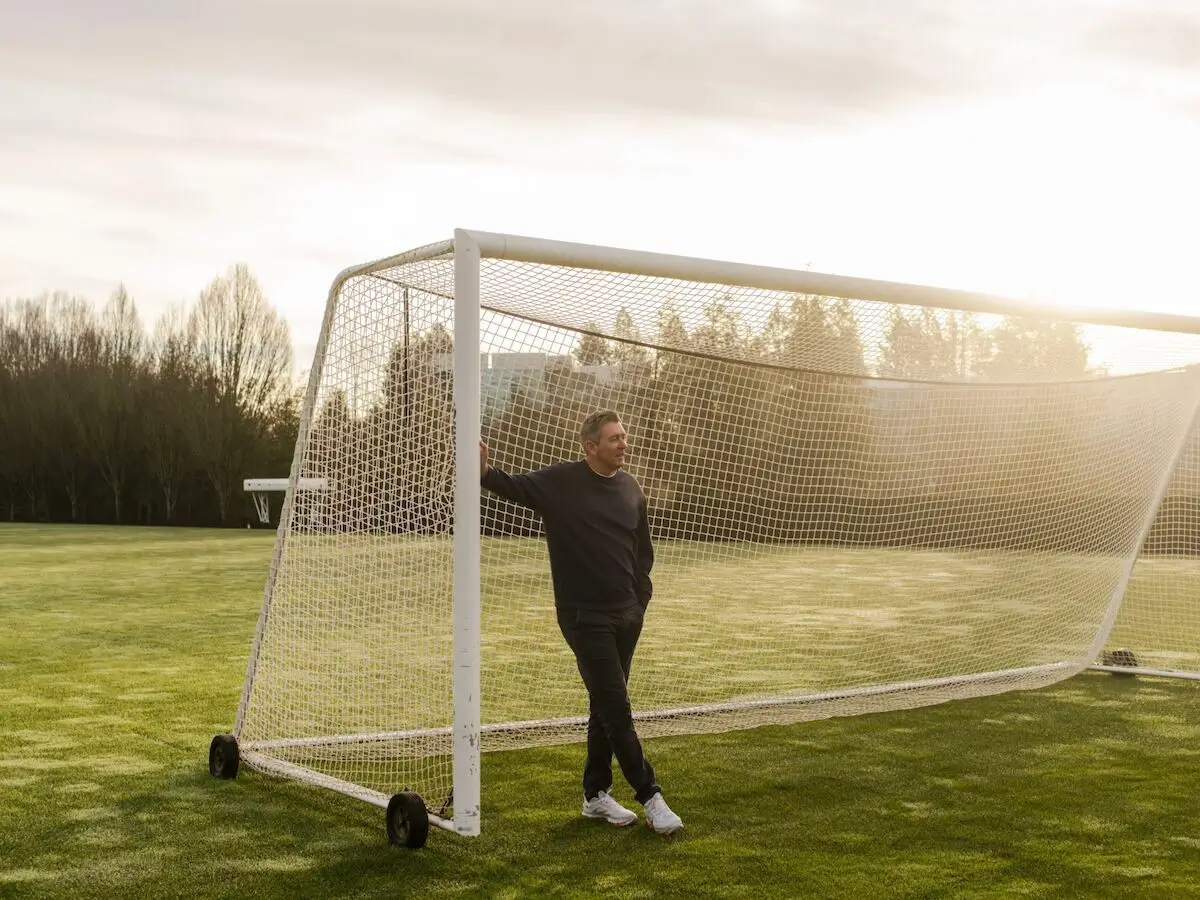
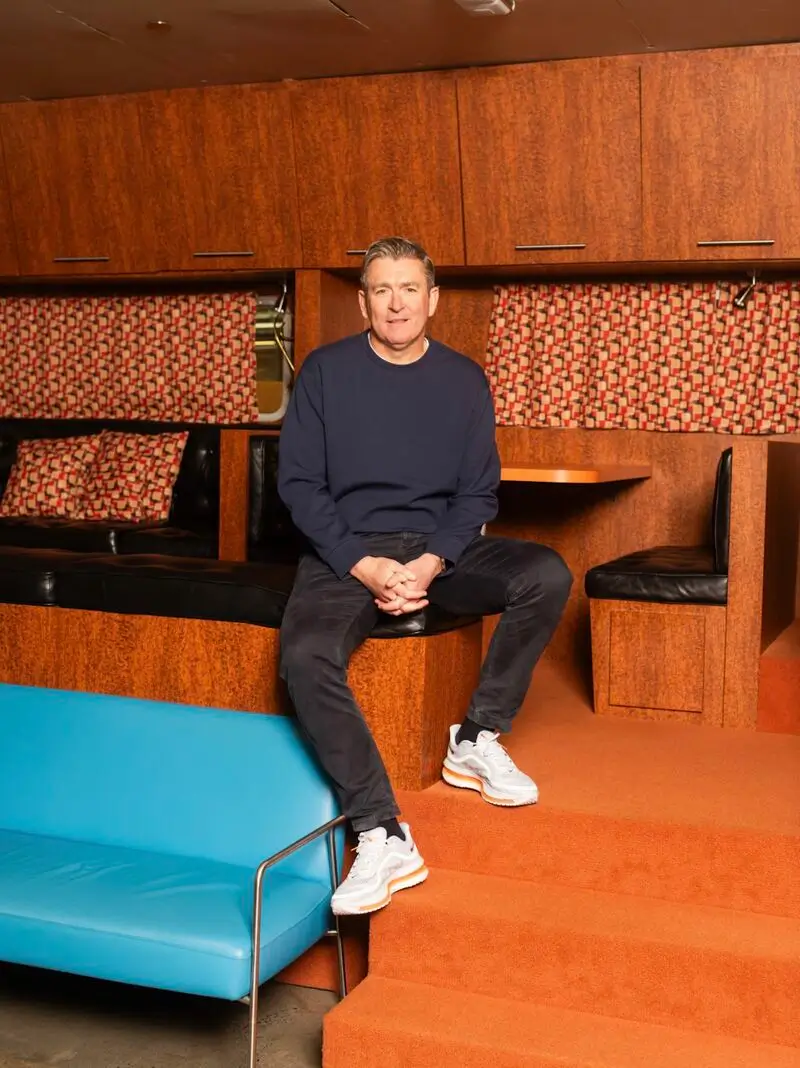
Phil McCartney’s story begins not in the gleaming corridors of Nike’s world headquarters in Beaverton, Oregon, but on the rain-slicked streets and council estates of Newcastle upon Tyne, a gritty industrial city in northern England. It’s a place where football (soccer) isn’t just a sport—it’s a religion, a potential escape route from working-class life, and often the only dream within reach for many kids. McCartney, like so many boys his age in the 1980s and early 1990s, chased that dream on muddy pitches. But fate, a pair of hand-me-down shoes, and an unyielding passion for sport would steer him toward a different path—one that would eventually place him at the helm of one of the world’s most iconic brands.
Born into a modest family—his father installed drywall, his mother worked in youth community building—McCartney grew up in an environment where opportunities felt limited. Most kids left school at 16 to start earning a wage. College seemed like something for other people. The United States? It might as well have been on another planet. Yet sport offered a window to something bigger. “Like everyone else he knew growing up, McCartney wanted to be [a] footballer,” notes a recent Nike Magazine profile. Football was the lifeblood of Newcastle, one of the clearest paths out of the working-class town.
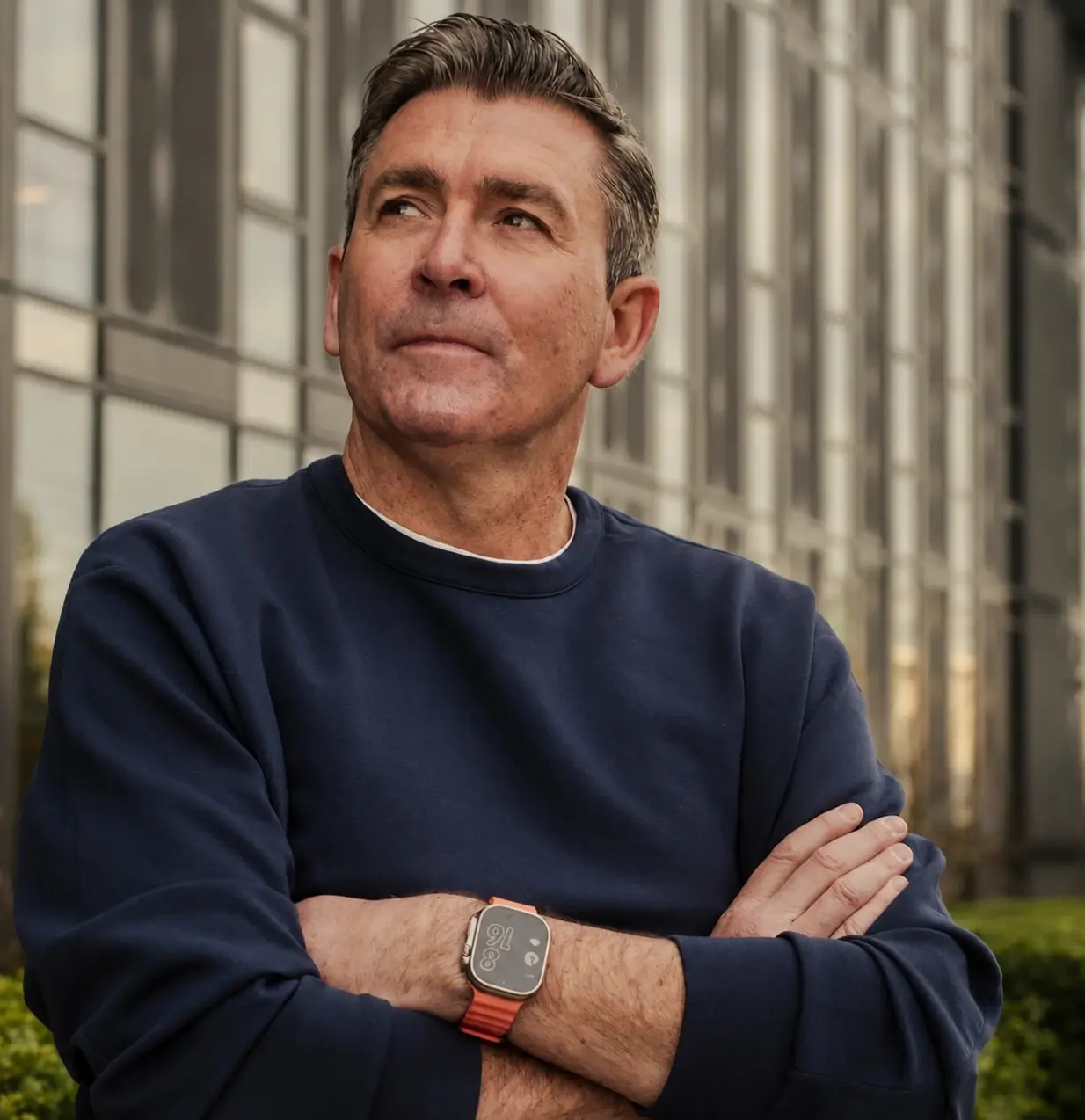
His early attempts at football were uninspiring. After a few lackluster games, his dad suggested he try something else. This moment became McCartney’s first lesson in ruthless prioritization: walking away from an “okay” idea in favor of a potentially better one. He joined a local running club organized by parents to keep kids out of trouble. The club ran on a shoestring budget with a simple rule—once you outgrew your trainers, you passed them down.
That’s how, at age 11, Phil McCartney received his first pair of Nikes: bright orange-red shoes with a vivid yellow Swoosh. He had no idea what Nike was, didn’t know it was an American company, and had certainly never heard of Oregon. But he knew exactly how those shoes made him feel—invincible, strong, fast, capable. He loved them so much he slept in them. The first race he won—a 1,500-meter on the track—was in those Nikes. To this day, he keeps a similar pair of Nike Flame spikes in his office as a tangible reminder of where it all began.
stir
Running opened doors McCartney never imagined. Races took him beyond his immediate neighborhood, exposing him to different parts of the country and different kinds of people. “With sport, the world gets bigger and bigger,” he later reflected. He developed into a serious athlete, competing in track and field while nurturing a quiet obsession with shoes. As a teen, he doodled shoe designs in his notebooks and worked in retail to help support his family, gaining early experience in the world of footwear.
His big break came when he applied for a job with Nike in the UK. He started as an EKIN—Nike spelled backwards. The role is legendary within the company: EKINs are the brand’s eyes, ears, and evangelists in the field. They must know the product line inside out, educate retailers and athletes, and embody the “Just Do It” spirit. For a working-class kid from Newcastle, landing this position was a dream come true.
“I started in the UK in sales and worked as the rep on JD Sports Fashion,” McCartney recalled in a 2016 interview. “I then went to Holland to work on product, and did a few jobs there before moving to the US where I worked in the football category, before moving [to] running.”
His career trajectory reflects Nike’s global footprint. From the UK to Amsterdam and eventually to Beaverton, McCartney climbed through roles in product development, design, and merchandising across multiple sports and Nike Sportswear. He served as Global Running Product Director, where his passion for the sport and deep athlete empathy shone through. By 2016, he had risen to Vice President and General Manager of Nike Footwear, a position he held while overseeing significant growth in the category.
flow
Over 27 years at Nike (as of 2025), McCartney has touched nearly every aspect of product creation. His diverse experiences across geographies gave him a unique perspective: he understands not just the science of footwear but the culture nuances that make products resonate in different markets. He’s worked on everything from football boots to running innovations, always with an athlete-first mindset.
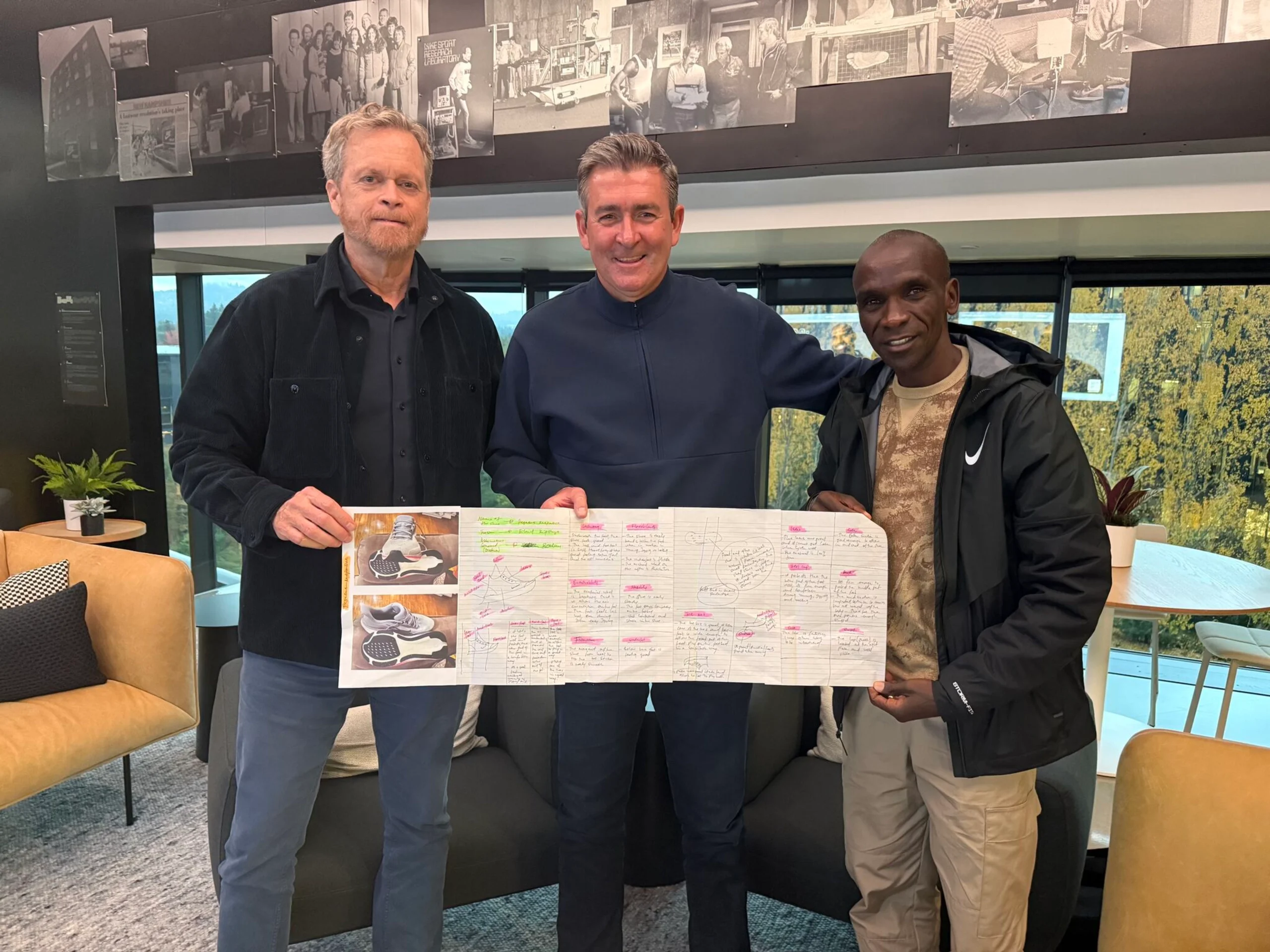
One of his notable contributions came in running. Projects like the Nike LunarEpic highlighted his focus on innovative cushioning and personalization. He has been instrumental in initiatives that bridge show data with design, ensuring products don’t just look good but genuinely make athletes better. His friendship with marathon legend Eliud Kipchoge exemplifies this. The two have known each other for over a decade, often discussing innovation, training, family, and the future of the sport—frequently while out on a run together. Kipchoge values McCartney’s perspective as a former athlete turned decision-maker.
In May/June 2025, McCartney was promoted to Executive Vice President, Chief Innovation, Design & Product Officer. In this role, he oversees innovation, design, and product creation for Nike, Jordan, and Converse. The promotion came amid Nike’s efforts to sharpen its focus, accelerate growth, and reclaim its innovative edge.
a know
McCartney leads with a deceptively simple idea: bet on athletes. “The biggest thing in innovation is to take a chance with the athletes and whatever ideas they might have,” he says. “The breakthroughs follow from there.”
This know draws from two pillars of Nike’s heritage. From co-founder Bill Bowerman comes the core mandate to make athletes better through relentless experimentation. From Kobe Bryant, who famously toured Nike’s campus asking, “Are you creating that epic s—?”, comes irreverence and uncompromising excellence. McCartney combines them into a North Star: Is it epic? Does it make athletes better? If not, don’t do it.
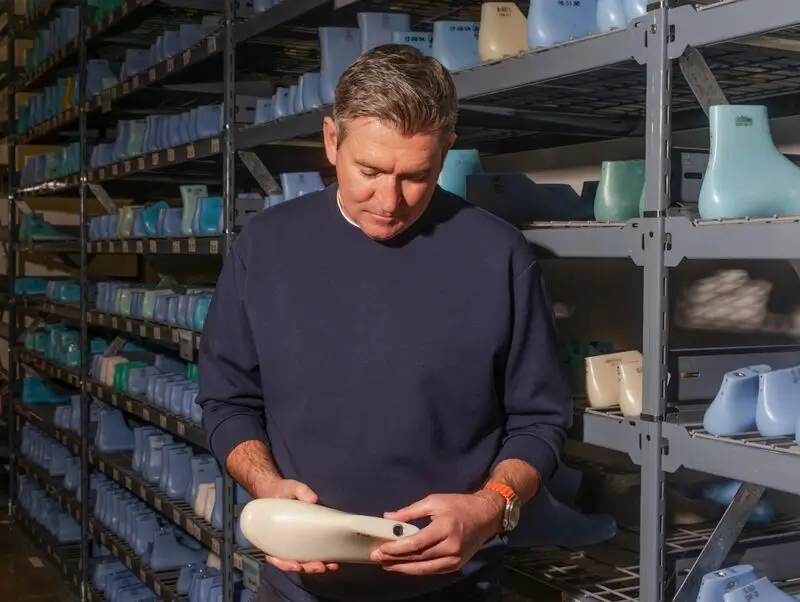
Under his leadership, Nike has reorganized its innovation efforts into “IDP”—Innovation, Design, Product—emphasizing that true creation starts with fresh ideas, flows into design, and results in breakthrough products. He’s pushed for a “Sport Offense” structure, organizing teams by sport to serve athletes more effectively. He advocates going “grassroots again,” operating hyperlocal models to anticipate needs, and fostering real-time prototyping in labs like the Bowerman Footwear Lab.
McCartney is known for building empowered teams. He credits mentors like Vincent Coates for teaching that great leaders create environments where people thrive. Colleagues describe him as someone who brings levity (including one memorable Elvis costume karaoke moment) while demanding competitiveness. “I’d walk through a brick wall for Phil,” says Coates. McCartney emphasizes authenticity: “I want our people of all backgrounds to feel comfortable here. It’s hard to be creative if you’re trying to be someone else.”
McCartney has spoken about imposter syndrome and the importance of helping colleagues feel comfortable being themselves. Nike’s profile also describes his visits home to speak with young people about the opportunities sport can open. These details come from Jazmine Hughes’s Nike Magazine profile, rather than a separate DRIFT interview.
imply
McCartney’s journey mirrors Nike’s own evolution—from humble beginnings (Phil Knight selling shoes out of a car) to a global powerhouse. His emphasis on speed-to-market, factory partnerships (he’s built 20-year relationships in Asia), and athlete co-creation positions Nike to tackle challenges like personalization, sustainability, and performance in emerging sports and markets, including India and beyond.
He’s excited about events like the 2028 LA Olympics, seeing them as catalysts for innovation. His leadership comes at a pivotal time as Nike reinvests in its product engine amid intense competition.
This summer, time to go off script. pic.twitter.com/6WNTga0T8U
— Nike (@Nike) May 21, 2026
look
Today, when Phil McCartney walks the Nike campus—through the Serena Williams Building, the LeBron James Innovation Center, or the Bowerman Lab—he carries Newcastle with him. Those hand-me-down Flames in his office aren’t just memorabilia; they’re a compass. They remind him why he does this work: to create products that make kids feel invincible, that push human potential, that spark joy and performance.
From sleeping in second-hand Nikes in a working-class English city to leading the charge on what “epic” means for one of the planet’s most recognized brands, Phil McCartney’s story is a testament to the power of sport, persistence, and betting on ideas that come from athletes themselves. It’s a narrative that embodies Nike’s ethos: Just Do It. And in doing so, he’s helping write the next chapter for millions of athletes worldwide who, like him once, dream bigger because of what’s on their feet.
From the DRIFT archive: No Me Quiero Ir De Aquí — The Story of Bad Bunny and FRSH Company’s Puerto Rican Streetwear Moment · Timberland x Spike Lee: “Advice of an Icon” and the Enduring Story of the Yellow Boot
Source and correction note — October 7, 2026: This article draws on Jazmine Hughes’s Nike Magazine profile and Nike’s executive biography. An unsupported education claim has been removed, and narrative wording previously presented as a direct quotation has been corrected.
Related Articles
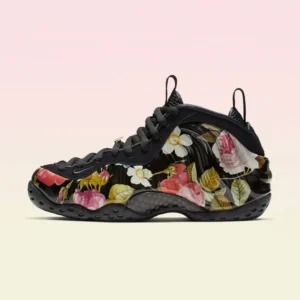
Shell, Floral Print, Gold Lace Lock
Air Foamposite One Floral/Black. AA3963-002. 11 December 2026. $240. Black nubuck eyestay, mesh tongue, metallic gold Swoosh dubrae.