DRIFT AUDIO
Listen to this story
Choose a voice, then press play.
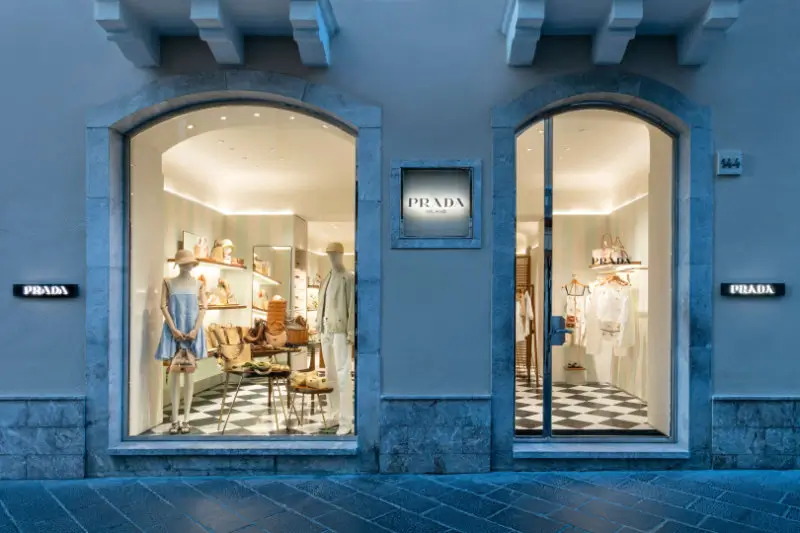
In the sun-drenched hills of Sicily, where ancient Greek theatres overlook the glittering Ionian Sea and Mount Etna stands sentinel in the distance, Prada has unveiled a new chapter in its storied legacy. Nestled on Corso Umberto I, in the vibrant center of Taormina’s historic centre, the maison’s latest boutique spans approximately 300 square metres across two elegant levels. This opening marks not merely another retail outpost but a thoughtful dialogue between Prada’s modernist roots and the timeless allure of one of Italy’s most enchanting destinations.
Taormina, often called the Pearl of the Ionian Sea, has long captivated travelers with its layered history—from Greek foundations in the 4th century BC to Roman, Byzantine, Arab, Norman, and Spanish influences. Its Teatro Antico, with panoramic views stretching to Calabria, has hosted everyone from Goethe to Hollywood icons. In recent years, boosted by cultural phenomena and its perennial charm as a refined escape, Taormina has solidified its status as a premier luxury destination. The arrival of Prada here feels predestined: a brand synonymous with refined Italian elegance meeting a town that embodies la dolce vita amid dramatic natural beauty.
View this post on Instagram
stir
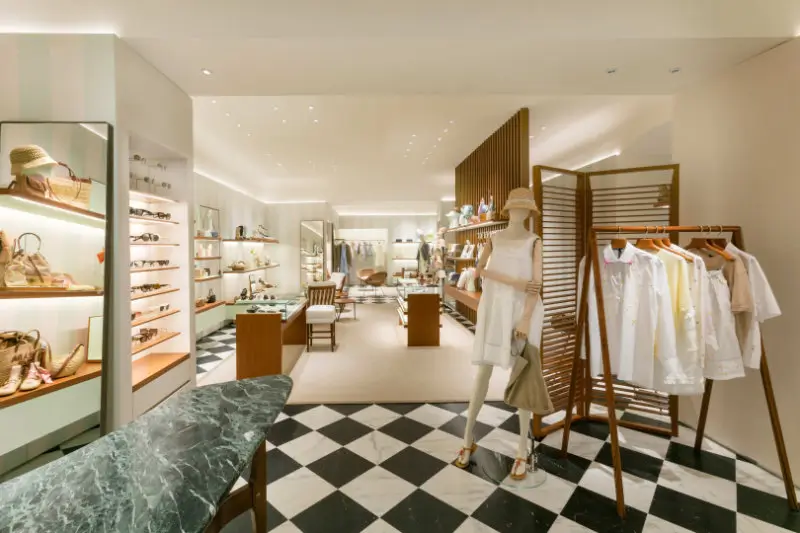
The boutique’s design pays homage to Prada’s origins while embracing its new Sicilian context. Upon entering, visitors are greeted by the brand’s familiar codes, reinterpreted with sensitivity to the locale. The black-and-white chequered marble floor immediately evokes the first Prada store, opened in 1913 by Mario Prada in Milan’s iconic Galleria Vittorio Emanuele II. That original emporium, specializing in haute leather goods, trunks, and travel accessories, set the tone for a century of innovation grounded in craftsmanship. The chequered marble—practical yet opulent—has become a signature element, symbolizing Prada’s enduring connection to Milanese architectural heritage.
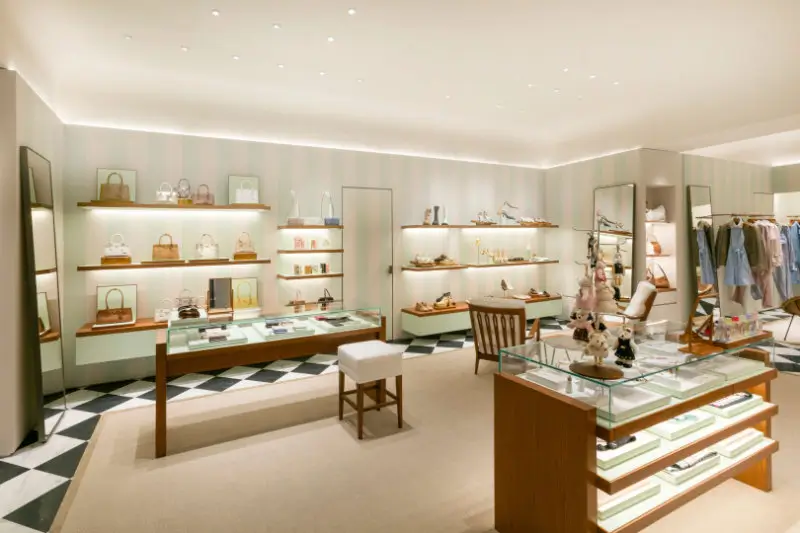
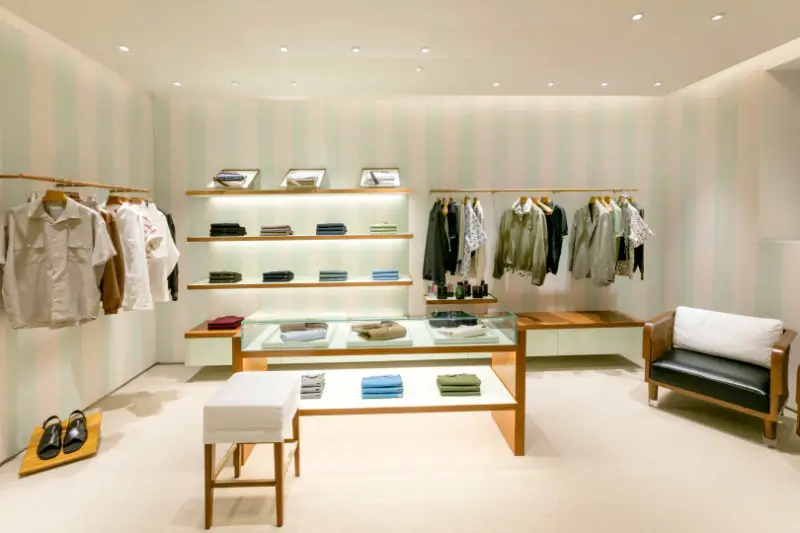
Walls reinterpret the classic wooden slat motif in soft pastel green, a gentle nod to the surrounding Mediterranean landscape of citrus groves and verdant hills. Paired with warm wooden shelves and drawer units, these elements create an inviting, tactile environment. On the ground floor, furnishings lean predominantly toward wood, complemented by striking Verde Alpi marble tables. These tables draw from an original design by the renowned BBPR studio (Banfi, Belgiojoso, Peressutti, Rogers), a pillar of mid-20th-century Italian modernism known for projects like the Torre Velasca in Milan. Their geometric precision and material honesty align seamlessly with Prada’s aesthetic of intellectual luxury.
Side tables by Gio Ponti, another titan of Italian design whose work spans architecture, furniture, and beyond (including iconic pieces like those featured in recent Prada Frames symposia), add layers of refined elegance. Wooden and wicker seating, softened by light-toned rugs, warms the space, evoking the relaxed sophistication of a Sicilian villa rather than a stark showroom. This balance of structure and comfort ensures the boutique feels lived-in and at ease within Taormina’s historic fabric—integrated rather than imposed.
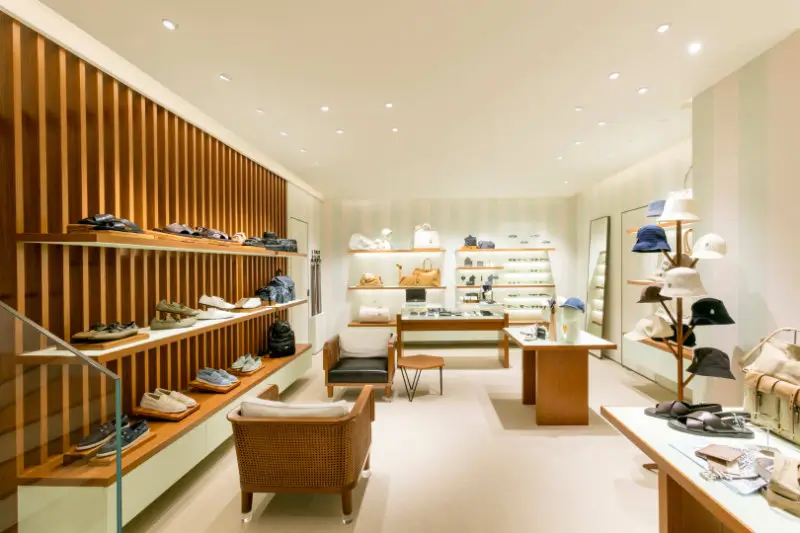
A wooden staircase gracefully descends to the lower level, accompanied by a display wall in timber that extends the accessory presentation from above. This seamless flow rounds out the women’s offering with scarves, hats, and jewellery—delicate yet statement-making pieces that capture Prada’s playful experimentation with materials and forms. Downstairs, dedicated to menswear, the atmosphere shifts subtly: natural-coloured matting underfoot provides a grounded, organic texture, while glass and wooden display counters showcase the collections with clarity and restraint. Gio Ponti seating with light-toned cushions continues the dialogue, maintaining visual and tactile continuity. The overall effect is one of calm consistency—a Prada space that breathes with its environment.
evolve
To fully appreciate this Taormina boutique, one must trace Prada’s journey. Founded in 1913 as Fratelli Prada, the house began as a purveyor of high-end leather goods under Mario Prada. By the 1970s and ’80s, his granddaughter Miuccia Prada transformed it into a global force, blending intellectual rigor with subversive creativity. Iconic innovations like the nylon backpack (1984) and the use of industrial materials elevated functional opulence, while collisions and runway shows consistently pushed boundaries—always with a deep respect for craft.
Today, under the leadership of Miuccia and Patrizio Bertelli, the Prada Group emphasizes heritage, innovation, and responsibility. Initiatives like Re-Nylon—transforming recycled materials into luxurious fabrics—underscore a commitment to sustainability without sacrificing allure. The Taormina store embodies this ethos: locally resonant design that honors Italian craftsmanship while minimizing disruption to its historic surroundings. Prada’s investment in cultural preservation, seen in projects like the Galleria Vittorio Emanuele II restoration, finds a natural extension here in Sicily.
The collections housed within reflect this balance. Leather goods remain central—structured totes, sleek wallets, and statement bags in signature saffiano or innovative textiles. Accessories range from the minimalist to the bold, with footwear offering everything from refined loafers to sculptural heels. Ready-to-wear for both women and men draws on seasonal themes: perhaps lightweight linens and cottons evoking Sicilian summers, or tailored pieces nodding to Taormina’s glamorous past. Jewellery and scarves add poetic touches, perfect for layering against the island’s golden light.
show
Taormina’s appeal to luxury brands is no accident. Its pedestrian-friendly Corso Umberto I, lined with medieval buildings, churches, and boutiques, has long hosted high-end names alongside local artisans. Nearby, properties like the Four Seasons San Domenico Palace (of The White Lotus fame) and Belmond hotels attract discerning travelers seeking authenticity and exclusivity. Louis Vuitton’s earlier resort boutique and café here further signal the town’s rising status in the Mediterranean luxury circuit.
What sets Prada’s presence apart is its contextual sensitivity. Unlike parachuted flagships that ignore their surroundings, this boutique dialogues with Taormina’s palette—earth tones, marble echoes of ancient ruins, and natural textures. It enhances the town’s role as a cultural crossroads, where history, art, and contemporary style converge. Visitors might pair a shopping visit with a stroll to the Greek Theatre, a boat trip to Isola Bella, or a meal featuring local specialties like fresh seafood, pistachios from Bronte, and Etna wines—experiences that deepen the connection between fashion and place.
For the fashion cognoscenti, this store represents more than commerce. It’s a destination where one can explore Prada’s archive-inspired pieces alongside current offerings, perhaps discovering how motifs from Milan’s industrial heritage translate to Sicily’s artisanal warmth. The two-level layout encourages exploration: ground floor for a broad introduction through accessories and women’s wear, lower level for immersive menswear discovery. Staff, attuned to the brand’s philosophy, offer personalized guidance, from styling tips to insights on material provenance.
fin
Prada’s Taormina opening arrives at a moment when luxury retail increasingly seeks meaningful integration with local cultures. In Sicily, a region rich in textile traditions, leatherworking, and craftsmanship, the boutique subtly amplifies these narratives. While Prada’s production remains rooted in Italian excellence (primarily in Tuscany and Lombardy), its presence here celebrates the peninsula’s diverse regional identities.
This store also aligns with broader trends in experiential retail. Shoppers don’t just purchase; they inhabit the space, absorbing its calm ambiance before venturing into Taormina’s winding streets. The design avoids ostentation, favoring quiet luxury that resonates with today’s discerning consumer—one who values sustainability, heritage, and sensory pleasure. Pastel greens and natural materials create Instagram-worthy yet authentic backdrops, perfect for capturing the interplay of fashion and travel.
Looking ahead, this boutique strengthens Prada’s footprint in Southern Italy, complementing stores in major cities while courting the international jet set that frequents Taormina. It reinforces the brand’s narrative of evolution: from 1913 leather specialist to global cultural influencer. As tourism rebounds and Sicily gains renewed attention, Prada positions itself as both guardian of Italian elegance and facilitator of new discoveries.
Related Articles
Ten Bags Sitting In The Same Week As The Shows
Pearl egg. Fringe mini. Kelly Doll. Holdall. Pigeon. Speedy. Alex tote. Aluminum case. Cassandre pouch. […]