DRIFT

“Everyone will have a robot in their home just like they have a car, a washing machine, or a vacuum cleaner.”

In the living room of the near future, a new companion stands—not a dog or a child or a human partner, but a robot. Tall, mobile, intuitive. It doesn’t beep or whirr like a sci-fi caricature. It doesn’t shuffle with the awkward gait of a prototype. It moves fluidly, learns your preferences, opens the door for your dog, hands you your jacket, and cleans up spilled coffee before you notice. It’s not a marvel. It’s not a gimmick. It’s just there—like a car, like a washing machine, like a vacuum.

That future is no longer speculative. It’s beginning now, with Redwood.

Introducing Redwood: A New Brain for a New Kind of Machine

At the center of this shift is Redwood, the latest neural control platform from the robotics company 1X, designed to power human-like robots such as NEO Gamma. What makes Redwood different isn’t just its capabilities—it’s where and how it’s trained. Unlike traditional robotics platforms tested in sterile labs and controlled conditions, Redwood was developed inside real homes, among messy kitchens, restless pets, cluttered shoes, and children’s toys strewn across hallways.

Its awareness isn’t bound to pre-programmed routines. It can see, understand, and act—opening drawers, navigating stairs, avoiding small children or fragile glass, and even recovering from failure. If it drops a dish, it learns. If it misplaces an object, it updates. It processes visuals and language onboard, not by streaming your home’s data to a server farm thousands of miles away. Privacy, performance, and perception—all rolled into one neural core.

Redwood isn’t just about building a robot. It’s about giving a body to intelligence.

NEO Gamma: More Than a Machine, Not Quite a Man

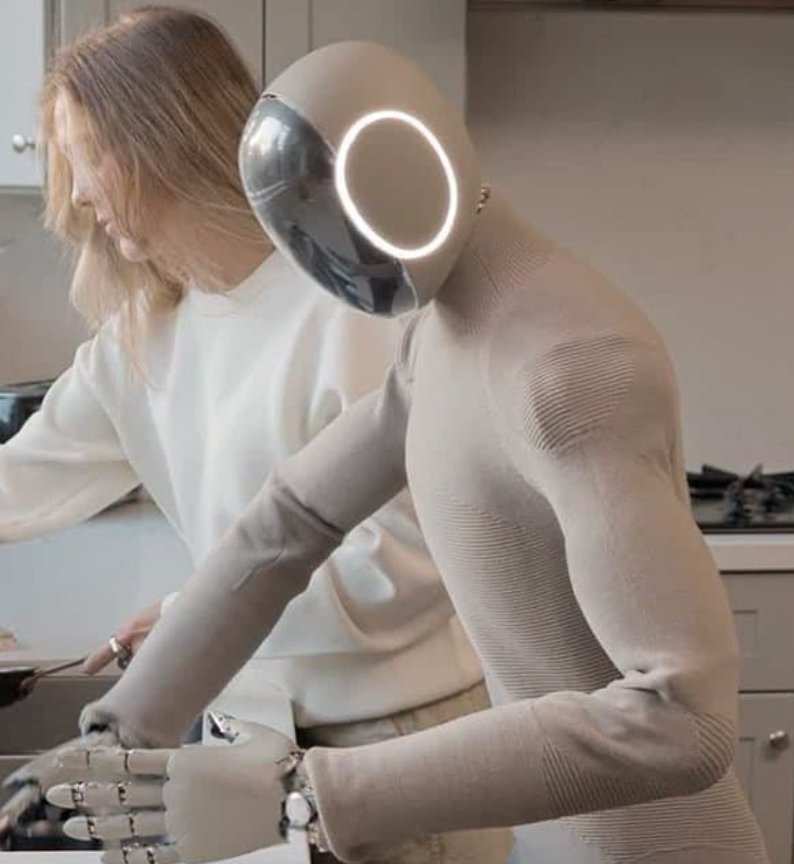
The physical manifestation of Redwood is NEO Gamma, 1X’s humanoid platform. Standing upright, equipped with articulated hands and human-mirroring limb structure, it’s designed for the home—not the factory. NEO isn’t bulky. It’s sleek, minimal, almost soft-spoken in its aesthetic.

And that raises a deeper question—why does it look like us?

Is it just to be familiar? To make interaction easier? Or are we inherently shaping robots in our image because we want them to fit seamlessly into our environments—chairs, doorknobs, utensils—all built for the human form?

NEO Gamma doesn’t try to mimic humanity in behavior. It doesn’t blink or smile. It doesn’t simulate emotion. Its job isn’t to become human. It’s to help us be more human by taking over tasks that rob us of our most limited resource: time.

Time: The Ultimate Haute

The refrigerator didn’t exist to impress guests—it existed to preserve food. The washing machine wasn’t sold as a marvel of engineering—it was sold as liberation from hours spent scrubbing by hand. The vacuum cleaner didn’t replace love or care—it simply made tidying up faster.

Redwood-powered robots promise the same.

They won’t be bought because they’re impressive, though they are. They’ll be bought because they return to us the one thing modern life steals with frightening precision: hours.

  • Hours spent searching for misplaced remotes or hauling groceries from the car.
  • Hours spent cleaning up messes while trying to answer emails.
  • Hours spent preparing repetitive meals or adjusting the thermostat for the fifth time.

With robots like NEO Gamma in our homes, the mundane disappears, and with it, a silent tax on our creativity, attention, and presence.

Opulence or Lifeline? The Global Disparity

But just as the Redwood brain sharpens the edge of convenience for the developed world, it also sharpens the contrast with those who have no access to basic infrastructure—people who are still boiling water over wood fires, whose days revolve around manual labor for survival, not progress.

The danger isn’t in the existence of these machines—it’s in their exclusivity.

For Redwood and robots like it to truly change the world, their benefits must extend beyond Silicon Valley mansions and tech-forward urban centers. The automation revolution cannot mirror the digital one, where billions were left behind for decades.

If done right, Redwood could help close that gap—not by parachuting humanoids into resource-scarce villages, but by automating agriculture, aiding medical care, and delivering education to places still left off the global grid.

Think of Redwood in a hospital with too few nurses. In a refugee camp helping distribute supplies. In a rural school, fetching chalk or displaying a visual lesson plan. The technology is agnostic—it’s our distribution and intention that matter.

Democratizing Automation

In the same way solar panels became more affordable and leapfrogged electrical grids in parts of Africa, robots—if made scalable—could leapfrog decades of labor bottlenecks. They could help build infrastructure where human effort is spread too thin, enable disaster response in dangerous zones, and extend care to aging populations with dignity and consistency.

But this democratization will require access, not just innovation. Policy, pricing, and infrastructure investment must align with vision. Robots that can help with housework should also help with rebuilding communities.

The Redwood platform may have been born in a domestic context—but its potential extends far beyond suburbia.

Adoption Always Follows Resistance

As with every technological leap, early reactions oscillate between skepticism and awe. “Why would I want a robot in my home?” some will ask, just as others once asked:

  • “Why would I need a car when I have a horse?”
  • “Why would I want a phone in my pocket?”
  • “Why would I ever trust a machine to clean my floors?”

And yet, resistance gives way to rhythm. What was once radical becomes ordinary. The microwave was a curiosity. Now it’s a countertop staple. AI assistants were novelties. Now they schedule meetings, set reminders, and play our favorite songs.

So too will Redwood-powered robots become part of the domestic fabric. Quiet. Functional. Dependable.

And for those who prefer the traditional path—washing clothes by hand, cooking without smart tech, living unplugged—that option remains. But history makes clear: convenience, once tasted, rarely gets returned.

Should They Look Like Us?

Amid all this, a philosophical question remains: Should robots look like humans?

Should they resemble us just to navigate our homes and hold our tools? Or is there something deeper—a desire to create kin, to reflect ourselves in our machines?

The answer may lie somewhere in between.

Humanoid form offers functional advantages in environments designed for human dimensions. A humanoid robot can grab a spoon, turn a doorknob, or fold laundry without requiring a complete reinvention of every household object. It makes sense.

But we should be cautious not to imbue them with human expectations. They are not surrogate friends or ersatz caregivers. Their value lies not in their mimicry, but in their utility. We don’t need robots to look like us to trust them. We need them to work.

A robot doesn’t need a face to be valuable. It needs competence, ethics, and reliability. Let their form follow their function.

Flow

With Redwood, 1X has stepped into a domain previously reserved for fiction. But fiction has always been a preview of possibility. The robots are not coming. They are here.

The question now is not either this future will arrive—but how we will shape it.

Will we build tools for the many, or toys for the few? Will we extend their benefits to the invisible and underserved, or relegate them to showroom corners and sci-fi spectacles?

As Redwood learns to clean your floor and open your fridge, it’s learning much more than motor control. It’s learning what it means to be useful, to serve without spectacle, to change lives without demanding applause.

Because at its best, technology doesn’t shout. It supports. And in the quiet hours it returns to us—the hours it gives back—we just might build something more human than ever before.

Related Articles

Modern data center facility with a solar-panel-clad exterior, bright green administrative offices, and secure perimeter fencing, showcasing sustainable digital infrastructure and renewable energy integration

Lombardy’s Data Center Boom: Balancing Digital Ambition with Environmental Responsible

Lombardy has emerged as Italy’s primary hub for new digital infrastructures, particularly data centers—vast complexes […]

In a highly anticipated reunion after 24 years, Adidas Originals and Coca-Cola have joined forces once again to celebrate the FIFA World Cup 2026™. The collaboration revives their iconic 2002 partnership from the Japan-South Korea tournament, now reimagined for the biggest global sporting event of 2026, co-hosted by the United States, Canada, and Mexico. Set to launch on June 6, 2026, this collection masterfully blends Adidas' streetwear heritage with Coca-Cola's timeless branding, creating a vibrant fusion of football culture, nostalgia, and modern style. The drop arrives at a perfect moment. With the World Cup kicking off on June 11, 2026, fans worldwide are gearing up for a summer of football excitement. This collaboration isn't just merch—it's a cultural statement that merges two legendary brands under the banner of "Originals are the Real Thing," a clever twist on Coca-Cola's famous slogan. Historical Context: A Reunion 24 Years in the Making Adidas and Coca-Cola first collaborated during the 2002 FIFA World Cup, producing limited-edition pieces that captured the era's energy. That partnership helped define early 2000s football-streetwear crossover culture. Fast-forward to 2026, and the brands are back with fresh energy, leveraging Adidas' deep FIFA ties (as an official partner) and Coca-Cola's long-standing sponsorship of the tournament. The 2026 edition promises to be historic as the first 48-team World Cup, spanning three countries and generating unprecedented global hype. This collab taps into that momentum, offering fans wearable pieces that celebrate both brands' legacies while looking forward to the future of football fashion. Collection Overview and Design Philosophy The Adidas Originals x Coca-Cola collection fuses 2000s street style with classic sporting aesthetics. Expect bold reds, creams, whites, and silver accents inspired by Coca-Cola's iconic packaging—think classic script logos, droplet detailing, and can-inspired motifs. The lineup spans footwear, apparel, and accessories, divided into two visual directions: one logo-heavy and graphic-forward, the other drawing from vintage advertising aesthetics. Designs pay homage to Coca-Cola's visual language while staying true to Adidas Originals' archival roots. High-quality materials, attention to detail, and versatile silhouettes make these pieces suitable for both match-day wear and everyday street style. The campaign, featuring young football star Lamine Yamal and a diverse cast in everyday scenes building anticipation for the tournament, reinforces themes of originality and shared cultural moments. Footwear Highlights Footwear takes center stage in this collaboration, with reimagined takes on iconic 2000s Adidas silhouettes: Samba and Superstar Models: These classics get Coca-Cola treatment with white/cream/red colorways and prominent script branding. The Samba blends street heritage with football roots, while the Superstar II features weathered bases and bold side panels. Expected pricing around $110–$130. Adistar Control 5: A standout with droplet detailing mimicking condensation on a cold Coke can. This model brings performance-inspired design into lifestyle territory. Predator Sala: Indoor/hybrid style with silver-and-red accents, nodding to predatory precision on the pitch and Coca-Cola's bold energy. Climacool 1: Revived with breathable tech and Coke-inspired graphics, perfect for warm summer days. Megaride F50: A highlight paying tribute to the iconic Coca-Cola glass bottle, with unique contours and refreshing design cues. Each pair incorporates thoughtful details like embroidered logos, custom insoles, and packaging that mimics vintage Coke crates or cans. These shoes are built for durability and comfort, appealing to sneakerheads, football fans, and casual wearers alike. Apparel and Accessories Beyond kicks, the collection offers a full lifestyle range: Track Tops and Jerseys: Standout jerseys fuse retro Coca-Cola advertising from different eras into cohesive football designs. Track jackets feature signature three stripes alongside Coke branding, in vibrant reds and classic whites. Shorts and T-Shirts: Relaxed fits with graphic prints, ideal for casual wear or layering. Expect motivational football motifs blended with refreshing beverage references. Accessories: A bright red airliner bag stands out as a functional statement piece. Additional items may include caps, socks, and tote bags carrying the collaborative spirit. The apparel emphasizes comfort with premium cotton blends, mesh panels for breathability, and oversized silhouettes popular in contemporary streetwear. Unisex sizing and inclusive fits make the collection accessible to a broad audience. Cultural Impact and Fan Appeal This collaboration resonates on multiple levels. For football fans, it represents national pride and global unity ahead of the 2026 tournament. Sneaker enthusiasts will appreciate the nostalgic 2000s revival mixed with modern execution. Streetwear collectors see it as a prime example of how heritage brands can innovate through partnerships. In an era where sports and fashion increasingly intersect, Adidas and Coca-Cola deliver pieces that transcend the pitch. Wear them to watch matches at home, attend watch parties, or hit the streets in any host city—New York, Los Angeles, Toronto, or beyond. The designs are versatile enough for gym sessions, festivals, or daily commutes. The timing aligns perfectly with rising interest in football in North America, boosted by the co-hosting nations. Young talents like Lamine Yamal in the campaign help bridge generational gaps, attracting newer fans while satisfying longtime supporters. Where to Buy and Release Details The collection launches globally on June 6, 2026, via: Adidas CONFIRMED app (for early access and raffles) Adidas.com Select retailers and flagship stores worldwide Some regions may see staggered drops, with Japan and other markets getting early access. Prices are expected to range from $50–$150 depending on the item, making it relatively accessible compared to ultra-limited drops. Pro Tips for Copping: Enable notifications on the CONFIRMED app. Check local stock at Adidas stores in major cities. Monitor resale platforms post-drop for exclusive colorways, but be wary of markups. Size up slightly for oversized apparel fits. Given the World Cup hype, popular items like the Sambas and jerseys are likely to sell out quickly. International shipping is available, but factor in potential customs delays. Styling Suggestions Match Day Look: Pair a collaborative jersey with classic black shorts and Samba sneakers for effortless fan style. Streetwear Rotation: Layer a track top over a graphic tee with wide-leg pants and the Megaride F50 for a bold urban ensemble. Casual Summer: White Superstar with denim shorts and the airliner bag for a refreshing, vacation-ready vibe. These pieces mix seamlessly with existing Adidas or neutral wardrobes, maximizing versatility. Broader Context in 2026 Fashion and Sports The Adidas x Coca-Cola drop is part of a larger wave of high-profile collaborations tied to the World Cup. Adidas continues its dominance in football kit design, while Coca-Cola leverages its sponsorship with collectibles, bottles, and experiential activations like the Trophy Tour. In the sneaker industry, this collab exemplifies the ongoing trend of lifestyle reinterpretations of performance silhouettes. It also highlights how global brands use major events to drive cultural conversations around unity, originality, and joy—core values for both companies. Sustainability notes (based on Adidas' broader initiatives) suggest some pieces may incorporate recycled materials, aligning with modern consumer expectations. Looking Forward: Legacy and Excitement As the countdown to kickoff continues, this collection serves as the perfect prelude to an unforgettable summer of football. Whether you're a die-hard supporter, a fashion-forward collector, or someone seeking motivation through style, the Adidas Originals x Coca-Cola FIFA World Cup 2026 lineup delivers. Expect potential restocks, special event exclusives in host cities, and continued campaign content featuring more athletes. This isn't just clothing—it's a ticket to participate in the global celebration of the beautiful game. Mark your calendars for June 6, 2026. Refresh your wardrobe, lace up those Sambas, and get ready to cheer on your team in style. The "Real Thing" meets the Originals in what promises to be one of the most talked-about releases of the year. This collaboration captures the essence of football's universal appeal: bringing people together through shared passion, iconic brands, and unforgettable moments. As the world prepares for 2026's expanded tournament, Adidas and Coca-Cola remind us that some partnerships are truly timeless.

Adidas Originals x Coca-Cola Collection: FIFA World Cup 2026

In a highly anticipated reunion after 24 years, Adidas Originals and Coca-Cola have joined forces […]

Loewe shoulder bag crafted in brown and black leather with minimalist lion face detailing and a matching fur tail charm

180 Years Unfolded: The Full Story Behind Loewe’s New Campaign

The year was 1846. Queen Victoria was on the British throne and the telephone, the […]