DRIFT AUDIO
Listen to this story
Choose a voice, then press play.
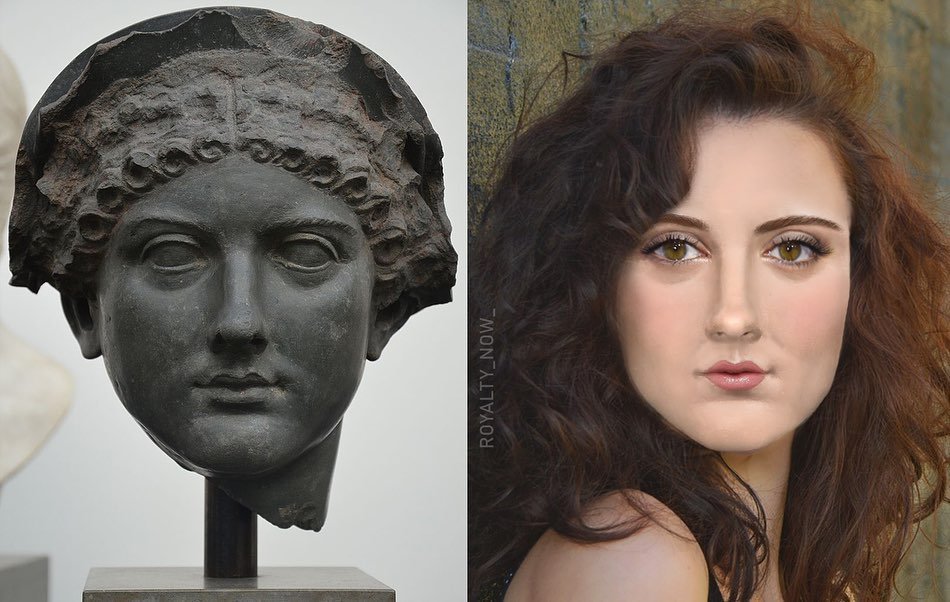
In an age where technology and art often intersect in unexpected and innovative ways, one artist has captured the attention of thousands by using her craft to answer an intriguing question: what would historical figures look like if they were alive today? Her unique artwork has gained over 120,000 followers on Instagram, a testament to the widespread fascination with reimagining figures from the past in the context of modern aesthetics and culture.
This artist’s project, blending historical research, creative interpretation, and digital artistry, is more than a playful exercise in imagination. It taps into something deeper—our collective desire to connect with history in a more personal and relatable way. Through her work, the artist bridges the gap between the distant past and the present, allowing viewers to imagine historical icons not just as static figures in textbooks but as dynamic individuals with contemporary relevance.
The Power of Visual Imagination in Reinterpreting History
At the core of this project lies the transformative power of visual imagination. By reinterpreting historical figures in a modern context, the artist invites viewers to reexamine these individuals not just as relics of the past but as people who could, in theory, walk among us today. This reimagining asks a compelling question: how would these figures fit into contemporary society, and what would their influence look like now?
For instance, the artist’s interpretation of Cleopatra presents the iconic queen not as the distant figure immortalized in classical sculptures and paintings but as a modern-day leader, dressed in today’s fashion and with a relatable human presence. Her portrayal of Cleopatra might feature sleek hair, subtle makeup, and modern clothing, yet it retains a sense of the queen’s power and mystique. The artist skillfully maintains the essence of Cleopatra while adding elements that make her feel immediately recognizable to a contemporary audience.
This approach extends to many other historical figures featured in the artist’s gallery, such as William Shakespeare or Joan of Arc. Shakespeare, in her hands, might be depicted with stylish glasses and a beard, wearing a smart, casual jacket that would not seem out of place in a coffee shop frequented by intellectuals and writers. Joan of Arc, on the other hand, might appear with short, edgy hair and minimalist modern attire, emphasizing her fierce independence and leadership qualities in a way that speaks to today’s feminist movement.
In reimagining these figures, the artist doesn’t simply dress them up in modern fashion. Rather, she uses visual cues to emphasize the traits that made them historically significant, while also reflecting how those traits might manifest in the current era. This balance of historical authenticity and modern relevance is what makes the artwork so compelling—it doesn’t just offer a superficial makeover but rather reintroduces these individuals to modern audiences in a way that feels fresh, accessible, and thought-provoking.
Art, Technology, and the Digital Age
One of the most notable aspects of this artist’s work is her ability to leverage technology to enhance her artistic vision. Using digital tools, she creates hyper-realistic portraits that seamlessly blend the historical with the contemporary. This fusion of traditional artistic skills with modern digital techniques allows her to create images that are both visually stunning and conceptually engaging.
The rise of digital art platforms like Instagram has also played a critical role in the success of this project. Social media enables artists to reach a global audience, providing instant feedback and engagement that traditional galleries cannot always offer. The fact that this artist has amassed over 120,000 followers on Instagram speaks to the democratizing power of digital platforms, where artists can build large, loyal audiences without the backing of established institutions or gatekeepers.
This accessibility also adds to the appeal of the artist’s work. By using a platform like Instagram, where images are shared and disseminated rapidly, the artist’s portraits can spark conversations across cultural and geographic boundaries. Users from around the world can comment on and interact with the artwork, sharing their thoughts on how these figures are reimagined. In a sense, the digital age allows history to become a shared and participatory experience, rather than something confined to the pages of academic texts.
The Ethics of Reinterpreting Historical Figures
While the project is undoubtedly creative and visually engaging, it also raises important questions about the ethics of reimagining historical figures. Bringing these figures into the present day through artistic reinterpretation is not without controversy. Some viewers might question whether it is appropriate to project modern ideals, aesthetics, and values onto individuals from vastly different historical contexts.
For example, reimagining a figure like Marie Antoinette in contemporary clothing could be seen as an oversimplification of her historical significance. How much of the original person is retained in these modern depictions, and how much is altered to fit contemporary tastes and expectations? There is always a risk of diminishing the complexities of historical figures by reducing them to fashionable images, thereby distorting their legacy.
Moreover, the reimagining of historical figures from non-Western cultures raises concerns about cultural appropriation and the imposition of Western beauty standards or aesthetics onto figures who represent very different traditions. Cleopatra, for instance, has been the subject of various interpretations over the centuries, many of which reflect more about the society creating the image than about the historical figure herself. In the context of this project, it is important to consider how reimagining Cleopatra in a modern context could inadvertently reinforce stereotypes or erase important aspects of her identity as a figure of African and Mediterranean heritage.
These ethical concerns, however, do not necessarily detract from the overall value of the artwork. Instead, they add another layer of complexity, inviting viewers to reflect critically on how we engage with history. By sparking debates around historical representation, the artist’s work encourages us to think about the ways in which we interpret and reinterpret the past, and how those interpretations reflect our own contemporary values and biases.
The Popularity and Cultural Relevance of the Project
The widespread popularity of the artist’s work highlights a cultural moment in which many people are seeking to reconnect with history in a more personal and relatable way. In an era of rapid technological change and uncertainty, there is a growing interest in looking to the past for wisdom, guidance, and connection. The artist’s reimagining of historical figures taps into this desire, offering a bridge between the past and the present that feels both familiar and new.
Additionally, this project resonates with the broader trend of “what if” scenarios that have gained traction in popular culture. From alternate history series like *The Man in the High Castle* to social media filters that allow users to see themselves as historical figures, there is a collective fascination with imagining different realities and exploring how the past might have unfolded differently. This project taps into that cultural curiosity, allowing viewers to envision a world where historical icons are not just figures of the past but active participants in the present.
Art as a Dialogue Between Past and Present
In reimagining historical figures as if they were alive today, this artist has created a thought-provoking body of work that bridges history, art, and contemporary culture. Her use of digital platforms and modern aesthetics allows viewers to engage with history in a fresh and personal way, while also raising important questions about how we interpret and represent the past. By blending creativity, technology, and historical research, she invites us to reflect on the enduring relevance of historical figures and their impact on our lives today.
Ultimately, this project serves as a reminder that art is not just about capturing the present moment—it is also a dialogue with the past, an ongoing conversation between what was and what could be. Whether we see these reimagined figures as purely artistic interpretations or as thought experiments, they encourage us to think more deeply about our relationship with history and the ways in which it continues to shape our world.