DRIFT

In the endless ebb and flow of the financial markets, particularly in the niche but influential world of music and media equities, days like today serve as potent reminders of how thin the line can be between resurgence and collapse.

Amid cautious optimism, Sphere Entertainment emerged as a bright spot, its shares climbing sharply on the back of debt restructuring news that injected a dose of badly needed confidence into the high-stakes entertainment venture.

The music sector more broadly exhaled in relief as tariff confusion—which had cast a backdrop over discretionary spending forecasts—eased slightly, giving investors reason to hope that the storm clouds of trade tensions might not rain on concert ticket sales, subscription revenues, and merchandise margins after all.

Yet in the same breath, the implosion of Cumulus Media, whose shares plunged 16% after announcing its pending delisting from the Nasdaq, served as a grim counterpoint—a cautionary tale about what happens when an industry built for a bygone era fails to adapt quickly enough to a new one.

It was a day of contrasting fortunes, captured in real-time on the ticker tape, and a reflection of the music sector’s ongoing reckoning with the demands of a transformed economy.

Sphere Entertainment: Betting Big, Flying Higher

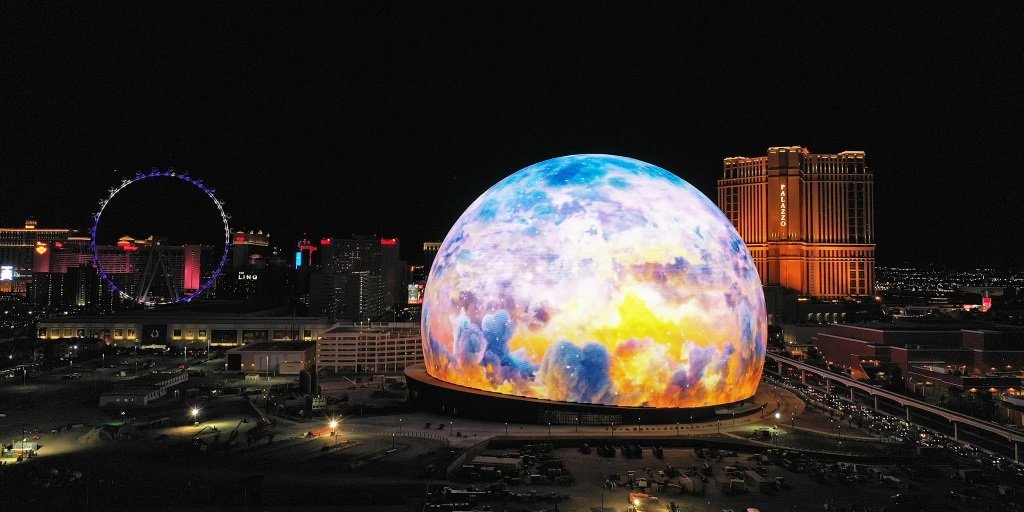
At the center of today’s optimism was Sphere Entertainment Co., the audacious firm behind the sprawling MSG Sphere Las Vegas, a $2.3 billion immersive venue that reimagines the concert and live event experience as something closer to virtual reality with a heartbeat.

When initial construction costs soared past projections and debt loads ballooned, critics wondered whether Sphere had overreached. Would enough paying audiences show up for high-priced, ultra-immersive shows? Could Sphere fill its calendar consistently enough to justify the immense operating overhead?

These questions have loomed heavily over the stock for months, depressing valuations and driving short interest to significant levels.

But today brought a different tune: credible news reports confirmed that Sphere’s executives were close to finalizing restructured agreements with major creditors, including banks and private equity groups that had financed much of the Sphere’s construction.

Proposed changes reportedly include extended debt maturities, adjusted interest rates, and temporary covenant waivers—effectively buying Sphere breathing room to stabilize revenue without immediate, paralyzing pressure to refinance or divest.

Investors responded quickly, sending Sphere’s stock up by over 11% in intraday trading.

The rally wasn’t just about Sphere’s immediate prospects. It was also a psychological marker:

If Sphere, with its towering debts and experimental business model, could find a viable path forward, then perhaps the broader live entertainment market, which had seen deep COVID-related scars, could fully recover as well.

For a sector that relies so heavily on public confidence—both from consumers and from Wall Street—the symbolism mattered.

Tariffs and Trade Fears: The Unseen Influence on Music

While Sphere captured headlines, a quieter but equally critical dynamic buoyed the sector: easing concerns around U.S.-China tariff disputes.

Throughout 2024, fears had grown that new tariffs on electronics and consumer goods could dampen American discretionary spending—the lifeblood of music streaming subscriptions, concert tours, festival sales, and merchandise consumption.

After all, if households face higher costs on essentials, entertainment tends to be the first budget item cut.

But today’s signals from Washington and Beijing—suggesting no immediate tariff escalations—sent ripples of reassurance across markets.

Music industry players dependent on consumer confidence, from Live Nation to Spotify, felt the immediate benefit:

  • Spotify shares rose nearly 2%, buoyed by optimism that subscriber churn rates would stabilize or even improve.
  • Live Nation, already riding a strong post-pandemic return to live events, ticked up an additional 2.5%.
  • Labels like Warner Music Group and Universal Music Group showed more modest but still positive gains.

The broader implication is simple but profound:

If macroeconomic headwinds ease, the secular growth story of music—more streaming, more touring, more experiential consumerism—remains intact.

Cumulus Media: A Company Adrift

While other players found hope today, Cumulus Media’s story was starkly different.

Once the second-largest owner and operator of AM and FM radio stations in the United States, Cumulus now finds itself perilously close to irrelevance, its stock crushed by a brutal 16% on news of Nasdaq delisting due to noncompliance with minimum market cap requirements.

It’s a stunning but not surprising fall for a company that never truly recovered from a decade-long convergence of pressures:

  • The collapse of traditional radio advertising revenue
  • The meteoric rise of on-demand digital audio platforms like Spotify and Apple Music
  • The surge of podcasts drawing audience attention and ad dollars away from terrestrial radio

Efforts to pivot into podcast networks and digital streaming have been too little, too late.

Debt burdens, largely incurred during the mid-2000s radio consolidation boom, now act as a millstone around the company’s neck.

Delisting from Nasdaq will make it far harder for Cumulus to attract new institutional investors or refinance its obligations. It will restrict trading liquidity and likely accelerate the departure of any remaining major stakeholders.

In short: without a radical reinvention or dramatic rescue plan, Cumulus could soon join the growing graveyard of legacy media brands unable to adapt to a streaming-first world.

Long-Term Industry Implications: Adapt or Fade

Today’s movements—Sphere’s rally, sector-wide positivity, Cumulus’s collapse—underline a critical truth about the music and media industry in 2025: adaptability is not optional; it is existential.

The winners of the next decade will not necessarily be those with the deepest catalogs or biggest brands.

They will be those who can:

  • Innovate in experience delivery (like Sphere is attempting)
  • Respond to consumer psychology shifts (like Spotify optimizing pricing models and personalized AI playlists)
  • Create durable ecosystems around direct fan relationships, community experiences, and diversified revenue streams beyond traditional advertising or subscription models

Legacy business models anchored in scarcity (like broadcast radio) or static physical distribution (like CD sales) are simply not equipped to withstand the digital-first, consumer-fluid realities of the modern music economy.

Moreover, success will demand flexibility not just in product, but in capital structure, debt management, and investor relations—as Sphere’s dance with creditors vividly demonstrates.

Looking Ahead: What Comes Next

As the second quarter of 2025 unfolds, analysts and investors alike will be closely watching several key dynamics:

  • Sphere Entertainment’s revenue ramp-up from its Sphere Las Vegas venue, particularly the sustainability of premium ticket prices and corporate partnerships
  • Live Nation’s summer concert schedule, especially in light of continued consumer discretionary pressures
  • Streaming service innovation battles—whether Spotify, Apple Music, Amazon Music, and emerging players can stave off subscription fatigue and maximize per-user revenue
  • Podcast advertising and creator economy shifts, and whether traditional radio remnants like Cumulus can pivot aggressively enough to capture new attention streams

Meanwhile, broader macroeconomic forces—the Fed’s interest rate policies, inflation trends, geopolitical developments—will continue to shape discretionary entertainment spending patterns in ways that could either support or destabilize the fragile recoveries seen today.

Impression

Today’s market narrative wasn’t one of uniform success or failure.

It was a story of fragmentation: optimism for some, oblivion for others.

Sphere’s rally proved that bold innovation, even when risky, can still command investor faith.

The music sector’s gains showed that consumer passion for experiences remains robust, so long as affordability fears don’t reignite.


Related Articles

Modern data center facility with a solar-panel-clad exterior, bright green administrative offices, and secure perimeter fencing, showcasing sustainable digital infrastructure and renewable energy integration

Lombardy’s Data Center Boom: Balancing Digital Ambition with Environmental Responsible

Lombardy has emerged as Italy’s primary hub for new digital infrastructures, particularly data centers—vast complexes […]

In a highly anticipated reunion after 24 years, Adidas Originals and Coca-Cola have joined forces once again to celebrate the FIFA World Cup 2026™. The collaboration revives their iconic 2002 partnership from the Japan-South Korea tournament, now reimagined for the biggest global sporting event of 2026, co-hosted by the United States, Canada, and Mexico. Set to launch on June 6, 2026, this collection masterfully blends Adidas' streetwear heritage with Coca-Cola's timeless branding, creating a vibrant fusion of football culture, nostalgia, and modern style. The drop arrives at a perfect moment. With the World Cup kicking off on June 11, 2026, fans worldwide are gearing up for a summer of football excitement. This collaboration isn't just merch—it's a cultural statement that merges two legendary brands under the banner of "Originals are the Real Thing," a clever twist on Coca-Cola's famous slogan. Historical Context: A Reunion 24 Years in the Making Adidas and Coca-Cola first collaborated during the 2002 FIFA World Cup, producing limited-edition pieces that captured the era's energy. That partnership helped define early 2000s football-streetwear crossover culture. Fast-forward to 2026, and the brands are back with fresh energy, leveraging Adidas' deep FIFA ties (as an official partner) and Coca-Cola's long-standing sponsorship of the tournament. The 2026 edition promises to be historic as the first 48-team World Cup, spanning three countries and generating unprecedented global hype. This collab taps into that momentum, offering fans wearable pieces that celebrate both brands' legacies while looking forward to the future of football fashion. Collection Overview and Design Philosophy The Adidas Originals x Coca-Cola collection fuses 2000s street style with classic sporting aesthetics. Expect bold reds, creams, whites, and silver accents inspired by Coca-Cola's iconic packaging—think classic script logos, droplet detailing, and can-inspired motifs. The lineup spans footwear, apparel, and accessories, divided into two visual directions: one logo-heavy and graphic-forward, the other drawing from vintage advertising aesthetics. Designs pay homage to Coca-Cola's visual language while staying true to Adidas Originals' archival roots. High-quality materials, attention to detail, and versatile silhouettes make these pieces suitable for both match-day wear and everyday street style. The campaign, featuring young football star Lamine Yamal and a diverse cast in everyday scenes building anticipation for the tournament, reinforces themes of originality and shared cultural moments. Footwear Highlights Footwear takes center stage in this collaboration, with reimagined takes on iconic 2000s Adidas silhouettes: Samba and Superstar Models: These classics get Coca-Cola treatment with white/cream/red colorways and prominent script branding. The Samba blends street heritage with football roots, while the Superstar II features weathered bases and bold side panels. Expected pricing around $110–$130. Adistar Control 5: A standout with droplet detailing mimicking condensation on a cold Coke can. This model brings performance-inspired design into lifestyle territory. Predator Sala: Indoor/hybrid style with silver-and-red accents, nodding to predatory precision on the pitch and Coca-Cola's bold energy. Climacool 1: Revived with breathable tech and Coke-inspired graphics, perfect for warm summer days. Megaride F50: A highlight paying tribute to the iconic Coca-Cola glass bottle, with unique contours and refreshing design cues. Each pair incorporates thoughtful details like embroidered logos, custom insoles, and packaging that mimics vintage Coke crates or cans. These shoes are built for durability and comfort, appealing to sneakerheads, football fans, and casual wearers alike. Apparel and Accessories Beyond kicks, the collection offers a full lifestyle range: Track Tops and Jerseys: Standout jerseys fuse retro Coca-Cola advertising from different eras into cohesive football designs. Track jackets feature signature three stripes alongside Coke branding, in vibrant reds and classic whites. Shorts and T-Shirts: Relaxed fits with graphic prints, ideal for casual wear or layering. Expect motivational football motifs blended with refreshing beverage references. Accessories: A bright red airliner bag stands out as a functional statement piece. Additional items may include caps, socks, and tote bags carrying the collaborative spirit. The apparel emphasizes comfort with premium cotton blends, mesh panels for breathability, and oversized silhouettes popular in contemporary streetwear. Unisex sizing and inclusive fits make the collection accessible to a broad audience. Cultural Impact and Fan Appeal This collaboration resonates on multiple levels. For football fans, it represents national pride and global unity ahead of the 2026 tournament. Sneaker enthusiasts will appreciate the nostalgic 2000s revival mixed with modern execution. Streetwear collectors see it as a prime example of how heritage brands can innovate through partnerships. In an era where sports and fashion increasingly intersect, Adidas and Coca-Cola deliver pieces that transcend the pitch. Wear them to watch matches at home, attend watch parties, or hit the streets in any host city—New York, Los Angeles, Toronto, or beyond. The designs are versatile enough for gym sessions, festivals, or daily commutes. The timing aligns perfectly with rising interest in football in North America, boosted by the co-hosting nations. Young talents like Lamine Yamal in the campaign help bridge generational gaps, attracting newer fans while satisfying longtime supporters. Where to Buy and Release Details The collection launches globally on June 6, 2026, via: Adidas CONFIRMED app (for early access and raffles) Adidas.com Select retailers and flagship stores worldwide Some regions may see staggered drops, with Japan and other markets getting early access. Prices are expected to range from $50–$150 depending on the item, making it relatively accessible compared to ultra-limited drops. Pro Tips for Copping: Enable notifications on the CONFIRMED app. Check local stock at Adidas stores in major cities. Monitor resale platforms post-drop for exclusive colorways, but be wary of markups. Size up slightly for oversized apparel fits. Given the World Cup hype, popular items like the Sambas and jerseys are likely to sell out quickly. International shipping is available, but factor in potential customs delays. Styling Suggestions Match Day Look: Pair a collaborative jersey with classic black shorts and Samba sneakers for effortless fan style. Streetwear Rotation: Layer a track top over a graphic tee with wide-leg pants and the Megaride F50 for a bold urban ensemble. Casual Summer: White Superstar with denim shorts and the airliner bag for a refreshing, vacation-ready vibe. These pieces mix seamlessly with existing Adidas or neutral wardrobes, maximizing versatility. Broader Context in 2026 Fashion and Sports The Adidas x Coca-Cola drop is part of a larger wave of high-profile collaborations tied to the World Cup. Adidas continues its dominance in football kit design, while Coca-Cola leverages its sponsorship with collectibles, bottles, and experiential activations like the Trophy Tour. In the sneaker industry, this collab exemplifies the ongoing trend of lifestyle reinterpretations of performance silhouettes. It also highlights how global brands use major events to drive cultural conversations around unity, originality, and joy—core values for both companies. Sustainability notes (based on Adidas' broader initiatives) suggest some pieces may incorporate recycled materials, aligning with modern consumer expectations. Looking Forward: Legacy and Excitement As the countdown to kickoff continues, this collection serves as the perfect prelude to an unforgettable summer of football. Whether you're a die-hard supporter, a fashion-forward collector, or someone seeking motivation through style, the Adidas Originals x Coca-Cola FIFA World Cup 2026 lineup delivers. Expect potential restocks, special event exclusives in host cities, and continued campaign content featuring more athletes. This isn't just clothing—it's a ticket to participate in the global celebration of the beautiful game. Mark your calendars for June 6, 2026. Refresh your wardrobe, lace up those Sambas, and get ready to cheer on your team in style. The "Real Thing" meets the Originals in what promises to be one of the most talked-about releases of the year. This collaboration captures the essence of football's universal appeal: bringing people together through shared passion, iconic brands, and unforgettable moments. As the world prepares for 2026's expanded tournament, Adidas and Coca-Cola remind us that some partnerships are truly timeless.

Adidas Originals x Coca-Cola Collection: FIFA World Cup 2026

In a highly anticipated reunion after 24 years, Adidas Originals and Coca-Cola have joined forces […]

Loewe shoulder bag crafted in brown and black leather with minimalist lion face detailing and a matching fur tail charm

180 Years Unfolded: The Full Story Behind Loewe’s New Campaign

The year was 1846. Queen Victoria was on the British throne and the telephone, the […]