Ronaldinho Launches Tu Música: A New Chapter in Global Music and Cultural Power

April 22, 2026
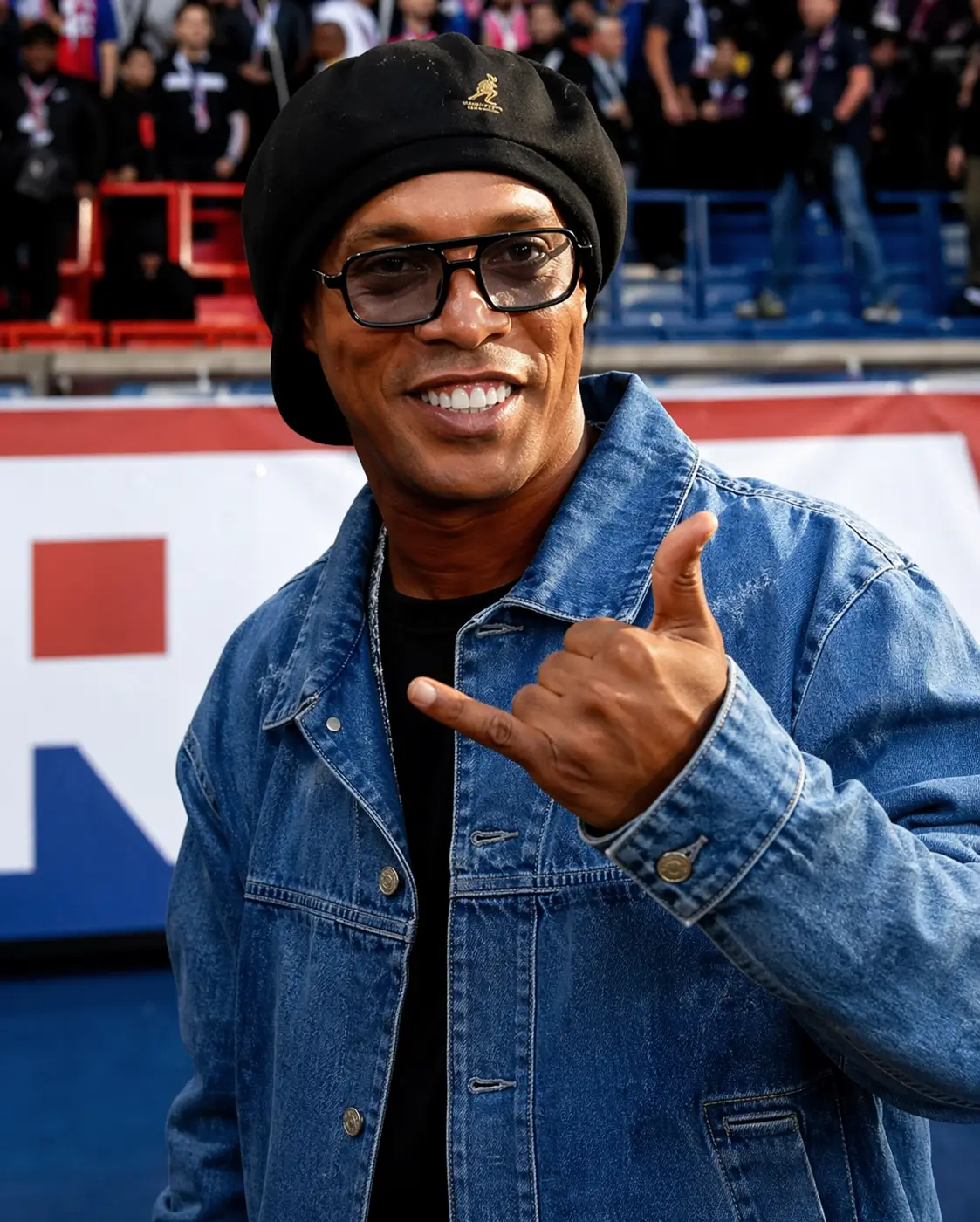
When Ronaldinho stepped onto the pitch at Camp Nou, the world didn’t just watch—it moved with him. There was rhythm in his gait, joy in his improvisation, a musicality that dissolved the boundary between sport and performance. Football, in his hands, became something closer to choreography.
Now, nearly two decades removed from his peak, that same instinct for rhythm reappears—this time, not on grass, but within sound.
Ronaldinho has officially launched Tu Música, a record label built on a simple but expansive premise: that music, like football, is a global language shaped by rhythm, identity, and connection. Headquartered in Miami, the venture arrives as a deliberate convergence of cultural capital and operational expertise. Co-founded alongside his brother and longtime manager Roberto de Assis, Sua Música Group CEO Roni Maltz Bin, and ASJ CEO Allan Jesus, the label positions itself not as an extension of celebrity—but as structure.
This is not a vanity imprint. It is infrastructure.
stir
Tu Música begins with a defined geographic and cultural anchor: Latin America. The timing is calibrated. With the upcoming FIFA World Cup set to dominate global attention from June 11 to July 19, the label is situating its first wave of releases within a moment already charged with collective emotion.
The intention is not passive alignment—it is activation.
Emerging artists across reggaeton, samba, and broader urban genres will be introduced in sync with tournament momentum, positioning their soundtracks alongside national pride, street-level celebration, and global visibility. The approach is less about riding a wave than shaping its sonic undercurrent.
Beyond this initial phase, the trajectory expands outward: Europe, then Africa, Asia, and the Middle East. The strategy remains consistent—localize, collaborate, scale. Each market is approached not as territory to enter, but as a culture to engage.
🇧🇷🔮🤙🏾 pic.twitter.com/rPe7tLa0Db
— Ronaldinho (@10Ronaldinho) January 6, 2025
sys
Founded in 2010, Sua Música emerged as a digital platform dedicated to Brazilian funk and urban genres—sounds often overlooked by mainstream industry channels but dominant within local ecosystems. By 2020, it had evolved into the largest independent distributor of urban music in Brazil, housing over 100,000 artists and maintaining direct pipelines to global streaming platforms.
Its influence did not go unnoticed.
In 2024, Warner Music Group acquired a minority stake in the company. The move was less about acquisition than recognition—a signal that cultural gravity had shifted. No longer confined to legacy industry centers like New York or London, influence was now emerging from decentralized, grassroots networks.
That partnership granted Sua Música access to global infrastructure while preserving its autonomy—a duality that now informs Tu Música’s operating model. It is not replication. It is extension.
As Roni Maltz Bin frames it, the focus is no longer distribution alone, but ecosystem-building: a system defined by AI-driven analytics, localized A&R, and direct-to-fan pathways that bypass traditional bottlenecks. Speed, adaptability, and authenticity form the backbone.
region
The selection of Miami is not incidental—it is strategic.
As one of the most culturally hybrid cities in the United States, Miami operates as a living intersection of Latin American, Caribbean, and North American identities. It is a place where reggaeton and hip-hop coexist fluidly, where diaspora informs daily life, and where music is not just consumed but embedded into environment.
For Tu Música, Miami functions less as headquarters and more as symbol.
It represents convergence—of language, of rhythm, of migration. It also offers logistical advantage: proximity to Latin America, access to U.S. industry infrastructure, and connectivity to emerging diasporic communities from Africa and the Middle East. In effect, it becomes both launchpad and lens.
frame
Launching a label is inherently complex. Launching one within the orbit of the World Cup is calculated.
The tournament’s reach—over five billion viewers globally—creates a rare condition: a shared emotional frequency. For Tu Música, this becomes a distribution channel in itself.
The rollout strategy centers on a series of singles and EPs timed to precede and coincide with the tournament. These releases are expected to integrate football iconography, national identity, and localized narratives, positioning them not just as music drops, but as cultural artifacts tied to moment.
It is a framework Ronaldinho understands intuitively. His performances in past tournaments—particularly 2002—were not just athletic milestones but cultural memories. Tu Música extends that sensibility into sound.
precision
The label’s global ambition unfolds in deliberate phases.
Latin America establishes the core identity—rooted in reggaeton, samba, funk, and urban pop, with emphasis on community-building through events and partnerships.
Europe introduces cross-genre connection—Afrobeat, dancehall, and electronic—anchored in cities like London, Paris, and Berlin, where hybridization defines the musical landscape.
Africa represents a correlative model rather than extraction. Markets such as Nigeria, South Africa, and Ghana are approached with co-sign structures that prioritize local ownership and creative autonomy.
Asia and the Middle East shift toward hybrid experimentation—K-pop intersections, Arabic trap, and electronic innovation—framed not as dominance, but dialogue.
The throughline is consistent: connection over control.
basis
Tu Música’s artist strategy resists replication. The label is not searching for derivatives—it is seeking distinction.
The focus leans toward genre-fluid creators: artists who merge traditional rhythms with contemporary production, who navigate multiple languages, and who treat music as both expression and resistance. Names like Tainy and Iza offer precedent—not as templates, but as signals of direction.
Equally critical is narrative.
Priority is given to artists emerging from historically marginalized communities—voices that carry lived experience into their work, transforming music into testimony, not just entertainment. In this sense, Tu Música positions storytelling as infrastructure alongside sound.
theory
Perhaps the most disruptive element lies in the label’s economic model.
Where traditional contracts often skew heavily toward label ownership, Tu Música proposes a 50/50 profit-sharing structure, with artists retaining full rights to their masters. It is a recalibration of power—one aligned with broader industry shifts championed by figures like Taylor Swift and Burna Boy.
For emerging artists in regions historically subject to exploitative deals, this model carries weight beyond finance. It signals agency.
As Allan Jesus frames it, the intent is not control but partnership—building alongside, rather than extracting from.
platform
Ronaldinho’s transition into music is not a departure—it is a continuation, reframed.

Where once he shaped moments on the pitch, he now constructs systems that allow others to do the same. The ambition is not immediate return, but long-term imprint. A shift from performer to enabler, from icon to architect.
There is precedent. Figures like Pelé extended their influence beyond sport into cultural ambassadorship. Tu Música suggests a parallel trajectory—one where music becomes the medium through which legacy is expanded.
clue
Tu Música, at its core, is less about catalog and more about condition.
It exists at the intersection of sport, sound, and identity—where rhythm becomes infrastructure, and culture becomes currency. It is early, undeniably. But its framework is intentional, its timing precise, and its foundation unusually aligned.
And if history offers any indication, when Ronaldinho enters a space, the rhythm does not simply continue.
It shifts.
Related Articles

Rose Byrne and Mary Bronstein Are Doing It Again, and This Time They Brought Jenna Ortega
A coach and her prodigy are about to become the most dangerous relationship in a […]