DRIFT AUDIO
Listen to this story
Choose a voice, then press play.
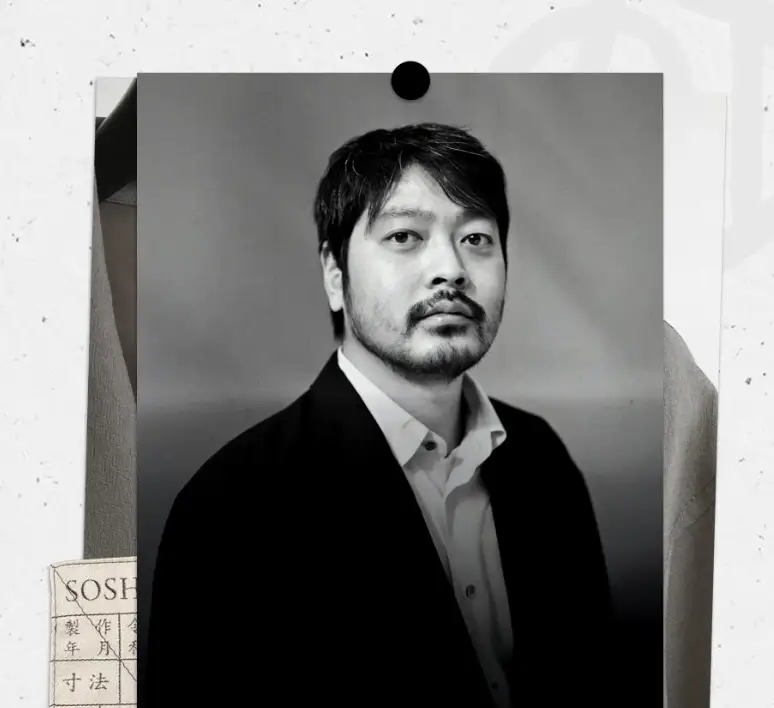
Soshi Otsuki isn’t rewriting the rules of fashion—he’s recalibrating its center. In an era driven by spectacle, his work reads as a quiet refusal: a commitment to craft, memory, and cultural dialogue over trend and noise. From his roots in Chiba to the runways of Florence, he has made a case for a different kind of luxury—one grounded not in logos, but in intention. Every pleated trouser, pre-curled lapel, every hand-stitched seam carries weight. Identity. Discipline. A measured, almost silent restraint.
stir
Otsuki’s work is anchored in a quiet rebellion—one that reframes dandyism away from flamboyance and toward discipline. His mantra, “dandyism created through Japanese spirituality and tailoring techniques,” exists as a tension between restraint and individuality. He draws from Tokyo’s salarymen—their muted palettes, rigid routines, and unspoken codes of dignity—then filters that through the elegance of 1980s Italian tailoring. The result is a hybrid language of power that never needs to announce itself.
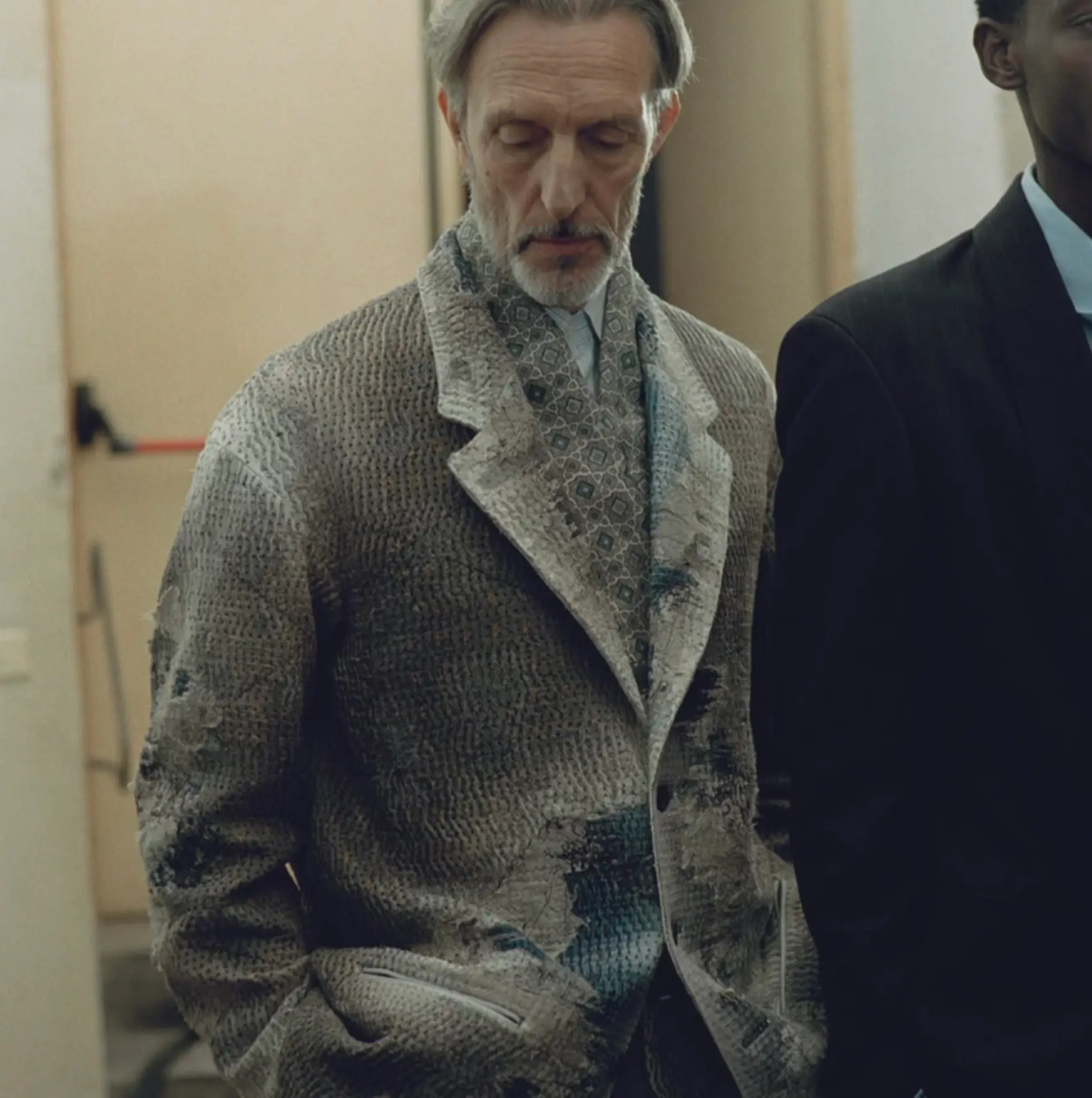
His garments are not simply worn—they are inhabited. Each piece carries narrative weight, shaped by his studies in philosophy and identity at Coconogacco, where clothing was approached as a vessel for meaning. Fabric, cut, and drape become tools of self-definition. His use of vintage kimono silk exemplifies this thinking: the narrow width and view of selvedge are not constraints, but design cues. The material’s history is not erased—it is extended.
Technically, his tailoring balances precision with showmanship. Pre-curled lapels—an echo of Giorgio Armani’s legacy—are rendered with a stillness that feels distinctly Japanese. Wide, multi-pleated trousers reference traditional hakama, yet fall with contemporary ease. This is what Otsuki calls “tailoring in motion”: structure that moves with the body rather than against it. Precise, but never rigid. Refined, but never stiff.
prize
In September 2025, Soshi Otsuki was awarded the LVMH Prize for Young Fashion Designers at the Fondation Louis Vuitton in Paris—a moment that shifted him from emerging voice to global presence. The accolade, accompanied by €400,000 and a year-long mentorship, is reserved for designers who don’t just execute, but redefine narrative.
What distinguished Otsuki was not only technical fluency, but philosophical clarity. The jury’s recognition of his “quiet rebellion” became shorthand for his approach. His use of reclaimed Italian suiting, vintage kimono silk, and hand-woven Iwate textiles spoke to sustain without performance. Not as gesture—but as continuity.
The win also marked a broader recalibration in fashion’s gaze. Japan, long treated as reference, was now foregrounded as authorship. Otsuki enters a lineage that includes Yohji Yamamoto and Rei Kawakubo—yet his voice diverges. Less deconstruction, more dialogue. He doesn’t dismantle Western tailoring; he speaks with it, reframing its codes through a Japanese spiritual lens. The implication is clear: the future of fashion may not be louder—but more intentional.
show
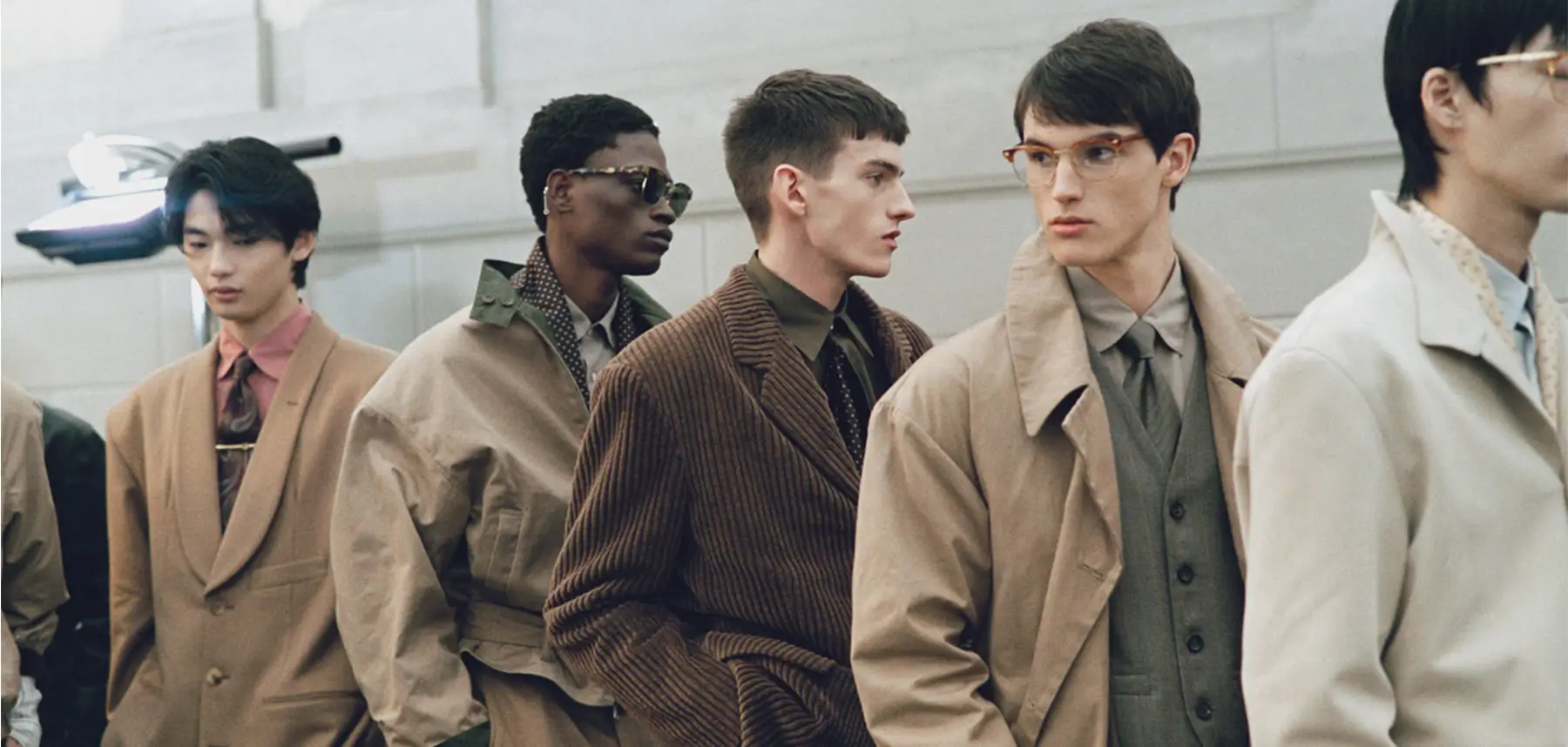
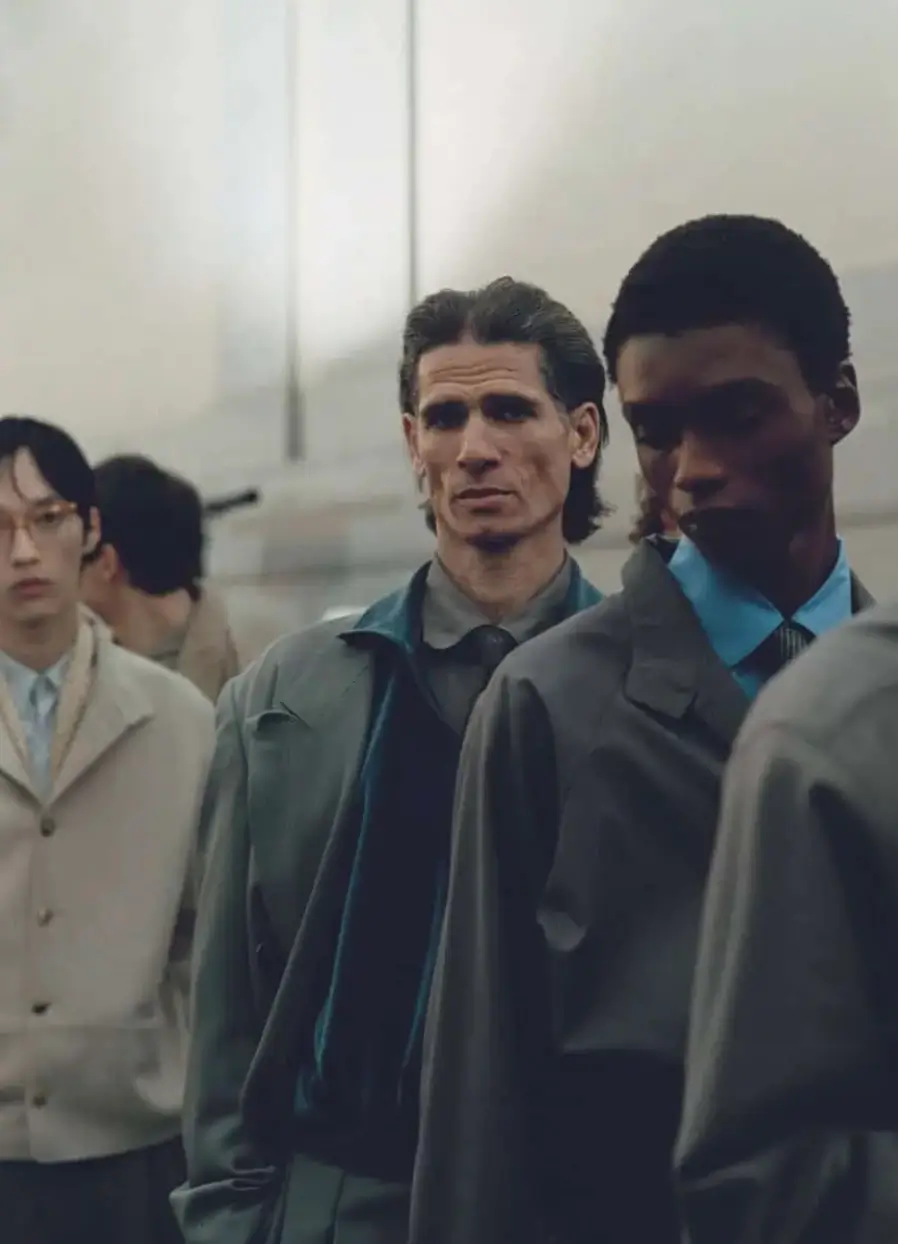
Otsuki’s debut as Guest Designer at Pitti Uomo No. 109 in January 2026 was not spectacle—it was calibration. Staged within the Refettorio di Santa Maria Novella, his A/W 2026 presentation, The Shape Itself, unfolded with a deliberate, almost meditative rhythm.
The collection operated in tension—structure and fluidity, past and present, silence and expression. Garments moved softly, their “tissue-paper” textures audibly crinkling as models passed, reinforcing both fragility and strength.
The silhouette was unmistakable. Wide, multi-pleated trousers—equal parts hakama and 1980s power dressing—paired with pre-curled lapels that nodded to Armani while asserting something more introspective. The palette remained restrained yet layered: “salaryman” grey, a custom blend of black and beige, offset by salmon pink, tobacco, and terracotta. Nostalgia, refracted through immediacy.
Fabric choices extended the narrative. Ultra-light wools, supple suedes, textured corduroy—each selected not just for drape, but for memory. Collisions entered quietly. A blue velour jacket by ASICS Sportstyle slipped beneath tailored outerwear, bridging movement and structure. Proleta Re Art introduced sashiko-stitched denim, grounding haute in process. Accessories—cigarette-holder rings by Kota Okuda, sculptural belts—read as small disruptions. Controlled deviations.
At a Pitti still marked by the absence of Armani, the show carried emotional weight. Not tribute in the literal sense—but resonance.
flow
Otsuki’s work expands through collision—not as branding, but as dialogue. Each partnership extends his philosophy outward, allowing craft to speak across disciplines.
With Proleta Re Art, utilitarian fabrics are elevated through handwork. Sashiko stitching becomes both reinforcement and ornament, turning denim and trucker textiles into heirloom objects. Streetwear, reframed through patience.
His work with ASICS follows the same logic. The velour zip-up layered beneath tailoring is less athleisure reference, more structural conversation. The reworked Gel-NYC, rendered in “salaryman” grey and salmon pink, applies his language of restraint to a familiar form.
Elsewhere, CAMISAS MANOLO contributes crisp cotton shirting—clarity within complexity—while GUNZE supplies ultra-light fabrics that move like second skin. Clothing, not as armor, but extension.
These connections form a network rather than a hierarchy. Otsuki does not absorb these voices—he amplifies them. The brand becomes less singular authorship, more collective resonance.
culture
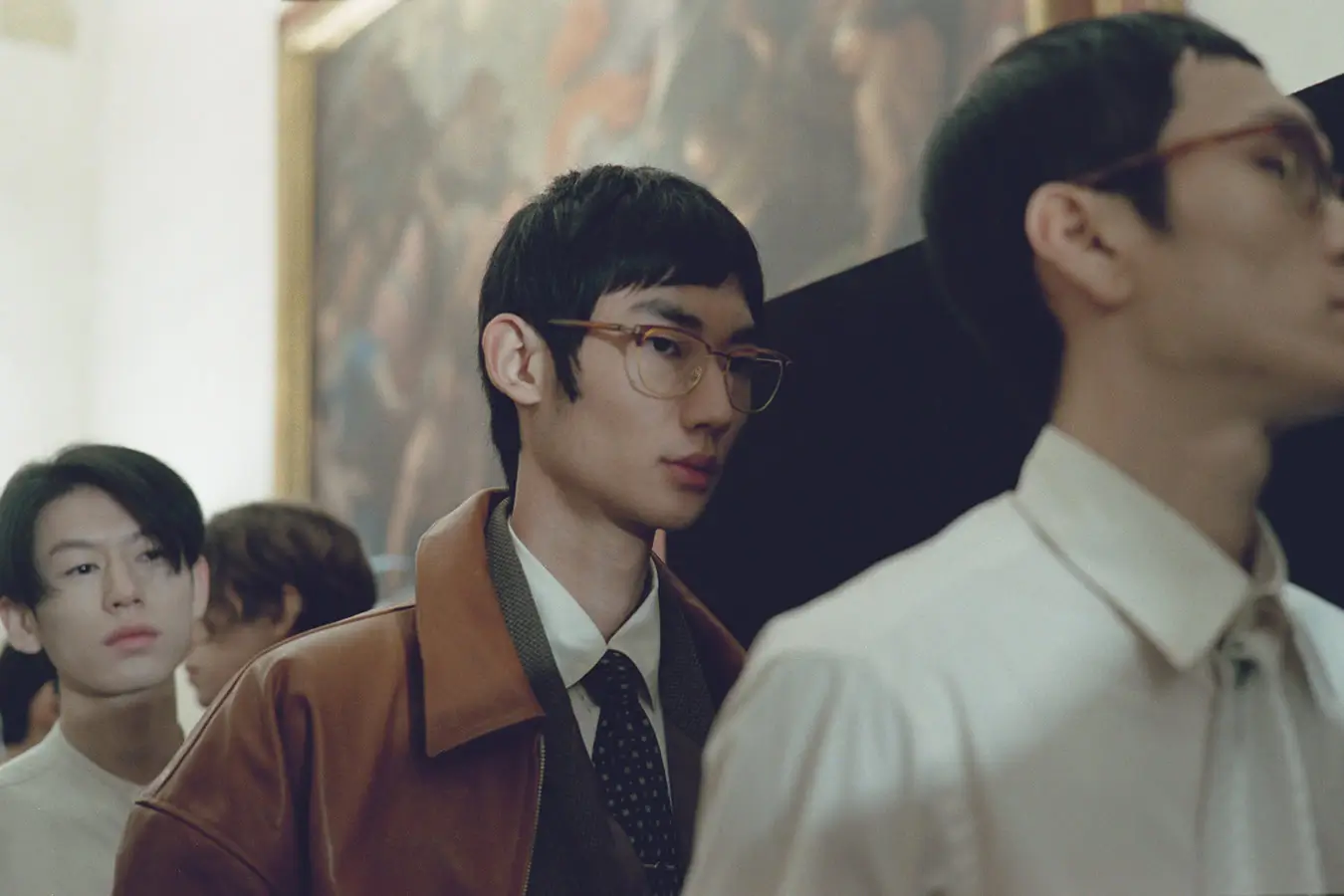
Otsuki’s A/W 2026 presentation functioned as more than a show—it was exchange. Florence, as the birthplace of Italian tailoring, provided context. His work responded not through imitation, but through reinterpretation.
The echoes of Armani’s 1980s silhouettes—double-breasted forms, softened structure—were present, but stilled. Where Italian tailoring often carries ease and expressiveness, Otsuki introduces restraint. A measured quiet.
Yet the dialogue is reciprocal. His “salaryman” grey, a calibrated neutrality, becomes a subtle act of defiance. Salmon and tobacco tones soften traditional severity. Fabrics—kimono silk, Iwate textiles, ultra-light wools—anchor the collection in memory rather than display.
Even pacing becomes part of the language. Slowed, deliberate, resistant to the accelerated rhythm of fashion week. An invitation to observe, not consume.
Otsuki has long traced parallels between Tokyo’s salarymen and Milan’s businessmen—shared codes of discipline, dignity, restraint. His work does not merge these identities. It allows them to coexist. That distinction matters. In a global landscape prone to flattening difference, his approach preserves specificity.
continue
Otsuki’s trajectory suggests something beyond brand-building. It points toward a system—one where luxury is redefined through continuity rather than novelty.
Expansion feels inevitable. Womenswear, perhaps. A rearticulation of kimono into contemporary form. His collaborations already hint at a broader cultural field—objects, installations, even publishing.
But his most significant contribution remains philosophical. In a system driven by constant output, he insists on memory. On process. On staying with an idea long enough for it to deepen.
Fashion, in his hands, becomes less about the new—and more about the necessary.
fin
Soshi Otsuki isn’t rewriting fashion—he’s returning it to itself. In an era of excess, his work holds space for restraint. For intention. For meaning that accumulates rather than declares.
From Chiba to Florence, his path reflects a broader shift. Away from spectacle, toward substance. His garments do not perform—they persist.
From Bunka Fashion College to the LVMH Prize to his Pitti Uomo debut, the arc is clear. Not acceleration—but alignment.
He does not design for attention. He designs for continuity. And in doing so, he reframes what clothing can hold: not just form, but memory. Not just identity, but history.
His legacy is still forming. But its foundation is already precise.
Not noise.
Structure.
Silence.
And the discipline to hold both.
n
From the DRIFT archive: Levi’s® Launches De La Soul T-Shirt Collection Inspired by Vintage Samples: A Cultural Revival Rooted in Hip-Hop History · Jodie Foster Narrates Morgan Neville’s Breakdown: 1975: A Cultural Autopsy of the Most Radical Year in American Cinema
Related Articles
American Horror Story Opens the Vault for a Thirteen-Episode Reunion of Its Own Ghosts
Three half-hour episodes land September 24 on FX and Hulu, with Jessica Lange, Sarah Paulson […]