DRIFT AUDIO
Listen to this story
Choose a voice, then press play.
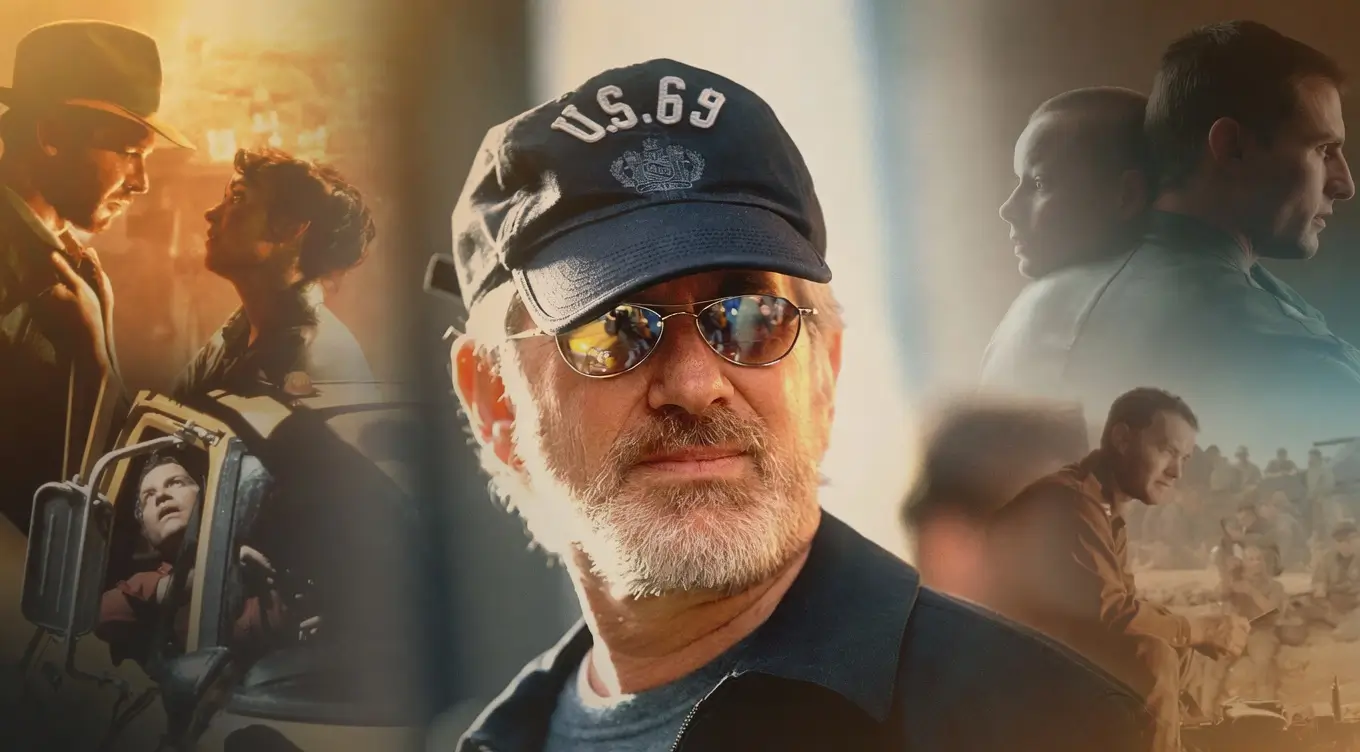
A handful of artists in any field reach the heights that Steven Spielberg has. Over six decades, the filmmaker has established himself not just as a popular or well-known director, but as a beloved and iconic one. His name is practically synonymous with American cinema, attached to some of the biggest hits and most acclaimed masterpieces of the 20th and 21st centuries. When Dawson’s Creek premiered in the late ’90s and needed to establish its main character as a film brat, there was only one choice for which director would be his personal hero; no other would make sense.
Spielberg is a director who can tackle vastly different genres—alien sci-fi, thrillers, war movies, weepy biopics—and make them feel recognizably “Spielbergian.” He imparts a raw, unabashed sentimentality that, at its best, delivers deeply emotional experiences. Some dismiss him as a purely populist filmmaker, but he possesses the craft and technical abilities of a true visionary: nobody knows how to move a camera or block a scene with quite as much panache and deft skill.
With Disclosure Day—his newest and strangest take on the alien contact story, released in theaters June 12, 2026—the director’s filmography has reached a neat 35 features. Now is the perfect time to revisit his works. But how to rank a catalogue as great and diverse as his? Schindler’s List and Jaws, Minority Report and The Fabelmans are vastly different movies that nonetheless carry the fingerprints of Spielberg’s humane, inquisitive approach.
This ranking draws from critical consensus (Rotten Tomatoes, IMDb), culture impression, and personal resonance, while celebrating the full spectrum—from young disrupter in the ’70s to blockbuster king, WWII chronicler, and late-career innovator. Even the lower entries have passionate defenders. Here is one thoughtful ranking of Steven Spielberg’s 35 directed features, emphasizing originality in theme and emotional truth over rote exposition.
low
At the bottom sit films where ambition occasionally outpaced execution or where the Spielberg touch feels less assured, yet each reveals facets of his evolving voice.
- 1941 (1979): A chaotic WWII comedy that swings wildly. Its broad farce and view spectacle background later mastery but lack focus. Still, the energy is infectious.
- Always (1989): A sentimental remake of A Guy Named Joe. Richard Dreyfuss and Holly Hunter shine, but the heavenly romance feels dated. It shows Spielberg grappling with loss early on.
- The Terminal (2004): Tom Hanks as a man stranded in an airport. Charming but slight; its humanism shines through bureaucracy.
- Hook (1991): Robin Williams as a grown-up Peter Pan. Divisive, but its whimsical production design and Lost Boys energy capture childhood wonder. Defenders praise its meta take on adulthood.
- The BFG (2016): Roald Dahl adaptation with Mark Rylance. View enchanting but narratively gentle; it prioritizes tenderness over thrills.
- Indiana Jones and the Kingdom of the Crystal Skull (2008): The controversial return. CGI-heavy and uneven, yet Harrison Ford’s charm and set pieces deliver nostalgic fun.
- War Horse (2011): Epic WWI tale told through a horse’s eyes. Overly sentimental for some, but its view flow and animal perspective offer fresh emotional layering.
- The Adventures of Tintin (2011): Motion-capture animation. Technically dazzling with fluid action; it translates Herge’s spirit into modern spectacle.
- Ready Player One (2018): Pop-culture overload in a dystopian VR world. Criticized for excess, it excels in inventive sequences and celebrates escapist joy—pure Spielberg escapism.
- Twilight Zone: The Movie (1983) – “Kick the Can” segment: Light and nostalgic, evoking wonder in aging.
- Amistad (1997): Powerful slavery drama with strong performances (Djimon Hounsou). Courtroom intensity showcases his dramatic command, though it leans didactic at times.
These entries highlight Spielberg’s willingness to experiment across animation, comedy, and historical drama, even when results vary.
core
Here reside dependable hits and mid-tier gems that balance entertainment with deeper inquiry.
- The Post (2017): Meryl Streep and Tom Hanks in a timely press-freedom story. Sharp journalism thriller with timely relevance.
- Lincoln (2012): Daniel Day-Lewis’s transformative performance anchors this political procedural. Masterful in dialogue and legislative nuance.
- Bridge of Spies (2015): Cold War spy exchange with Tom Hanks. Tense, elegant, and humane—Coen brothers’ script elevates it.
- West Side Story (2021): Vibrant remake. Ansel Elgort and Rachel Zegler bring fresh energy; the dance sequences pulse with choreographic brilliance and social commentary.
- Munich (2005): Post-9/11 thriller on Israeli retaliation. Morally complex and gripping, it marks a darker turn.
- War of the Worlds (2005): Tom Cruise-led alien invasion. Visceral effects and parental panic make it a harrowing update of Wells’ classic.
- The Lost World: Jurassic Park (1997): Dino sequel with set-piece thrills (San Diego rampage). It expands the franchise’s wonder and terror.
- Empire of the Sun (1987): Young Christian Bale in WWII Shanghai. Visually stunning coming-of-age tale; one of his most painterly works.
- Catch Me If You Can (2002): Leonardo DiCaprio and Hanks in cat-and-mouse con artistry. Effortless charm and 1960s style make it endlessly rewatchable.
- The Color Purple (1985): Whoopi Goldberg’s breakthrough. Emotional depth in adapting Alice Walker; it proves Spielberg’s facility with intimate drama.
- Minority Report (2002): Tom Cruise in a prescient sci-fi noir. Pre-crime tech and kinetic chases showcase vision world-building.
- A.I. Artificial Intelligence (2001): Kubrick-inspired Pinocchio tale with Haley Joel Osment. Haunting exploration of humanity, love, and abandonment—often cited as underrated masterpiece.
tier
These films define why Spielberg endures: technical innovation married to profound emotional resonance.
- Jurassic Park (1993): Game-changing effects and awe-inspiring dinosaurs. It revolutionized blockbusters while delivering wonder and cautionary thrills.
- Indiana Jones and the Last Crusade (1989): Sean Connery as Indy’s dad elevates the adventure. Wit, mid, and Grail myth at their finest.
- Close Encounters of the Third Kind (1977): UFO obsession meets family strain. The Devil’s Tower finale remains transcendent cinema.
- E.T. the Extra-Terrestrial (1982): The ultimate friendship story. Universal in its themes of loneliness and connection; it redefined family sci-fi.
- Raiders of the Lost Ark (1981): Perfect adventure archetype. Harrison Ford’s iconic Indy, relentless pacing, and mythic stakes—pure cinematic joy.
- Saving Private Ryan (1998): Normandy opening is visceral filmmaking at its peak. War’s horror and brotherhood rendered with unflinching realism.
- The Fabelmans (2022): Semi-autobiographical ode to cinema and family. Intimate, funny, and moving—late-career reflection at its best.
- Jaws (1975): The original summer blockbuster. Mechanical shark troubles birthed modern tentpole cinema; tension, character, and primal fear remain unmatched.
- Indiana Jones and the Temple of Doom (1984): Darker, wilder prequel. Kate Capshaw and Short Round add mid; rollercoaster set pieces define escapism.
- Schindler’s List (1993): Black-and-white Holocaust masterpiece. Liam Neeson, Ralph Fiennes, and Ben Kingsley deliver harrowing humanity amid atrocity. A moral triumph.
tbd
Disclosure Day, starring Emily Blunt, Josh O’Connor, Colin Firth, Eve Hewson, and Colman Domingo, marks Spielberg’s return to alien contact themes with a conspiracy-thriller edge. Following an on-air incident exposing government secrets, ordinary people confront humanity’s place in the universe. Early reactions hail it as a “dense roller coaster” blending chase, love story, and mystery, with Blunt delivering career-best work. Optimistic amid skepticism, it echoes Close Encounters while addressing modern distrust and revelation.
Box office opened strong at $92.9M worldwide, affirming Spielberg’s enduring draw. Its humanistic pursuit of truth fits seamlessly into his oeuvre—wonder tempered by realism, emotion grounded in the everyday. Whether it climbs the ranks depends on rewatch value, but it already feels like a fitting late-period statement: belief in connection, even across stars.
fin
Ranking Spielberg feels somewhat absurd because his films operate on a spectrum of joy, terror, grief, and hope. Recurring motifs—absent or flawed fathers, childlike wonder, moral choice amid chaos, the power of ordinary people—thread through decades. His technical innovations (practical effects mastery, fluid Steadicam, collaborative genius with Williams, Kaminski, et al.) serve story and feeling first.
In 2026, amid fragmented media, Spielberg reminds us of cinema’s communal power. Disclosure Day arrives at a moment of culture fatigue with cynicism, offering instead breathless optimism. His work dispels the notion that sentimentality is weakness; it is, in his hands, a radical act of empathy.
From beach panic in Jaws to quiet revelations in The Fabelmans, Spielberg has shaped how gens see the world—both its monsters and its miracles. As his 35th film invites us to consider disclosure and connection, one truth remains: few directors have made us feel quite so alive.
From the DRIFT archive: Jodie Foster Narrates Morgan Neville’s Breakdown: 1975: A Cultural Autopsy of the Most Radical Year in American Cinema · Martha Stewart’s Entertaining Returns: The 1982 Classic That Defined Modern Lifestyle Culture
Related Articles

Under Rue de Castiglione, Liaigre Gives Hôtel Costes a Spa With No Hard Corners
A 20-meter lap pool, eight treatment rooms and not one sharp angle: Studio Liaigre’s spa […]