DRIFT AUDIO
Listen to this story
Choose a voice, then press play.
There is a moment, just after stepping into the space, when the noise of Milan Design Week—the crowds, the launches, the constant theater of newness—begins to recede. Not because the installation is loud. Not because it insists on attention. But because it asks for something rarer: stillness.
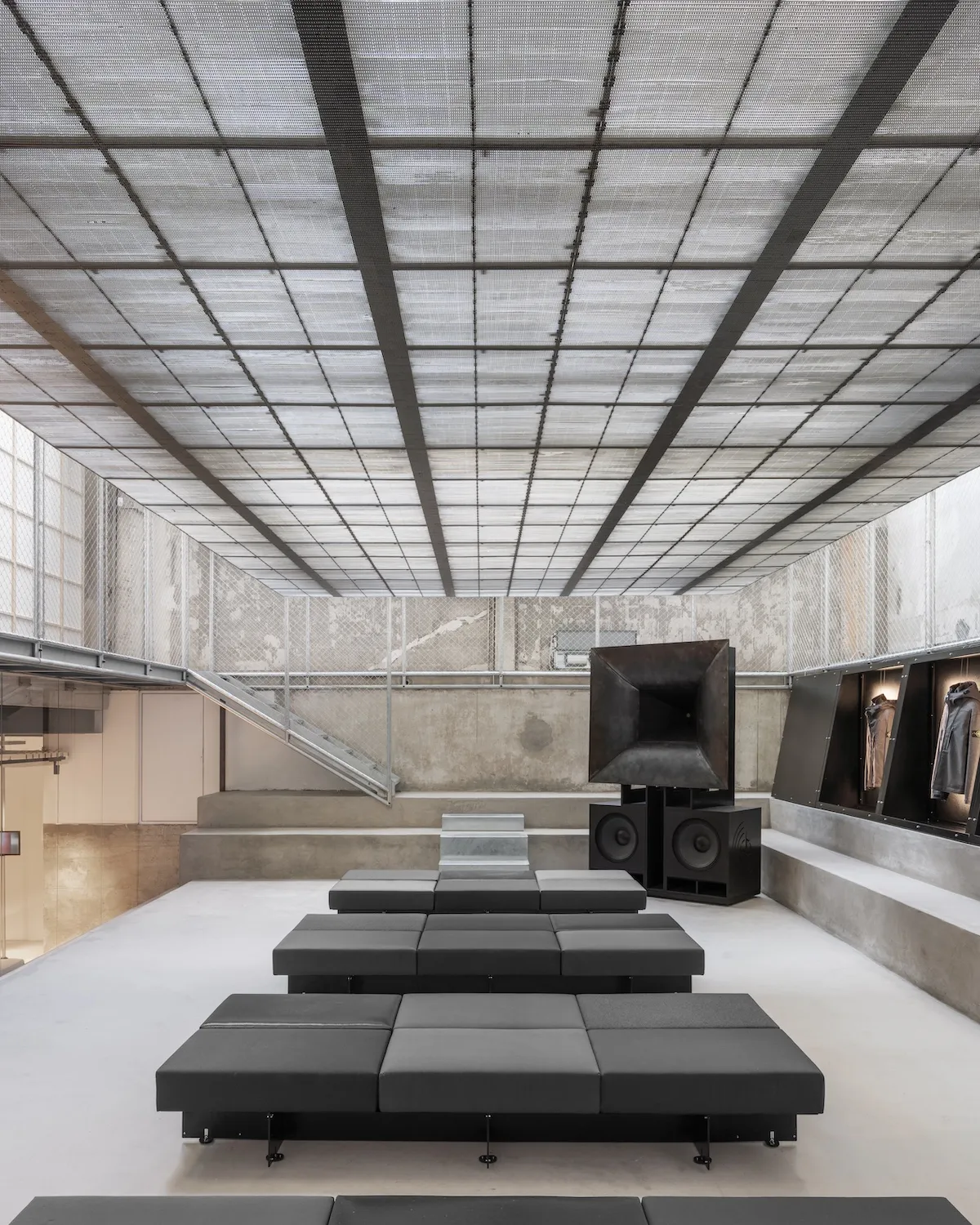
At Capsule Plaza, inside the emptied shell of a disused swimming pool, Stone Island and NM3 have built something that resists the usual language of exhibition. This is not simply a display. It is not even entirely an installation. It is an encounter: quiet, tactile, immersive, and unexpectedly intimate. It does not shout over the week surrounding it. It speaks in texture, tone, pressure, and pause.
View this post on Instagram
acknowledge
The project is called No Seasons, a title that moves through the room like a thesis and a memory at once. The phrase revives Massimo Osti’s radical concept from the 1980s, one that rejected the tyranny of the fashion calendar in favor of something more enduring. No spring. No summer. No autumn. No winter. Only garments designed to last, adapt, and evolve. Here, in 2026, that philosophy is not being nostalgically quoted. It is being reactivated.
stir
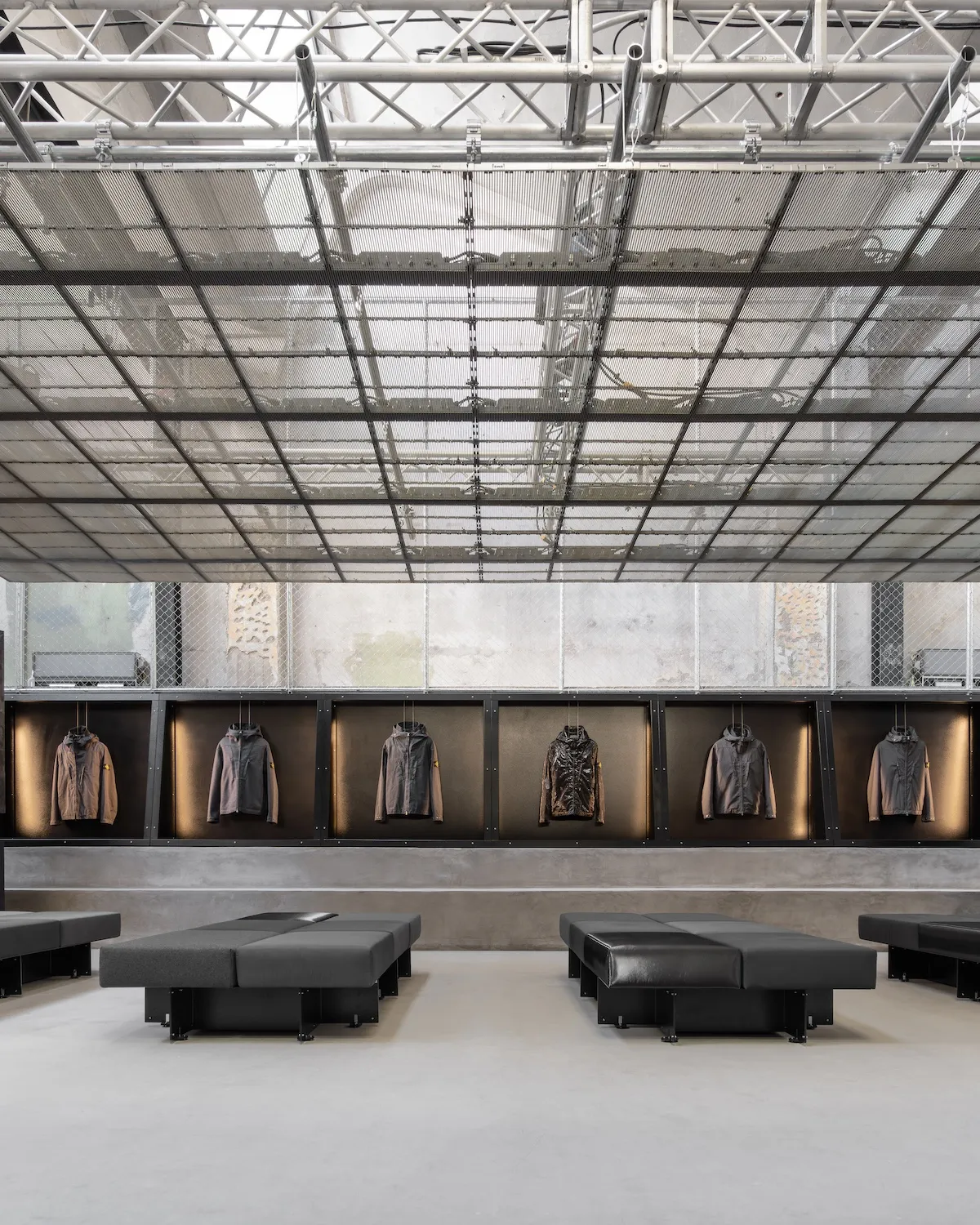
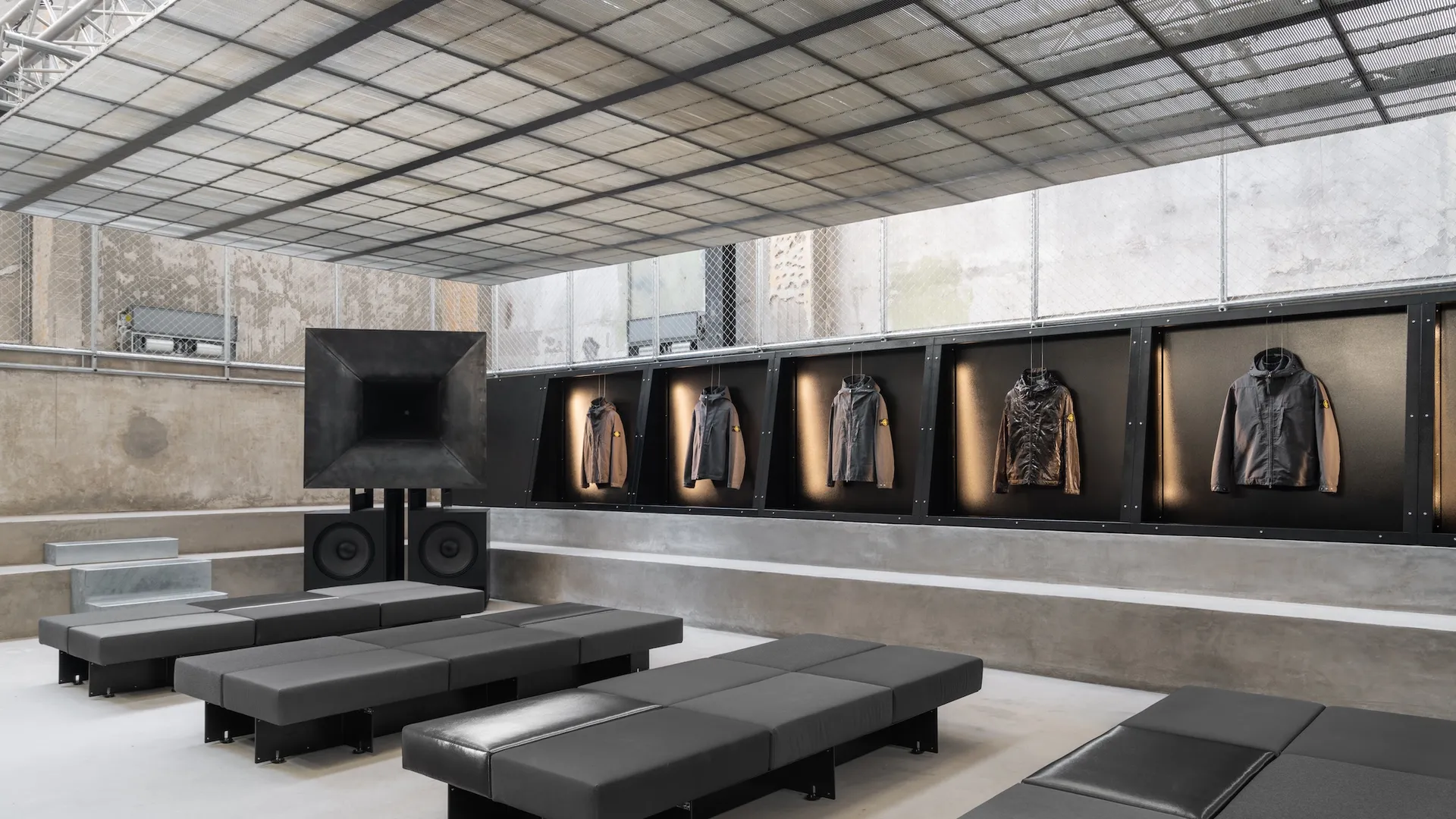
At the center of the installation is a single jacket, deconstructed across six different material iterations. Each version is rendered in the same piombo dye, a lead-toned shade that becomes the control variable in a larger experiment. The color remains fixed. The fabrics do not. What emerges is a study in how surface, weight, finish, and memory transform the meaning of a garment even when its silhouette stays constant.
Tela Resinata, Stone Island’s original resin-coated cotton, carries a weathered sheen, cracked like aged lacquer—time as evidence, not erosion. Prismatic Nylon-TC fractures light into metallic fragments, shifting between gunmetal and violet with movement. Raso Gommato resists with a slick, almost aquatic density. David-TC remains grounded—matte, composed, quietly resilient. Crinkle Reps NY holds its creases like memory, a record of heat and pressure. Panno introduces weight and softness simultaneously, its wool-fabric blend carrying a sense of lived history.
assemble
Yet the force of No Seasons lies not only in what is shown. It lies in how the visitor is asked to engage.
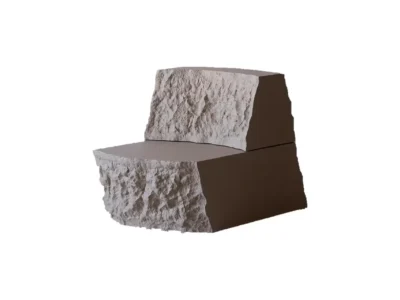
NM3 transforms observation into contact. Powder-coated steel benches—precisely assembled—are upholstered in the same six fabrics. You do not just see the material; you test it. You sit with it. You press into resistance. You trace surfaces. The garments move from object to experience.
This is fashion as phenomenology. Not spectacle, but sensation.
dialogue
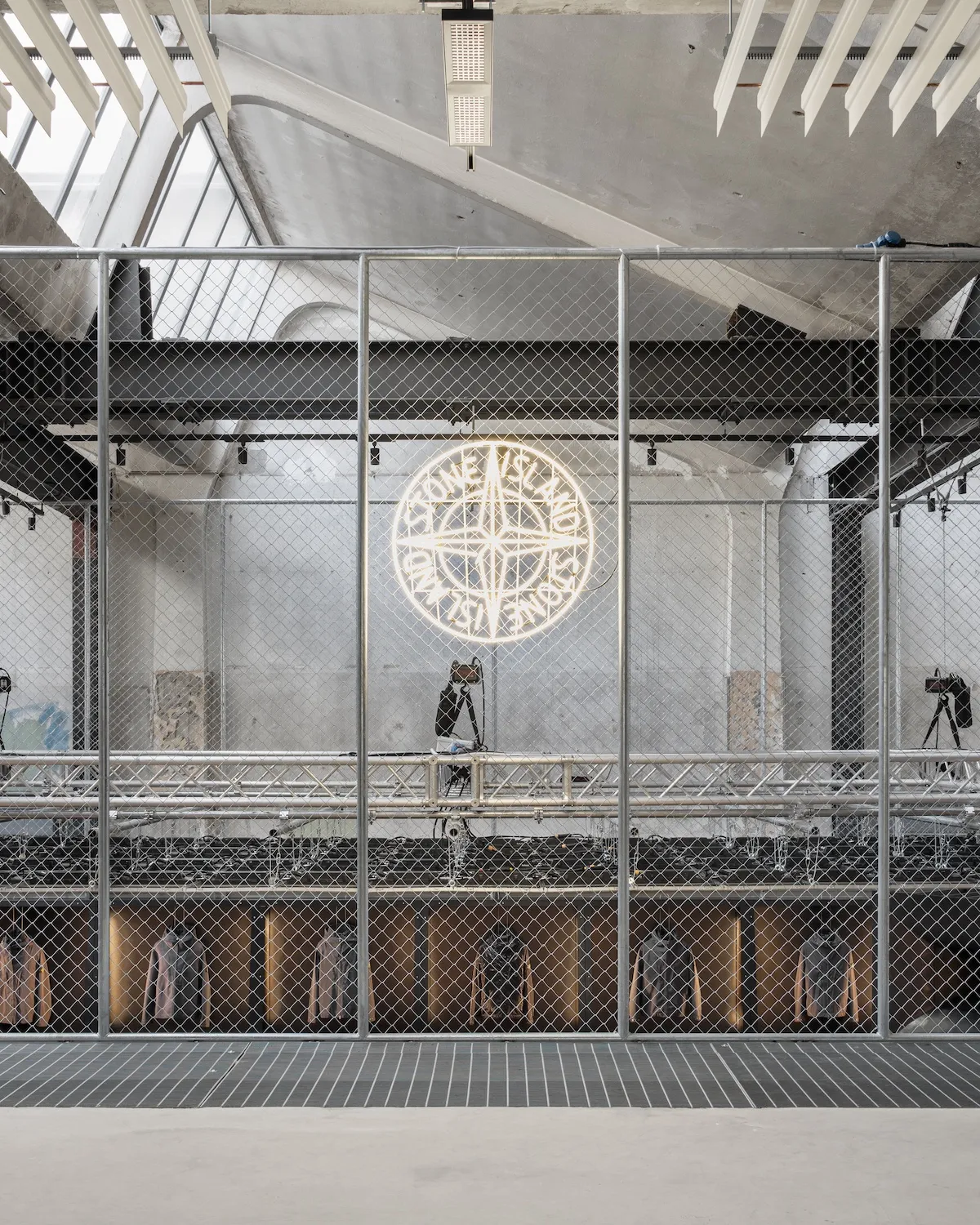
The drained pool becomes more than a venue—it becomes a frame for material thought. Concrete walls hold a landscape of modular steel and controlled light. NM3’s philosophy of modular precision mirrors Stone Island’s engineering ethos. Nothing is hidden. Structures are legible. Construction becomes part of the language.
Black metal vitrines rise with restraint, holding garments like active studies rather than static relics. The jackets are elevated, but never distanced. This is not preservation. It is presentation as process.
View this post on Instagram
show
Above, a large LED ceiling by 700×100 introduces motion without distraction. Ripples, fractures, and light trails echo the textures below rather than illustrate them. It is digital, but grounded—an atmospheric extension of material.
Sound follows the same logic. Engineered by Friendly Pressure, a low-frequency resonance fills the space through a patinated metal horn. It is not music as performance. It is sound as presence—subtle, grounding, immersive.
change
And here, something shifts.
You stop moving through the installation as a viewer. You begin inhabiting it as a participant.
No Seasons expands beyond fashion. It becomes environment—space for pause, for touch, for awareness. In a culture defined by speed and image consumption, this insistence on physical presence feels radical.
You cannot capture texture through a screen. You cannot compress weight into an image. You have to be there.
retro
Massimo Osti’s belief—“I don’t design clothes. I design materials.”—finds full expression here. The installation does not explain it. It lets you feel it.
Stone Island was never simply a fashion brand. It was—and remains—a laboratory. Garments are experiments. Wearers complete the process. Over time, fabric records use, environment, and memory.
No Seasons distills that idea to its essence. One jacket. Six materials. No distraction.
inflection
In an industry driven by constant output, this reduction feels intentional. While others pursue novelty, Stone Island returns to material.
NM3 reinforces this through dry-assembly design—structures built to be disassembled, reconfigured, moved. Nothing is fixed. Everything adapts.
The drained pool intensifies the experience. Sound sharpens. Movement slows. Attention deepens.
You sit. You touch. You notice.
scope
The materials begin to speak differently.
Crinkle Reps NY feels like stored pressure. Tela Resinata carries environmental history. Panno suggests duration and weight. Each fabric holds time differently.
This is not about newness. It is about use.
The LED visuals echo emotion rather than object. The sound hums rather than performs. Every element contributes without overwhelming.
The result is multisensory design that remains restrained, deliberate, and precise.
forward
In an era of digital fashion and virtual consumption, No Seasons acts as quiet resistance.
Not through rejection, but through emphasis.
Technology is present—but it enhances the physical rather than replacing it. The installation insists that material experience remains central to fashion’s future.
Garments are not images. They are companions.
They age. They adapt. They record.
clue
By the time you leave, the effect lingers.
You become aware of your own clothing—its texture, its wear, its presence. You think less about trend, more about continuity.
No Seasons is not about nostalgia. It is about carrying forward a know rooted in material, memory, and meaning.
In a world defined by speed, it offers something rare:
A place to pause.
A space to touch.
A reason to remember.
n
From the DRIFT archive: PANTONE’s 2026 Color of the Year Takes Shape With Play-Doh and Post-It Editions