DRIFT


Where Architecture Meets Innovation in the Midst of Japan

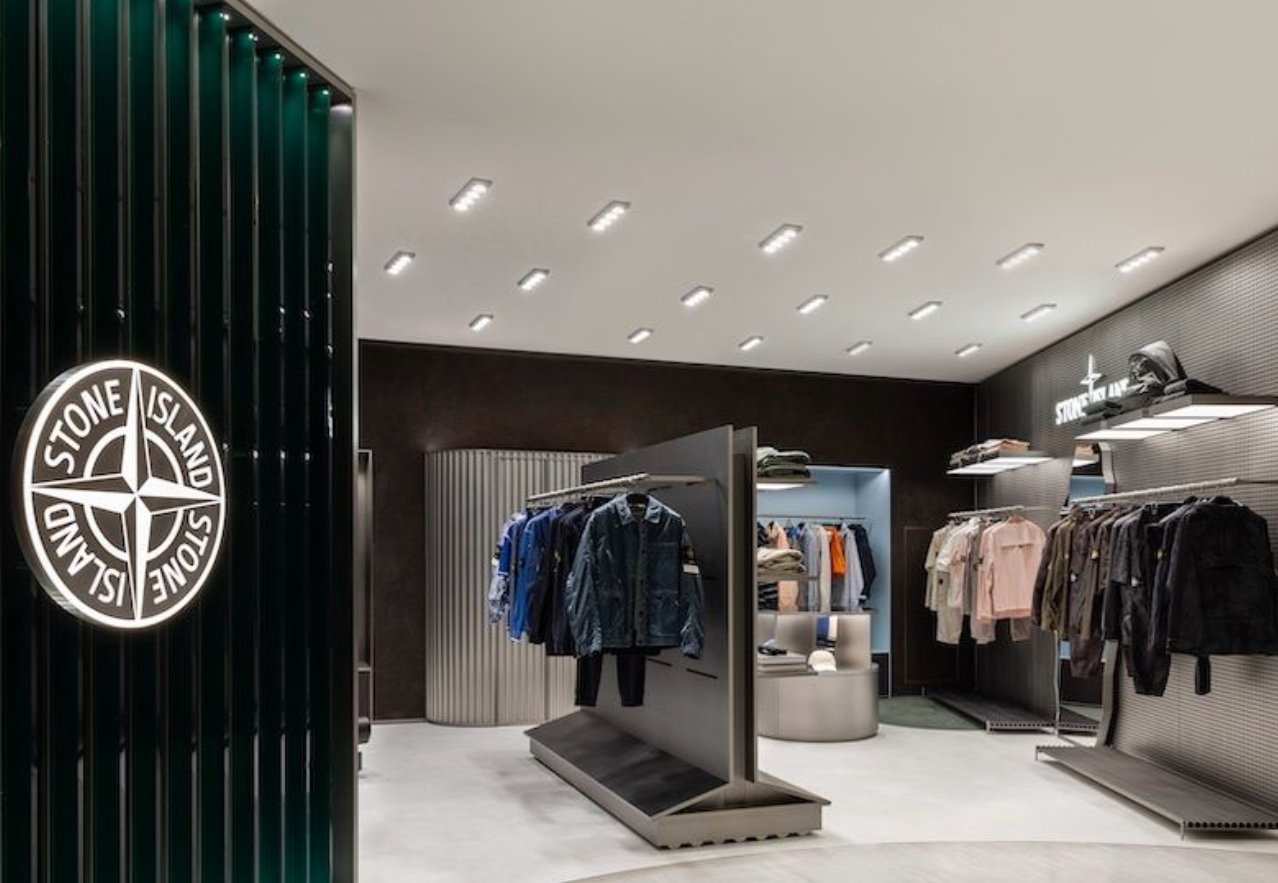
In the high-octane world of performance fashion, Stone Island remains a standard-bearer for innovation. Its relentless pursuit of fabric technology, militarized silhouettes, and sophisticated garment dyeing techniques has built not just a brand, but a subcultural stronghold—embraced by terrace culture in the UK, Japanese style arbiters, and the global fashion elite alike. With its latest architectural move, the Italian outerwear house signals more than just expansion—it declares a sharpened identity. The relocation and reopening of the Stone Island store at HANKYU MEN’S OSAKA marks the continuation of an architectural and cultural narrative that is now as much about space as it is about cloth.

Previously nestled on the fourth floor, the store has descended—strategically and symbolically—to the second floor, closer to street level and visibility. This move is not arbitrary. It mirrors a larger shift in the brand’s global retail strategy: bringing its rarefied technical luxury closer to the everyday urban footfall, without compromising on the rigor or mystery that defines the Stone Island experience.

At the core of the store’s reimagined presence is the distinctive global design language developed in collaboration with OMA/AMO, the research and design arm of Rem Koolhaas’ architectural practice. This partnership, ongoing since 2021, reinterprets the conventional expectations of retail through installations that blend science-fictional severity with elemental elegance. Just as Stone Island outerwear makes the wearer feel like a protagonist in some yet-unwritten dystopia, its stores immerse visitors in a spatial laboratory, each surface meticulously composed, each material echoing the brand’s obsessive commitment to experimentation.

A Monolithic Welcome

Stepping into the new Hankyu Men’s Osaka location feels like entering a sanctum of industrial poetics. The OMA/AMO treatment here is precise and immersive. Brushed steel, thermo-sensitive polymers, smoked glass, and mineral textures coalesce to form a visual and tactile mise-en-scène. Racks hang like mechanical limbs from modular scaffolds. Flooring subtly references the rubberized treatments of archival Stone Island pieces. Lighting is diffuse but purposeful—highlighting jackets the way one might illuminate precious artifacts or alien technology.

The overall effect is somewhere between a science lab and a command center—precisely where Stone Island thrives. For a brand whose identity is so rooted in engineering and function, this architectural direction doesn’t decorate but distills. It offers a purer way to understand the garments not just as commodities but as tools.

From Fabric to Format: A Multisensory Strategy

Stone Island has long occupied a special place in the world of menswear, operating less like a fashion label and more like a technical atelier. Its innovations—from reflective jackets in the 1980s to the Ice Jacket that changes color with temperature—have always demanded more than a simple hanger on a rack. This new store layout acknowledges that demand. It creates space not just to shop, but to decode.

Interactive displays reveal the processes behind the pieces: resin coatings, heat-reactive dyeing, garment washing protocols. Customers are encouraged to engage with the legacy of the brand—videos loop with behind-the-scenes footage of Italian factories, and shelving incorporates archival materials like rubber patches and swatches from discontinued prototypes. A jacket here is never just a jacket; it’s a layered tale of research, failure, breakthroughs, and redefinitions.

OMA/AMO’s Vision: Industrial Beauty for the Retail Age

In partnering with OMA/AMO, Stone Island has elevated the notion of brand environment to something approaching philosophical architecture. While other luxury brands often traffic in plush, aspirational indulgence, Stone Island offers a very different appeal—one grounded in utilitarian grace, structural honesty, and intellectual substance.

The architectural language developed by OMA/AMO for Stone Island is modular and mobile. Walls can be shifted, fixtures reassembled, and installations replaced to reflect new seasons or special capsule drops. This mutability reflects the ethos of the garments themselves—pieces that morph, adapt, and interact with light, heat, and movement. It is not merely branding, but a holistic embodiment of the technical DNA that powers Stone Island.

Notably, the Osaka location integrates several Japan-specific flourishes. Burnished wooden elements pay homage to traditional Japanese craftsmanship, creating a gentle tension between the natural and synthetic. This fusion reflects the sensibility of the Japanese customer: one who reveres innovation but also insists on cultural anchoring and aesthetic integrity.

Osaka as a Strategic Anchor

Osaka, long known as Japan’s working-class metropolis with a gritty charm and entrepreneurial spirit, makes a fitting home for Stone Island’s latest concept store. The city’s men’s fashion scene is robust, rooted in a love for heritage garments, function-first fashion, and an appreciation for brands that make quality feel like an obsession. Osaka’s fashion tribes—from vintage Americana heads to techno-futurist stylists—mirror the dualities that Stone Island itself embodies: past and future, form and function, art and utility.

The Hankyu Men’s department store is itself a barometer for what is relevant in Japanese menswear. By placing Stone Island so prominently on its second floor—amid peer brands like Comme des Garçons Homme, Sacai, and Undercover—it acknowledges the label’s increasing resonance with Japan’s discerning consumers. In doing so, it not only caters to existing brand loyalists but seeds the next generation of admirers.

Community, Cult, and Continuity

Stone Island does not rely on traditional marketing. It never has. Its allure is built on a combination of cult reverence, subcultural affiliation, and global mystique. From Milanese street crews to British casuals and Seoul’s fashion-forward tastemakers, the brand functions more like a secret society than a conventional fashion label. The Osaka store continues this tradition—not with bells and whistles, but with an unrelenting devotion to precision, quality, and storytelling.

The store also doubles as a kind of clubhouse. With curated music playlists, occasional product installations, and capsule exclusives for the Japanese market, it functions as a soft power base. There is talk already of a Japan-exclusive “Ghost Piece” capsule set to launch from this very location, harnessing regional loyalty with global interest.

The new Osaka flagship will also reportedly act as a testing ground for further retail experiences. QR-based garment histories, experimental fabrication stations, and AI-led styling tools are all in various stages of development. If successful, these features will roll out to other flagship stores across Asia and Europe.

Stone Island and the Global Grid

This Osaka opening is part of a larger expansion blueprint. Since joining the Moncler Group in 2020, Stone Island has quietly accelerated its global retail strategy, opening concept stores in Seoul, Shanghai, and New York, each one guided by the same architectural vocabulary and experiential mindset. But no two stores are the same. Each one is contextually tailored, a site-specific reflection of how Stone Island resonates in different urban ecosystems.

The Osaka location holds particular weight because of Japan’s longstanding fascination with Stone Island. As early as the 1990s, Japanese fashion magazines were profiling the brand’s radical dyeing experiments and showcasing it alongside cult European labels. Japanese collectors today still chase vintage Tela Stella and Prototype Research Series jackets with near-religious fervor.

With this new store, Stone Island is not just catering to that passion—it is institutionalizing it. By presenting the brand as both museum and laboratory, it ensures that Osaka becomes a permanent node in the brand’s evolving global grid.

The Compass Inside

As with every Stone Island flagship, the iconic compass logo is both a symbol and a philosophy. It represents direction, exploration, and the ability to remain centered amid chaos. The Osaka store, in its serene severity, offers customers a way to navigate not just outerwear, but identity—how we protect ourselves, signal allegiance, and express curiosity in a world that moves faster each day.

“The Compass Inside,” the recurring campaign tagline associated with the global flagship rollout, functions here as both branding and metaphysical suggestion. It implies that wearing Stone Island is not about trends, but about orientation—about knowing where you stand in the landscape of style, community, and technological possibility.

This Osaka chapter, then, is not just about real estate. It is about legacy. A continuation of the Stone Island project as a perpetual engine of reinvention. And as long as the compass keeps turning, the story will continue—one store, one city, one material innovation at a time.

Related Articles

Modern data center facility with a solar-panel-clad exterior, bright green administrative offices, and secure perimeter fencing, showcasing sustainable digital infrastructure and renewable energy integration

Lombardy’s Data Center Boom: Balancing Digital Ambition with Environmental Responsible

Lombardy has emerged as Italy’s primary hub for new digital infrastructures, particularly data centers—vast complexes […]

In a highly anticipated reunion after 24 years, Adidas Originals and Coca-Cola have joined forces once again to celebrate the FIFA World Cup 2026™. The collaboration revives their iconic 2002 partnership from the Japan-South Korea tournament, now reimagined for the biggest global sporting event of 2026, co-hosted by the United States, Canada, and Mexico. Set to launch on June 6, 2026, this collection masterfully blends Adidas' streetwear heritage with Coca-Cola's timeless branding, creating a vibrant fusion of football culture, nostalgia, and modern style. The drop arrives at a perfect moment. With the World Cup kicking off on June 11, 2026, fans worldwide are gearing up for a summer of football excitement. This collaboration isn't just merch—it's a cultural statement that merges two legendary brands under the banner of "Originals are the Real Thing," a clever twist on Coca-Cola's famous slogan. Historical Context: A Reunion 24 Years in the Making Adidas and Coca-Cola first collaborated during the 2002 FIFA World Cup, producing limited-edition pieces that captured the era's energy. That partnership helped define early 2000s football-streetwear crossover culture. Fast-forward to 2026, and the brands are back with fresh energy, leveraging Adidas' deep FIFA ties (as an official partner) and Coca-Cola's long-standing sponsorship of the tournament. The 2026 edition promises to be historic as the first 48-team World Cup, spanning three countries and generating unprecedented global hype. This collab taps into that momentum, offering fans wearable pieces that celebrate both brands' legacies while looking forward to the future of football fashion. Collection Overview and Design Philosophy The Adidas Originals x Coca-Cola collection fuses 2000s street style with classic sporting aesthetics. Expect bold reds, creams, whites, and silver accents inspired by Coca-Cola's iconic packaging—think classic script logos, droplet detailing, and can-inspired motifs. The lineup spans footwear, apparel, and accessories, divided into two visual directions: one logo-heavy and graphic-forward, the other drawing from vintage advertising aesthetics. Designs pay homage to Coca-Cola's visual language while staying true to Adidas Originals' archival roots. High-quality materials, attention to detail, and versatile silhouettes make these pieces suitable for both match-day wear and everyday street style. The campaign, featuring young football star Lamine Yamal and a diverse cast in everyday scenes building anticipation for the tournament, reinforces themes of originality and shared cultural moments. Footwear Highlights Footwear takes center stage in this collaboration, with reimagined takes on iconic 2000s Adidas silhouettes: Samba and Superstar Models: These classics get Coca-Cola treatment with white/cream/red colorways and prominent script branding. The Samba blends street heritage with football roots, while the Superstar II features weathered bases and bold side panels. Expected pricing around $110–$130. Adistar Control 5: A standout with droplet detailing mimicking condensation on a cold Coke can. This model brings performance-inspired design into lifestyle territory. Predator Sala: Indoor/hybrid style with silver-and-red accents, nodding to predatory precision on the pitch and Coca-Cola's bold energy. Climacool 1: Revived with breathable tech and Coke-inspired graphics, perfect for warm summer days. Megaride F50: A highlight paying tribute to the iconic Coca-Cola glass bottle, with unique contours and refreshing design cues. Each pair incorporates thoughtful details like embroidered logos, custom insoles, and packaging that mimics vintage Coke crates or cans. These shoes are built for durability and comfort, appealing to sneakerheads, football fans, and casual wearers alike. Apparel and Accessories Beyond kicks, the collection offers a full lifestyle range: Track Tops and Jerseys: Standout jerseys fuse retro Coca-Cola advertising from different eras into cohesive football designs. Track jackets feature signature three stripes alongside Coke branding, in vibrant reds and classic whites. Shorts and T-Shirts: Relaxed fits with graphic prints, ideal for casual wear or layering. Expect motivational football motifs blended with refreshing beverage references. Accessories: A bright red airliner bag stands out as a functional statement piece. Additional items may include caps, socks, and tote bags carrying the collaborative spirit. The apparel emphasizes comfort with premium cotton blends, mesh panels for breathability, and oversized silhouettes popular in contemporary streetwear. Unisex sizing and inclusive fits make the collection accessible to a broad audience. Cultural Impact and Fan Appeal This collaboration resonates on multiple levels. For football fans, it represents national pride and global unity ahead of the 2026 tournament. Sneaker enthusiasts will appreciate the nostalgic 2000s revival mixed with modern execution. Streetwear collectors see it as a prime example of how heritage brands can innovate through partnerships. In an era where sports and fashion increasingly intersect, Adidas and Coca-Cola deliver pieces that transcend the pitch. Wear them to watch matches at home, attend watch parties, or hit the streets in any host city—New York, Los Angeles, Toronto, or beyond. The designs are versatile enough for gym sessions, festivals, or daily commutes. The timing aligns perfectly with rising interest in football in North America, boosted by the co-hosting nations. Young talents like Lamine Yamal in the campaign help bridge generational gaps, attracting newer fans while satisfying longtime supporters. Where to Buy and Release Details The collection launches globally on June 6, 2026, via: Adidas CONFIRMED app (for early access and raffles) Adidas.com Select retailers and flagship stores worldwide Some regions may see staggered drops, with Japan and other markets getting early access. Prices are expected to range from $50–$150 depending on the item, making it relatively accessible compared to ultra-limited drops. Pro Tips for Copping: Enable notifications on the CONFIRMED app. Check local stock at Adidas stores in major cities. Monitor resale platforms post-drop for exclusive colorways, but be wary of markups. Size up slightly for oversized apparel fits. Given the World Cup hype, popular items like the Sambas and jerseys are likely to sell out quickly. International shipping is available, but factor in potential customs delays. Styling Suggestions Match Day Look: Pair a collaborative jersey with classic black shorts and Samba sneakers for effortless fan style. Streetwear Rotation: Layer a track top over a graphic tee with wide-leg pants and the Megaride F50 for a bold urban ensemble. Casual Summer: White Superstar with denim shorts and the airliner bag for a refreshing, vacation-ready vibe. These pieces mix seamlessly with existing Adidas or neutral wardrobes, maximizing versatility. Broader Context in 2026 Fashion and Sports The Adidas x Coca-Cola drop is part of a larger wave of high-profile collaborations tied to the World Cup. Adidas continues its dominance in football kit design, while Coca-Cola leverages its sponsorship with collectibles, bottles, and experiential activations like the Trophy Tour. In the sneaker industry, this collab exemplifies the ongoing trend of lifestyle reinterpretations of performance silhouettes. It also highlights how global brands use major events to drive cultural conversations around unity, originality, and joy—core values for both companies. Sustainability notes (based on Adidas' broader initiatives) suggest some pieces may incorporate recycled materials, aligning with modern consumer expectations. Looking Forward: Legacy and Excitement As the countdown to kickoff continues, this collection serves as the perfect prelude to an unforgettable summer of football. Whether you're a die-hard supporter, a fashion-forward collector, or someone seeking motivation through style, the Adidas Originals x Coca-Cola FIFA World Cup 2026 lineup delivers. Expect potential restocks, special event exclusives in host cities, and continued campaign content featuring more athletes. This isn't just clothing—it's a ticket to participate in the global celebration of the beautiful game. Mark your calendars for June 6, 2026. Refresh your wardrobe, lace up those Sambas, and get ready to cheer on your team in style. The "Real Thing" meets the Originals in what promises to be one of the most talked-about releases of the year. This collaboration captures the essence of football's universal appeal: bringing people together through shared passion, iconic brands, and unforgettable moments. As the world prepares for 2026's expanded tournament, Adidas and Coca-Cola remind us that some partnerships are truly timeless.

Adidas Originals x Coca-Cola Collection: FIFA World Cup 2026

In a highly anticipated reunion after 24 years, Adidas Originals and Coca-Cola have joined forces […]

Loewe shoulder bag crafted in brown and black leather with minimalist lion face detailing and a matching fur tail charm

180 Years Unfolded: The Full Story Behind Loewe’s New Campaign

The year was 1846. Queen Victoria was on the British throne and the telephone, the […]