DRIFT AUDIO
Listen to this story
Choose a voice, then press play.
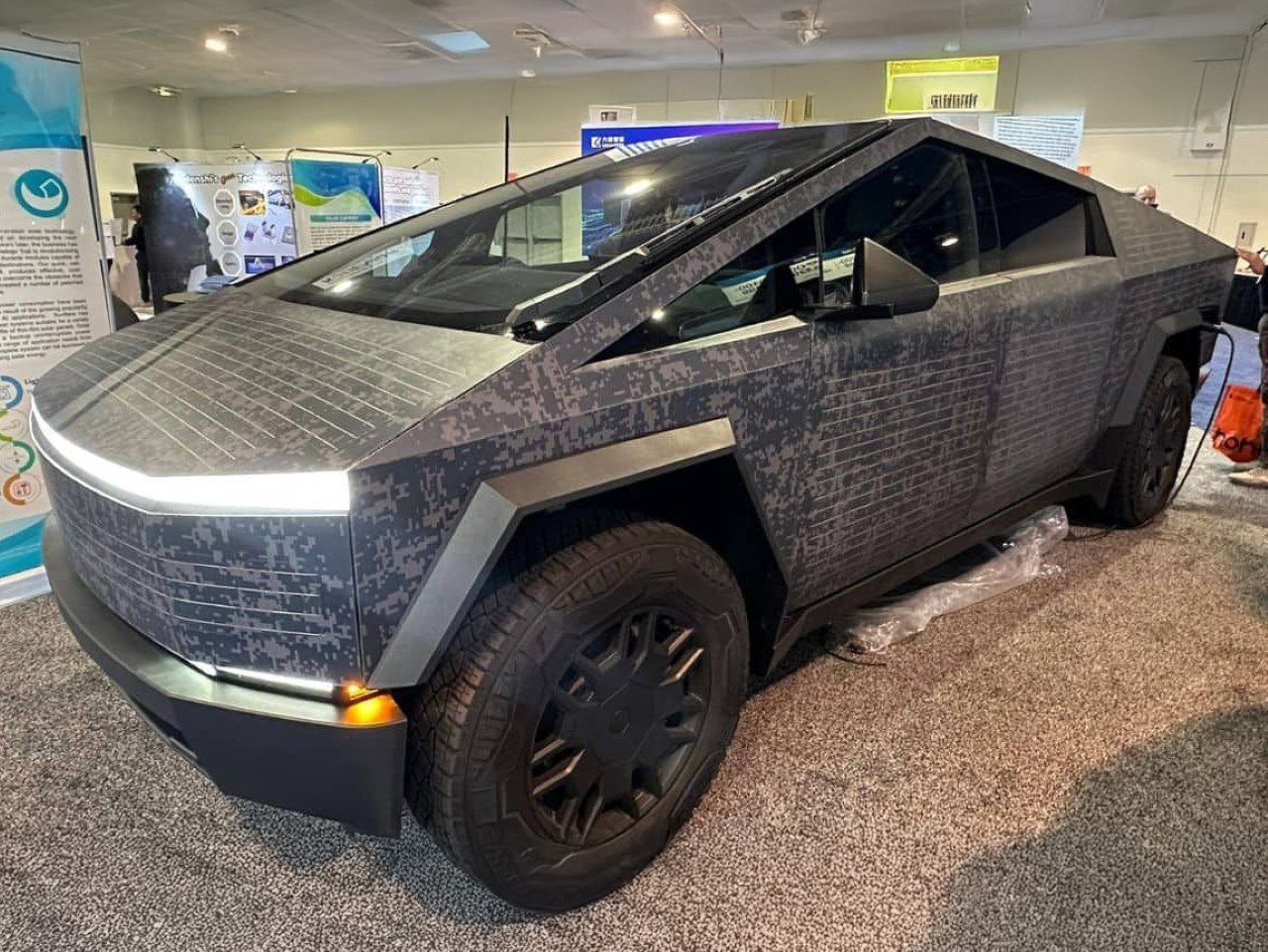
The Tesla Cybertruck, widely recognized for its futuristic aesthetics and groundbreaking technology, has been a hot topic in the automotive world since its unveiling. Designed to push the boundaries of electric vehicle (EV) design, the Cybertruck has attracted both admiration and skepticism for its angular stainless steel exterior and robust performance features. Now, California-based Sunflare Solar has further amplified its appeal with a $10,000 solar panel wrap, designed to harness renewable energy and extend the truck’s range.
This pioneering solution marks a step toward realizing Tesla CEO Elon Musk’s original vision of integrating solar power into the Cybertruck, an idea that was initially proposed but never materialized in Tesla’s final production model. By leveraging cutting-edge solar technology, Sunflare Solar has created a practical alternative for Cybertruck owners who wish to maximize their vehicle’s potential while embracing sustainability and energy independence.
Bringing Tesla’s Solar Vision to Life
Elon Musk has long championed the idea of solar-integrated vehicles. As early as 2017, he explored the possibility of equipping the Tesla Model 3 with solar cells, but the concept was deemed impractical due to limitations in efficiency and integration. However, when the Cybertruck was unveiled in 2019, Musk announced that the vehicle would feature an optional solar roof, capable of adding up to 15 miles of range per day.
Despite this exciting promise, Tesla’s solar roof never made it into production. The technology, while conceptually sound, faced engineering challenges, including weight concerns, cost efficiency, and durability. Enter Sunflare Solar, whose flexible solar panel wrap offers a viable alternative to Musk’s initial vision—one that effectively transforms the Cybertruck into a self-charging vehicle, at least to a limited extent.
How the Sunflare Solar Panel Wrap Works
Sunflare Solar’s solar panel wrap, which debuted at CES 2025, utilizes copper indium gallium selenide (CIGS) solar cells, a highly efficient and lightweight alternative to traditional silicon-based panels. Unlike conventional rigid panels, these flexible solar cells seamlessly adhere to the Cybertruck’s angular surfaces, making use of the vehicle’s flat top and rear design.
Key Features of the Sunflare Solar Panel Wrap:
Power Generation: Produces up to 1.5 kW of electricity, translating to an estimated 15 miles of additional daily range—precisely what Musk had envisioned for Tesla’s in-house solar roof.
Energy Storage: Includes a 5 kW battery inverter, allowing for efficient energy transfer back into the Cybertruck’s battery system.
Off-Grid Capabilities: Supports solar-powered off-road adventures, reducing reliance on external charging stations.
Lightweight and Flexible: Unlike bulky rooftop solar panels, the thin-film CIGS cells are lightweight and adaptable, preserving the Cybertruck’s aerodynamic efficiency.
Sustainable Energy Source: Converts solar energy into usable power, reducing dependence on grid electricity and reinforcing the Cybertruck’s eco-friendly appeal.
The seamless integration of this solar wrap technology highlights the potential of renewable energy in EV innovation, making off-grid travel more accessible and enhancing Tesla’s vision of a self-sustaining vehicle ecosystem.
Potential Drawbacks: Durability, Cost, and Practicality
While the solar panel wrap is a groundbreaking innovation, it is not without its drawbacks.
Durability Concerns
One of the Cybertruck’s most celebrated features is its stainless steel exoskeleton, designed for maximum durability, impact resistance, and longevity. However, by covering this rugged exterior with solar panels, there is a risk of compromising the vehicle’s resilience.
• Flexible solar panels, while durable, remain susceptible to scratches, environmental wear, and potential damage.
• Exposure to harsh weather, road debris, and UV degradation could lead to performance degradation over time.
Given that the Cybertruck is marketed as an off-road-capable vehicle, these durability concerns may deter some buyers who prioritize the truck’s original ruggedness over energy efficiency.
Cost Considerations
The $10,000 price tag for Sunflare Solar’s solar panel wrap may be a significant factor in a potential buyer’s decision.
• While the added range is valuable, buyers will need to determine if an additional 15 miles of daily range justifies the cost of the upgrade.
• The price of traditional Level 2 or DC fast charging solutions is generally more economical compared to this solar wrap technology.
• ROI (Return on Investment) considerations: It could take years of use for the solar wrap to offset its cost in fuel savings.
For Cybertruck owners who prioritize sustainability and energy independence, this investment may still be worthwhile. However, for practical buyers focused on cost-efficiency, traditional charging infrastructure may remain the preferred choice.
Charging Limitations
While solar integration in EVs is an exciting concept, it has practical limitations:
• Charging speed is relatively slow. Even under optimal sunlight conditions, the 1.5 kW output pales in comparison to traditional fast-charging stations.
• Weather-dependent performance. The efficiency of the solar panels varies based on sun exposure, making them less effective in cloudy, rainy, or winter conditions.
This means that Cybertruck owners cannot solely rely on the solar panel wrap for long-distance travel and will still need traditional charging options for sustained use.
A Glimpse into the Future of EVs and Solar Integration
Despite these challenges, the Sunflare Solar panel wrap represents a major step forward in EV innovation and renewable energy integration.
• Tesla and third-party innovators are continuously exploring new ways to increase range and energy efficiency without increasing reliance on fossil fuels or traditional power grids.
• Advancements in solar technology could further improve efficiency, making solar-integrated EVs a mainstream reality in the near future.
• This project demonstrates growing consumer demand for sustainable transportation solutions, encouraging automakers to invest more in renewable-powered vehicles.
Final Verdict: Is the Solar Panel Wrap Worth It?
The Sunflare Solar panel wrap for the Tesla Cybertruck is an exciting innovation, offering additional range, off-grid capabilities, and a step toward self-sustaining EV technology. However, potential buyers should carefully weigh the pros and cons before making the $10,000 investment:
While the Sunflare Solar panel wrap may not be a one-size-fits-all solution, it represents an important leap forward in integrating solar power into electric vehicles. As the EV industry continues to evolve, innovations like this will play a crucial role in shaping the future of sustainable transportation.
Related Articles

Garage Italia’s Electric Spiaggina Puts the Fiat 500’s Riviera Years on Battery Power
Ten kilowatts, rattan seats and a €85,000 starting price: Garage Italia's 500 Spiaggina rebuilds Ghia's 1958 beach car for the yacht crowd.