H.Lorenzo Opens a New Flagship in West Hollywood, Uniting Four Decades of Avant-Garde Fashion Under One Roof

June 2, 2026
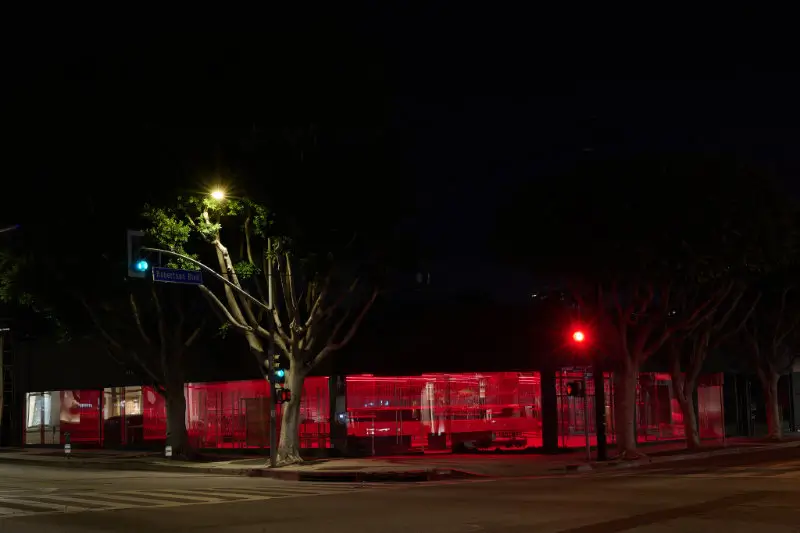

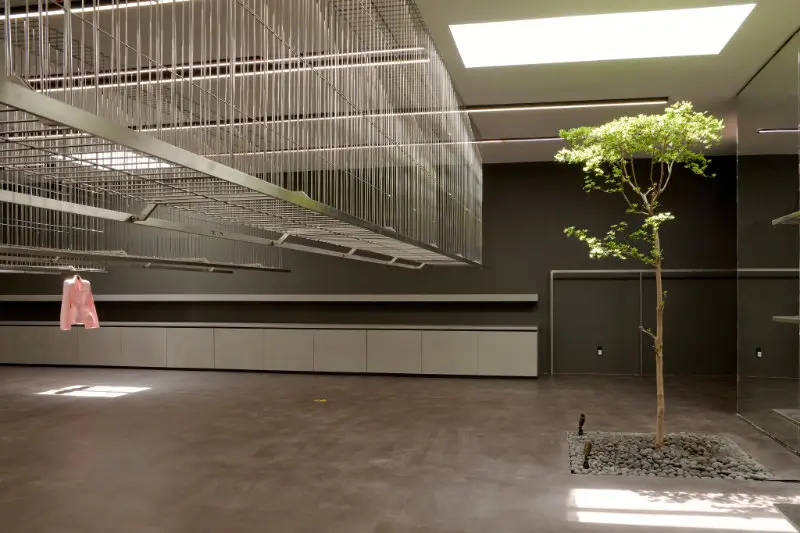
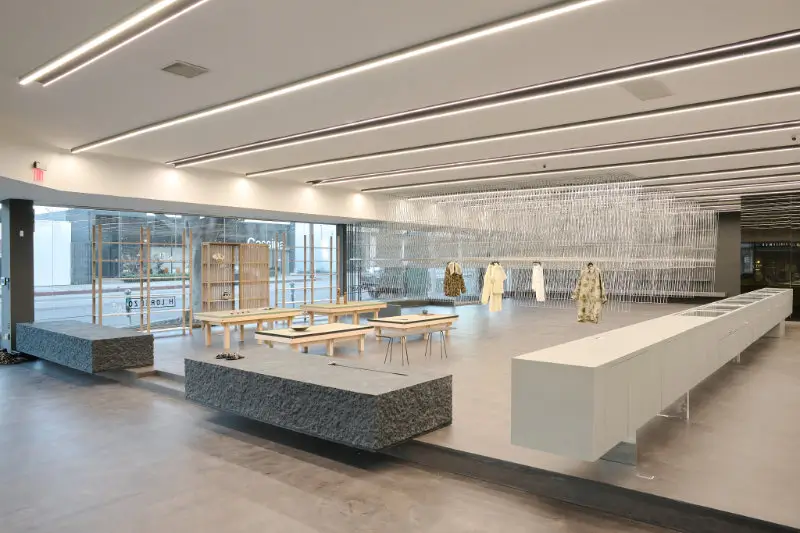
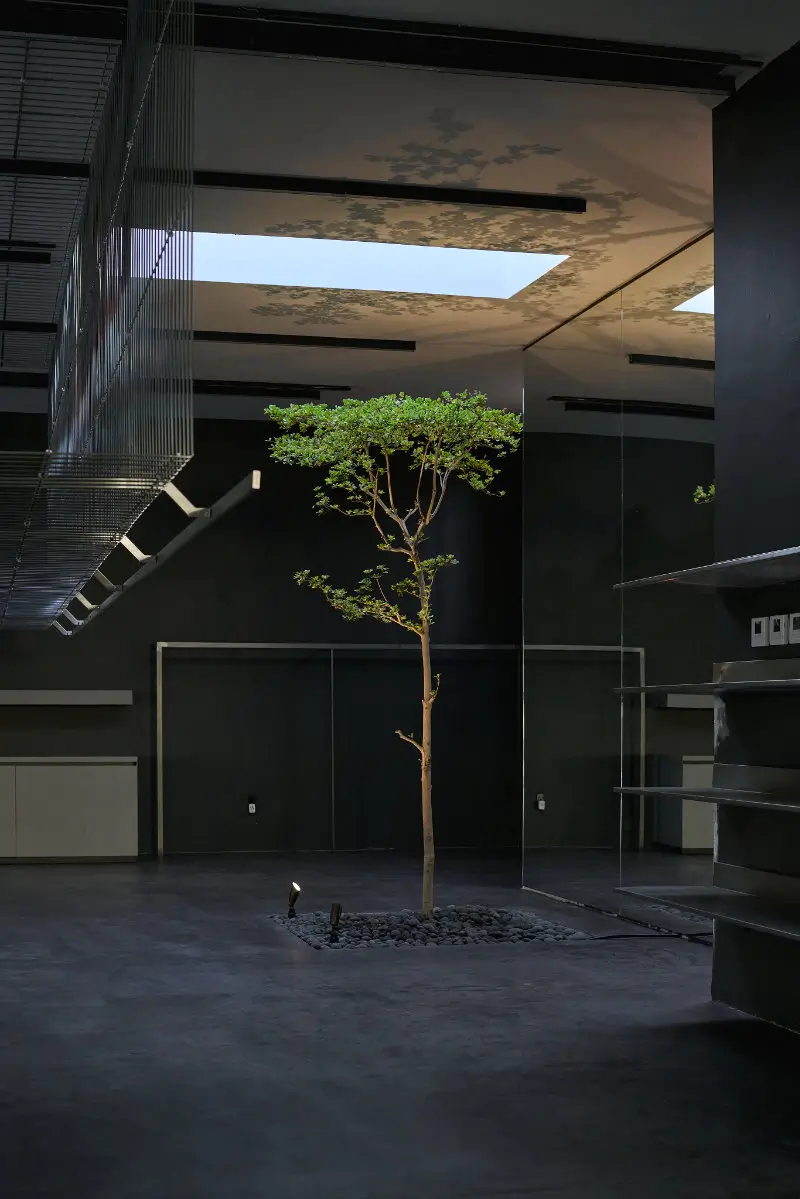
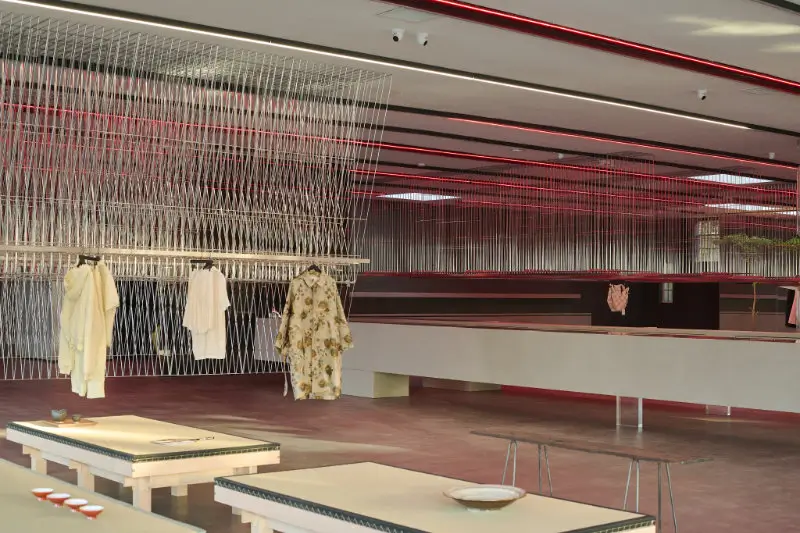
For more than four decades, H.Lorenzo has occupied a singular and irreplaceable position within the American fashion landscape. Long before haute streetwear became a mainstream phenomenon and avant-garde fashion achieved broader commercial acceptance, this Los Angeles-based retailer was quietly but decisively introducing American audiences to experimental designers, directional silhouettes, and alternative visions of luxury. On June 1, 2026, the influential retailer officially entered a new chapter with the grand opening of its new flagship store at 8801 Beverly Boulevard in West Hollywood. Spanning an impressive 9,000 square feet, this destination brings the brand’s men’s and women’s collections together under one roof for the first time in its history.
The move represents far more than a simple change of address or an expansion. It signals a bold, renewed commitment to physical retail, creative discovery, and genuine community-building at a pivotal moment when much of the fashion industry continues to grapple with the delicate balance between digital commerce and meaningful real-world experiences. Designed by longtime connector Oliviero Arch Baldini of Studio O, the flagship functions as both a sophisticated retail environment and a powerful cultural statement—one that honors the retailer’s rich history while establishing a dynamic platform for its future evolution.
For H.Lorenzo, a company that has consistently championed independent voices and emerging talent over corporate conformity, this new flagship feels like a natural and inevitable evolution of a philosophy that has remained remarkably consistent since its founding by Lorenzo Hadar more than forty years ago.
View this post on Instagram
stir
Few retailers in the United States can legitimately claim the kind of culture influence that H.Lorenzo has exerted on American fashion over the past four decades. Established in the early 1980s—during an era when avant-garde fashion occupied a much smaller, more underground niche than it enjoys today—the retailer built its formidable reputation by consistently identifying and supporting visionary designers well before they achieved widespread recognition.
Over the years, H.Lorenzo became one of the earliest and most dedicated American stockists for numerous influential labels that boldly challenged conventional notions of luxury, tailoring, proportion, and personal expression. Rather than passively following market trends, the retailer frequently played an active role in creating them. It introduced curious customers to designers whose work blurred the traditional boundaries between fashion, art, architecture, performance, and cultural commentary.
Its importance extends well beyond mere product selection. For many emerging and international designers attempting to break into the competitive American market, securing placement at H.Lorenzo represented a significant validation and milestone. The retailer cultivated a well-earned reputation for deeply understanding and nurturing experimental fashion, providing designers with an environment that respected creative integrity rather than forcing commercial compromises.
This approach gradually transformed the store into something far more meaningful than a traditional retail operation. It evolved into a vibrant meeting point—a cultural salon—for artists, stylists, musicians, collectors, photographers, and fashion enthusiasts who were actively seeking alternatives to the dominant mainstream luxury narratives of the time.
As Los Angeles steadily transformed itself from a city primarily associated with entertainment and casual lifestyle into a formidable global fashion capital, H.Lorenzo remained one of its most defining and enduring cultural institutions. Its stores on the Sunset Strip and surrounding areas became landmarks where creativity and commerce intersected in uniquely compelling ways.
flow
One of the most significant and forward-thinking aspects of the new flagship is its deliberate decision to unite the men’s and women’s collections within a single, cohesive environment. While many traditional retailers continue to maintain strict separations between categories—through distinct floor plans, separate entrances, or entirely standalone stores—H.Lorenzo’s integrated approach reflects broader and more progressive shifts in how contemporary consumers actually engage with fashion today.
Modern shoppers increasingly explore collections across traditional gender boundaries. They prioritize compelling design, exceptional craftsmanship, innovative materials, and authentic personal expression over rigid classifications. The consolidated flagship creates natural opportunities for cross-pollination between categories, encouraging serendipitous discovery that more closely mirrors the fluid nature of today’s fashion culture.
Visitors to the new space will encounter a more holistic and complete representation of H.Lorenzo’s identity. They can move fluidly between different collections and creative perspectives that share underlying values of experimentation, quality, and cultural relevance. The layout invites exploration rather than directing customers toward immediate purchases. Shoppers are encouraged to engage with fashion as a rich cultural experience—lingering over unexpected connections between designers, silhouettes, and artistic disciplines.
This philosophy aligns seamlessly with H.Lorenzo’s longstanding emphasis on curiosity, discovery, and intellectual engagement—qualities that have defined the retailer since its earliest days on the Los Angeles scene.
arch
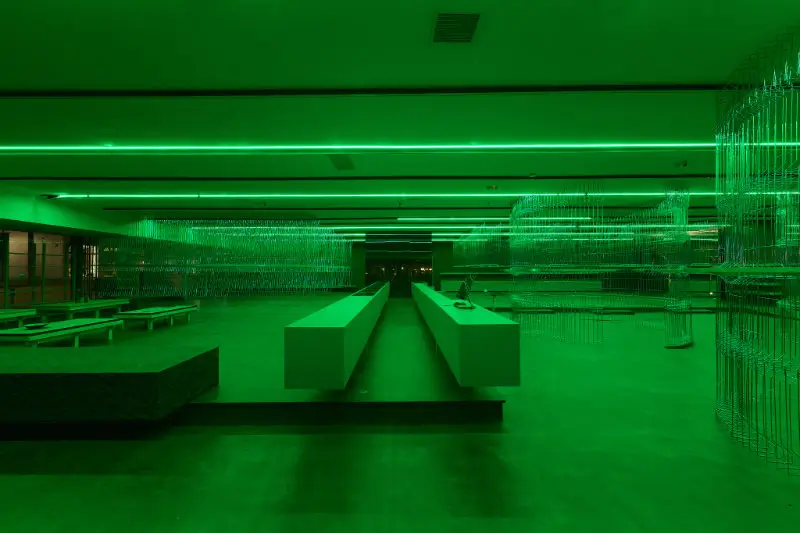
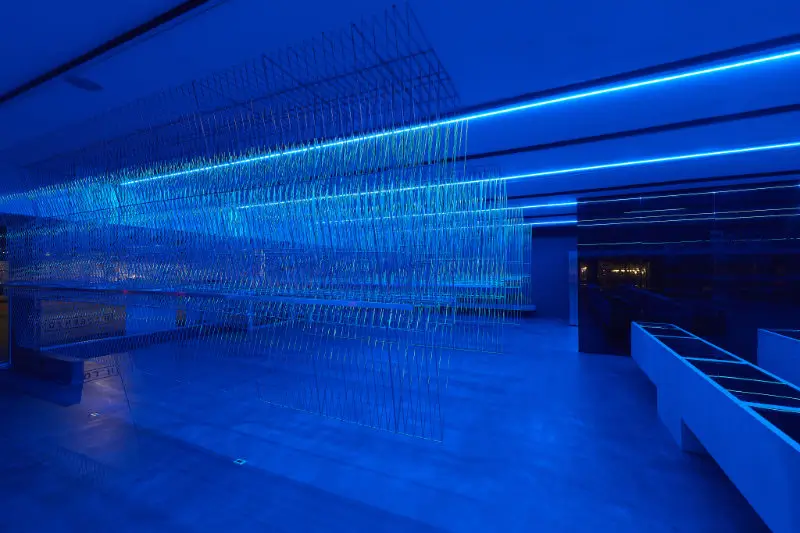
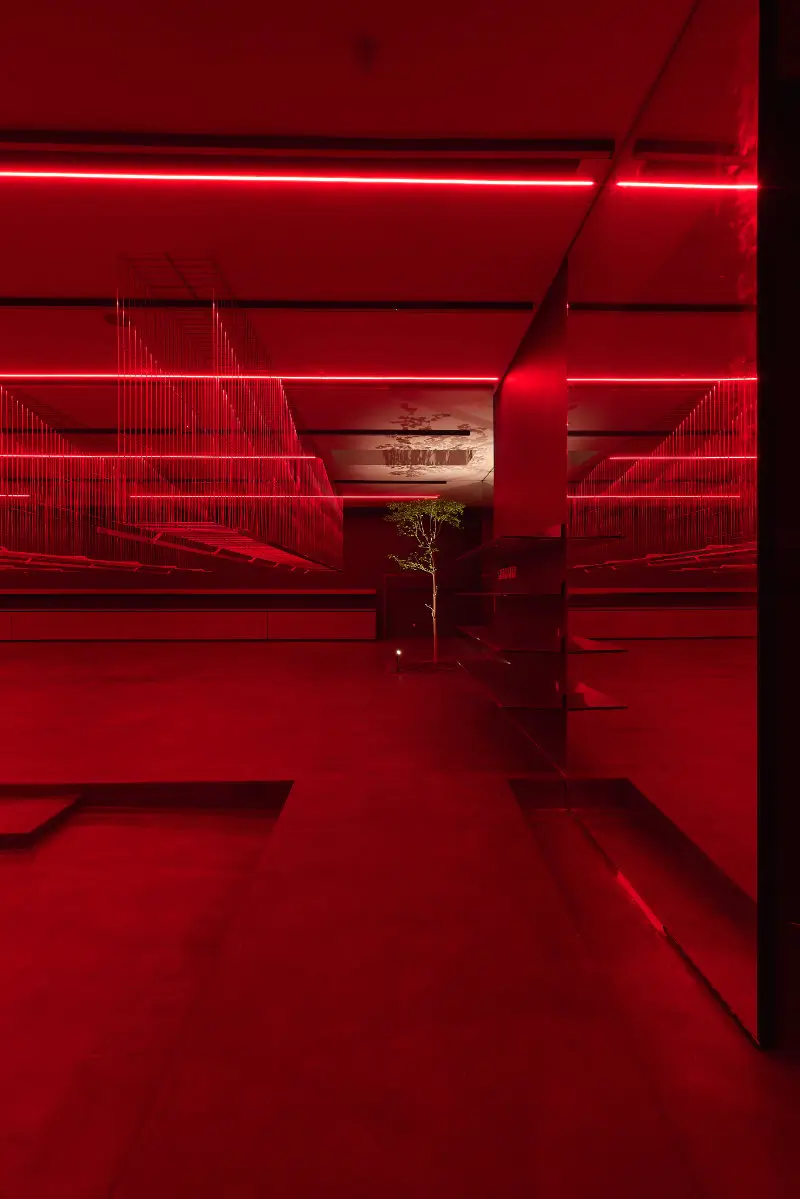
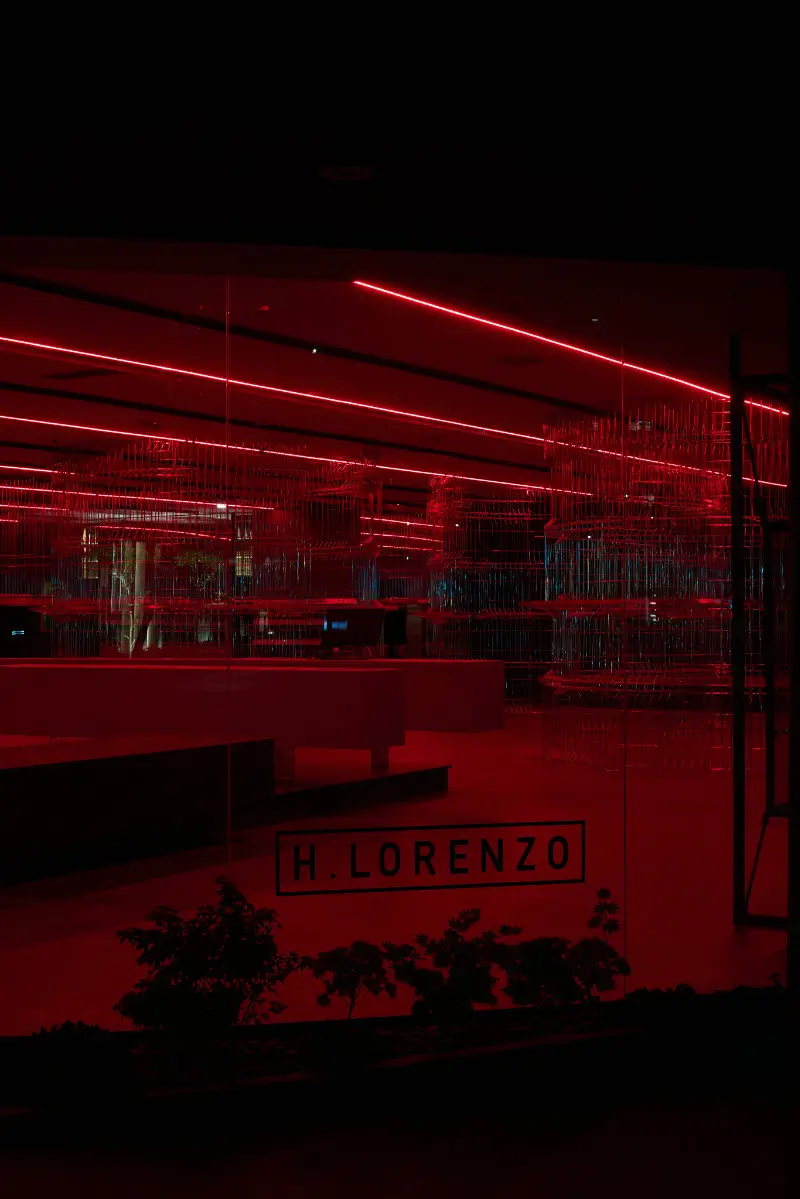
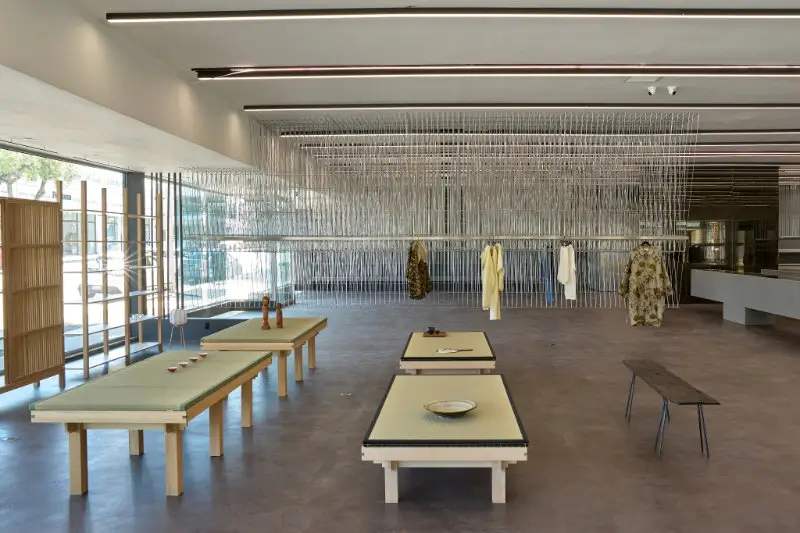
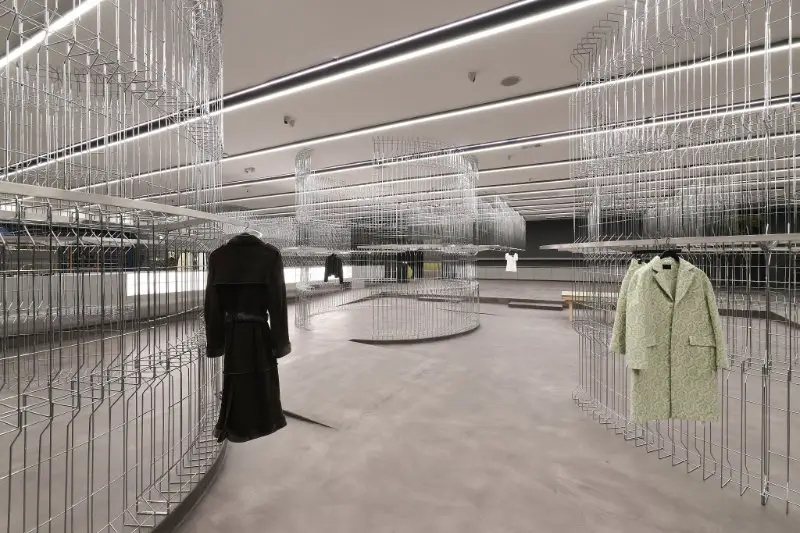
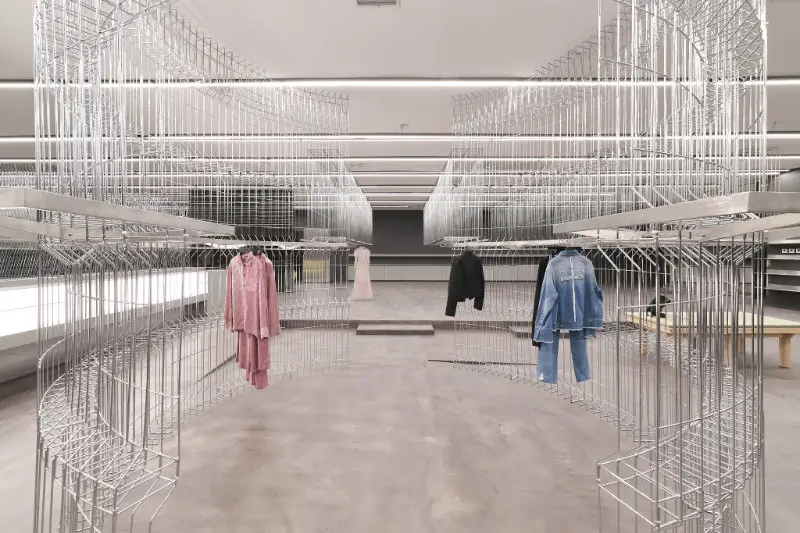
The design of the new flagship plays a central role in communicating H.Lorenzo’s enduring philosophy. Created by Italian architect Oliviero Arch Baldini, a longtime collaborator, the store embraces a raw, industrial aesthetic that prioritizes texture, atmosphere, and uncompromising material authenticity over superficial opulence.
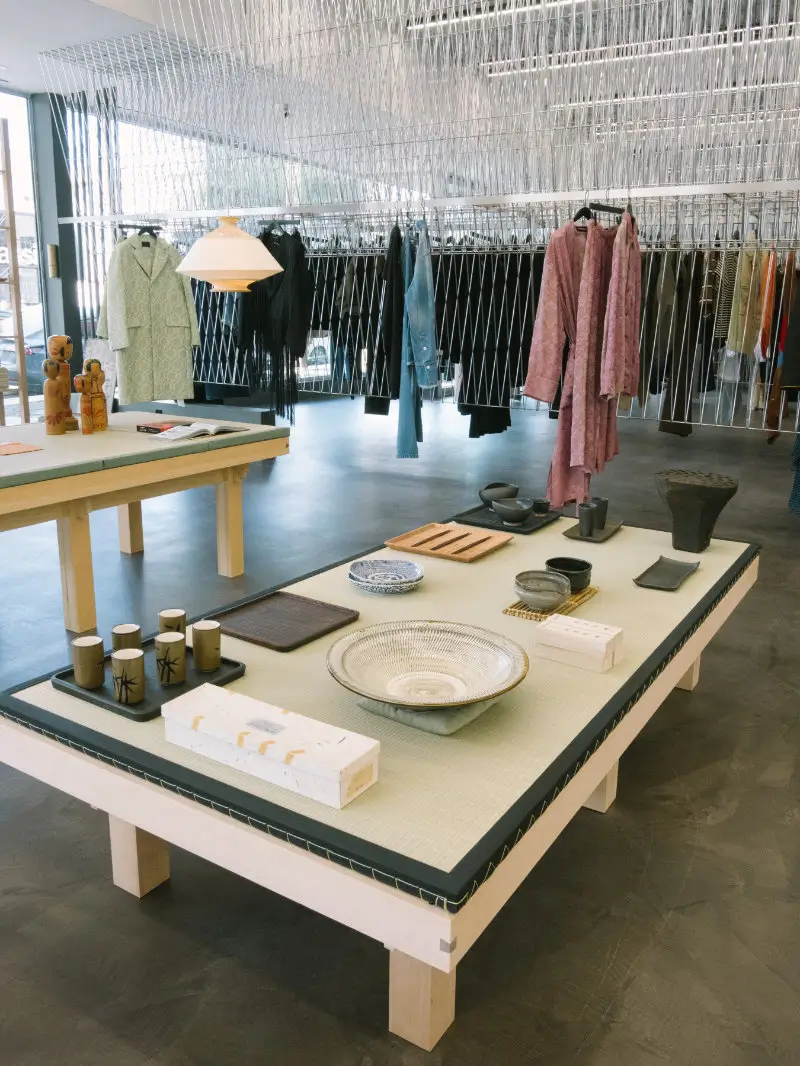
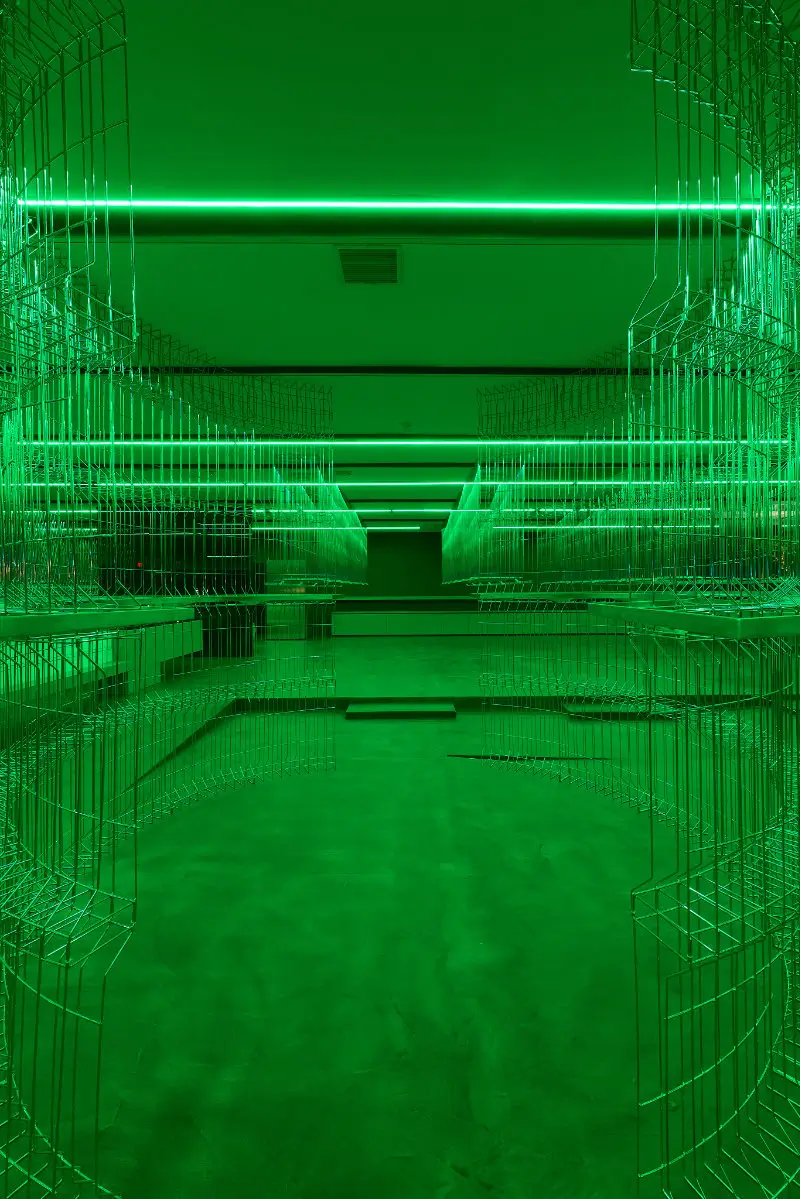
Instead of relying on conventional luxury retail tropes—polished marble, mirrored surfaces, or overly ornate detailing—the environment draws attention to the inherent beauty of its core materials and thoughtful spatial composition. Spiral metal racks introduce a striking sculptural element throughout the store. These fixtures serve a dual purpose: they function as practical merchandising tools while simultaneously acting as bold architectural statements. Their curved, flowing forms create dynamic movement within the space, gently guiding visitors through different areas while preserving an overall sense of visual openness and freedom.
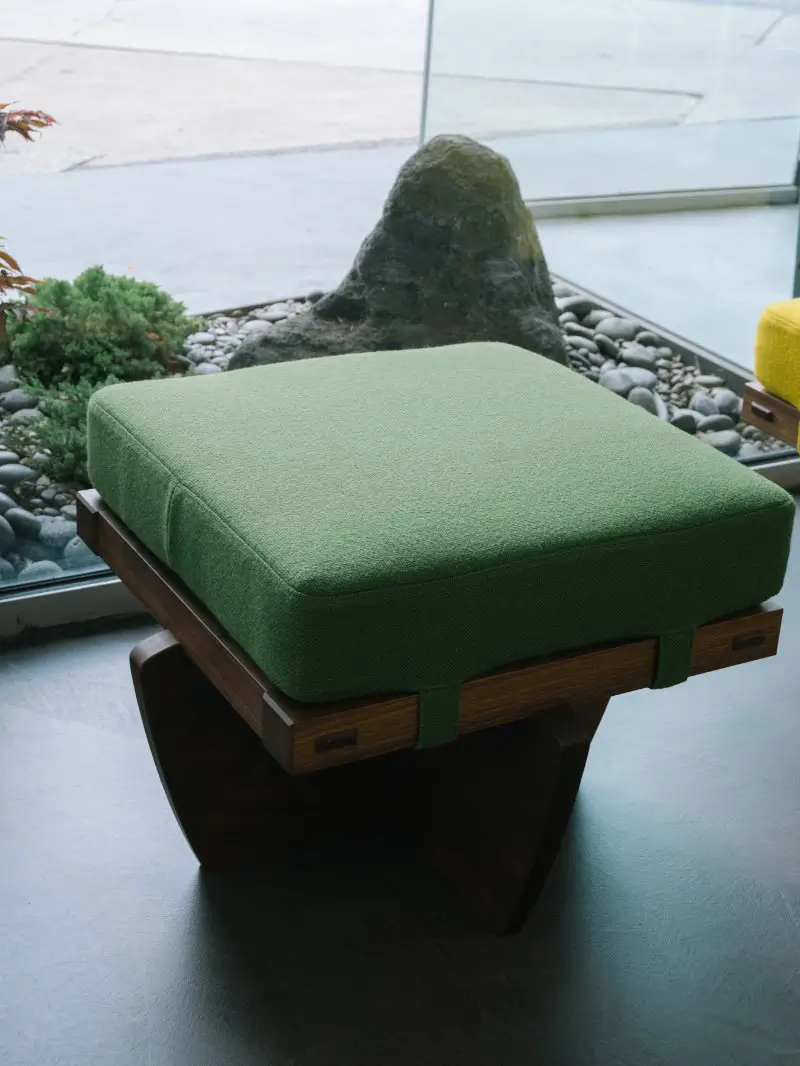
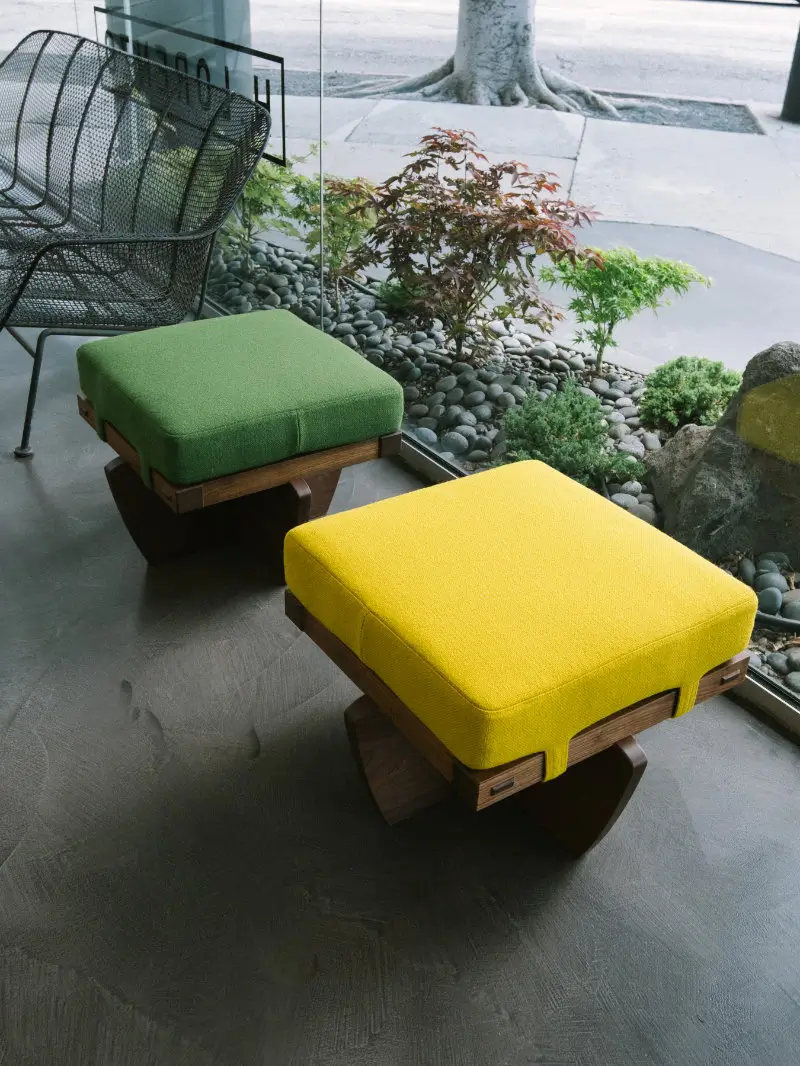
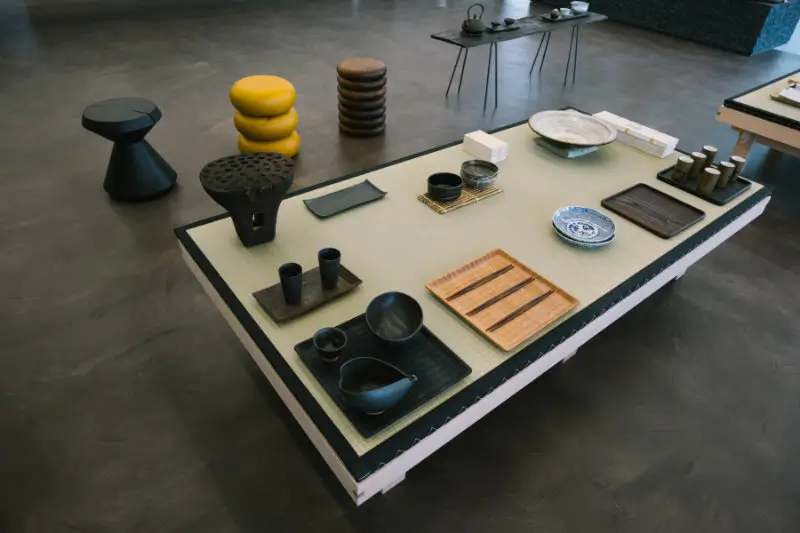
Experiential lighting adds yet another sophisticated dimension to the customer journey. Rather than merely illuminating products, the lighting system actively shapes perception, mood, and emotional response, enhancing the immersive qualities of the entire environment. Japanese wood surfaces introduce warmth, tactility, and a sense of refined craftsmanship that beautifully balances the cooler, more industrial character of exposed concrete and metal structures.
This thoughtful combination of natural and manufactured materials creates a compelling ongoing dialogue between tradition and modernity, softness and strength, minimalism and complexity. The resulting atmosphere feels intentionally less like a conventional retail store and more like a contemporary cultural space—a gallery or atelier—where fashion, architecture, design, and lifestyle intersect meaningfully.
Every material choice and spatial decision appears calibrated to encourage lingering, thoughtful observation, and deeper engagement rather than rapid, transactional shopping.
endure
Japan has long occupied a profoundly special place within H.Lorenzo’s cultural and aesthetic framework. For decades, Japanese designers have ranked among the most influential and consistently represented voices in the retailer’s collections. The Hadar family’s deep, personal connection to Japanese design philosophy, meticulous craftsmanship, and refined aesthetics has profoundly shaped both its buying strategy and its broader cultural outlook.
That longstanding relationship is made palpably visible throughout the new flagship. The prominent use of Japanese wood, for example, reflects a shared appreciation for material quality, understated elegance, and quiet durability that has characterized Japanese architecture and interior design for centuries.
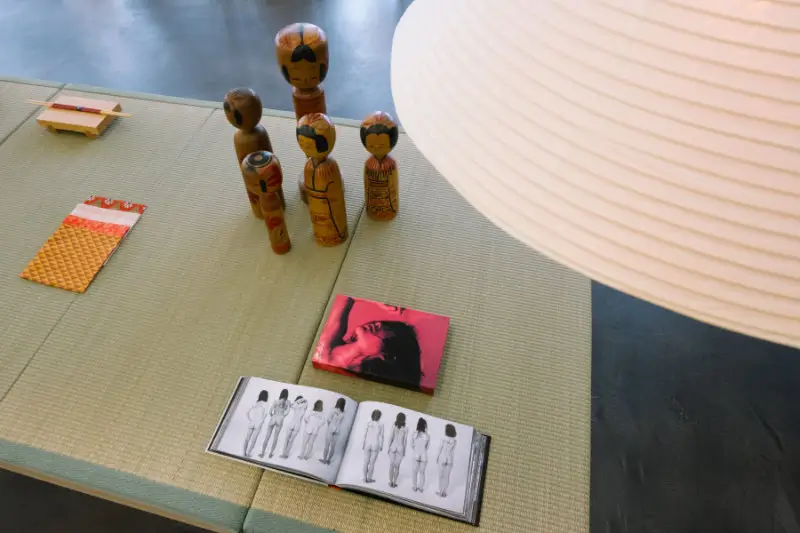
Beyond the architectural elements themselves, the store thoughtfully incorporates carefully curated objects, collectible publications, and artistic artifacts that further reinforce these cultural influences. These items are not mere decorative accessories; they actively contribute to the narrative and atmosphere of the space. They provide valuable context for the clothing collections while creating additional layers of engagement for visitors.
Books, magazines, catalogs, and other printed matter have always played a vital role in fashion culture. They document fleeting ideas, preserve important histories, and connect individual garments to larger artistic and intellectual movements. By integrating these elements so deliberately into the retail environment, H.Lorenzo once again positions itself as a true cultural destination rather than simply a commercial enterprise.
creative
Perhaps the most compelling and future-oriented aspect of the new flagship is its dedicated installation space specifically designed for emerging designers and experimental presentations. Throughout its history, H.Lorenzo has built much of its legendary reputation on its ability to identify and support remarkable talent well before wider industry recognition arrives. The retailer’s willingness to take calculated risks on young, unproven designers has helped shape countless careers while continually enriching the broader fashion ecosystem.
The new flagship formalizes and amplifies that commitment through a flexible, designated area intended for rotating installations, special presentations, pop-up collaborations, and experimental showcases. In an industry that has become increasingly dominated by global conglomerates and massive marketing budgets, such independent platforms are becoming more valuable than ever.
Emerging designers frequently struggle to secure meaningful visibility and commercial opportunities within traditional retail environments. Dedicated installation spaces like this one provide crucial opportunities for storytelling, creative risk-taking, and direct, unfiltered engagement with engaged consumers. For customers, these dynamic presentations offer compelling reasons to return regularly, keeping the store feeling fresh, relevant, and constantly evolving. For designers, they grant access to one of the most discerning and influential retail audiences in American fashion.
The initiative powerfully reinforces H.Lorenzo’s identity as a genuine incubator of creativity rather than merely a sophisticated distributor of finished products.
View this post on Instagram
cont
The timing of this opening is particularly significant. It arrives at a cultural moment when discussions surrounding the future of physical retail remain especially intense and relevant. For years, many industry observers confidently predicted that the rise of digital commerce would eventually render brick-and-mortar stores less important or even obsolete. Yet many of fashion’s most respected and forward-thinking retailers continue to invest substantial resources in creating exceptional physical environments.
The underlying reason has become increasingly clear: fashion is, at its core, a fundamentally sensory and experiential category. The tactile qualities of fabric, the precision of construction, the drama of proportion and movement, and the overall atmosphere of a space are difficult—if not impossible—to fully convey through screens alone.
Physical retail offers unparalleled opportunities for multi-sensory engagement that digital platforms cannot replicate. Customers can touch materials, examine craftsmanship up close, understand how garments move on the body, and make unexpected discoveries through the joy of unscripted exploration.
These experiences become especially vital in the realm of avant-garde fashion, where garments often challenge conventional expectations and only fully reveal their complexity, nuance, and beauty through direct, personal interaction. Mac Hadar, son of founder Lorenzo Hadar and current director of operations, emphasized this core belief when discussing the new flagship. “This new store represents the evolution of our vision over the last 40 years and the community we have built around it,” he explained. “Bringing everything together into one space allows us to create a deeper experience for our customers and designers alike. We’ve always believed in the power of physical retail, in creating spaces where people can discover something unexpected.”
His comments highlight a perspective increasingly shared by influential voices across the industry: the future of physical retail lies not in competing on convenience but in excelling at irreplaceable experience and cultural resonance.
a new
The flagship also marks an important milestone in the evolution of the Hadar family business. Founded by Lorenzo Hadar and now actively led by his son Mac, H.Lorenzo stands as a relatively rare example of successful, values-driven generational continuity within the challenging world of independent fashion retail.
Many family-owned retailers struggle to navigate leadership transitions, particularly amid rapidly shifting consumer behaviors, economic pressures, and technological disruptions. The successful opening of this new store demonstrates how heritage businesses can thoughtfully evolve and expand without abandoning or diluting their foundational principles.
Mac Hadar inherits a powerful legacy built on cultural credibility, creative courage, genuine long-term relationships with designers, and an unwavering commitment to quality. The new flagship suggests a clear commitment to preserving those core values while intelligently adapting them to meet the expectations and sensibilities of a new generation of consumers.
Rather than pursuing radical reinvention for its own sake, the project focuses on refinement, expansion, and deeper integration of the brand’s various elements. It respectfully acknowledges the retailer’s storied history while simultaneously building the necessary infrastructure to support ambitious future growth.
That delicate balance between continuity and thoughtful innovation may ultimately prove to be one of the project’s greatest and most enduring strengths.
mean
Los Angeles has undergone a remarkable transformation as a global fashion city over the past two decades. Once viewed primarily through the lens of entertainment industry glamour and laid-back casualwear, the city now boasts a diverse, sophisticated, and increasingly influential ecosystem of independent designers, established brands, creative studios, manufacturing resources, and culture institutions.
The opening of H.Lorenzo’s new flagship contributes meaningfully to that ongoing evolution. It further solidifies West Hollywood’s status as one of Los Angeles’ most important corridors for haute, creative, and independent retail while providing a compelling new destination capable of attracting both dedicated local audiences and international visitors.
Related Articles

France Just Banned Social Media for Kids Under 15, and the Fight Over Anonymity Is Only Getting Started
France becomes the first EU nation to bar under 15s from social platforms, and critics […]