DRIFT AUDIO
Listen to this story
Choose a voice, then press play.
In a Helsinki basement workshop, three shoe industry veterans built a company around one soggy November evening and named it after a moose
Every brand needs an origin story, and Tarvas has a genuinely small one. According to the company’s own account, the founders were walking home through slushy Helsinki streets one November evening when the sleet turned into standing water and their socks paid for it. That single miserable commute became the seed for what is now the brand’s signature feature: a rubberized canvas mudguard that wraps the entire perimeter of the shoe, sealing the gap where most footwear lets water creep in around the welt.
View this post on Instagram
It is a small piece of engineering, but it defines the whole product line. The mudguard is not bolted on as an accessory; it is built into the silhouette from the first prototype forward, which is part of why Tarvas spent years refining a single shoe before adding anything else to the catalog. The founders, Jukka Lehtinen, Pekka Keinänen, and Harri Saarikoski, all came out of the footwear industry before starting the company, and that background shows in how narrowly they scoped the first release. Rather than launching a full range, they built one shoe, the Explorer, and treated it as a proof of concept for the climate it was designed to survive.
Helsinki weather does not do subtlety. Rain turns to sleet turns to slush turns to ice, sometimes within a single afternoon, and a shoe that only performs in dry conditions is not much use to someone commuting by foot or tram through a Nordic winter.

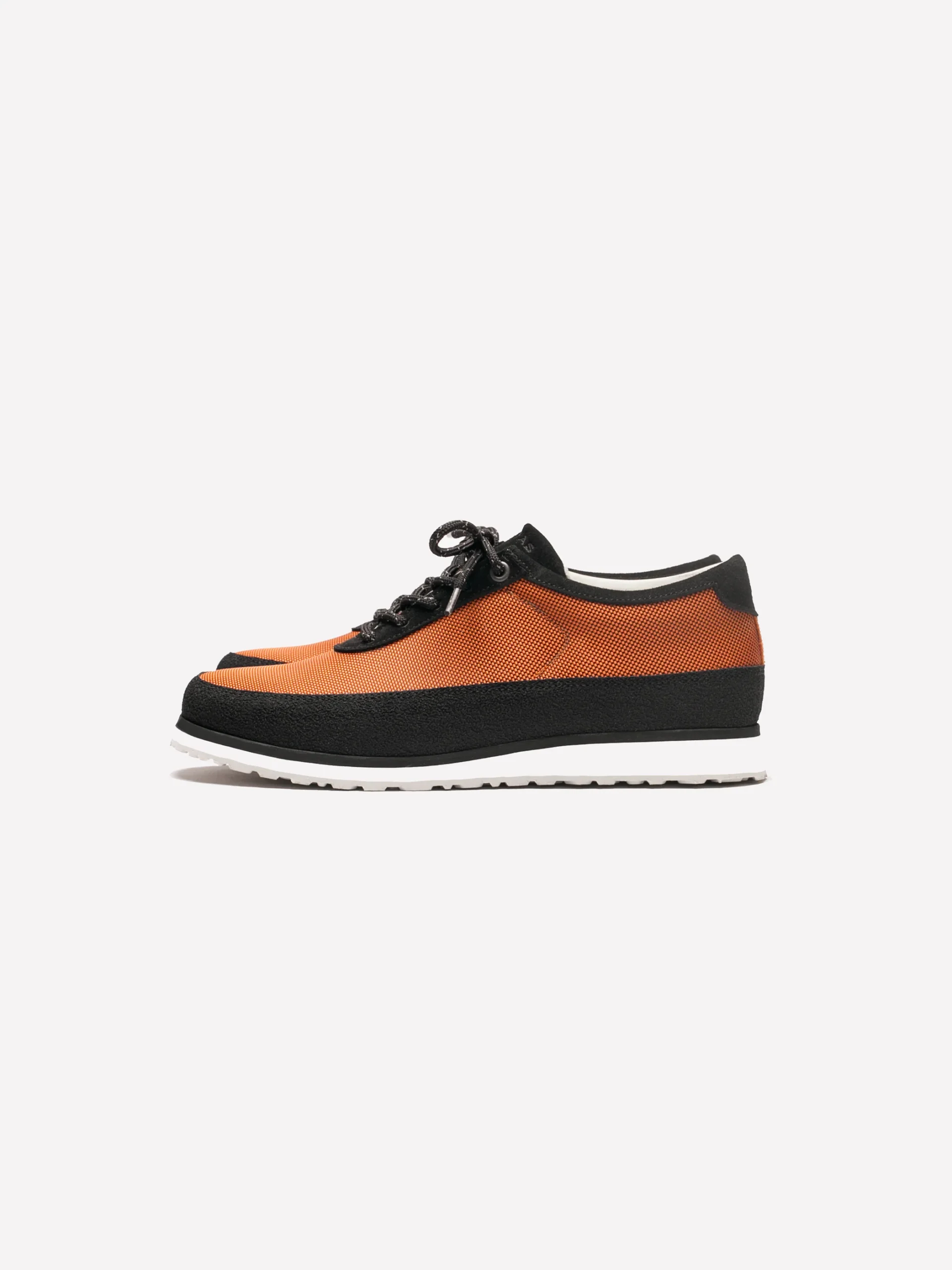
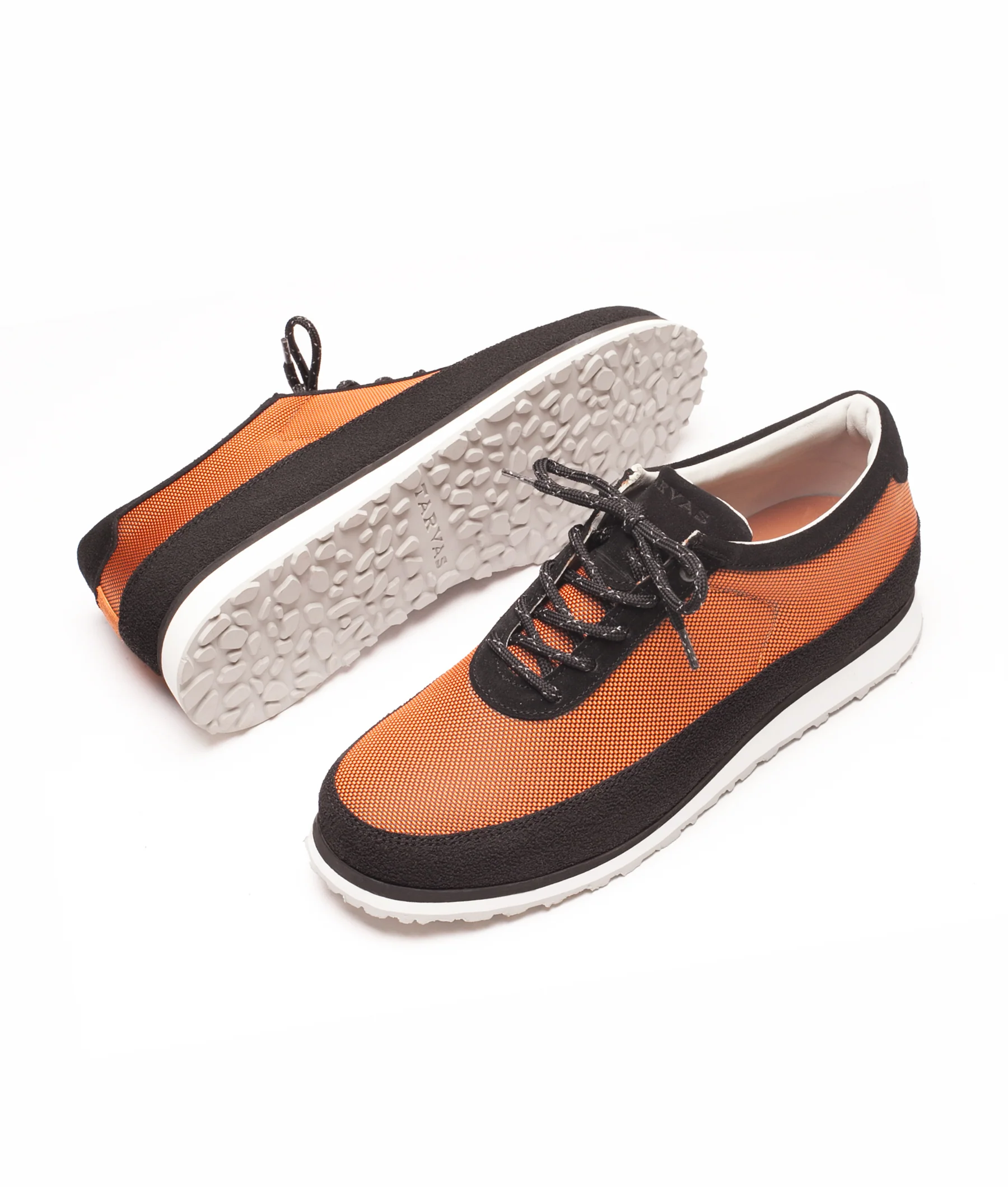
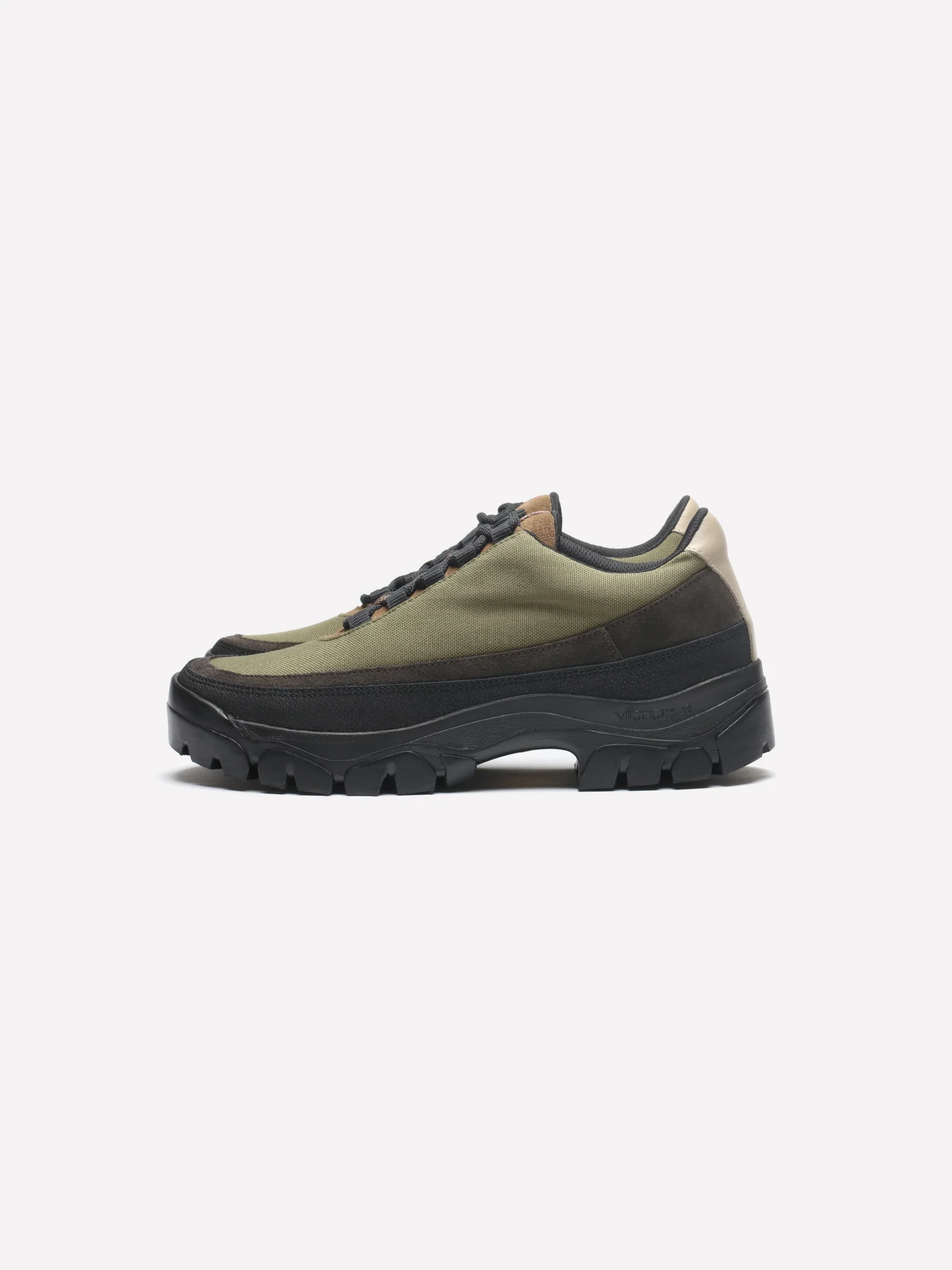
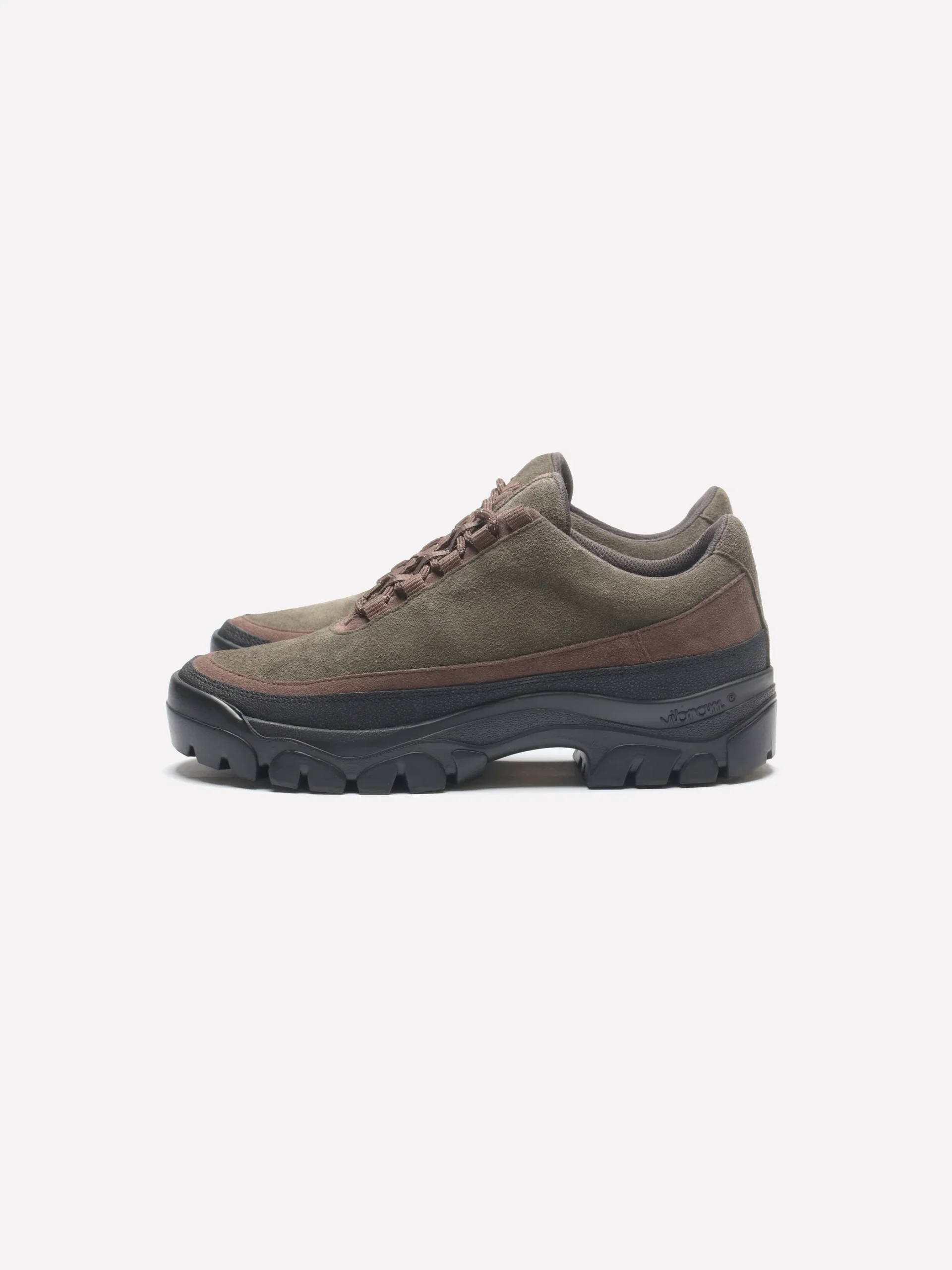
The Tarvas Explorer in Metallic Orange pairs a vibrant technical mesh upper with black suede overlays and a lightweight white rubber outsole, balancing trail-inspired utility with everyday comfort.
transition
Tarvas keeps its production close by design, not as a marketing line. The shoes are designed in Kruununhaka, a historic district in central Helsinki, and manufactured roughly two hours away by train in Parkano, a small town in the Pirkanmaa region. The founders visit the factory regularly and, by their own account to Helsinki Design Week, have used the short distance to their advantage during supply chain disruptions that hit competitors sourcing from further afield.
That proximity became especially useful in 2020, when many footwear brands watched their overseas factories shut down or slow to a crawl. Tarvas still felt the disruption, shipments were delayed and some retail orders were cancelled in the early months of the pandemic, but the company was able to keep working with its factory directly rather than waiting on updates from a supplier several time zones away. Sales recovered later that year, helped along by a black soled version of the Explorer that found favor with buyers.
Materials tell a similar story of tight geography. Uppers and linings come from cow leather tanned in Italy or Germany, soles are natural rubber from Italy, insoles combine EVA foam with a leather surface from Portugal, and the laces are recycled polyester spun in Estonia. Nothing here is exotic. It is a supply chain built almost entirely within a few countries’ reach of the Baltic Sea, which is either a sustainability strategy or a stubborn regional loyalty, depending on how generously you want to read it.
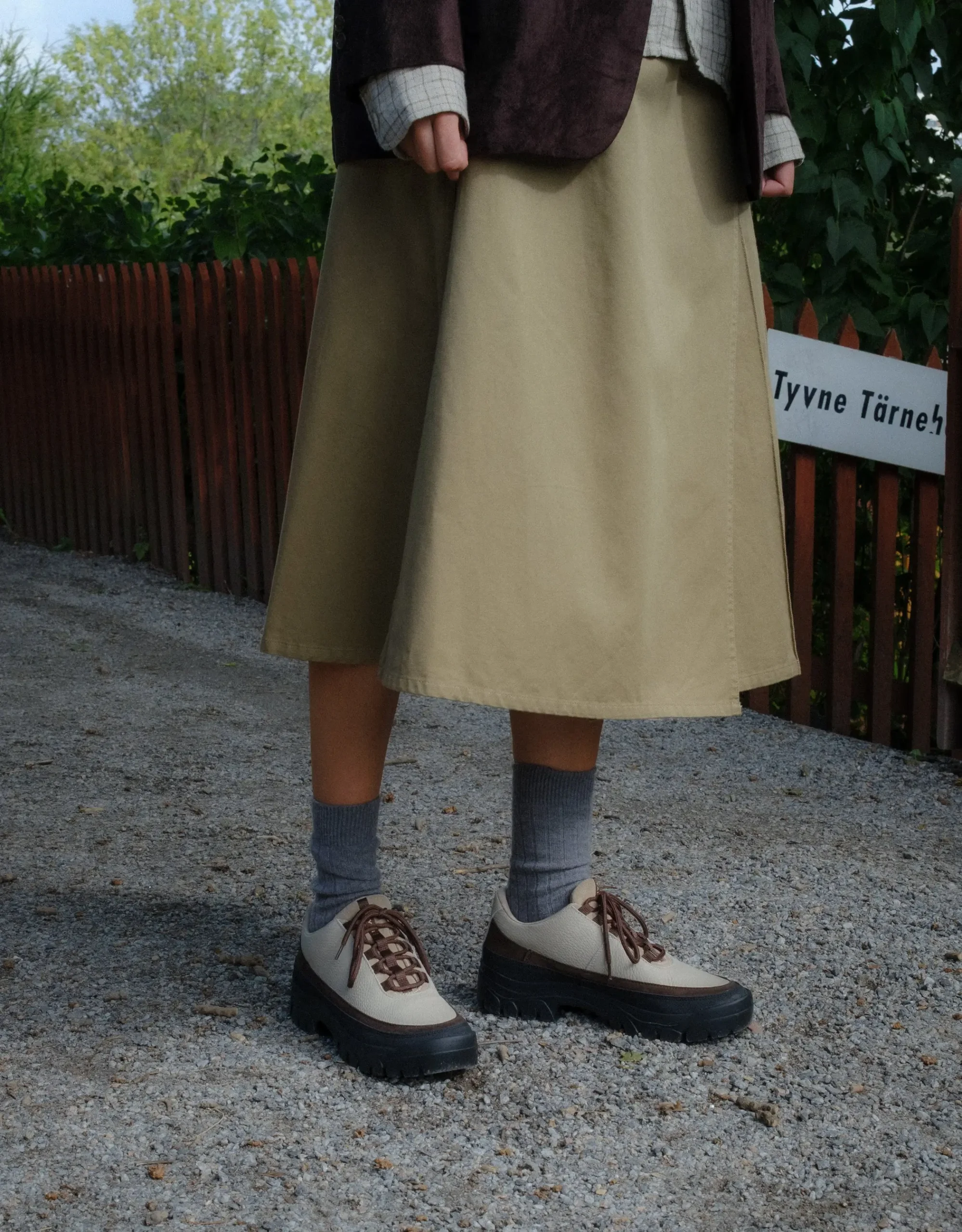
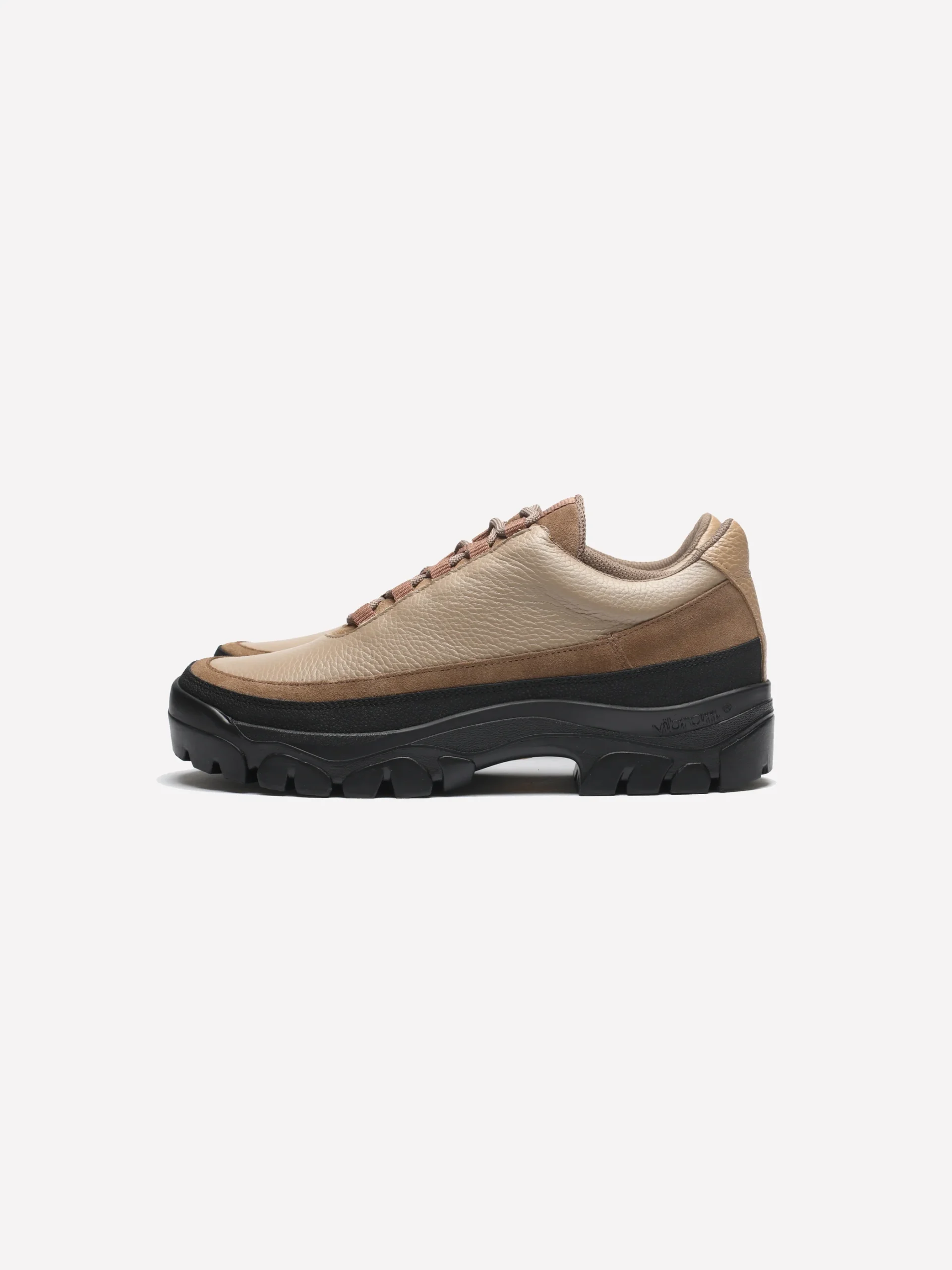
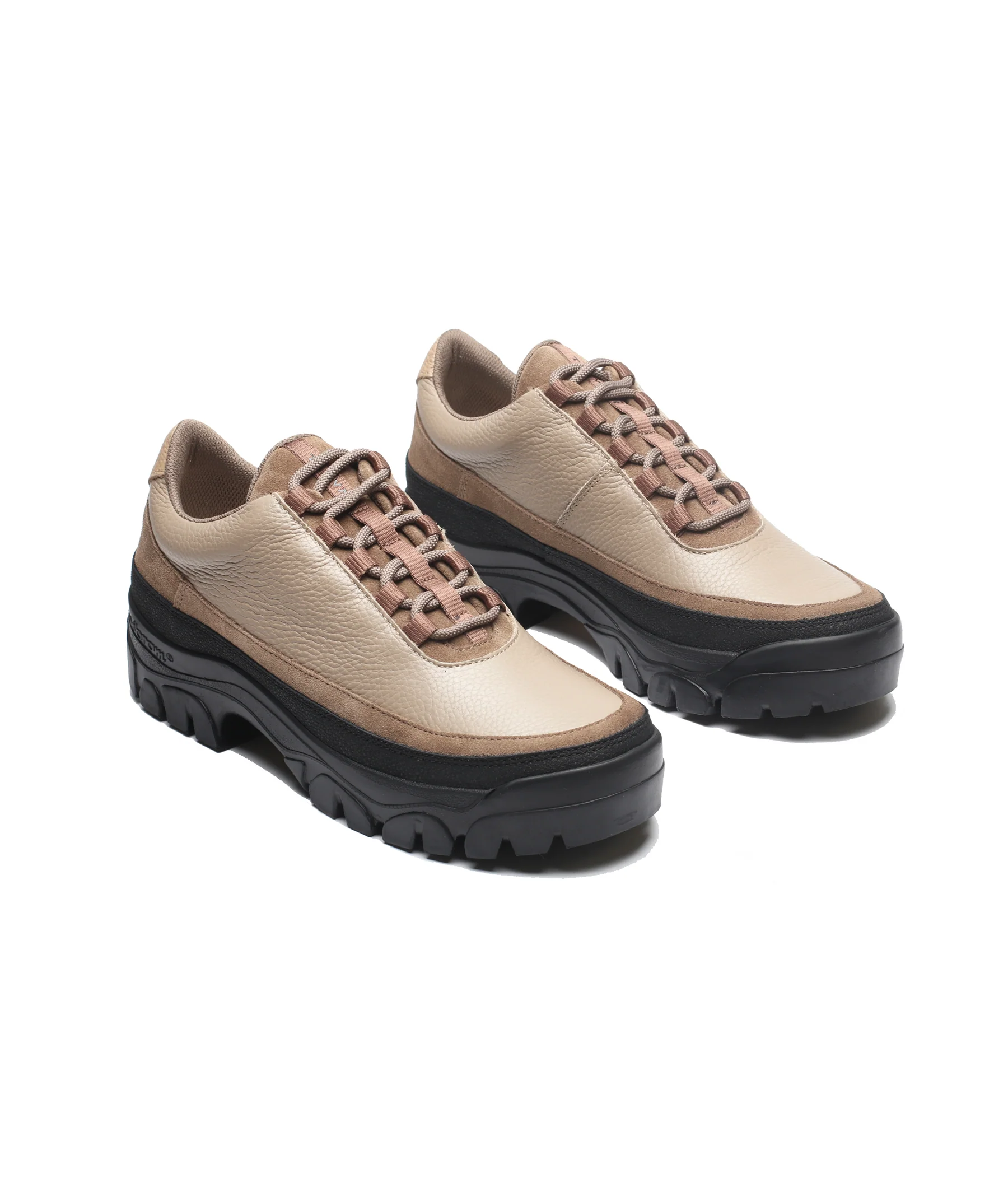
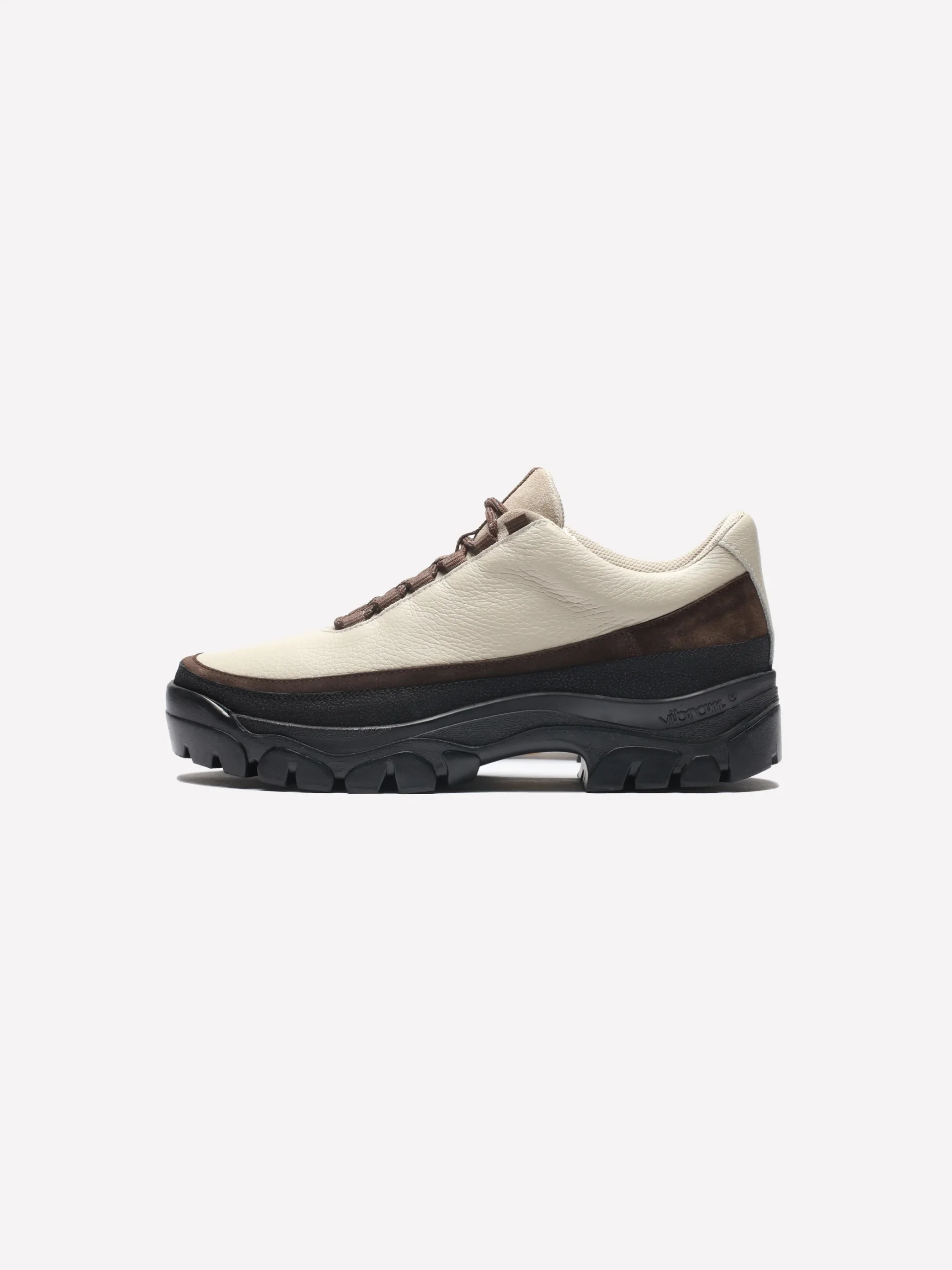
Styled outdoors, the Tarvas Easy Hiker pairs off-white leather with brown suede detailing and a rugged black lug sole, complementing understated everyday layering with trail-inspired functionality.
five
For roughly half a decade, Tarvas made exactly one shoe. That is an unusual bet for any young company, since most footwear labels try to diversify quickly to spread risk across styles and price points. Tarvas did the opposite, spending years building prototypes in the basement workshop before the first batch of the Explorer reached customers in 2017, and then continuing to refine that same silhouette rather than rushing a follow up.
The Explorer, as it exists now, pairs a water repellent suede or leather upper with a natural rubber sole cut with a structured tread pattern for grip on wet stone or dirt trail alike. Retail pricing has run in the range of two hundred and forty to two hundred and eighty euros depending on the upper material, according to a 2021 report from outdoor gear outlet Field Mag, positioning it well above mass market boots and boat shoes and closer to the small batch European leather goods it is visually adjacent to.
The company describes its design philosophy in plainly functionalist terms: form follows function, nothing unnecessary makes it into the final product. That is a familiar line in Nordic design generally, but it is worth noting how literally Tarvas applies it. The Explorer was never meant to be a hiking boot or a dress shoe. It was built to survive the daily walk between the two, which in a Helsinki winter can mean packed snow, black ice, and standing meltwater inside a single kilometer.
vive
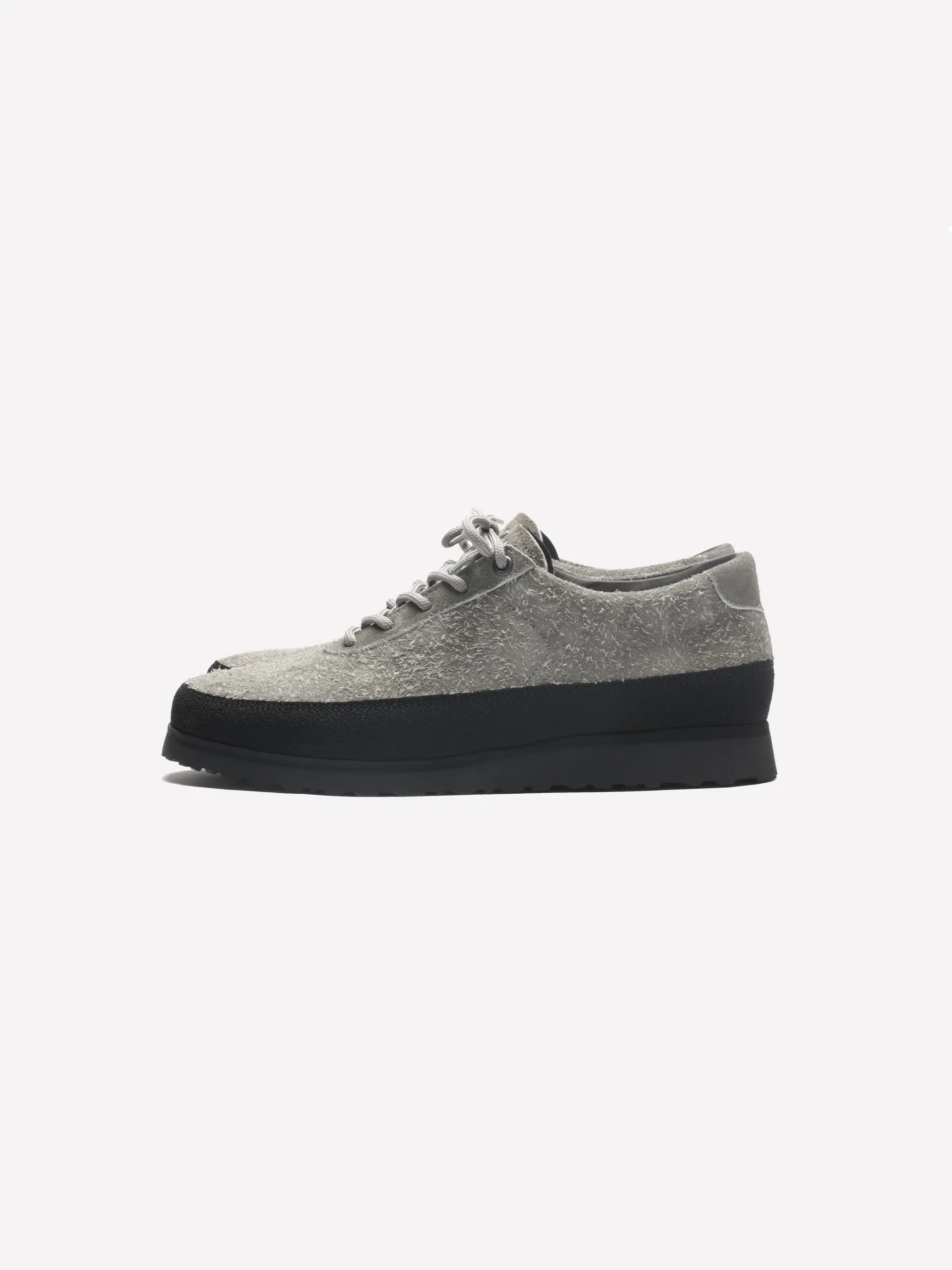
Tarvas has since widened its range beyond the original Explorer, adding the Easy Hiker, the Wanderer, and the Forest Bather to the current lineup, each built around the same mudguard and locally sourced material logic but tuned toward slightly different terrain and occasions. The company has also been candid about the limits of its sustainability claims. Its own materials page states plainly that it does not consider itself a green company, given that raw materials still travel in from multiple European countries before being assembled in Finland, a position that reads more like an honest accounting than a marketing pivot.
Distribution has grown well past Finland’s borders. Tarvas now sells through a curated set of stockists spanning Japan, the United States, and parts of Europe, alongside direct sales from its own site. The brand’s own account of its history, published as a journal entry from the founders themselves, frames the company less as a fashion label chasing seasonal drops and more as three friends who turned a decade old hobby into a factory relationship two hours outside Helsinki. Whether that framing holds up as the company scales further distribution and adds new silhouettes is the kind of thing only time, and a few more wet Helsinki Novembers, will settle.
Related Articles
JOURNAL STANDARD Trades Its Signature Grey for Earth Strata Brown on the adidas Tobacco
Reservations open September 23 for JOURNAL STANDARD’s adidas Originals Tobacco, in deep brown suede with […]