DRIFT AUDIO
Listen to this story
Choose a voice, then press play.
The Acura NSX, a name synonymous with innovation, performance, and luxury, has left an indelible mark on the automotive world since its debut in the early 1990s. This 3000-word article explores the historicism behind the Acura NSX, tracing the evolution of its models, comparing it with competitive vehicles, and highlighting recent industry-supported philanthropic projects.
The Acura NSX, known as the Honda NSX outside North America, was introduced in 1990. Conceived during the late 1980s, it was Honda’s ambitious project to create a world-class supercar. The NSX was designed to challenge the established European sports car manufacturers, particularly Ferrari. Honda aimed to offer a supercar with unparalleled reliability and everyday usability, a feat that many high-performance cars of that era struggled to achieve.
The NSX was groundbreaking in several ways. Its all-aluminum monocoque chassis was a first for a production car, significantly reducing weight while maintaining structural rigidity. The mid-engine layout, combined with the use of lightweight materials, contributed to its exceptional handling characteristics. Honda’s expertise in engineering was evident in the NSX’s 3.0-liter V6 engine, which featured VTEC (Variable Valve Timing and Lift Electronic Control), providing a harmonious balance of power and efficiency.
The legendary Formula One driver Ayrton Senna played a crucial role in the development of the NSX. His feedback during the car’s testing phase helped refine its chassis and suspension, resulting in a vehicle that was not only fast but also exceptionally well-balanced and driver-friendly. Senna’s involvement added a layer of authenticity and performance credibility to the NSX.
The original NSX (1990-2005) set new benchmarks for sports cars. It featured a naturally aspirated 3.0-liter V6 engine producing 270 horsepower, later upgraded to a 3.2-liter unit with 290 horsepower. The first-generation NSX was lauded for its precision, reliability, and daily drivability. Special editions, such as the NSX-R, further enhanced its performance credentials with weight reductions and track-focused upgrades.
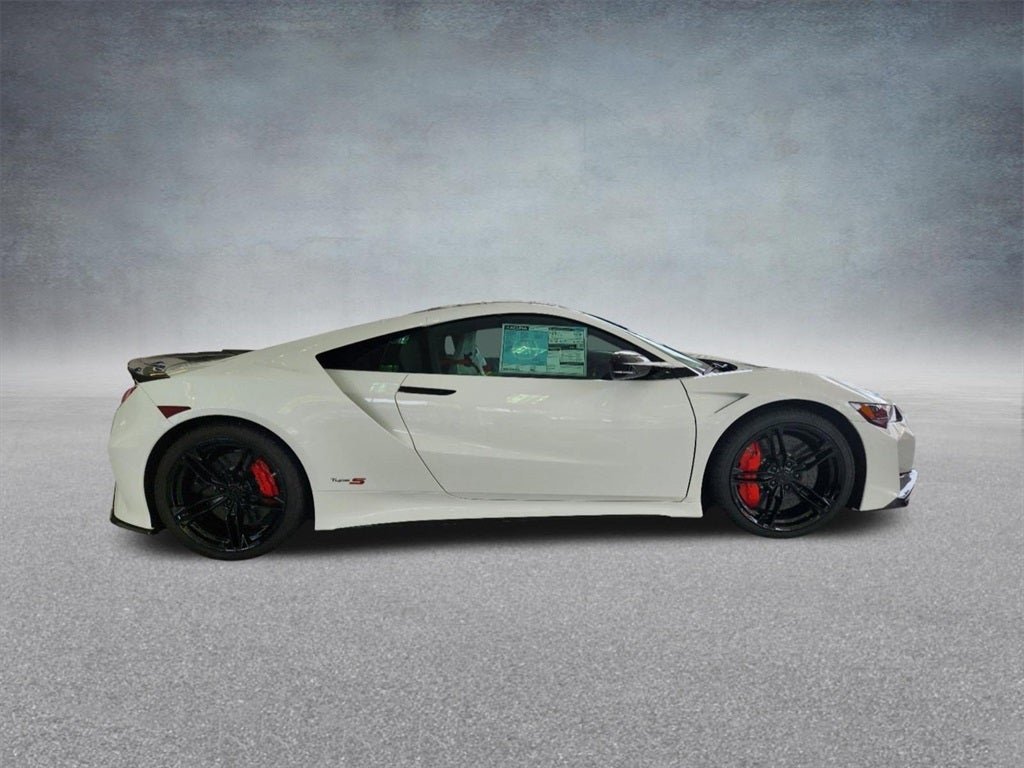
After a decade-long hiatus, the NSX made a triumphant return in 2016 as a hybrid supercar. The second-generation NSX (2016-present) features a twin-turbocharged 3.5-liter V6 engine paired with three electric motors, producing a combined output of 573 horsepower. This advanced powertrain, coupled with Acura’s Sport Hybrid Super Handling-All Wheel Drive (SH-AWD) system, delivers breathtaking acceleration and precise handling. The modern NSX retains the spirit of its predecessor while embracing cutting-edge technology.
The Ferrari 348 and its successor, the 355, were direct competitors to the first-generation NSX. While the Ferraris offered Italian flair and V8 power, they were often criticized for their reliability issues and high maintenance costs. The NSX, by contrast, gained a reputation for its dependability and user-friendly nature, appealing to a broader range of enthusiasts.
The Porsche 911 has been a perennial rival to the NSX. Both cars have evolved significantly over the years, each offering distinct driving experiences. The 911, with its rear-engine layout and iconic design, has consistently been a benchmark in the sports car world. The NSX, with its mid-engine configuration and innovative technology, provides a different yet equally exhilarating driving experience. Each has its loyal following, and their competition has driven both brands to continuously improve.
The Nissan GT-R, often referred to as “Godzilla,” has been another significant competitor. Known for its incredible performance and advanced technology, the GT-R offers a more aggressive and raw driving experience compared to the refined and balanced nature of the NSX. Both vehicles push the boundaries of what is possible in their respective categories, showcasing Japanese engineering prowess.
Acura, as a brand, has consistently supported various philanthropic initiatives. The company focuses on education, environmental sustainability, and community development. One notable project is the Acura College Graduate Program, which offers special financing options to recent college graduates, helping them transition into the workforce with reliable transportation.
Honda, Acura’s parent company, is deeply committed to environmental sustainability. The Honda Green Path initiative aims to reduce the environmental impact of manufacturing and operations. This includes reducing CO2 emissions, waste, and water usage across its facilities. The NSX is produced at the Performance Manufacturing Center (PMC) in Ohio, a state-of-the-art facility designed with sustainability in mind.
Acura and Honda have also been active in promoting STEM (Science, Technology, Engineering, and Mathematics) education. Through partnerships with organizations like FIRST (For Inspiration and Recognition of Science and Technology), they support robotics competitions and provide mentorship to young students. These efforts aim to inspire the next generation of engineers and innovators, ensuring a bright future for the automotive industry.
In times of crisis, Acura and Honda have provided significant support for disaster relief efforts. This includes donations to the American Red Cross and other organizations to assist communities affected by natural disasters. Additionally, Honda’s Community Service program encourages employees to volunteer their time and skills to support local initiatives, further strengthening community ties.
The Acura NSX is more than just a high-performance sports car; it is a symbol of innovation, engineering excellence, and a commitment to quality. From its groundbreaking debut in 1990 to its current iteration as a hybrid supercar, the NSX has continuously set new standards in the automotive world. By examining its historical development, comparing it with key competitors, and highlighting Acura’s philanthropic endeavors, we gain a deeper appreciation for the NSX’s impact on both the automotive industry and society at large.
The journey of the Acura NSX reflects a blend of tradition and forward-thinking, embodying the essence of what makes a car truly great. As we look to the future, the NSX will undoubtedly continue to inspire and influence, remaining a benchmark for performance, innovation, and responsible corporate citizenship.
Related Articles

Ameri Put Wrangler On Drive And Cut It To Two Denims
First Ameri × Wrangler drop. Jacket ¥30,800. Pants ¥26,400. Blue, black, pink. 29 September. Drive […]