DRIFT AUDIO
Listen to this story
Choose a voice, then press play.
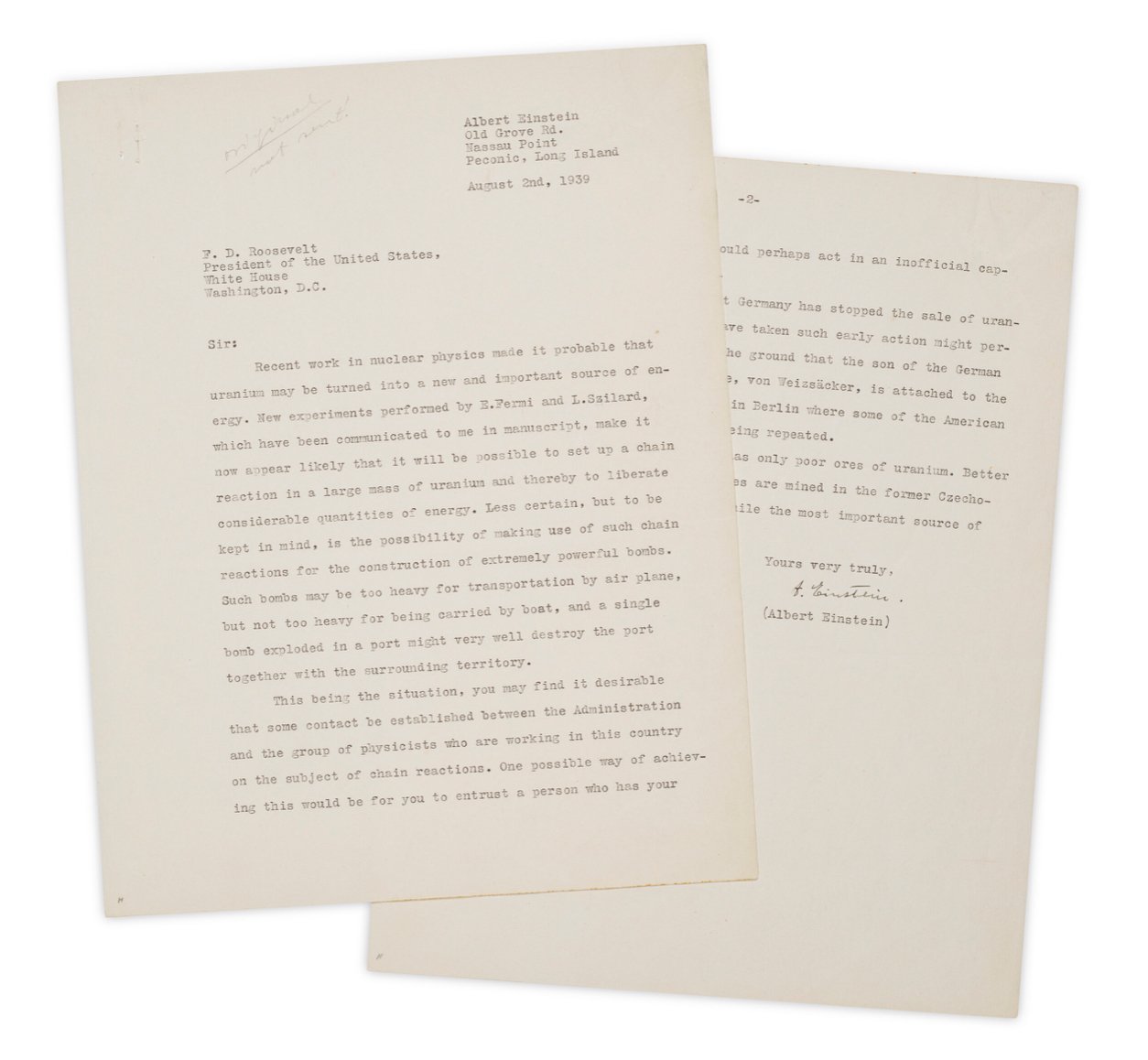
In the midst of World War II, a single letter signed by Albert Einstein set into motion a series of events that would shape the course of history. Written by Leo Szilard with the help of other physicists and signed by Einstein on August 2, 1939, the Einstein–Szilard letter addressed to President Franklin D. Roosevelt, alerted the United States of America to the potential danger of Germany’s ability to develop atomic bombs.
In this monumental letter, the scientists urged President Roosevelt to consider the ramifications of nuclear research in the hands of enemy forces and encouraged the U.S. government to take immediate action to secure uranium ore and accelerate their own nuclear research efforts. This letter was the catalyst for the establishment of the Manhattan Project, the extensive research and development initiative that ultimately led to the creation of the first atomic bombs.
The Einstein–Szilard letter is considered one of the most significant documents of the 20th century, not only for its impression on the war but also for the profound changes it heralded in the fields of science and technology. Although the original letter is likely preserved in a museum or archive, its historical significance would command an exorbitant price if it were ever to go up for auction. Considering the scarcity of comparable historical documents and the unique role this letter played in shaping our world, it is difficult to provide a precise estimate, but it could potentially sell for millions of dollars.
The Einstein–Szilard letter is a testament to the power of foresight and the courage to speak up in the face of impending danger. Its influence on the trajectory of world history cannot be overstated, and its legacy continues to inspire a deeper understanding of the intersection of science, technology, and global politics.
Related Articles
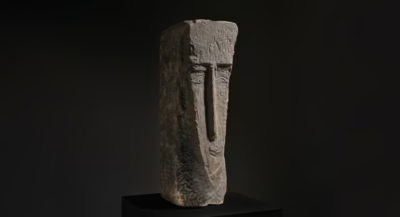
Modigliani’s Limestone ‘Tête’
Carved from a single block of limestone in Montparnasse more than a century ago, one of Modigliani's rare stone heads goes to auction for the first time…