DRIFT AUDIO
Listen to this story
Choose a voice, then press play.
A trailer just landed for a movie about the making of a movie, and somehow the underdog story still works twice.
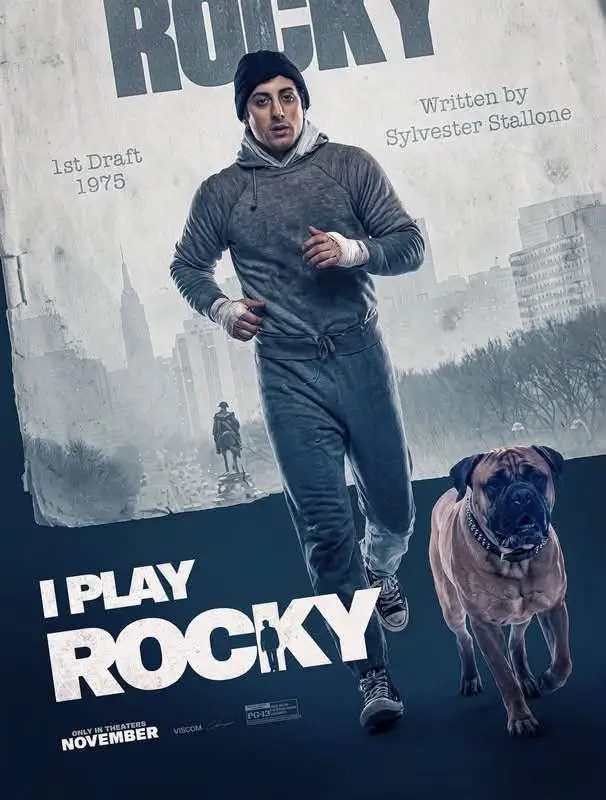
The first footage for I Play Rocky arrived this week, and it does something modern trailers rarely bother with anymore: it trusts a fifty year old true story to still land a punch. The film, from Amazon MGM Studios, reconstructs the frantic, broke, and mostly humiliating stretch of the mid 1970s when a jobbing actor named Sylvester Stallone wrote a boxing script called Rocky and then refused every studio that wanted to buy it unless he got to star in it himself.
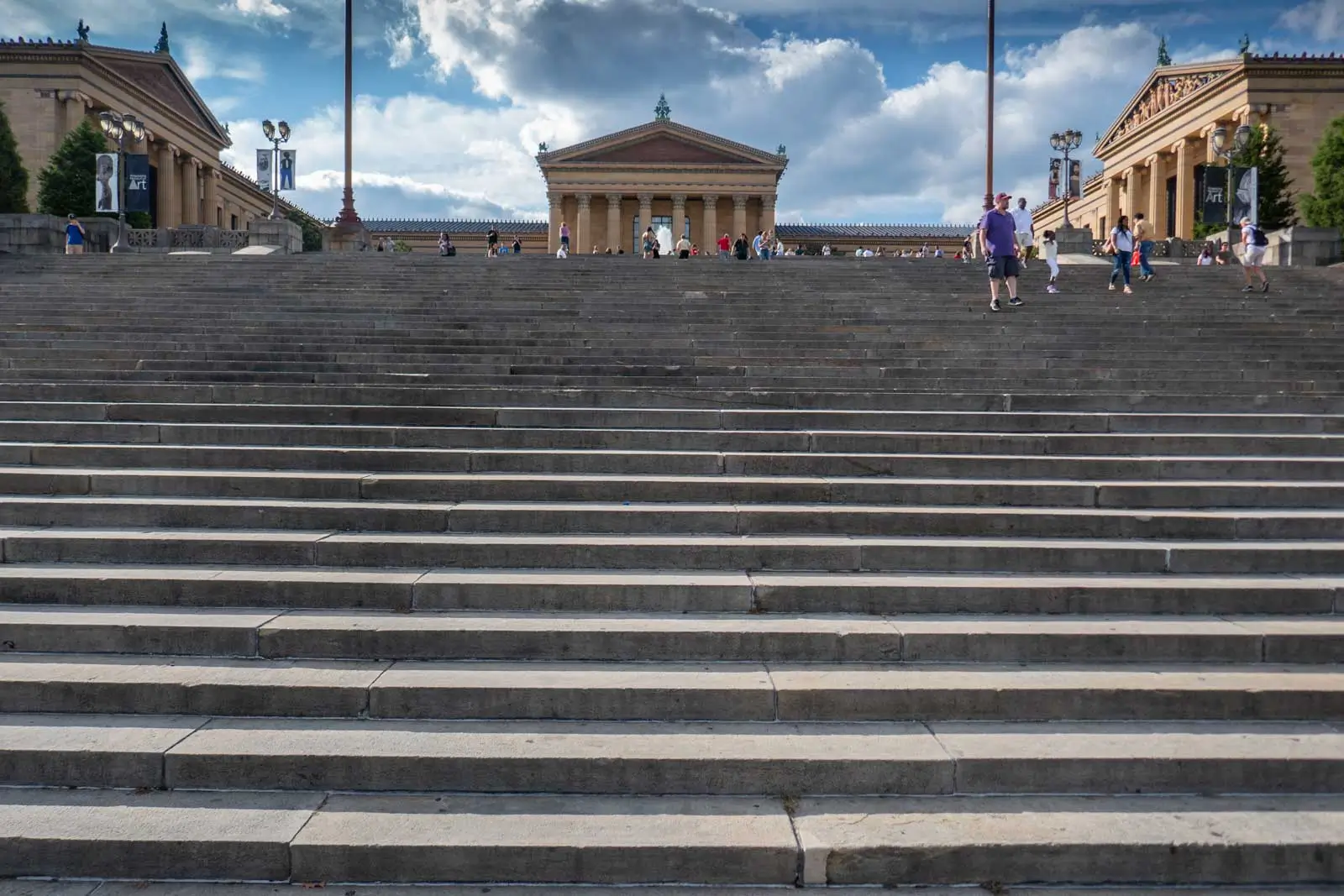
Philadelphia Museum of Art and its landmark steps.
It is, on paper, one of the most repeated stories in Hollywood folklore. Producers wanted Ryan O’Neal. They wanted Burt Reynolds. Stallone had a few hundred dollars, a bull terrier named Butkus, and a stubborn belief that nobody had cast him in leading roles because nobody had let him try. The 1976 film Rocky went on to beat both Network and Taxi Driver for Best Picture, and Stallone became just the third person in Academy history nominated for acting and writing in the same year, joining Charlie Chaplin and Orson Welles in a club that still has three members.
I Play Rocky treats that gauntlet, the writing, the refusals, the standoff with studio executives, as the actual plot, rather than as a paragraph in a biography. Peter Farrelly directs from a script by Peter Gamble, and the film opens in select theaters on November 6, with a wider release to follow later in the month, timed to land just ahead of Rocky’s fiftieth anniversary in late November.
The production filmed largely in New Jersey rather than Philadelphia itself, but the city’s own relationship to the original film remains inseparable from the story I Play Rocky is retelling, down to the famous museum steps that turned an ordinary morning run into one of the most repeated images in American film.
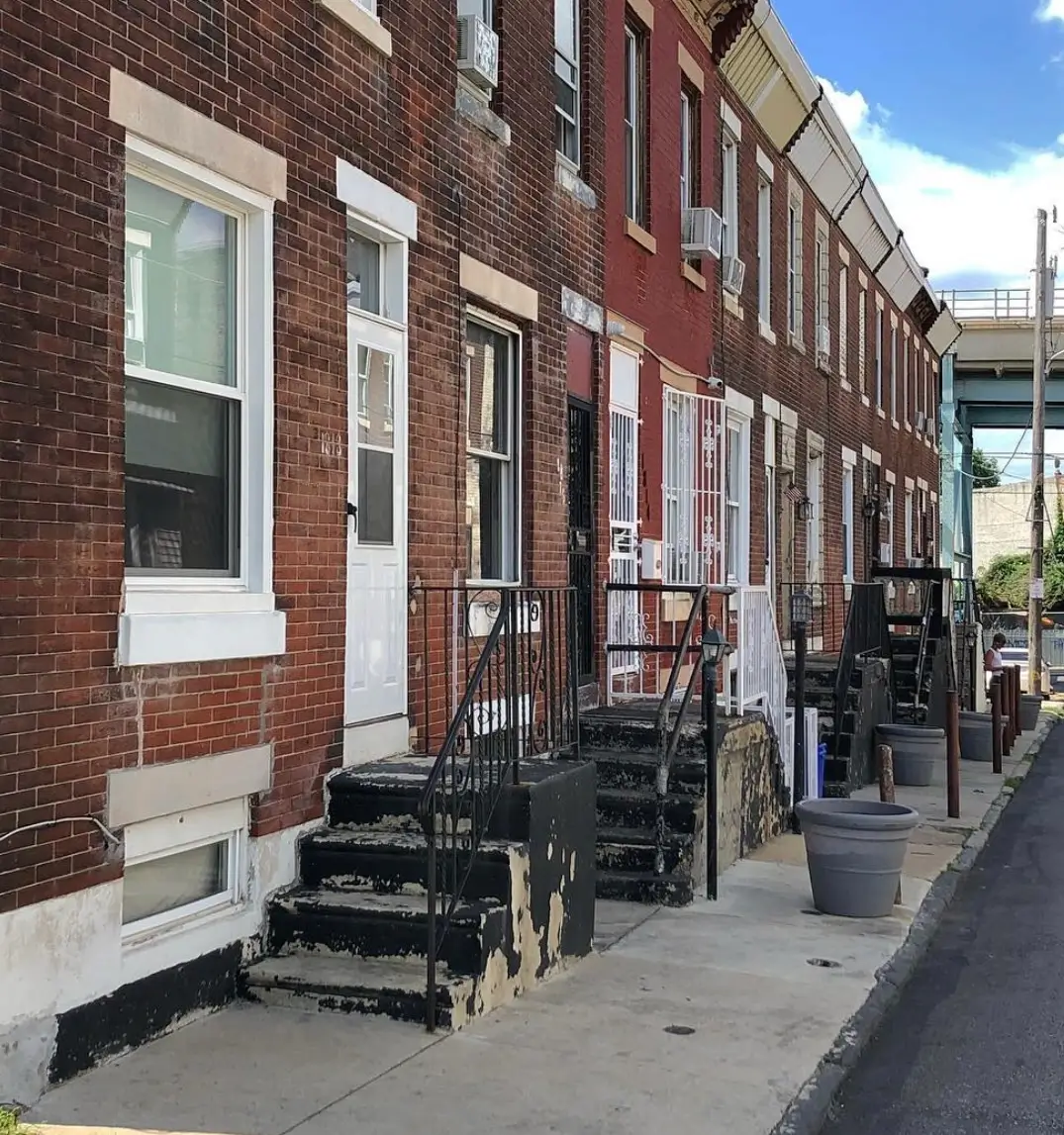
Philadelphia rowhouses along a residential street.
stir
What makes the trailer genuinely funny, on top of moving, is how faithfully it reproduces the myth everyone already knows by mid. There is the partially paralyzed face, a lasting mark from a complicated birth that left Stallone with a slurred, one sided delivery casting directors routinely wrote off. There is the unknown writer with a stack of rejected screenplays, taking meetings where executives loved the script and openly doubted the man who wrote it could carry a film. There is the studio offering real money, upward of a few hundred thousand dollars by most retellings, for the rights alone, and Stallone turning it down flat because the deal did not include him in the lead.
The film leans into just how absurd that bet looked at the time. Stallone was not simply unproven, he was a name nobody in a position to greenlight anything wanted attached to their movie. Betting his own rent money on himself was not an underdog gesture dressed up after the fact for a highlight reel. It was, by every account from that period, a genuinely reckless decision that could have ended a career before it started, closer in spirit to the worn, unglamorous gyms where actual fighters trained through that decade than to anything resembling a Hollywood pitch meeting.
The film’s official synopsis describes it as an electrifying true story about a man who believed he was not just meant to write Rocky, but meant to be Rocky Balboa, and the phrase does a fair job of summarizing why the project appealed to a studio in the first place. It is the same three act shape as the original film, just relocated from a boxing ring to a series of studio offices, which is either a clever structural trick or a slightly cheeky bit of brand extension, depending on how generous a viewer feels.
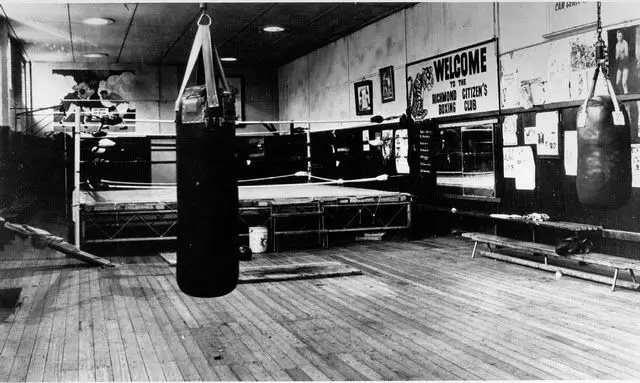
Historic boxing gym interior with ring and heavy bags.
role
The casting decision doing most of the trailer’s heavy lifting belongs to Anthony Ippolito, a 26 year old actor from Long Island who takes on the young Stallone role. Ippolito is not a newcomer to playing famous men from the same stretch of the 1970s. He previously portrayed a young Al Pacino in Paramount Plus’s The Offer, the limited series dramat the chaotic production of The Godfather, which means he now has back to back credits recreating two of the most recognizable Italian American actors of that decade.
By several accounts, Ippolito landed the Stallone role after submitting an unsolicited audition tape, which is its own small echo of the film’s premise: an actor nobody had cast in a lead role talking his way into one anyway. The resemblance in the early set photos and trailer cuts is close enough that outlets covering the film have leaned on the word doppelganger without much exaggeration, and reactions online have split fairly evenly between genuinely impressed and gently roasting how far Ippolito pushes the voice, a lower, thicker cadence the trailer itself describes as sounding like he has rocks in his mouth.
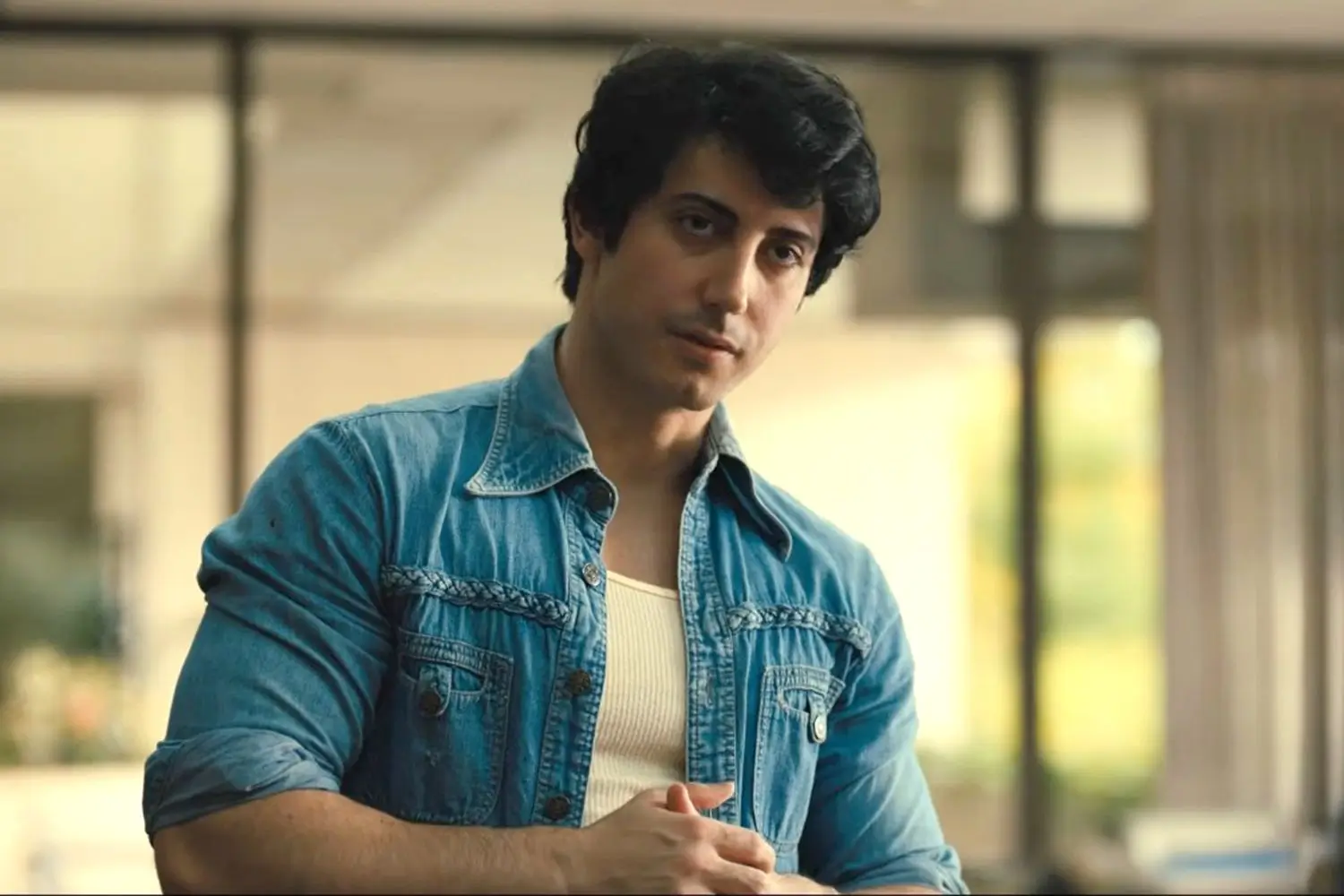
Anthony Ippolito, in a denim shirt and white tank top.
Born in 1999 and raised between Long Island and New York City, Ippolito has worked steadily since childhood, with credits including Pixels, Netflix’s Purple Hearts, and the Netflix series Grand Army, where he played a painter navigating a Brooklyn public high school. None of those roles prepared audiences for the idea that he would eventually be handed one of the more scrutinized impersonations in recent memory, play a man whose voice and posture are as recognizable as his filmography.
away
Peter Farrelly’s presence behind the camera is its own small plot twist. The director, who won an Academy Award for Green Book, spent much of his earlier career defined by broad comedy, first alongside his brother Bobby on films like There’s Something About Mary and Dumb and Dumber, and more recently on his own with the Amazon comedies Ricky Stanicky and this year’s Balls Up, the latter of which landed with considerably less enthusiasm from critics than his previous outings.
I Play Rocky finds him back in the register that earned him his Oscar, telling a grounded, character driven true story rather than chasing a punchline. It is a deliberate pivot, and one Amazon MGM Studios appears to be betting on heavily. The studio unveiled fresh footage for the film at CinemaCon earlier this year as part of an expanded theatrical slate the company has been building out, alongside titles like a Thomas Crown Affair reimagining and a new Spaceballs sequel, part of a stated push toward films that, in the studio’s own framing, give audiences a reason to leave the house.
The production itself filmed largely in New Jersey, standing in for the Philadelphia of the original Rocky and the various New York and Los Angeles rooms where Stallone pitched, and was rejected by, a long list of studio executives. Sean Porter handled cinematography, and the film is produced by Farrelly alongside Toby Emmerich, Christian Baha, Paul Currie, and Michele Weiss.
There is a reasonable argument that a film about the making of Rocky was always going to be an easier sell to a studio than an original biopic pitch would be. The title alone carries fifty years of built in recognition, and the fiftieth anniversary timing gives the release its own built in marketing hook, a fact Amazon MGM Studios has been fairly open about in how it has scheduled the rollout. But the choice to hand that project to Farrelly, rather than to a director with a track record in prestige drama, still reads as a deliberate wager on his ability to hold a straight face for two hours after a decade spent mostly making audiences laugh. Whether critics treat that as a comeback or a stretch will likely depend on how much of Ricky Stanicky and Balls Up still lingers in viewers’ memory when I Play Rocky opens.
people
Filling out the ensemble is a cast built almost entirely around recognizable figures from Stallone’s early circle. Stephan James plays Carl Weathers, the actor who originated Apollo Creed, in a piece of casting that has drawn its own commentary given the roughly six year age gap between James and Ippolito, despite Weathers having actually been younger than Stallone at the time. AnnaSophia Robb plays Sasha Czack, Stallone’s first wife, credited in several retellings of the story with pushing him to adopt the stage name that would eventually become inseparable from the role itself. Jay Duplass takes on John G. Avildsen, the director who eventually shepherded Rocky to the screen and to a Best Director win, while P.J. Byrne and Toby Kebbell play producers Irwin Winkler and Robert Chartoff, the men who ultimately agreed to Stallone’s terms.
Matt Dillon, Tracy Letts, Kiki Seto, and Robert Morgan round out a supporting cast built to populate the rooms Stallone spent years trying to talk his way into. It is a dense ensemble for a film centered on a single, fairly narrow stretch of one man’s career, but that density mirrors the actual history: getting Rocky made required convincing a long chain of skeptical, powerful people, one at a time, and the film’s cast list reads like a roll call of everyone who eventually said yes.
Casting an ensemble this recognizable around a story this well documented creates its own particular pressure, since audiences who already know the outcome are left evaluating performance and resemblance rather than plot. That is arguably the whole appeal of a project like this one. Nobody buying a ticket to I Play Rocky needs to be told how the story ends. What they are paying to see is whether the reconstruction feels earned, whether Ippolito’s version of the slurred, halting cadence that got Stallone rejected from countless auditions lands as tribute rather than caricature, and whether a film built almost entirely on dramatic irony can still generate tension when its audience already knows Rocky went on to win Best Picture.
him
Stallone himself has kept a notable distance from the production. He did not give the project his blessing, though he has also not publicly criticized it, and has said he intends to withhold judgment until he sees the finished film. It is a fairly restrained posture for a man whose entire early career was defined by refusing to be a passive bystander in his own story, and it gives the film’s release an added layer of tension: the subject of a biographical drama, watching from outside the process, waiting to see how faithfully his own gamble gets rendered back to him.
View this post on Instagram
That tension sits underneath everything the trailer is doing, the recreated wardrobe, the Bill Conti score cue lifted almost note for note, the shots blocked to mirror the original film’s most quoted moments. Rocky won three Oscars in 1977, including Best Picture, and eventually spawned six sequels plus three additional Creed films, a franchise that has grossed well over a billion dollars combined. Fifty years later, the story being retold is not the boxing match. It is the year and a half before anyone agreed to let Stallone step into the ring at all, a stretch of rejection that, as the film’s marketing puts it, reads as the ultimate underdog story behind the ultimate underdog movie.
I Play Rocky opens in select theaters on November 6, expanding wider later in November, arriving just ahead of the fiftieth anniversary of the film it is built around.
Related Articles
HUF Put The Triple Triangle On Fruit Of The Loom
First collision. Underwear 2P pack. Rib tank 2P pack. ¥4,950 each. Kentucky cotton. Special box. […]