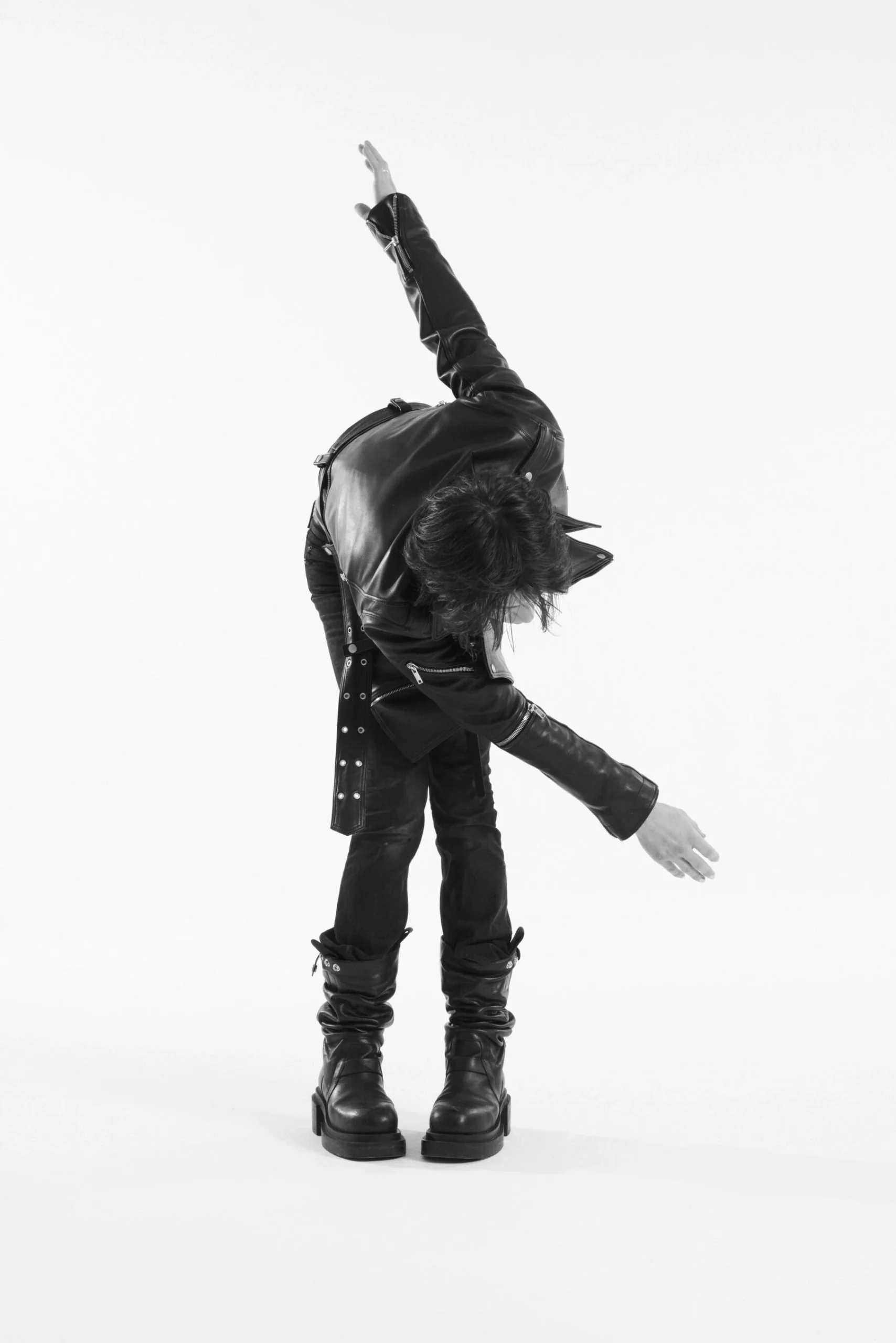
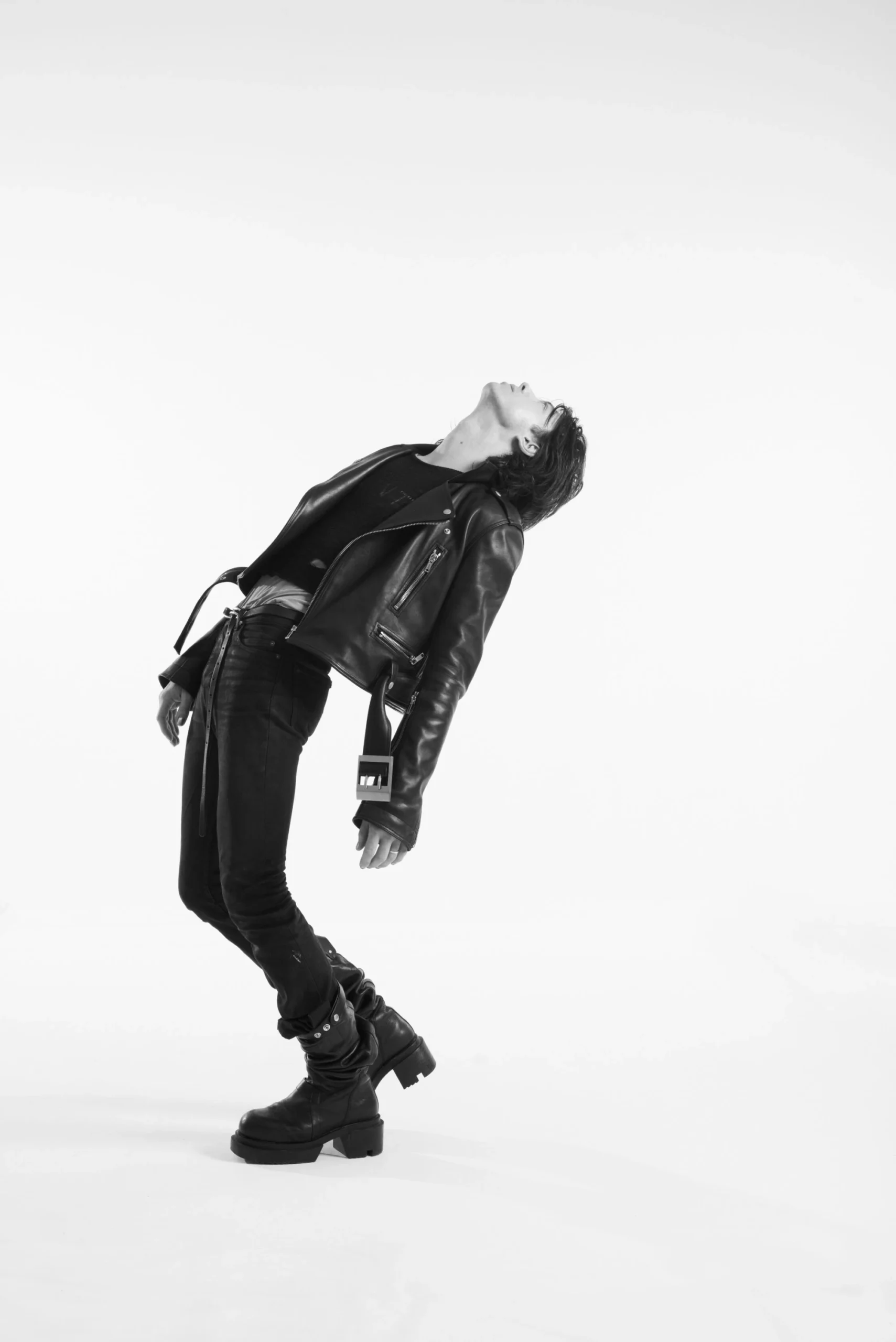
DRIFT AUDIO
Listen to this story
Choose a voice, then press play.
Connor Hickey has spent nearly a decade shaping the objects, eyewear and sculpture detail that give Rick Owens its physical language, one tooth of rubber at a time.
There is a particular kind of fashion job that never shows up in a byline. Nobody credits the person who decides how thick a rubber sole should curl at the heel, or how a pair of sunglasses should sit on a face that has spent thirty years being photographed in fog machines and black wool. That job, at Rick Owens, belongs to Connor Hickey, and it is a wider job than most people would guess.
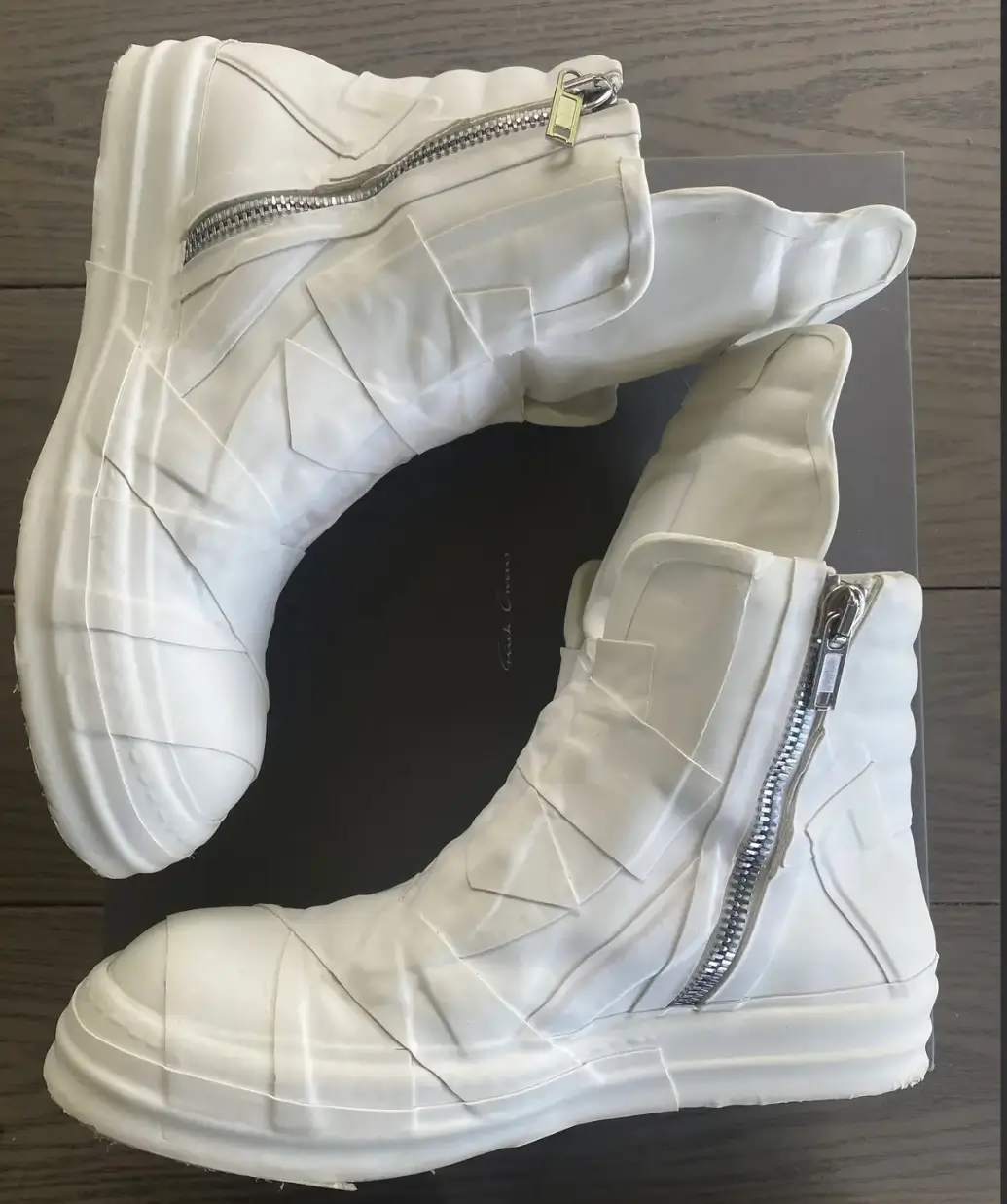
The avant-garde white high-top boots feature a deconstructed layered upper, oversized polished side zippers, and a sculpture chunky sole, combining futuristic design with signature handcrafted detailing.
stir
On paper, Hickey’s role at Rick Owens reads as a list rather than a title: eyewear, product, object, sculpture, special projects. That kind of description usually signals a small team wearing a lot of hats, and at a house the size of Owens’ own, that is exactly what it means. Rather than sitting inside a single department, Hickey moves across the physical output of the brand that does not fall neatly under clothing. Glasses frames. Furniture-adjacent objects. The sculptural hardware that shows up on runways and in stores. The digital modeling and rendering work that increasingly sits underneath all of it before a single physical prototype gets made.
It is the kind of role that only exists at a house built the way Owens has built his, over three decades, from a single Hollywood Boulevard storefront into a label that also makes furniture, that has shown at the Palais Galliera, and that treats its own runway sets as sculpture in their own right. A designer working across eyewear, objects and product needs some fluency in fashion, some in industrial design and some in old fashioned model making, and Hickey’s background traces a fairly direct line toward all three.
flow
Hickey trained at Auckland University of Technology in New Zealand, in a design program grounded in the kind of hands on, materials first thinking that industrial design programs tend to favor over pure fashion ones. His early portfolio work, visible on his own Behance page, sits closer to interior and furniture design and digital process work than to garment construction, which tracks with the shape his career eventually took. Object thinking first, clothing second.
The move from Auckland to Paris is not a small one, geographic or pro, and it is the kind of jump that tends to happen in stages rather than in one leap. New Zealand’s own design industry, while respected, is small relative to the fashion capitals, and designers trained there who want to work at the level Hickey now works at have historically needed to leave for London, Paris or New York to find it. Auckland University of Technology has built something of a reputation for sending graduates into exactly that kind of international pipeline, particularly out of its industrial and spatial design streams rather than its straight fashion design ones.
Before landing at Rick Owens, Hickey’s design work already showed up on other labels’ output. A 2022 credit lists his hand in the three dimensional pattern work and rendering for a look in Acne Studios’ Spring/Summer 2022 collection, look 36, a small credit but a telling one. It places him inside the part of fashion that barely gets photographed: the digital modeling stage where a garment or an object gets built and rebuilt on screen long before anyone sews or molds anything. That skill set, increasingly, is what separates designers who can move fluidly between fashion houses and independent studios from those who cannot. A patternmaker trained only on a physical form has to relearn an entire toolkit to work digitally. A designer who starts there, as Hickey appears to have, arrives at a house like Rick Owens already speaking the language its production pipeline runs on.

The off-white Geobasket-inspired high-top shoe pair smooth leather with soft suede overlays, an exaggerated padded collar, extended tongue, and signature wraparound laces, delivering a bold architectural silhouette with min luxury show.
scope
If there is one physical detail that sums up what Hickey’s corner of the job actually is, it is the sole. Rick Owens sneakers have always looked recognizably like Rick Owens sneakers even when the silhouette underneath them changes completely, and the reason usually comes down to the same jagged, serrated tread pattern running along the bottom edge, a detail the trade press has taken to calling the house’s shark tooth tread. It shows up on the Geobasket, the label’s own answer to the Nike Dunk. It shows up on the Ramones, Owens’ take on a Chuck Taylor. It even survived the brand’s move toward thinner, flatter soles.
That last point is worth sitting with for a second, because it says something about how deliberate the detail actually is. When Owens introduced the Minimal Sneaker as part of the Fall 2025 Concordians collection, the entire premise of the shoe was a razor thin sole in a market suddenly obsessed with low profile silhouettes. Shaving down a rubber sole to that degree usually means losing the fussy details that live inside its thickness. Instead, the serrated tread pattern stayed, scaled down but intact, a signature the house was apparently unwilling to design away even under real pressure to follow a competing trend.
Getting a detail like that to survive a total silh overhaul is not a decision made once and then forgotten. It is the kind of thing that gets redrawn, re-molded and re-approved every time a new sole geometry comes through, which is precisely the territory a product and object designer like Hickey would be working in day to day. Owens himself has talked in past interviews about molding his own rubber soles by hand in the label’s early years, before the company could afford proper manufacturing minimums, a scrappy origin story for a detail that now has its own recognizability across secondhand markets, resole services built entirely around preserving it, and a footwear press that reliably name checks it in nearly every new release.
Owens’ footwear operation has also spent years running alongside a parallel string of connections with outside brands, including a multi season run with adidas that began in 2013, plus later partnerships with Dr. Martens, Veja, Birkenstock and, most recently, Converse. Each of those partnerships reworks an outside brand’s own iconic silhouette through Owens’ aesthetic rather than the other way around, which means the tread and general shape language has to travel convincingly onto someone else’s shoe last, someone else’s manufacturing setup, someone else’s brand codes. That kind of translation work sits squarely inside the product design function rather than the runway design function, and it is a fair example of what a role like Hickey’s spends a lot of its time doing quietly, season after season, without ever needing its own headline.
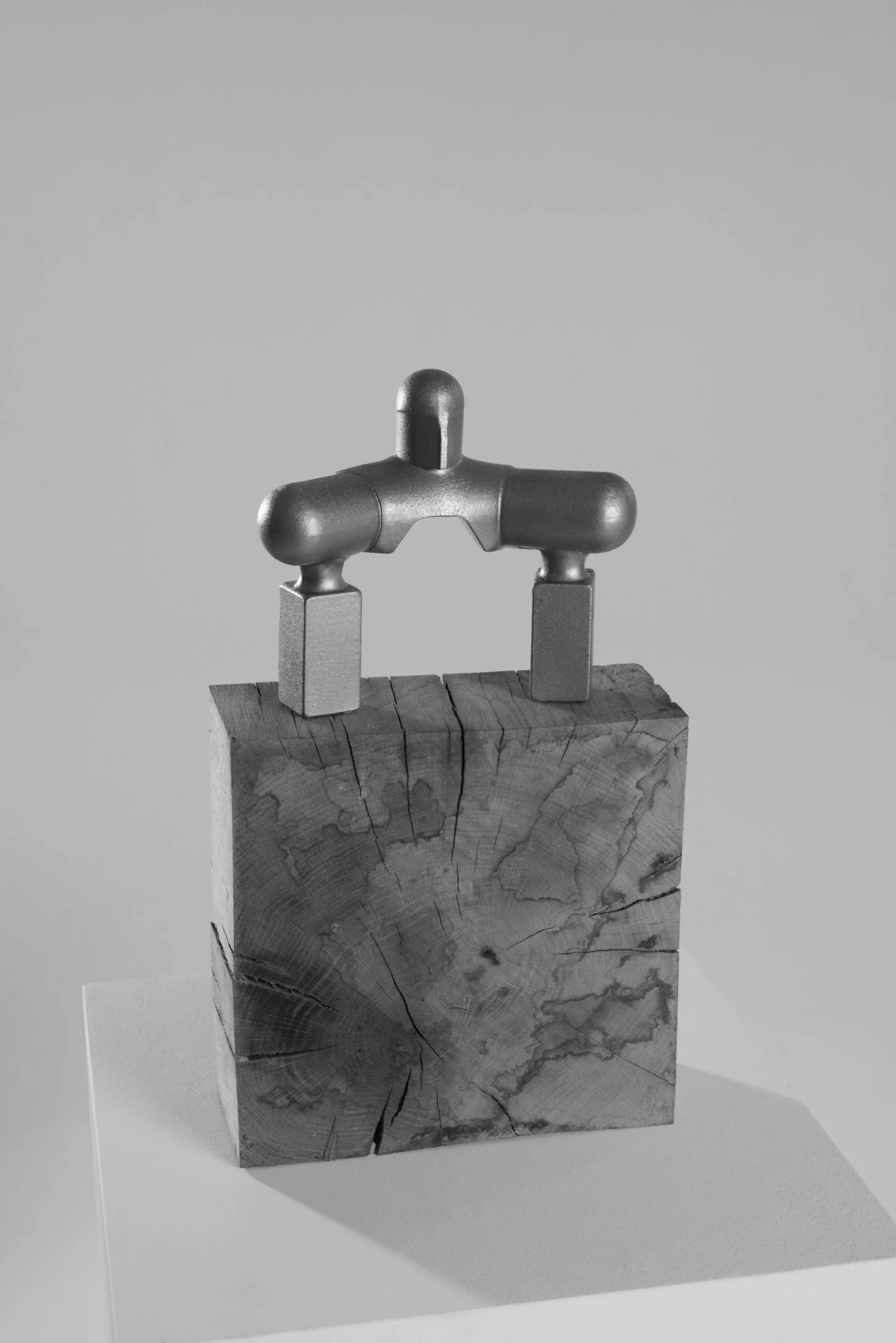
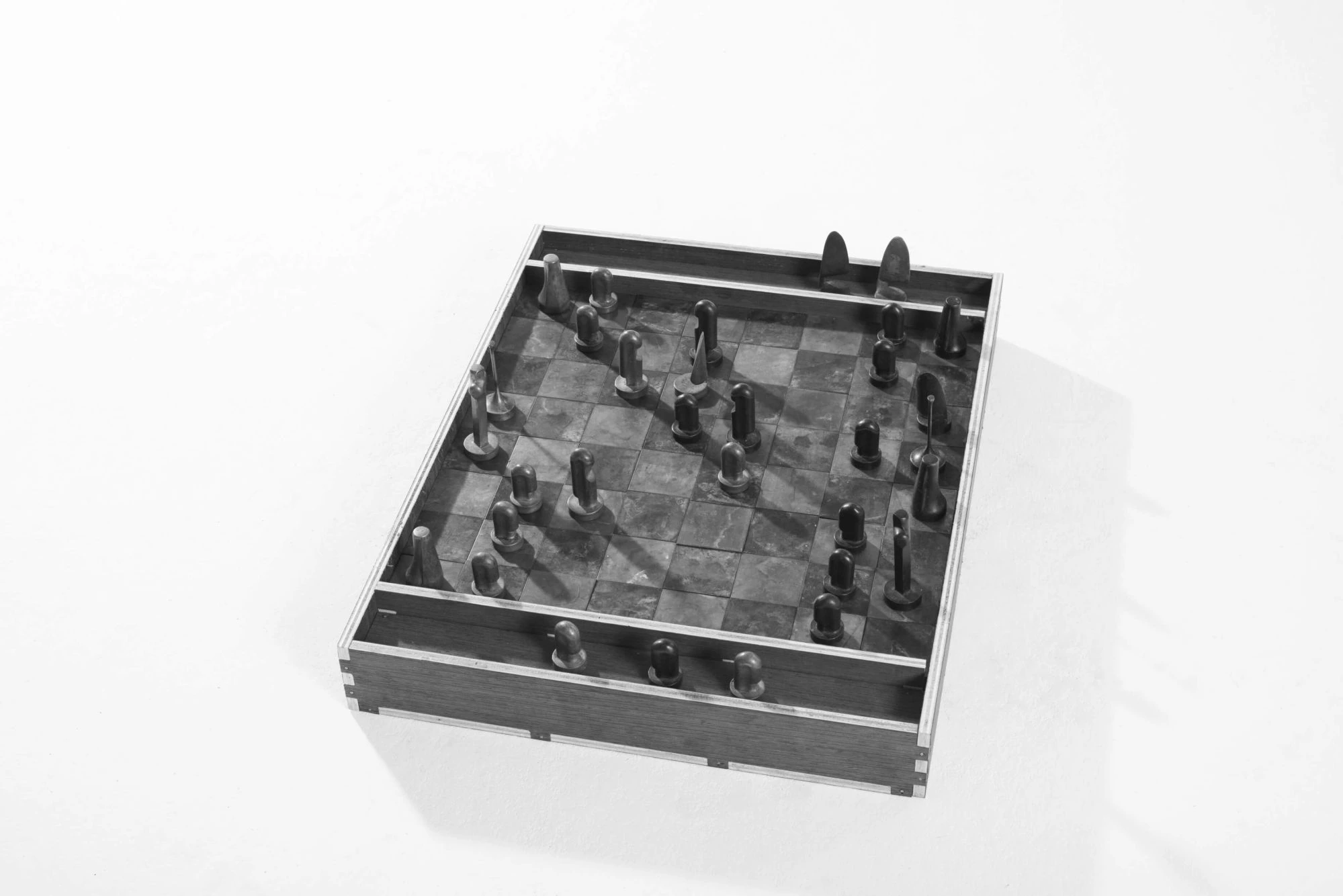
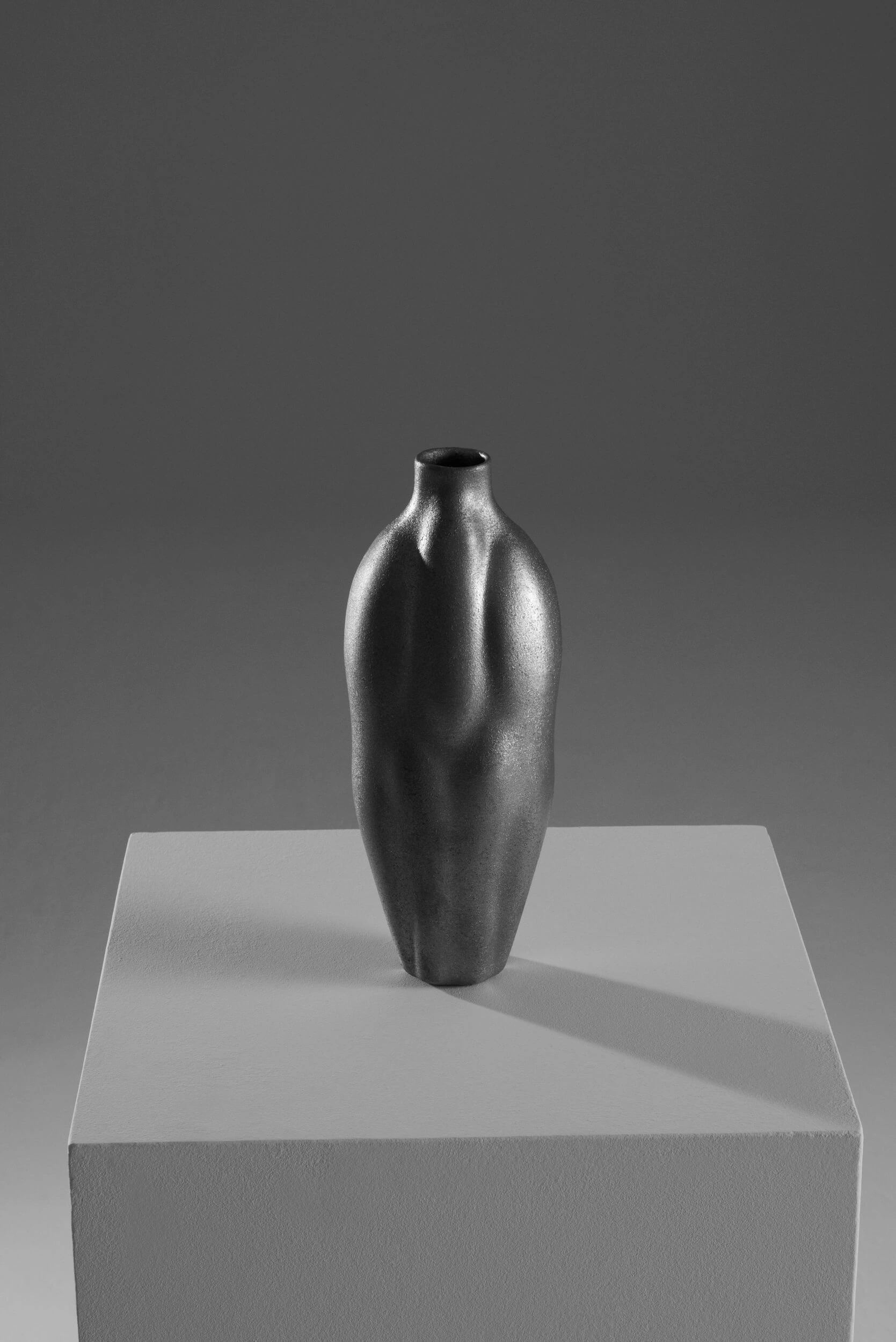
The minimalist abstract sculpture combines softly rounded metallic forms with geometric supports, perched on a cracked solid wood block to create a striking dialogue between industrial precision and natural texture.
challenge
Eyewear presents its own version of the same puzzle, just at a much smaller physical scale. A frame has to survive contact with a human face, has to hold a lens securely, and has to be manufacturable at a price point that still makes sense for the brand, all while carrying the same visual signature that shows up on a boot or a jacket collar. Fashion houses that design eyewear in house rather than licensing it out to an optical conglomerate tend to keep that work close, inside a small product team, because the margin for error on something worn against a customer’s face is much smaller than the margin on a coat. Rick Owens has kept its eyewear largely in house, and it is one of the categories explicitly named in Hickey’s own role description.
The same logic extends to the sculpture objects and special projects that round out the job. Runway sets, hardware pieces, the occasional furniture adjacent object that shows up in a Rick Owens store rather than a showroom, all of it needs someone who can think in three dimensions and then hand that thinking off to whoever actually fabricates the piece. It is a role that barely existed as its own job category a generation ago, when a fashion house’s non-clothing output was usually treated as an afterthought handled by whoever had spare time. Houses built around a total aesthetic universe, Owens’ included, now tend to staff that work properly, which is part of why a designer with an industrial design background rather than a strictly fashion one can end up this central to a brand’s physical identity.
View this post on Instagram
out
Away from Rick Owens, Hickey’s public footprint stays small and fairly guarded, which tracks with a house that has always preferred its own designers stay somewhat mysterious rather than build personal brands on the side. His LinkedIn activity shows flashes of a wider industry curiosity beyond fashion proper, including a passing comment on Nike’s acquisition of the digital shoe and NFT studio RTFKT, the kind of observe that makes sense coming from someone whose own work increasingly lives in 3D software before it lives anywhere physical.
The most view public moment of Hickey’s life to date had nothing to do with a runway at all. In January 2026, Vogue covered his wedding to writer and performance artist Ingvild Gillet, held at a gothic church in Paris. The two had first crossed paths in London years earlier, at a gallery opening in Bethnal Green filled with brightly colored clothes strewn across plinths, an early meeting Hickey has described as memorable mostly for Gillet herself rather than the art. They reconnected years later, after Hickey’s own move to Paris for the Rick Owens role gave the pair a shared city again.
Vogue’s account described a ceremony built around custom pieces from Ann Demeulemeester and Rick Owens, a detail that reads less like a stylist’s flourish and more like two people getting married inside the exact aesthetic world they already work in professionally. A reception at Gillet’s family home in the French countryside followed the church ceremony, a fairly traditional shape for a wedding wrapped around two decidedly non-traditional designer wardrobes. It is the kind of coverage that tends to introduce a working designer’s name to an audience many times larger than any trade press credit ever could, even when the designer in question would probably rather the sole pattern do the talking.
View this post on Instagram
fin
There is a version of this story that tries to draw a straight line from a design student in Auckland to a fixture of one of fashion’s most recognizable and gothic show worlds, but the honest version is messier and more interesting than that. Hickey’s public trail runs through interior and furniture study, through a single credited look at Acne Studios, through a modest LinkedIn page that undersells a job with real reach inside one of the industry’s most tightly controlled brands, and now through a wedding that put his name in front of a much wider audience than a sole pattern ever could.
What stays consistent across all of it is the object level thinking. Whether the assignment is a pair of glasses, a piece of hardware, or the exact angle of a serration running along a rubber sole, the work sits in the space between industrial design and fashion, a space that rarely gets its own coverage because it rarely produces a single dramatic runway moment. It shows up instead in the parts of a Rick Owens shoe, or a Rick Owens object, that keep looking like Rick Owens no matter how many seasons pass around them.
Related Articles
Polo Ralph Lauren Put A Silk Slim And Called It Tuxedo
Silk-Bib Tuxedo Shirt. Style 100068378. Silk front. Band collar. Elongated. UK site lists it unavailable. […]