DRIFT AUDIO
Listen to this story
Choose a voice, then press play.
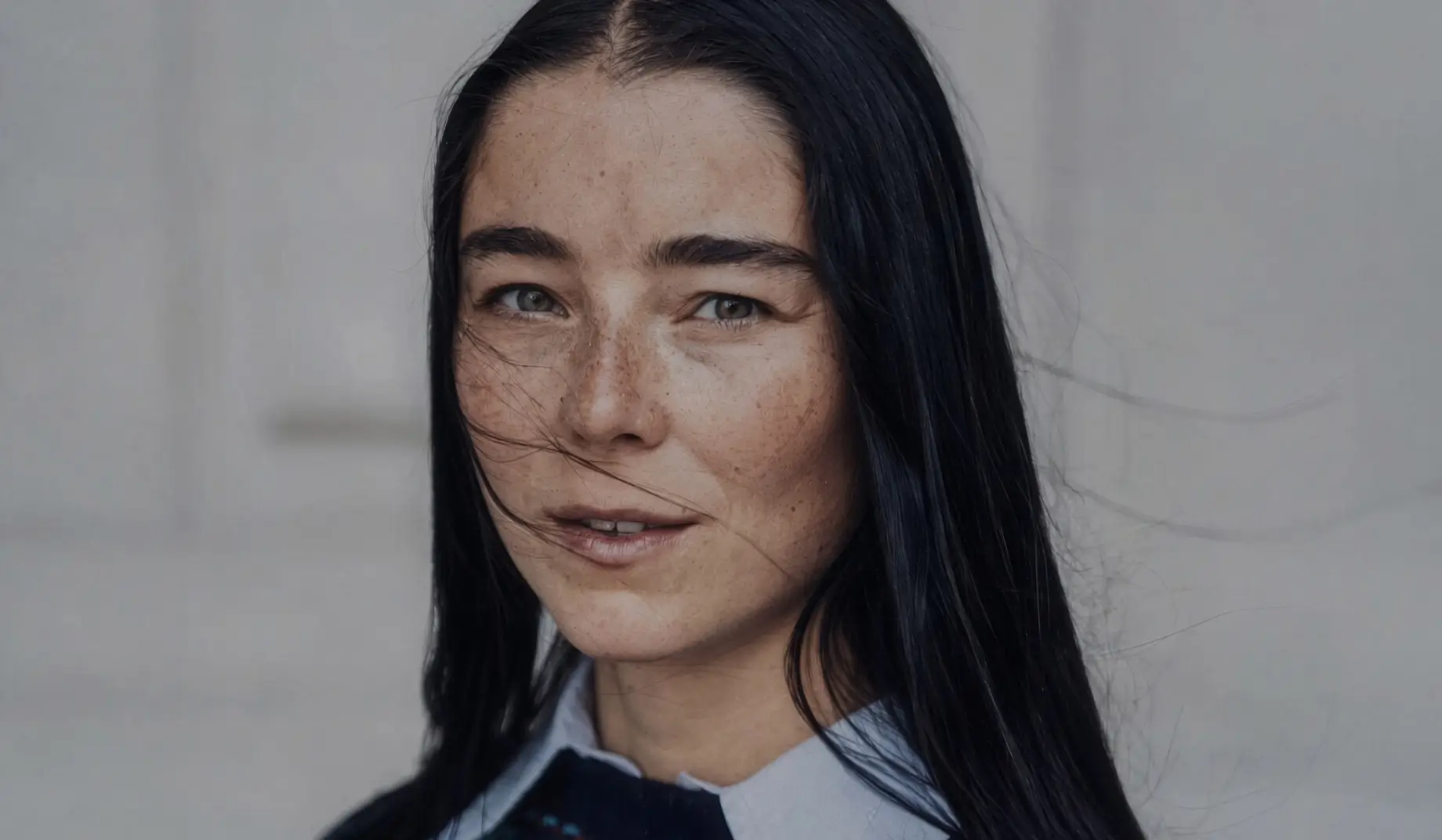
Antwerp designer Julie Kegels beat 2,400 applicants for the 2026 LVMH Prize on Friday, with Lii and Yoshita 1967 taking the runner-up honors.
Frank Gehry’s glass sails held a different kind of crowd on September 4. Inside the Fondation Louis Vuitton, nine finalists from nine countries had just finished presenting their collections to a jury of the industry’s most recognizable names. When the results came, Julie Kegels, the 27 year old behind an Antwerp womenswear label not yet two years old, took the top prize: the 2026 LVMH Prize for Young Fashion Designers, worth 400,000 euros plus a year of mentoring from LVMH’s in-house teams.
View this post on Instagram
Jennifer Lawrence presented the award. The actress, a longtime Dior ambassador, opened her remarks with a slip of the tongue that drew laughter across the room: she introduced the ceremony as being about “fascism” before catching herself and landing on “fashion.” She recovered to call the early look at each year’s crop of talent “one of the best parts of this job.”
Delphine Arnault, the LVMH executive who created the Prize in 2013, said Kegels had walked the jury through bags and shoes still in development during her presentation, a pitch Arnault described as “really about a full silhouette.” She noted that Kegels had recorded among the highest turnover of any finalist this year. “There is an actual customer for her designs,” Arnault said.
hum
This year’s edition drew roughly 2,400 applications from more than 100 countries, the largest pool in the Prize’s 13 year history. Twenty semi-finalists showed their work to the Prize’s committee of experts on March 4 and 5 at La Samaritaine, the LVMH owned Paris department store, before nine advanced to the September final: Kegels, Zane Li’s Lii, Anil Padia’s Yoshita 1967, Colleen Allen of the United States, Gabriel Figueiredo’s De Pino, Galib Gassanoff’s Institution, Sweden’s Petra Fagerström, Harry Pontefract’s Ponte, and Daniel del Valle Fernandez’s The Vxlley. Padia’s presence marked the first time a Kenyan label had reached the final round. Announcing the shortlist back in April, Arnault had already flagged the group’s range, pointing to designers from the United States, Europe, and China, and, for the first time, Kenya, and calling their work sophisticated interpretations of traditional craft.
The jury itself grew this year with five new members: Jack McCollough and Lazaro Hernandez of Loewe, Camille Miceliof Pucci, Michael Rider of Celine, and Pietro Beccari, who took over LVMH’s wider Fashion Group last December. They sat alongside a returning panel that included Jonathan Anderson, Sarah Burton, Maria Grazia Chiuri, Nicolas Ghesquière, Marc Jacobs, Stella McCartney, Nigo, Phoebe Philo, and Pharrell Williams, plus Delphine Arnault, Jean-Paul Claverie, and Sidney Toledano. “We’re the freshmen,” McCollough said of joining a panel with that much collective history. Separate from the three headline awards, the program also grants three additional fashion school graduates a stipend and a year placed inside an LVMH house’s own design studio.
sculpt
Kegels trained at Antwerp’s Royal Academy of Fine Arts, studying under Walter Van Beirendonck and Dirk Van Saene, two members of the Antwerp Six gen that built the school’s reputation. She gained further experience at Meryll Rogge‘s label and at Alaïa, where Pieter Mulier now serves as creative director, before launching her own house in 2024. Her debut collection, titled 50/50, showed the following season at Women’s Fashion Week in Paris, and she has said the label grew out of curiosity that deepened into a more conceptual exploration of the tension between structure and fragile, control and chaos, translated through construction and storytelling rather than a single recognizable print or logo.
The idea behind that first collection has stayed close to the center of her work. On her own site, Kegels writes that “one woman can hold many identities, sometimes within the same day,” grounding the label in craft and intuition rather than a single fixed sil. For Fall/Winter 2026, she pushed that premise further with a collection organized around what she called a “quick change,” tracing the fast transformations women move through in a single day and, as she put it in one interview, exploring “how to hide from it all” when private and public life keep overlapping. “My goal is to create a recognizable design language where the silhouette and construction speak for themselves,” she told other value ref ahead of that show. The LVMH Prize‘s own description of her work leans into that same duality, frame her clothing as moving between instinct and intention, elegance and humor, fantasy and the day, rather than imposing one fixed identity on the people wearing it.
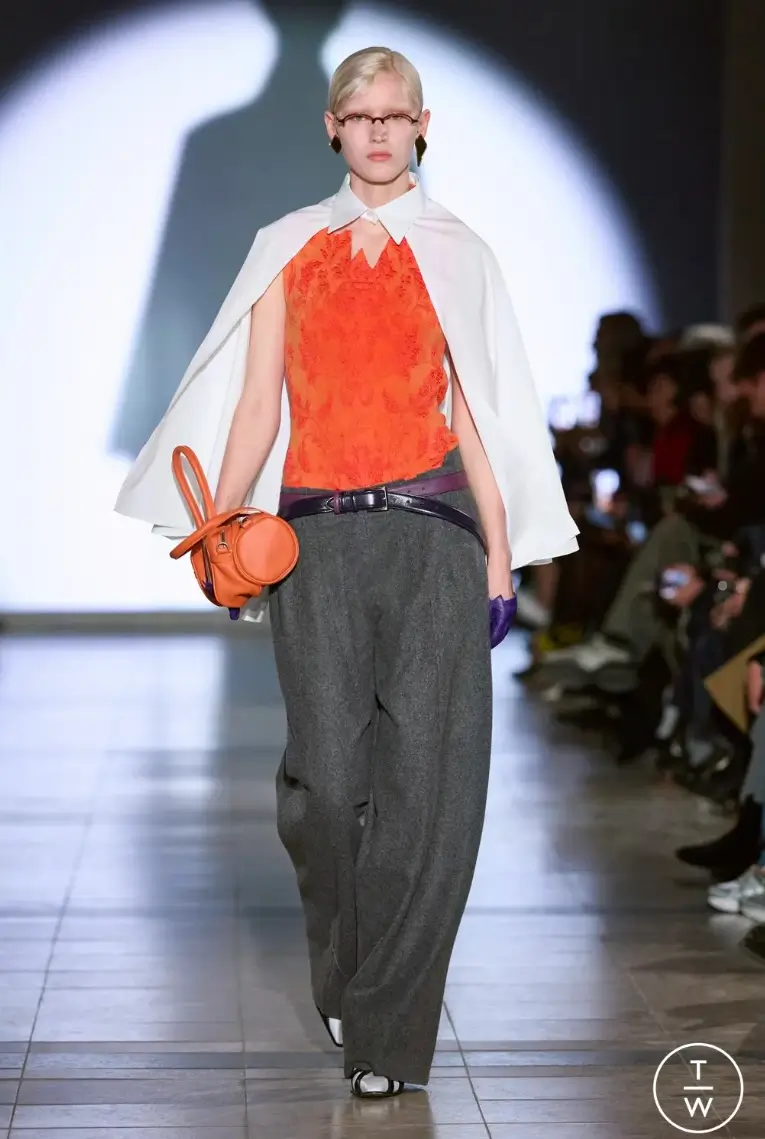
At the LVMH final, her presentation space held a glossy brown wood veneer dress mounted on a mannequin next to a look pieced together from upcycled blankets, worn with an oversized leather bag styled to resemble a sofa cushion. It is a fitting shorthand for a brand the LVMH Prize itself describes as working through sculptural sil, artisanal techniques, and sustain materials drawn from domestic spaces and modern life. For the ceremony itself, Kegels wore a sheer dress layered over lace pasties that doubled, cheekily, as the physical invitations to her spring show.
The business has kept pace with the ideas. Kegels’ label is now carried in 38 points of sale worldwide, and she said direct e-commerce accounts for 28 percent of sales and grew 85 percent over the past year, figures Arnault singled out as unusually strong for a house not yet two years old.
challenge
The Karl Lagerfeld Special Jury Prize, worth 200,000 euros, went to Lii, the New York label founded by Chongqing born designer Zane Li shortly after his 2023 graduation from the Fashion Institute of Technology. Li showed his first collection for autumn/winter 2024 and has built the brand, in its own words, around “the tension between structure and softness.” He remains Lii’s only full time employee, with his partner Jason Rider handling brand management, press, and styling, while the label sells across 32 stores in 12 countries. The prize adds a year of mentoring focused on sustainable development, communication, copyright and legal affairs, marketing, production, and financial management. Priyanka Chopra Jonas, an actress who fronts both Dior and Bulgari for LVMH, presented the award. “That shows that there’s still potential in the market for our stuff,” Li said of the win, adding that he intends to keep growing the label “without compromising the creative side.”
The Savoir-Faire Prize, also worth 200,000 euros, went to Yoshita 1967, the label of Indo-Kenyan designer Anil Padia and the first brand from Kenya to reach the Prize’s final round. Padia has described the house as an extension of his own family history, tracing his relatives’ migration from Gujarat, India, to Nyeri, Kenya, more than a century ago. His house now works between Nairobi and Paris and is built on artisanal crochet made by a network of women artisans, a practice he has described as a way to “connect the past with the present” while “protecting the hand” and the people behind it. His mentorship year is aimed specifically at knowledge transmission, the preservation of technical skill, and environmentally responsible collection development, a slightly different focus than the other two winners’ grants. Thai actress Urassaya Sperbund, a Louis Vuitton ambassador who sat with the jury this year, presented that award.
extend
Conversation among this year’s finalists kept circling back to one problem: the gap between when a young label has to pay to produce a collection and when its retail partners actually pay for it. Arnault said she was struck by how many designers are launching into a landscape of shrinking wholesale, soft consumer spending, and rising costs, and that several told her the prize money would directly ease that squeeze.
Kegels put it more bluntly. “We are the bank in between,” she said of the wholesale system, calling it unfair to young labels that front manufacturing costs while stores settle their invoices on their own schedule. She learned that risk directly when Ssense, a retail partner, filed for bankruptcy protection in 2025. “That was terrible for us,” she said, adding that she now vets retailers more carefully before agreeing to stock with them.
Li and Padia described a version of the same pressure. Li, whose Lii operates with him as its only full time staffer aside from his partner’s support on management and press, said his prize money would go toward production and sample making, along with new categories in knitwear, leather, and accessories. Padia, who has self financed Yoshita 1967 up to this point, was blunter about the scale of need. “What couldn’t I use it for?” he said when asked what the grant would fund, adding that he hopes to extend his artisan network beyond crochet into hand weaving and lace.
Jury members who spoke after the ceremony kept returning to the same balance of craft and commercial sense. Lazaro Hernandez of Loewe, sitting on the jury for the first time alongside design partner Jack McCollough, called Kegels “a nice mixture of both worlds,” noting that her plan extended past the runway and into the business itself. Pietro Beccari, chairman and chief executive of Louis Vuitton, described her as multitalented, capable of “crazy creations” while keeping her business sense on the ground. Sidney Toledano, special adviser to LVMH chairman and chief executive Bernard Arnault, agreed: “I think she has a business model that will work very well.”
look
Founded in 2013, the LVMH Prize has become one of fashion’s more closely watched launchpads, with past main-prize winners including Grace Wales Bonner, Steven Stokey-Daley of S.S. Daley, and Nensi Dojaka. The win puts Kegels in that same line of alumni who have used the mentoring year to scale fast. Arnault pointed specifically to Soshi Otsuki, whose label won the 2025 edition, noting his turnover has multiplied sixfold since. Kegels said her own mentorship priorities are practical: guidance on financial management, introductions to manufacturers willing to work with emerging labels, and help sourcing deadstock fabric as the sustainable share of her collection grows.
Her label’s next runway show lands during Paris Fashion Week on September 28, the first collection Kegels will present since taking the Prize.