DRIFT AUDIO
Listen to this story
Choose a voice, then press play.
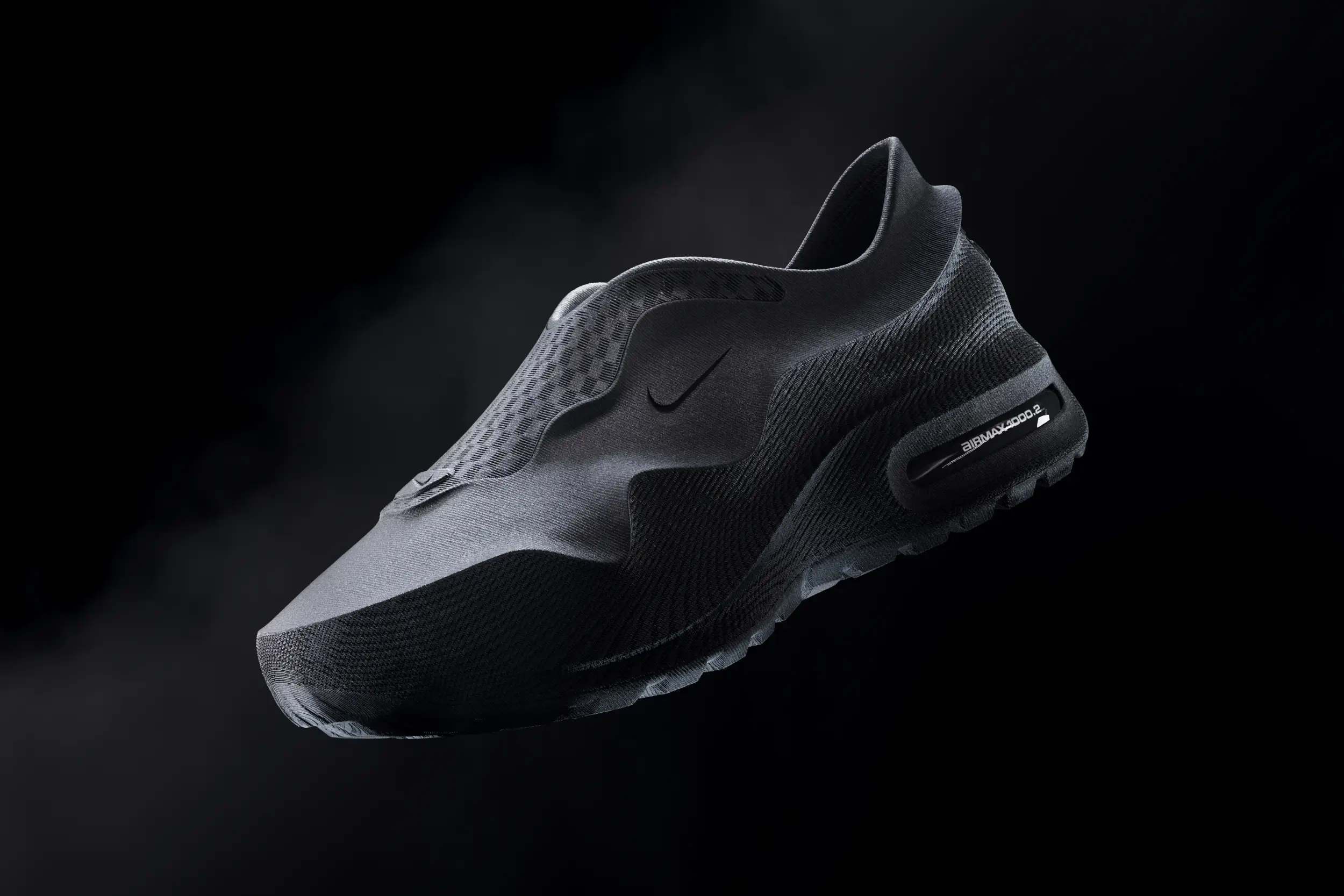
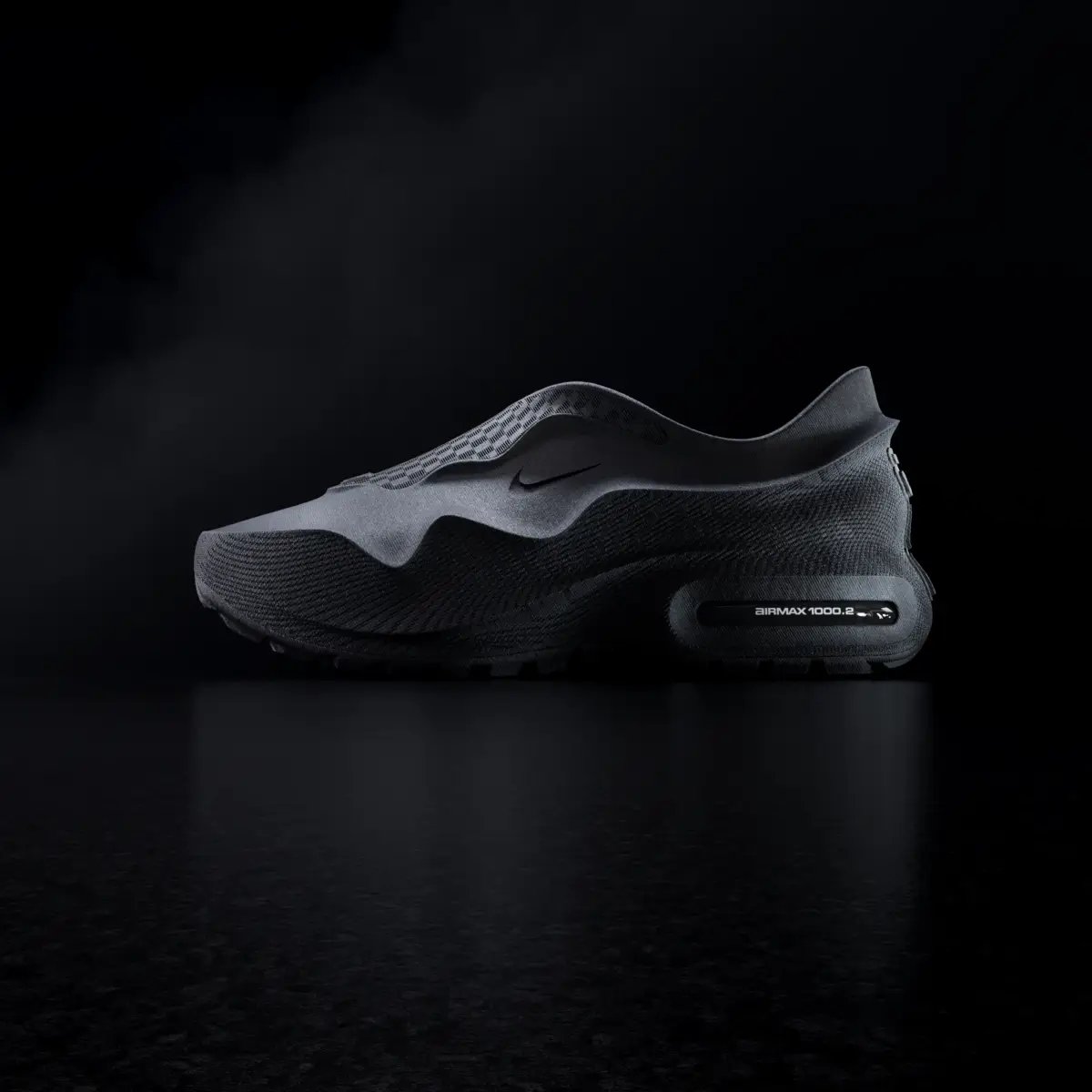
In the ever-evolving world of footwear, few collisions capture the intersection of heritage, innovation, and futurism quite like the partnership between Nike and Zellerfeld. The Nike Air Max 1000.2 “Triple Black,” manufactured exclusively through Zellerfeld’s advanced 3D-printing technology, represents the latest chapter in this groundbreaking series. Building directly on the original Air Max 1000, this iteration refines the silhouette with improved outsole geometry and enhanced print efficiency while preserving the soft, responsive cushioning that made its predecessor a breakout success. As the raffle window runs from May 4 through May 7, 2026, via Zellerfeld’s EQL platform, shoe and design communities alike have turned their attention toward this stealth-driven monochrome release.
imagine
The story begins with the iconic Nike Air Max 1, introduced in 1987 by legendary designer Tinker Hatfield. The silhouette permanently altered footwear culture through its visible Air cushioning system, blending technical innovation with bold visual identity. Nearly four decades later, Nike’s partnership with Zellerfeld revisits that same disruptive spirit through entirely different means.
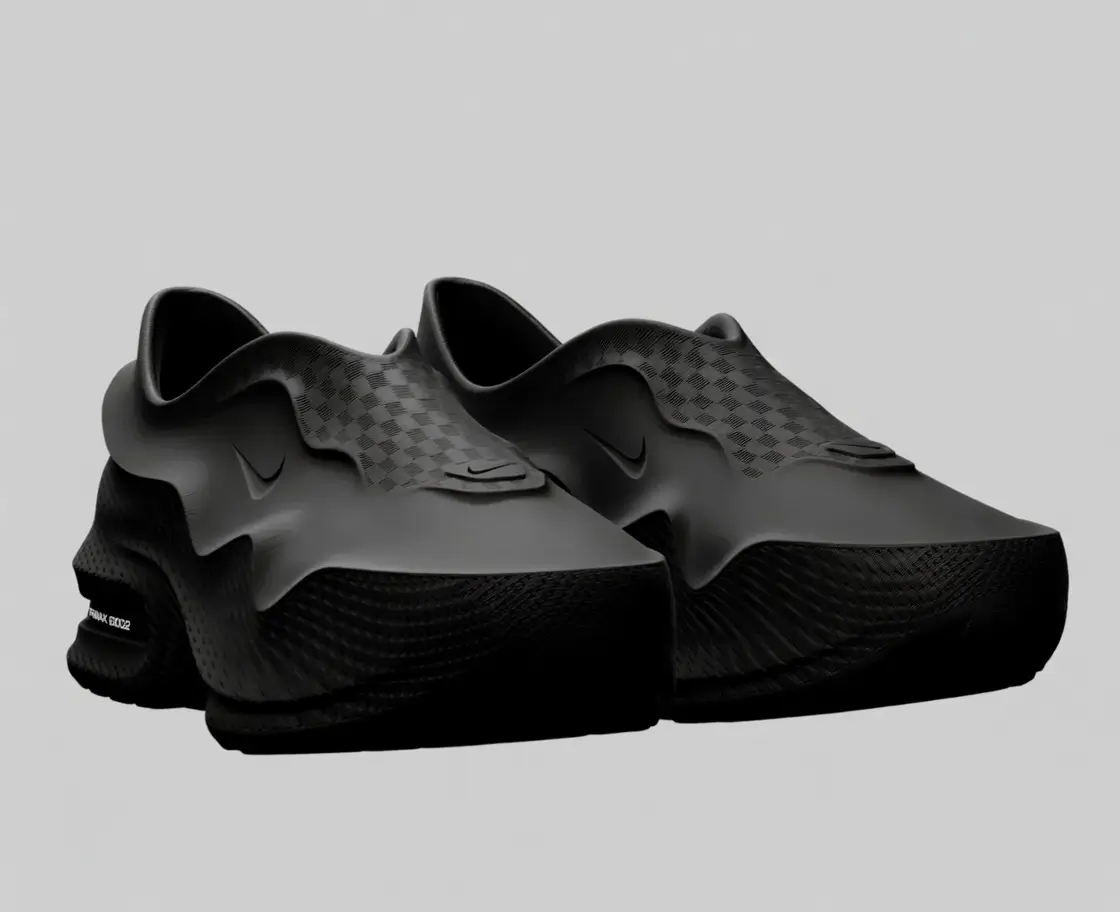
When the original Air Max 1000 debuted in late 2024, it was not positioned as a retro revival. Instead, it emerged as a complete reconstruction of what an Air Max silhouette could become in an era increasingly shaped by digital manufacturing. The laceless one-piece upper, sculpted through Zellerfeld’s proprietary 3D-printing process, eliminated conventional stitching, layered assembly, and glue-based construction almost entirely. The result felt less like a traditional sneaker and more like a wearable industrial prototype.
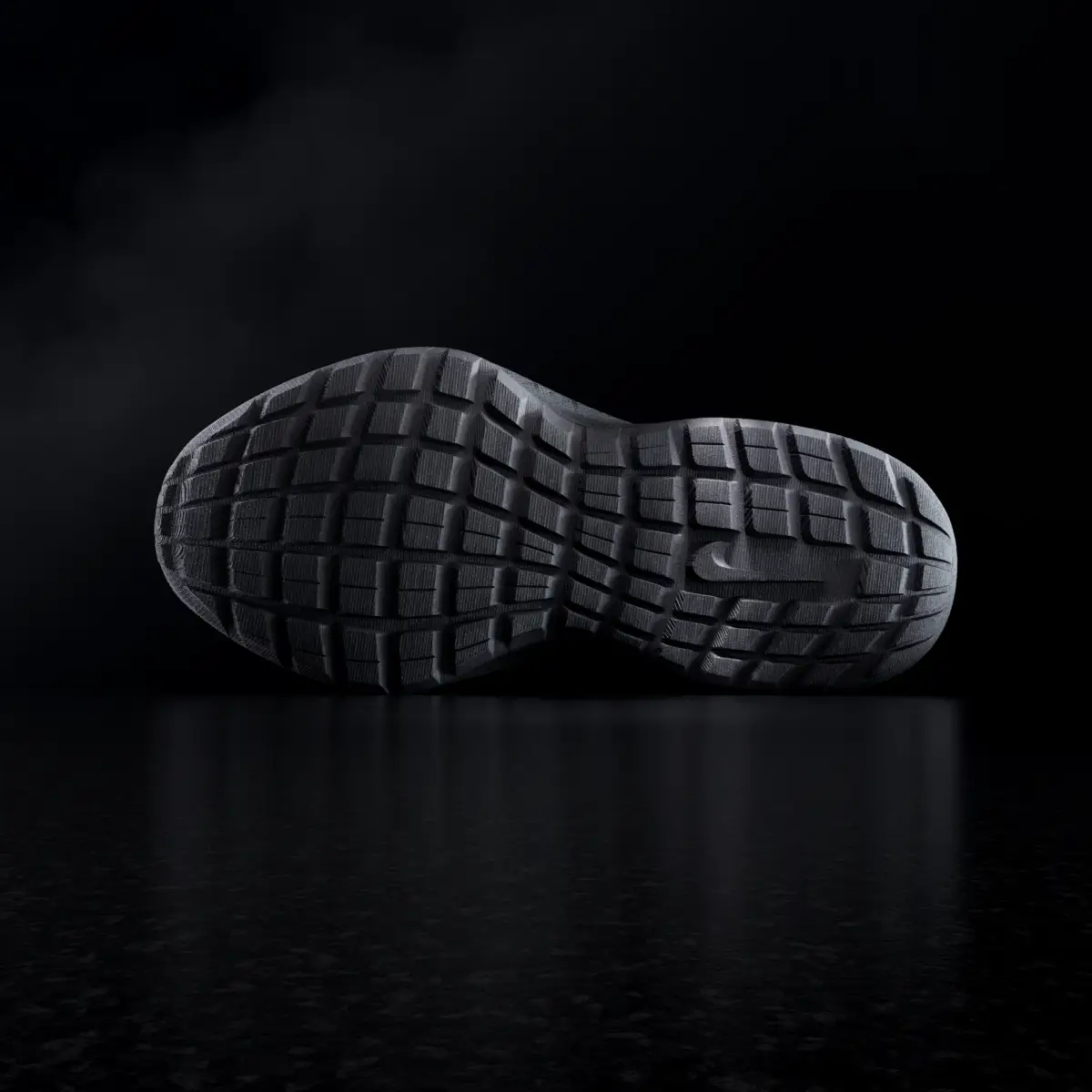
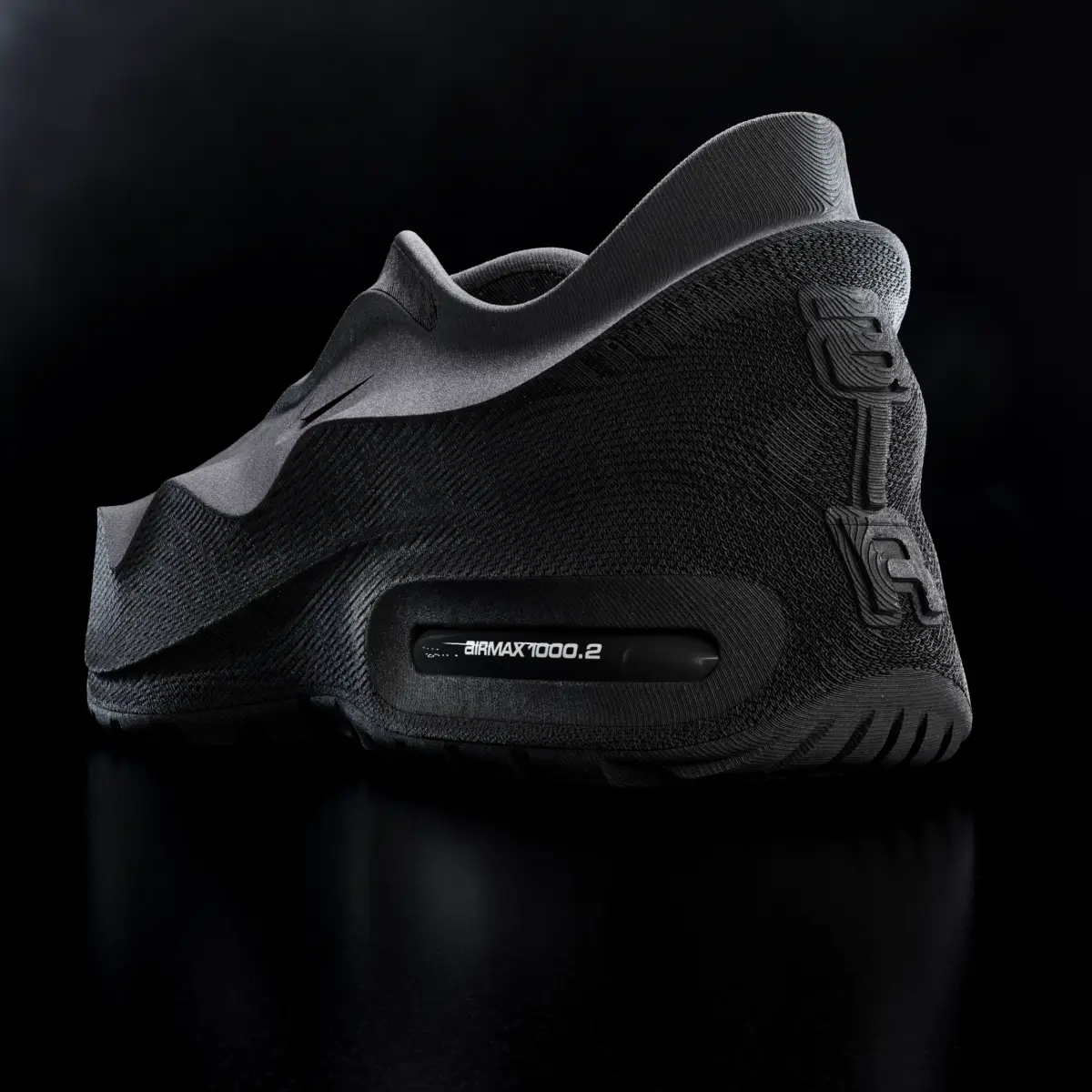
The Air Max 1000.2 continues that philosophy through subtle but meaningful refinements. Most notably, the outsole geometry evolves from mixed smooth and diamond-grid lug structures into more uniform striped traction grooves, improving manufacturing efficiency while streamlining print consistency. Rather than treating the silhouette like a fixed product, Nike and Zellerfeld approach it almost like software — iterating, optimizing, and refining the architecture with each release cycle. The understated “Air Max 1000.2” branding embedded into the heel Air unit quietly acknowledges that progression.
Even with its futuristic execution, the silhouette maintains recognizable Air Max DNA. Flowing contour lines echo the mudguard language of the original Air Max 1, while layered wave-like textures across the upper and tooling create depth without relying on conventional overlays. The laceless slip-on construction reinforces the sculptural quality of the sneaker, allowing the form itself to dominate visually.
innov
The “Triple Black” colorway strips the concept down to its purest expression. Every surface — from the textured lattice upper to the outsole and integrated heel tooling — is rendered in deep monochromatic black. Instead of relying on color contrast, the design allows texture, curvature, and shadow to define the silhouette.
Subtle lighting reveals intricate transitions between smooth matte surfaces and ribbed structural zones, emphasizing the shoe’s digitally engineered construction. A discreet tonal Swoosh appears along the sidewall, preserving Nike heritage without interrupting the futuristic visual language. The restraint works in the shoe’s favor; branding becomes secondary to geometry.
At the core of the build is Zellerfeld’s proprietary ZellerFoam TPU material, which forms nearly the entire structure outside the inserted Air unit. Through advanced 3D-print layering, varying densities can be distributed throughout the shoe itself — softer around the collar and pressure zones, firmer through the heel and structural support areas. The result is a lightweight build that feels simultaneously cushioned, adaptive, and flexible.
Unlike traditional footwear manufacturing, where dozens of individual components are stitched and assembled together, the Air Max 1000.2 emerges through a unified printing process. This dramatically reduces weak points while allowing more experimental shaping and structural fluidity. The material itself is also machine-washable, quick-drying, odor-resistant, and fully recyclable, adding practical functionality to the silhouette’s conceptual appeal.
show
While the Air Max 1000.2 presents itself view as an experimental object, its performance characteristics remain grounded in wearability. Early impressions and wear-testing feedback consistently point toward a soft, responsive ride that merges the familiar sensation of Nike Air cushioning with the adaptive give of the printed TPU lattice structure.
The refined outsole pattern enhances flexibility and traction while maintaining stability underfoot. Deep segmented grooves across the outsole allow the shoe to articulate naturally with movement, giving the silhouette an unexpectedly fluid ground feel despite its molded appearance. Compared to heavier leather or multi-layer mesh sneakers, the lightweight printed construction also reduces fatigue during extended wear.
What makes the model especially compelling is how seamlessly function and experimentation intersect. The shoe does not feel like a novelty concept disconnected from practicality. Instead, it operates as a proof-of-concept for how digitally fabricated footwear might realistically integrate into everyday use.
move
The true breakthrough behind the Air Max 1000.2 lies within Zellerfeld’s manufacturing model itself. Traditional sneaker production depends on extensive assembly chains involving separate material sourcing, stitching, adhesives, and layered construction processes. Zellerfeld’s system radically simplifies that pipeline by producing nearly the entire shoe through a singular print process.
Using TPU-based ZellerFoam, the company can digitally tune flexibility, density, and support throughout different areas of the silhouette. Once printed, the Air unit is inserted independently, preserving the recognizable cushioning identity associated with Air Max footwear while allowing the surrounding structure to evolve freely.
The efficiency improvements introduced through the 1000.2’s revised outsole geometry also address one of the largest challenges surrounding earlier releases: scalability. Previous drops sold out almost instantly, partially due to production limitations tied to print complexity. By refining the outsole architecture and optimizing print workflows, Nike and Zellerfeld are gradually transforming experimental footwear into something capable of broader accessibility.
At a reported retail range between approximately $179 and $200 USD, the model also positions itself competitively relative to premium performance and lifestyle sneakers currently occupying the market.
Footwear, updated like software.
Zellerfeld updates the 3D-printed Nike Air Max 1000 with improvements to the shape and lug design to make it faster to produce with the Air Max 1000.2, debuting in Black this Thursday, May 7. https://t.co/7x6vh7tWA0 pic.twitter.com/rI9YWwtDBM
— swoosh supply (@swooshsupply) May 5, 2026
culture
Since the Air Max 1000 line first emerged, the silhouette has generated a uniquely cross-disciplinary form of interest. Shoe collectors are drawn toward its rarity and connection to Air Max heritage, while industrial designers, technology enthusiasts, and fashion audiences view it as a glimpse into a wider manufacturing evolution.
Earlier colorways including Black/Volt, Red/Atomic Green, Lilac, and Oat quickly developed cult appeal, and the “Triple Black” edition continues that momentum through a more understated aesthetic direction. Its stealth-oriented execution feels especially aligned with contemporary luxury-tech minimalism, where material experimentation and silhouette innovation carry more weight than loud graphic storytelling.
Social media has amplified much of the fascination surrounding the model, particularly through close-up imagery showcasing the shoe’s layered textures, sculpted tooling, and seamless slip-on construction. Yet beyond hype cycles, the collaboration resonates because it represents something genuinely forward-looking. Nike is not simply revisiting archival nostalgia; it is actively exploring how footwear may be designed, produced, distributed, and personalized in the years ahead.
The raffle release through Zellerfeld’s EQL platform, followed by a broader North American launch via SNKRS, reinforces that growing accessibility. Even so, the silhouette still feels closer to an evolving industrial experiment than a mass-market sneaker.
impression
The Nike Air Max 1000.2 “Triple Black” ultimately succeeds because it reframes sneaker design as an adaptive system rather than a static product. Through 3D-printing technology, recyclable materials, and digitally optimized construction, Nike and Zellerfeld are building a silhouette capable of continuous evolution without abandoning the cultural foundation that made Air Max iconic in the first place.
What emerges is not simply another futuristic sneaker release, but a tangible indicator of where footwear manufacturing may be heading next — toward localized production, computational design, customizable fit systems, and materially efficient construction methods.
For collectors, it represents a compelling fusion of Air Max heritage and experimental innovation. For the broader design industry, it stands as one of the clearest examples yet of how performance footwear, sustainability, and digital fabrication are beginning to converge into a singular language.
n
From the DRIFT archive: A Review: The Nike Air Force 1 Low Boucle Reimagines Texture and Haute