DRIFT AUDIO
Listen to this story
Choose a voice, then press play.
Days before headlining Lollapalooza, Charli xcx ran her Music, Fashion, Film show inside a Nashville warehouse built around a black pyramid stage.
Twenty minutes before a full production run through, Charli xcx asked for five minutes to stare into the abyss. That is the kind of detail that tends to surface only when a reporter is actually standing inside the building, and it happened inside Rock Nashville, a cavernous rehearsal complex more accustomed to country arena acts than a British pop star days away from headlining Lollapalooza for 100,000 people.
stir
The centerpiece of the new Music, Fashion, Film production is hard to miss even before the sound checks start. A black cage structure built into the shape of a pyramid rises through the middle of the warehouse floor, topped with a single massive woofer, its lower layers wired with tangled cable runs, quick change rooms, and production desks stacked several stories into the air. Crew members warned that the rig would grow taller still before its first public outing, adding roughly ten more feet ahead of the Lollapalooza date. Even mid build, walking the upper platforms is enough to make a visitor’s stomach turn, a small preview of the scale Charli and her team are aiming for on a stage built to hold a headline set rather than a support slot.
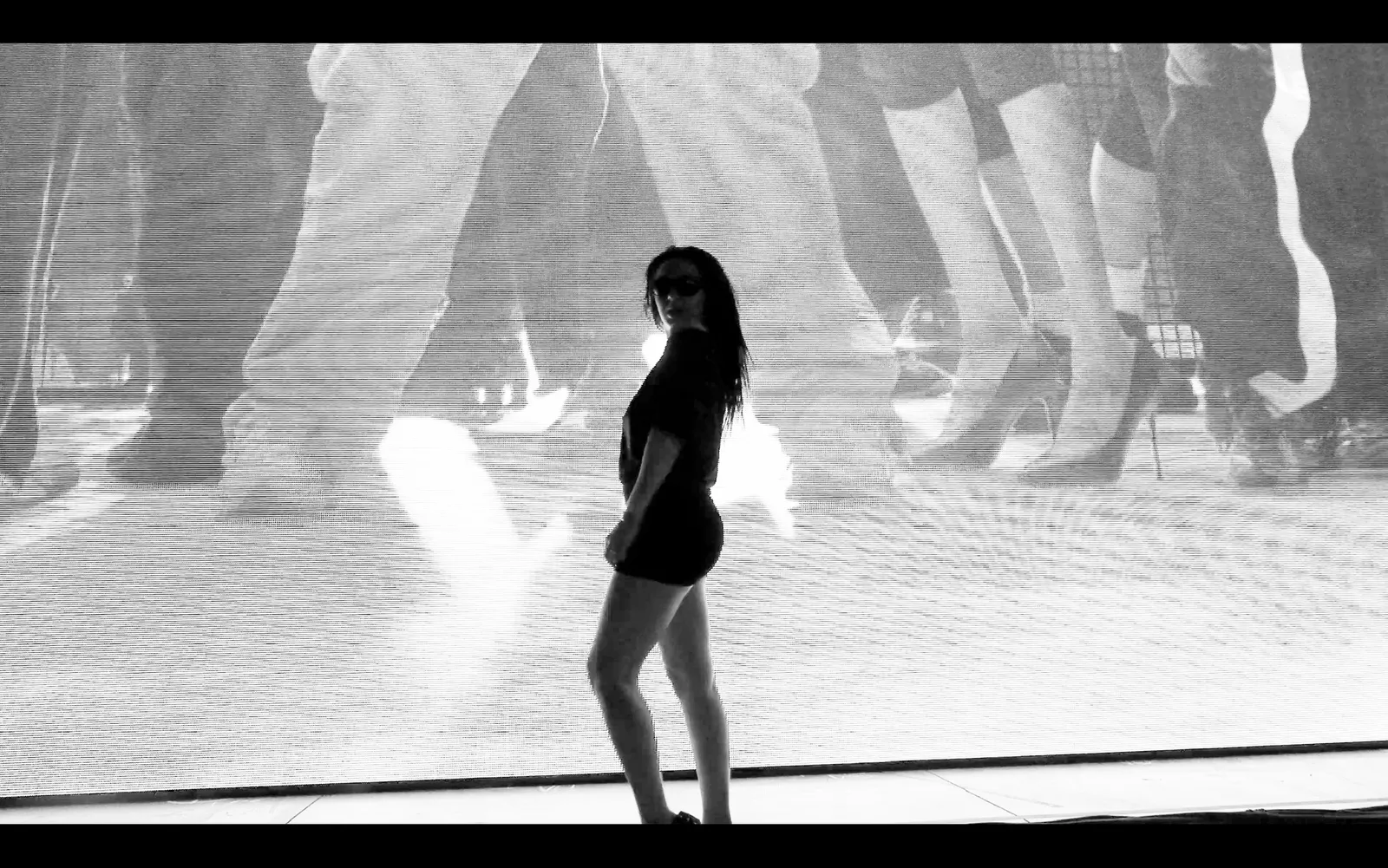
Black-and-white image of a Charli xcx in sunglasses posing onstage in front of a large video screen.
Rock Nashville itself is an unlikely backdrop for a pop production of this size, a complex better known for hosting country and Americana acts putting together arena and stadium shows with full production before hitting the road. The heat inside the warehouse hovered around 100 degrees for most of the day, a detail that mattered more than it might sound, since dancers and crew alike were running full choreography passes in costumes built for stage lighting rather than a non air conditioned rehearsal hall. Between takes, small crews moved through the space adjusting rigging, checking monitors, and resetting quick change stations tucked inside the pyramid’s lower levels, a logistics operation that looked, from the floor, closer to a small scale construction site than a rehearsal for a pop show.
concern
The rehearsal marks preparation for the largest live production Charli has mounted to date, a headline slot at Lollapalooza that lands roughly a week after the release of her latest album, Music, Fashion, Film, and functions as a preview of the arena tour that follows it that fall. The show folds in a full live band, a company of roughly twenty dancers, and pyrotechnics heavy enough to notice from the back of a hangar sized room, alongside a performance of “House,” pulled from Charli’s contribution to the Wuthering Heights soundtrack, that sits at the emotional center of the set. Where her previous arena scale shows leaned hard into club energy, this one reads more composed, more attentive to mood and pacing than to sheer volume, a shift that tracks with the guitar leaning, rock inflected sound of the new record itself compared to the dance pop of her previous album cycle.
That tonal pivot appears to be intentional rather than incidental. Charli has spoken in the past about feeling boxed in by the version of herself that calcified during her previous album Brat‘s cultural takeover, the partying, sunglasses, chaos persona that became shorthand for an entire summer, and has framed the new record as a response to that flattening, a reminder that any artist, like anyone else, contains more than the single trait an audience latches onto. The new show’s more filmic pacing seems to be one expression of that same instinct, trading a nonstop rager for something closer to a considered piece of staging.
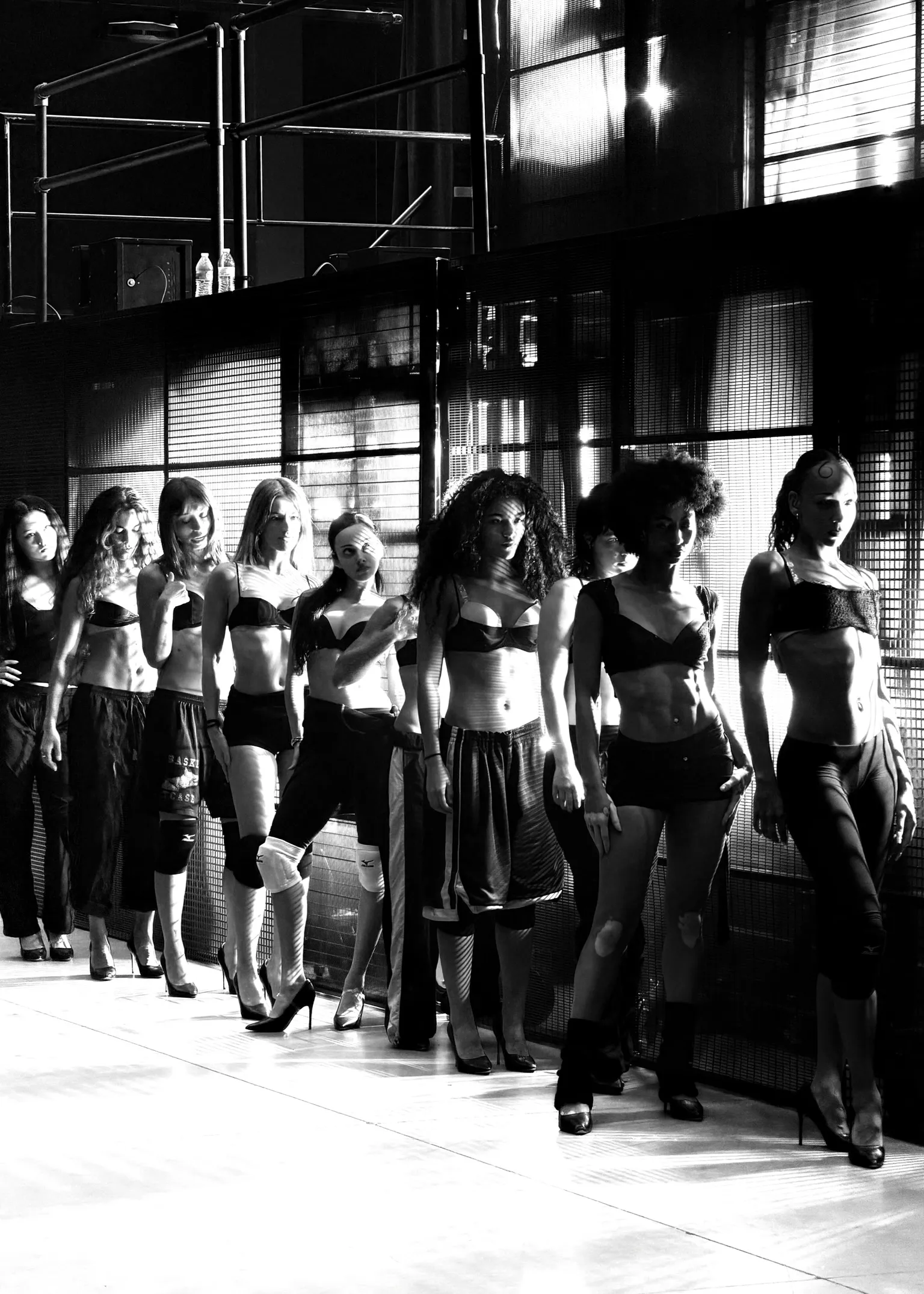
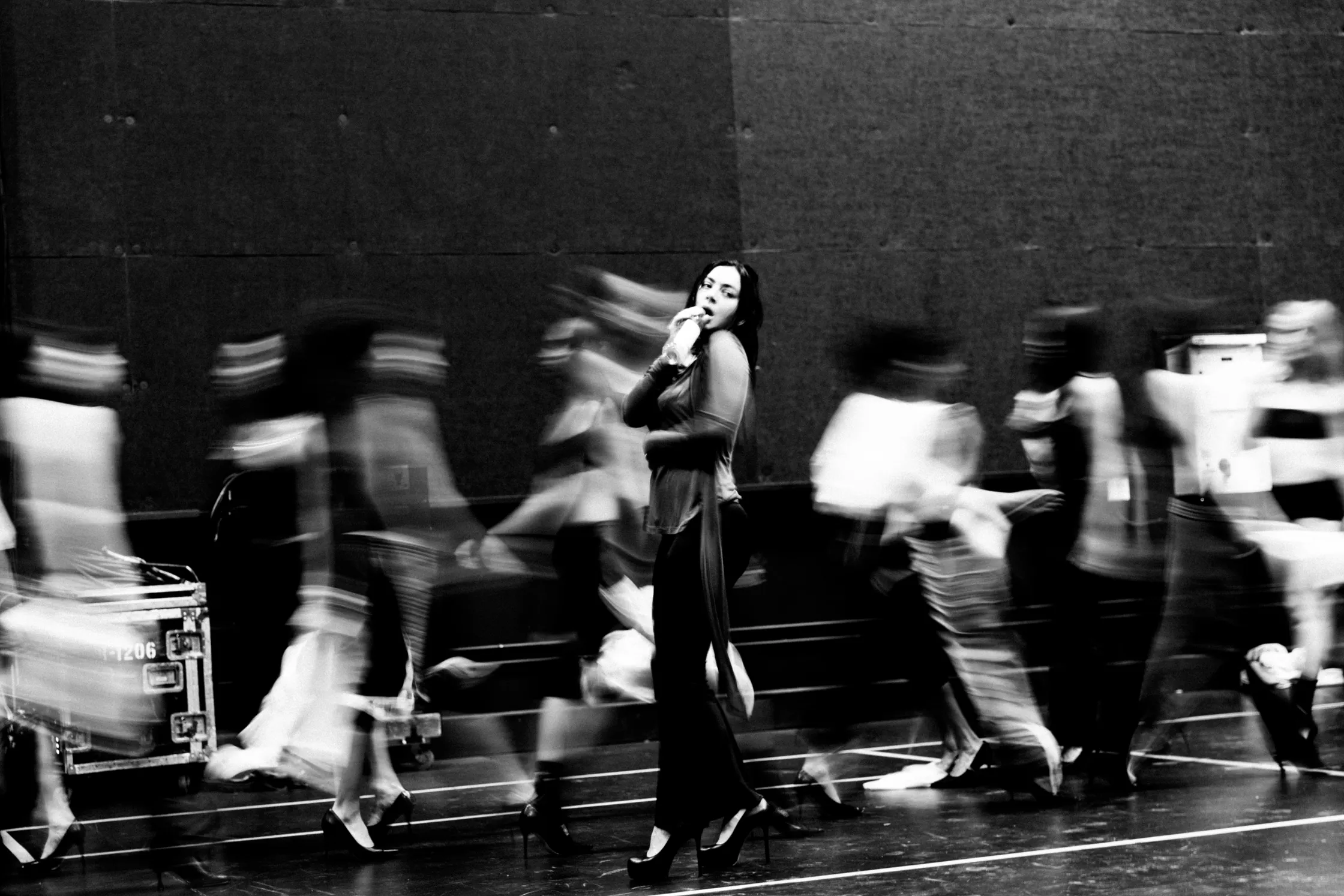
Monochrome image of dancers lined up backstage in performance outfits and heels.
team
Very little of a production this size runs on one person’s instincts alone, and the crew inside Rock Nashville reflects that. Creative director Imogene Strauss, who has built a reputation over the past several years for elevating the view lang of large scale pop shows, worked the floor alongside choreographer Eric Christison and lighting designer Jonny Kingsbury, fine tuning transitions and blocking in real time as the run through played out. Strauss has become a go to name for artists looking to level up view beyond Charli’s own camp, having also worked with Addison Rae, Robyn, and Role Model in recent years, and her close connection with Kingsbury has become a signature part of how Charli’s stage shows have grown more ambitious with each cycle.
Longtime presence extends well beyond the creative leads. Personal assistant Daniela Parada, who has worked with Charli for roughly four years, moved between production notes and logistics throughout the day, while manager Twiggy Rowley, a childhood friend turned tour operation lead, walked through the scale of the current touring machine: around 110 crew members, roughly 15 buses, and closer to 27 trucks on the road, though Rowley noted the team is actively trying to trim that number down rather than let the production keep expanding indefinitely. Musical director Mitch Schneider tracked cue changes during the run through, and stylist Chris Horan flagged wardrobe notes on the spot, including a section tied to the Wuthering Heights adjacent track “Dying For You” that needed a different sil than what the rehearsal run had shown.
Several members of the team have been with Charli for years rather than months, a detail Rowley pointed to more than once while walking the floor. Some crew members joined back when Charli was still playing small clubs on her own dime, before any of the current scale existed to speak of, and that continuity shows up in how the rehearsal actually runs. Notes get delivered in shorthand, corrections happen without much explanation needed, and decisions that might take a newer team longer to work through seem to move quickly because everyone in the room already understands the shorthand of how Charli likes to work. It is the kind of institutional memory that is difficult to build quickly and even harder to replace once a production reaches a scale this large.
huh
Some of the day’s more candid moments touched on how Charli’s team thinks about the gap between her public persona and the person actually running rehearsals for twelve hours in 100 degree heat. The mockumentary The Moment, which Charli produced and released earlier this year, satirized the machinery around her previous album cycle with enough accuracy that members of her own team have described watching it back as an oddly familiar experience, joking that at least one real crew member’s speech patterns bled into the actor playing his fictionalized counterpart. That kind of self aware distance from her own mythology has become something of a throughline for Charli over the past two years, someone equally willing to lean into the chaos persona publicly and pick it apart from the inside when given the chance.
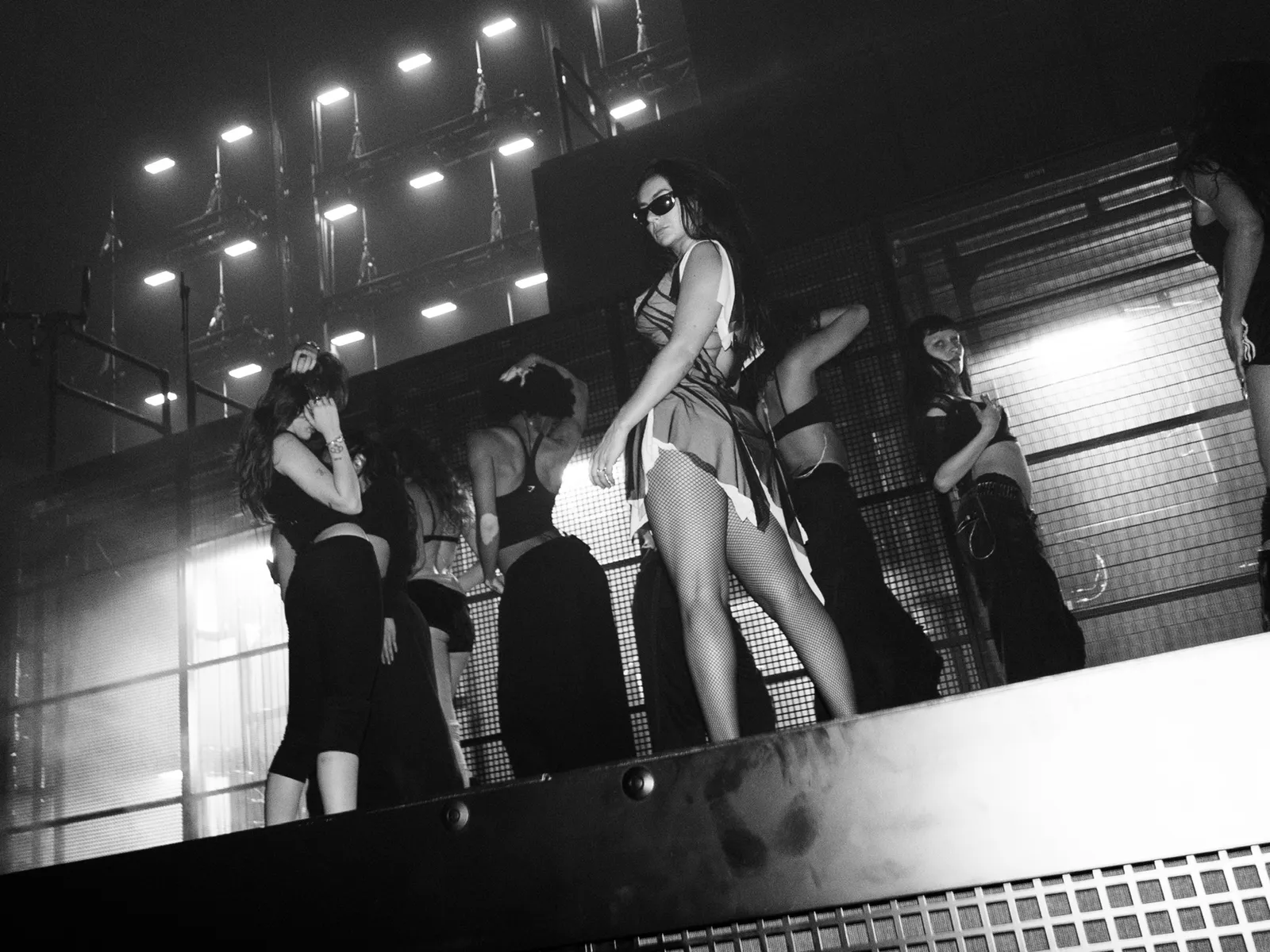
Monochrome image of a Charli xcx in sunglasses and fishnet tights posing among dancers on an industrial stage.
The album itself backs up that reading. Where its predecessor leaned entirely into synth driven club sounds, Music, Fashion, Film pulls in electric guitars and a rockier, less club focused palette throughout, produced again with longtime collaborators A. G. Cook and Finn Keane. It is a deliberate enough swing in direction that choosing Nashville, of all cities, to debut the material live via a small invite only show ahead of the full production reads as its own kind of statement, putting a hyperpop leaning pop star in a city defined by guitar music days before she took the same songs to one of the largest stages of her career.
Charli’s own path to this point has been unusually long for an artist still only in her early thirties. Born Charlotte Emma Aitchison in Cambridge, England, she began self releasing music on MySpace as a young teenager and was performing at underground warehouse raves within a year of picking up the habit, long before major labels or arena stages entered the picture. That early, self directed start shows up in how hands on she remains with production decisions more than a decade into a recording career, down to details as granular as a mic stand’s adjustability between songs.
extend
By the time the full run through wrapped, notes were still piling up. A mic stand needed reworking so it could be adjusted between songs depending on heel height, transitions between certain tracks needed tightening so the models and dancers moving through the choreography did not read as disconnected from Charli’s own blocking, and at least one section of choreography built around a song from Music, Fashion, Film’s cousin project, the Wuthering Heights soundtrack contribution “Dying For You,” was still being learned in full. None of it read as behind schedule so much as the ordinary friction of turning a full production around in a matter of days, the kind of granular troubleshooting that rarely makes it into a finished show but shapes almost everything the audience eventually sees.
Sitting on the floor of her dressing room afterward
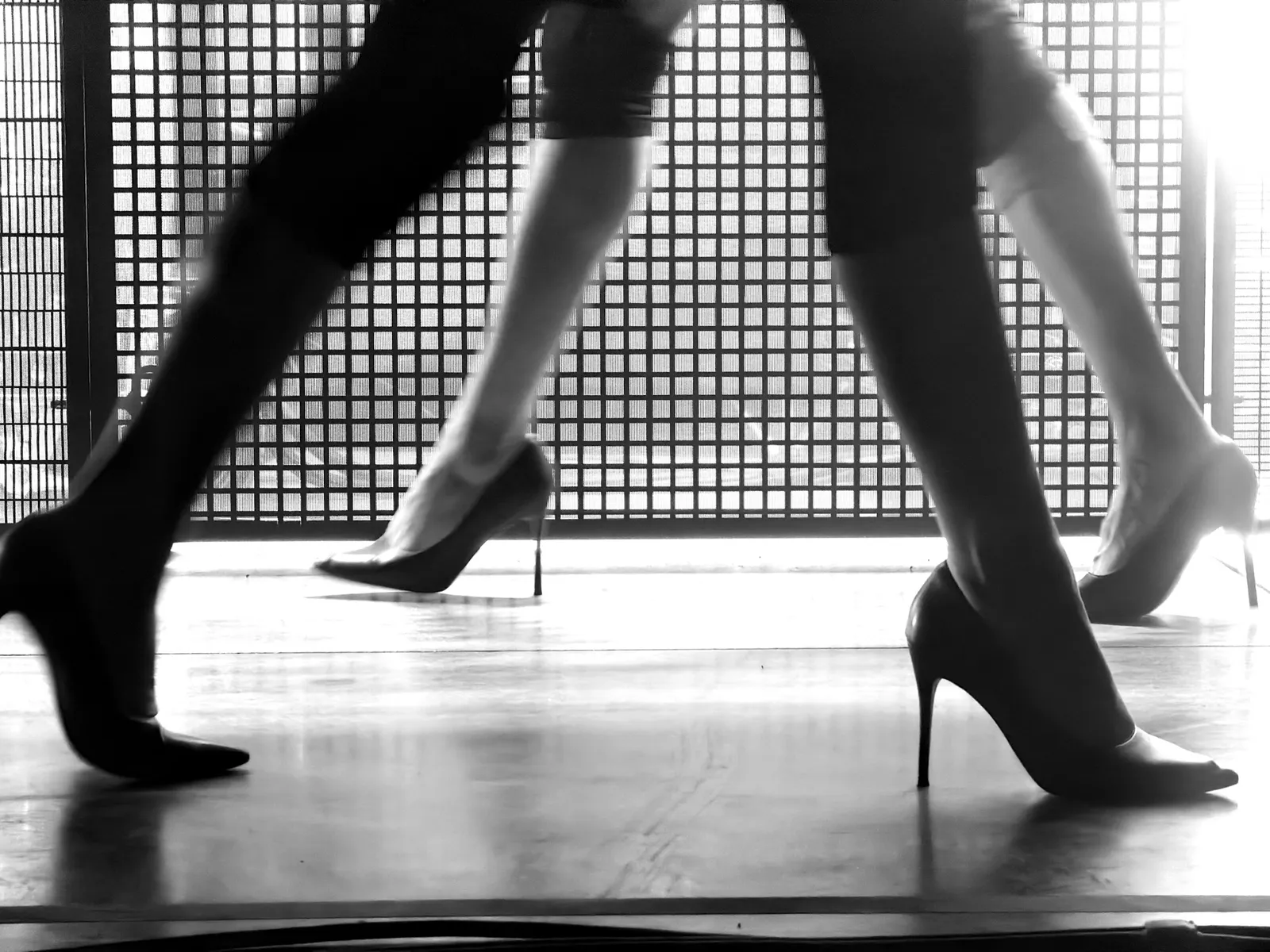
Monochrome close-up of dancers walking in high heels across a brightly lit stage.
, notes still being worked through with her team gathered around her, Charli ran through what needed fixing before the following morning’s final rehearsal, then moved directly into wardrobe fittings. It is a pace that has become fairly standard for an artist who, by her own account, finds some relief in stepping back from a body of work once it leaves her hands, even as the machinery required to bring a show like this to life keeps running well past the point most audiences would assume the creative work was finished.
look
The Nashville rehearsals functioned as a dry run for a run of dates that stretch well past a single festival slot. Charli headlines Lollapalooza in Chicago on August 1, sharing top billing with Tate McRae, Lorde, Olivia Dean, and several others across the festival’s four day run, before the Music, Fashion, Film arena tour proper kicks off that September in Philadelphia. Given how much of the Nashville rehearsal focused on staging elements built for an arena environment rather than a festival mainstage, the Lollapalooza set reads less like a standalone show and more like a full scale preview of what audiences will see once the tour opens for real, pyramid, live band, and all.
What stood out most across the day was not any single production element but how much of the show’s identity had already been locked in well before opening night, down to the exact cue where a mic stand needed to move or the precise silhouette a single costume change needed to hit. For a rollout built around the idea that an artist contains more range than any single era gets credit for, the rehearsal floor made a fairly convincing case on its own, without needing the album or the arena stage to make the argument first.
There is also something notable about the scale of restraint on display, relative to how large the production actually is. A pyramid stage, a full band, twenty dancers, and heavy pyrotechnics could easily tip into spectacle for its own sake, and past Charli productions have occasionally leaned that direction. What the Nashville rehearsal suggested instead was a team treating scale as a tool for mood rather than a substitute for it, willing to slow a transition down or cut a flourish if it did not serve the emotional shape of a given song. Either that restraint survives the jump from a controlled warehouse run through to an actual festival crowd of 100,000 people is the kind of thing that only gets answered once the pyrotechnics are live and the crowd noise replaces the quiet of a rehearsal floor.
Related Articles
Jung Kook Lets a Zipper Count In the Final Chapter of Calvin Klein’s Fall Denim Story
Renell Medrano directs the third Feel the Fit film, where a zipper cues the beat […]