DRIFT AUDIO
Listen to this story
Choose a voice, then press play.
Will Bankhead has spent almost two decades running The Trilogy Tapes like a blog that grew a record label, a clothing line and a publishing habit without ever cleaning up its edges.
recall
- A Blog Before Anyone Called It That
- From Skate Ramps to Mo’Wax
- Cassettes First, Then Vinyl
- The Palace Connection
- Clothes That Read Like a Blog Post
- Hinge Finger, Rezzett and the Rest of the Universe
- Books, Prints and Everything Bankhead Still Wants to Make
- Where TTT Stands Now
The Trilogy Tapes started in 2008 as a blog, back when a blog still meant one person posting whatever they were digging through that week with no editorial calendar behind it. Will Bankhead ran it out of London, mixing obscure vinyl rips, flyers, photographs and found internet ephemera into something that read less like a music site and more like a stream of consciousness from inside his own record collection. It stayed that way, on and off, until 2022, functioning as a kind of public scrapbook long after the label itself had become a serious concern.
That blog is easy to overlook now that TTT is known internationally for its apparel, but it is the reason the whole project has the tone it has. Nothing about The Trilogy Tapes was ever built to look finished. The graphic lang across almost two hundred releases stays deliberately raw, occasionally grotesque, always a little unnerving, and Bankhead has kept it that way on purpose rather than by accident.
Flip through the blog archive from those years and there is no obvious editorial logic holding it together beyond one person’s taste, which is precisely the point. Magazine clippings sit next to flyers from club nights nobody outside a small circle would have heard about, record covers from three different decades, photographs with no caption explaining who took them or why, and stray bits of internet ephemera that read like they were saved because Bankhead simply liked how they looked. That approach, curating by instinct rather than by category, carried straight through into how the label eventually chose which records to release and, later, which graphics ended up printed on a shirt.
View this post on Instagram
stir
Bankhead’s path into music ran through skateboarding, not art school ambition. He was sponsored by Slam City Skates in the early 1990s, part of a crew that used Rough Trade Records, then upstairs from the Slam shop on Talbot Road, as a second home. Skating West London spots led him toward photography, and a photograph he took of James Lavelle for a magazine feature ended up pulling Bankhead directly into Mo’Wax, the label Lavelle had built into one of the defining view identities of 1990s British music.
Bankhead spent close to a decade at Mo’Wax as a designer and photographer, contributing to roughly fifty releases, working alongside longtime convincer Ben Drury, whom he had met while studying at Central Saint Martins. When Mo’Wax wound down in the early 2000s, Bankhead moved with Lavelle to Honest Jon’s Records, the label attached to the Notting Hill record shop of the same name, before eventually starting something of his own.
flow
The Trilogy Tapes only became a proper label in name once cassette releases started flowing through it, before vinyl entered the picture in 2010 or 2011 depending on which account you read. Early signings leaned toward whatever Bankhead found interesting rather than whatever a genre chart said should be interesting. Dro Carey, discovered through YouTube, put out one of the label’s first vinyl EPs, blending Burial style dub with Chicago footwork and R&B vocals in a way that immediately pulled TTT away from any single dance music lane.
That refusal to sit inside one genre has stayed constant. A single catalog run might move from kranky techno to cavernous dub to hardcore jungle experiments without warning, alongside archival curiosities as far flung as a Japanese kayokyoku recording from Chiyoko Shimakura. Resident Advisor named TTT its label of the month a decade into its run, describing the operation as an exceptionally curated outlet spanning noise, techno, house and drone with no interest in tidy boundaries. Ben UFO, Theo Parrish and Beatrice Dillon are among the names who have passed through the catalog, alongside the duo Rezzett, a connection between Bankhead’s TTT stalwart Lukid and another producer, whose self titled debut and its follow up, Meant Like This, arrived five years apart on the label.
live
The label’s move into clothing did not happen in isolation. Palace Skateboards, the London skate brand that grew out of a similarly small, insular scene, gave Bankhead production support that let TTT’s merchandise line scale into something closer to a proper fashion operation rather than a side hustle selling tour shirts. In 2015, that relationship went further, with TTT and Palace launching a joint label named directly after the skate brand, deepening a partnership built on the two operations sharing production infrastructure and, evidently, a similar sense of humor about how seriously any of this should be taken.
Bankhead has been candid that the arrangement is as much financial as creative. Supporting a family in London while running an independent label on the side is not cheap, and Palace’s backing gave the merchandise arm room to keep going without depending on it to cover every cost of the music side. A pop up store in New York followed in 2019, giving the brand a physical footprint outside London for the first time.
There is a version of this story where a small skate adjacent label gets folded shh into a bigger, better funded brand and slowly loses whatever made it distinct in the first place. That has not happened here. Palace’s production muscle solved a logistics problem for Bankhead rather than a creative one, and the graphic decisions on TTT merchandise have stayed his, right down to the smaller, stranger details, glow in the dark ink, deadpan slogans, a recurring cross shaped motif that shows up across seasons without ever quite explaining itself. The partnership reads less like an acquisition and more like two small, London rooted operations agreeing to share a printer.
huh
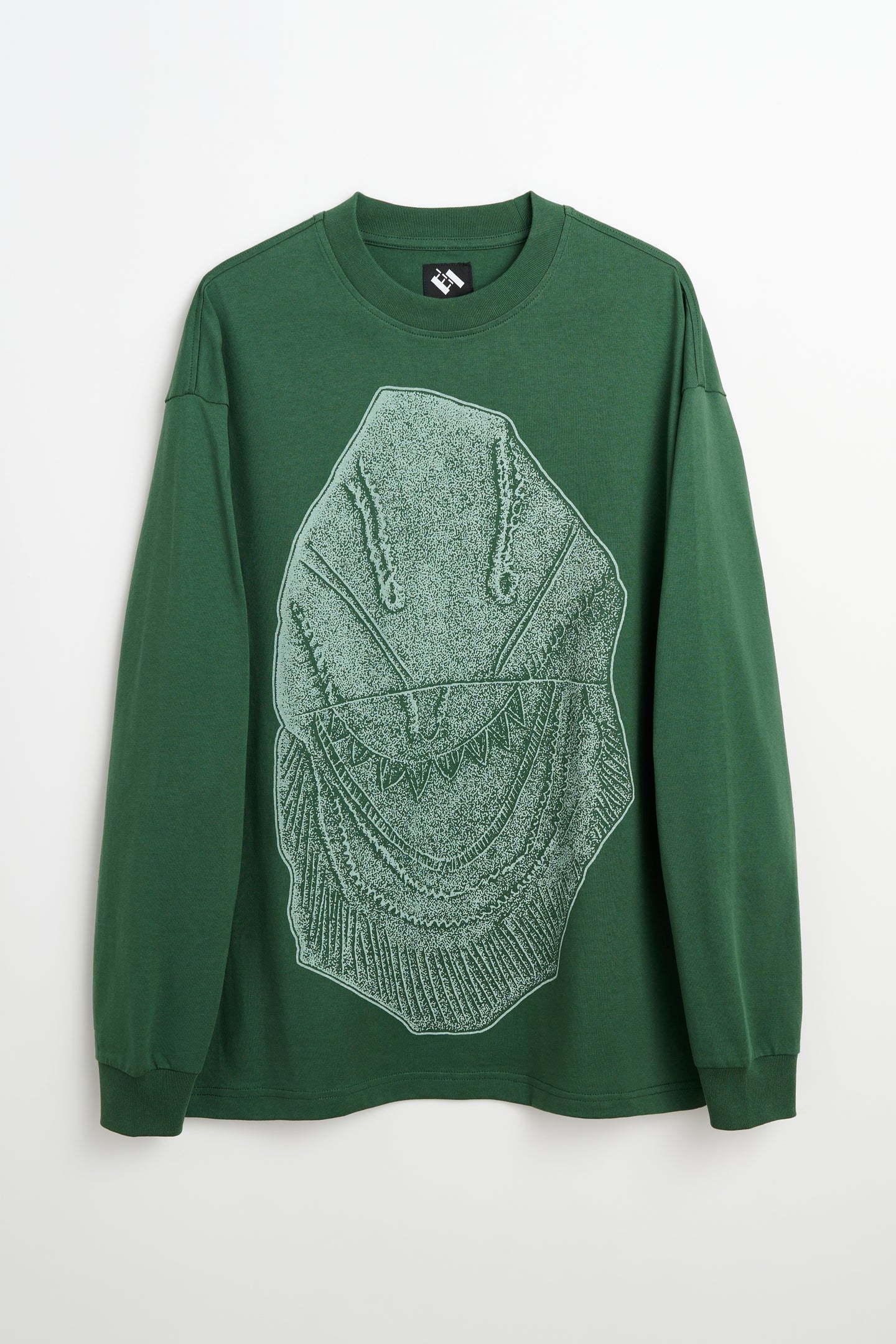
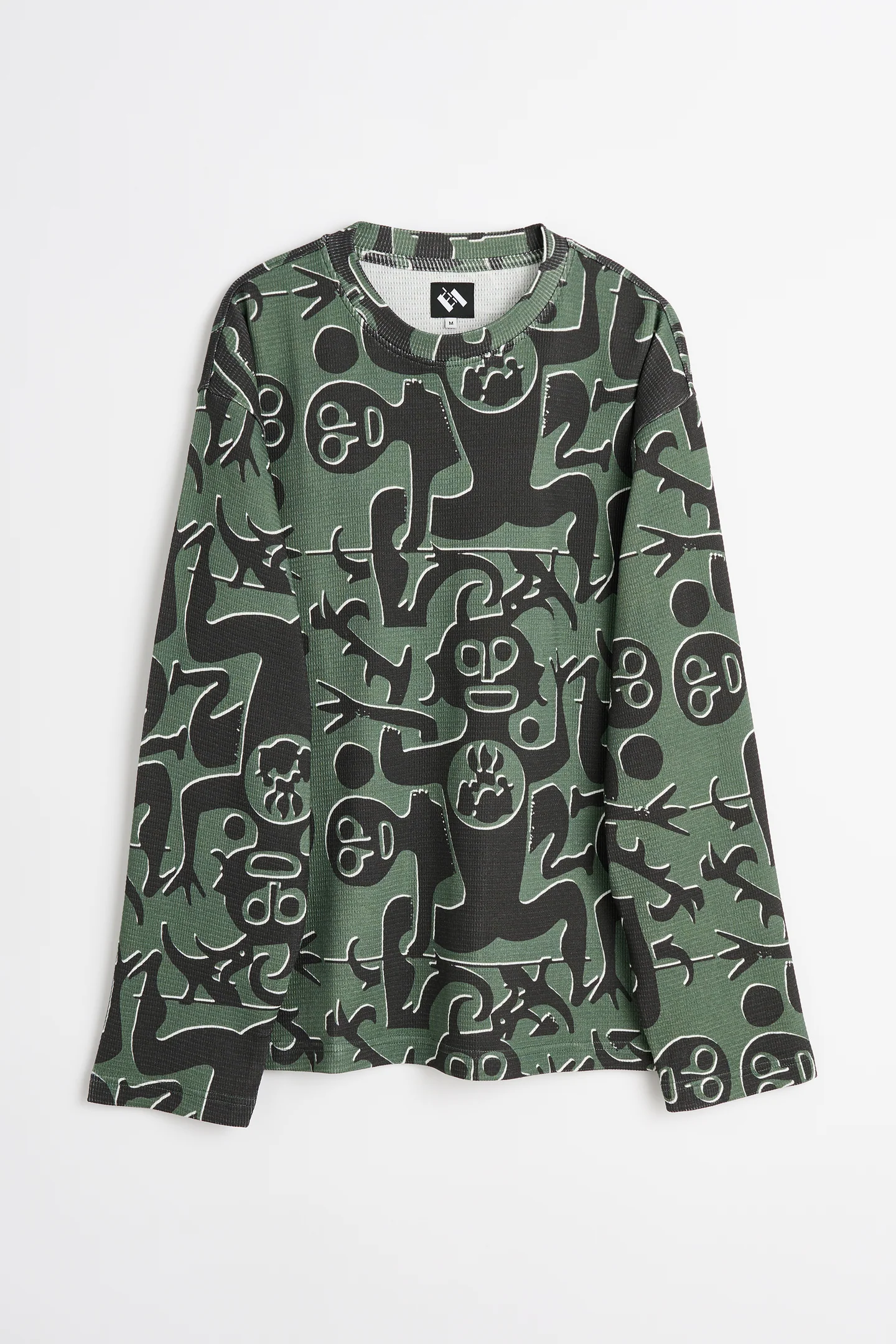
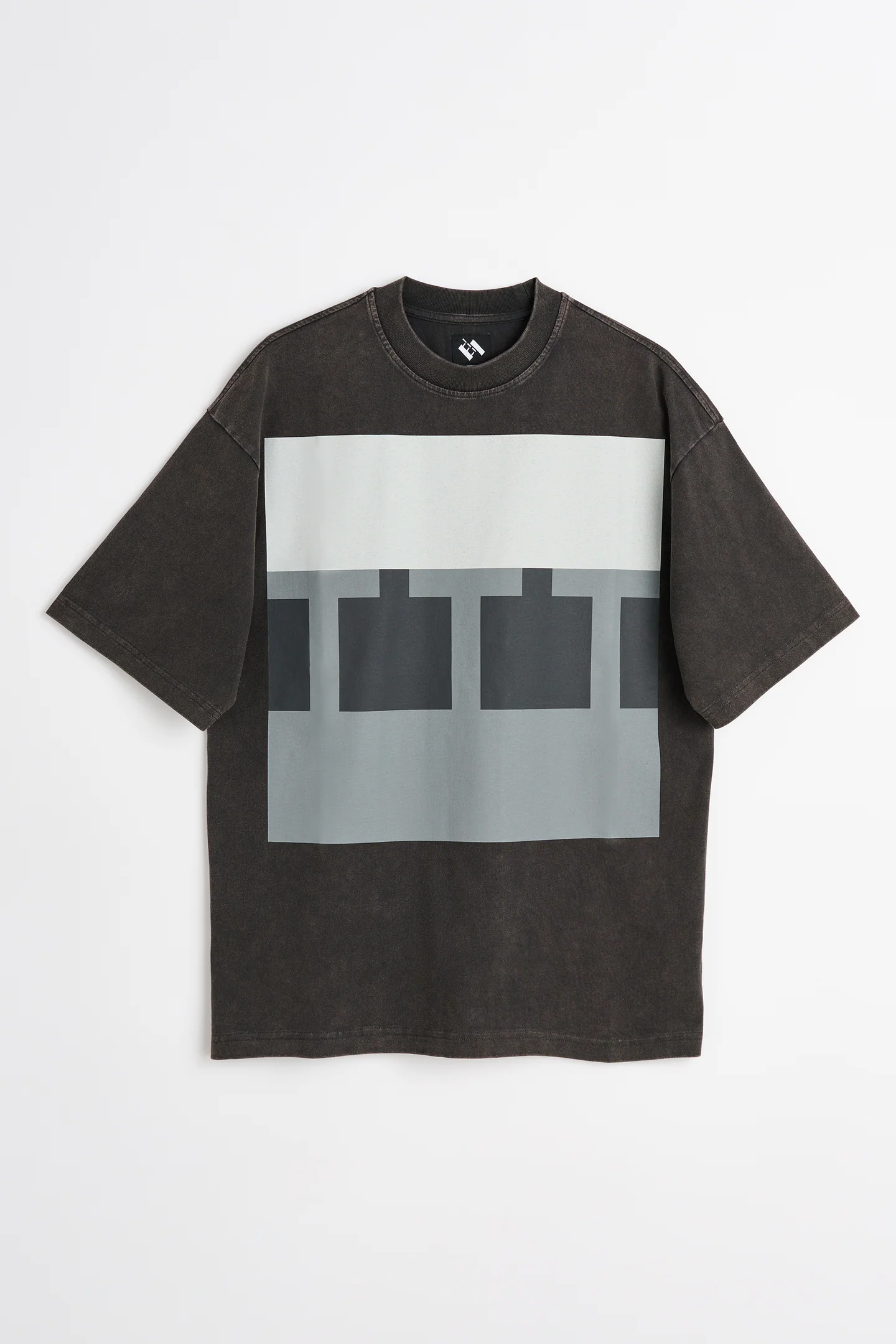
TTT’s apparel carries the same visual language as its record sleeves: geometric logos, cut and paste graphics, an aesthetic rooted in punk and rave culture rather than anything polished or seasonal in the traditional fashion sense. The label’s Summer 2025 collection, released through a rebuilt website alongside Palace’s brick and mortar stores, leaned into glow in the dark shirts, dense geometric patterns and a recurring cross head motif stamped across a run of shorts, priced from roughly seventeen to a hundred and sixty six pounds. Accessories in that same drop included ripstop courier bags, heart shaped logo totes, bucket hats and trucker caps carrying blunt, deadpan text like Pain and Come Down, alongside a kaleidoscopic video campaign shot by Studio Info.
None of it reads as a brand chasing a trend cycle. It reads like an extension of the same scrapbook instinct that built the original blog, just stitched onto cotton instead of posted to a page.
View this post on Instagram
straddle
Bankhead’s output rarely stays inside one label for long. In 2012 he co-founded Hinge Finger with the DJ and producer Joy Orbison, giving both men a separate outlet distinct from TTT’s own catalog. He has also run the clothing labels Park Walk and Answer, along with the dub imprint PK, on top of his continued design work and DJ sets under the TTT name itself.
Reviewing what has come out of this network over the years, one thing stands out: almost none of it was built to be predictable. Bankhead has said outright that running a small label mostly means trying to earn back what has already gone into it, a blunt admission that cuts against the idea that any of this operates as some kind of lucrative side project. Press releases posted directly to TTT’s own social accounts have occasionally spelled out exact production costs, treating the audience less like customers to be sold to and more like people who might actually want to know how the business works.
show
Bankhead has talked for years about wanting to push TTT further into publishing, books, zines and prints specifically, framing physical, printed material as something the culture around the label still needs more of rather than less. That instinct fits with everything else about the project: a preference for something you can hold rather than something that only exists as a feed. TTT has shown up in that world already at the margins, with Bankhead DJing at events tied to independent publishers such as innen, the Zurich based zine and book imprint founded by Aaron Fabian, and lending interviews to small run zines like Left Alone, put together by London’s Rubadub adjacent crew.
None of this has scaled into a formal TTT publishing arm on the level of its music or clothing output, but the intent has been stated plainly and often enough that it reads less like a passing comment and more like a project still waiting for the right amount of time to build it properly.
fin
Nearly two decades in, The Trilogy Tapes has settled into an unusual position: too design literate to be filed away as just a record label, too rooted in underground electronic music to be filed away as just a streetwear brand, and too consistently strange looking to be mistaken for either category’s more polished competitors. Bankhead remains the operation’s only real center of gravity, still designing most of what the label puts out, still DJing under its name, and still, by his own account, working through most of it from home while raising a family and trying to keep more traditional fashion and music industry habits at arm’s length.
The label’s catalog now runs past a hundred releases, its clothing line sits in stockists across multiple continents, and its visual language, that same raw, slightly unnerving graphic style that started on a 2008 blog, has stayed recognizable enough that a TTT record sleeve and a TTT t shirt can sit next to each other without looking like they came from two different companies. Given how many other multidisciplinary labels have eventually smoothed themselves into something more market friendly, that consistency is the more interesting story here than any single release or connection.
What makes that consistency notable is how little of it looks planned from the outside. Bankhead has described the whole enterprise, more than once, as a matter of spreading himself thin across too many small ventures to keep the finances working, which is an odd thing to admit about a project that outside observers tend to describe in terms of curation and vision. Both descriptions are probably true at once. A label built to cover its own costs and a label built around one person’s specific, slightly deranged taste are not mutually exclusive, and TTT’s twenty year run suggests that the second thing has quietly been funding the first the entire time, one cassette, one record sleeve and one glow in the dark shirt at a time.
Related Articles

A Tiger On The Denim / Human Made
HUMAN MADE Shinsaibashi PARCO, full renewal 17 October 2026. Tiger jacket, hoodie, keyholder. Wasted Youth popup, two days. App lottery 10:00 to 17:00.