

DRIFT AUDIO
Listen to this story
Choose a voice, then press play.
Women worldwide are building their own boxing gyms and sauna clubs — chasing presence over performance, and quietly building a real business in the process.
In This Story
- A Room of One’s Own, Reimagined
- Why It’s Arriving Now
- The Business of the Underground
- Global Inspiration, Local Communities
- The Women Leading the Movement
- What Comes Next
There’s a version of this story that starts with a woman wrapping her hands alone in a locker room before anyone else arrives. She’s early, not because she has to be, but because the ten minutes of shh before the room fills feel like something worth protecting. She isn’t performing yet. She’s just breathing.
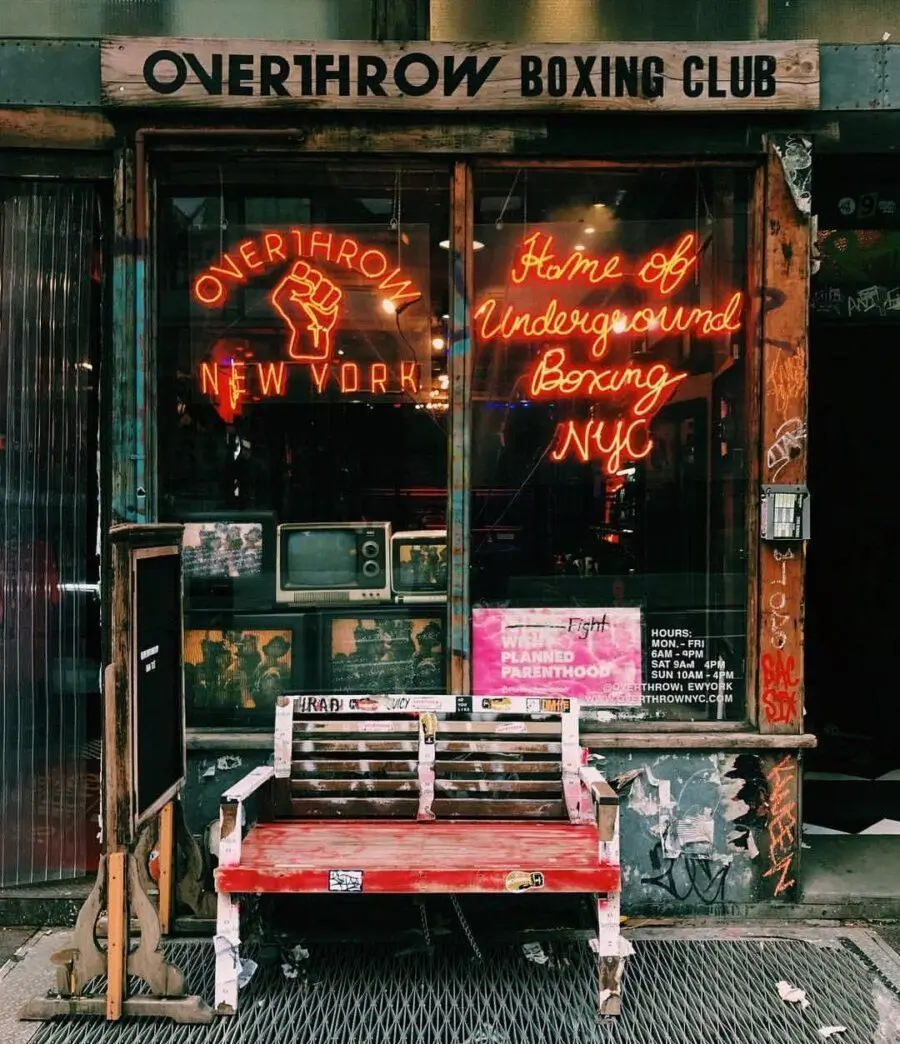
That small, private ritual is happening right now in hundreds of cities, in gyms that don’t advertise and sauna clubs that don’t need to. It’s the same instinct described in gyms and steam rooms everywhere: a hunger for presence in a world engineered for distraction. But look closer at who’s actually filling these rooms, and a more specific story starts to emerge. Increasingly, it’s women. And increasingly, it’s not incidental.

A fighter grips a pair of vintage brown leather boxing boots while wrapped hands and moody lighting emphasize the sport’s grit, discipline, and timeless tradition.
stir
For most of boxing’s modern history, the gym was coded male by default — a place a woman might visit but rarely felt she owned. The same was often true of sauna culture outside a handful of countries where communal bathing has always cut across gender lines. What’s shifting now isn’t just participation numbers. It’s ownership. Women aren’t just showing up to existing rooms; they’re building new ones, on their own terms, and the terms look different.
Female-founded boxing gyms have quietly multiplied across London, Los Angeles, Sydney, and Berlin over the past several years, often started by women who found their nearest gym intimidating, male-dominated, or simply uninterested in coaching them past the basics. The response wasn’t to protest the old room. It was to build a new one — one where the first thing you notice isn’t testosterone in the air, but attention. Trainers who correct your stance because they want you to actually improve, not because they’re performing expertise for an audience.

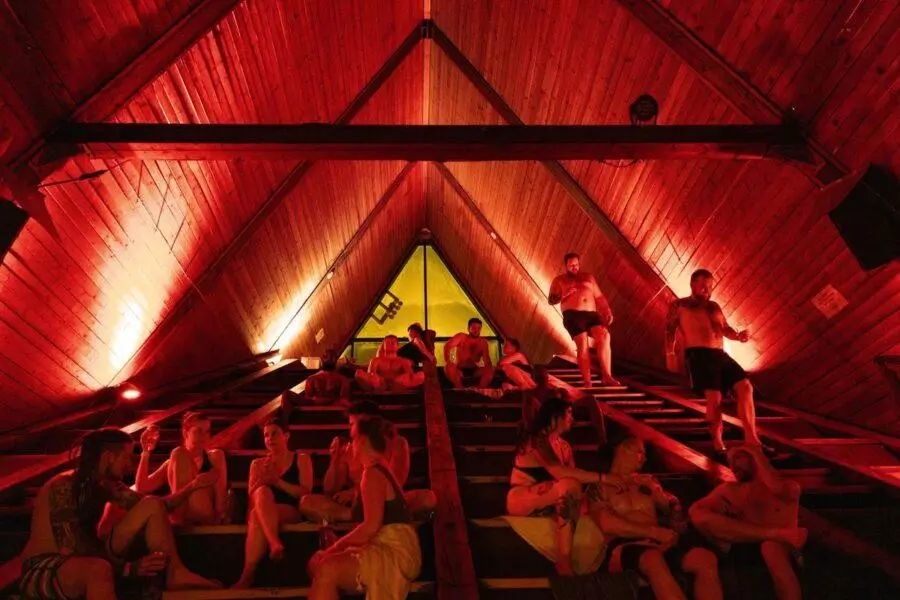
Sauna culture has followed a parallel, if quieter, path. Nordic countries never fully lost the communal, often gender-integrated sauna tradition, but the newer wave of urban sauna clubs — the kind popping up in converted warehouses and rooftop spaces in cities with no sauna heritage at all — have leaned hard into women-only or women-forward sessions. Not as a marketing gimmick, but because the demand was already there, waiting for someone to build the room.
What both spaces share is a rejection of the same thing: the performance economy of modern femininity. The version of womanhood that requires curation — the right activewear, the right angle, the right caption. Walk into either room and that performance becomes almost impossible to sustain. You cannot fake a jab. You cannot curate a face melting in ninety-degree heat. The body simply tells the truth, and for many women, that truth is the entire appeal.
huh
None of this exists in a vacuum. It’s arriving at the exact moment when several culture pressures are converging on women in particular.
The always-on nature of digital identity has hit women’s attention and self-image harder than most demographics, and the data on comparison culture, curated feeds, and the mental toll of constant self-presentation is not exactly new information at this point. What is new is the response: an entire generation actively seeking out rooms where none of that currency works. A boxing ring doesn’t care about your follower count. A sauna doesn’t care what filter you’d apply.
There’s also a safety calculus at play that shapes women’s relationship to physical space differently than men’s. Running alone at dawn, training alone at a gym late at night, walking home from a workout after dark — these carry a different risk calculation for women, one that shows up repeatedly in surveys about exercise habits and public space. Female-first gyms and sauna clubs offer something practical underneath the spiritual framing: a room where vigilance can finally switch off. That alone is worth the membership fee for a lot of women, even before you factor in the deeper draw of unfiltered presence.
And then there’s community itself, which these spaces are shh rebuilding in a culture that has made adult friendship — especially for women past their twenties — surprisingly hard to sustain. Shared discomfort turns out to be an extraordinarily efficient shortcut to intimacy. Fifteen rounds of sparring or forty minutes of shared heat produces a kind of bond that years of scheduling brunch never quite manages. Women are noticing this and organizing their social lives around it.
flow
Here’s the part that’s easy to miss if you only look at this through a wellness lens: this “underground” is quietly becoming one of the more interesting consumer categories in fitness and hospitality, and the businesses paying attention are not small operators anymore.
Boutique fitness already proved that people will pay a premium for community and identity, not just equipment access — that’s the entire thesis behind the boutique studio boom of the last decade. Female-focused boxing gyms are simply the next iteration of that thesis, applied to a category that was previously assumed to be male terrain by default. The unit economics are attractive for the same reason any boutique fitness model is attractive: high retention, strong word-of-mouth, and a membership base that will pay for atmosphere as much as programming.
Sauna clubs are following an even steeper commercial curve. What used to be a niche import from Nordic and Baltic wellness culture has become one of the fastest-growing categories in urban hospitality, with contrast therapy — hot rooms paired with cold plunges — turning into a full standalone business model rather than an add-on to an existing spa. Women-forward sessions and women-only clubs are frequently among the first offerings to sell out in markets where these businesses have launched, which tells its own story about where unmet demand has been sitting.
What makes the commercial opportunity distinct from a standard gym or spa play is the retention mechanic underneath it. Most fitness businesses fight constant churn because motivation is the product, and motivation is famously unreliable. These spaces are selling something stickier: belonging. A woman who has found her boxing gym or her sauna community isn’t chasing a fitness goal she’ll eventually hit or abandon. She’s maintaining a social ecosystem, and social ecosystems don’t get abandoned the way New Year’s resolutions do.
That distinction matters enormously to anyone building or investing in this space. It changes what the business actually is. A gym selling belonging can charge more, churn less, and expand through referral rather than advertising — the same playbook that’s built enormous value in categories like members’ clubs and boutique hospitality, now applied to a female-first fitness and wellness audience that has historically been underserved by both.
There’s also a product-adjacent opportunity forming around these spaces: apparel built for training rather than posing, recovery products designed around actual heat and cold exposure rather than marketing claims, and a wave of smaller media and content businesses documenting this world specifically for women who want to find their version of that first room. None of this needed to be invented from scratch. It needed someone to notice the room was already full and ask what else the people in it might want.
from
Travel is where this becomes most visible as a genuine worldwide phenomenon rather than a single-market trend. A woman moving from London to Seoul can walk into a jjimjilbang and find a familiar rhythm underneath an unfamiliar ritual — communal, unhurried, built around heat and rest rather than image. A traveler in Istanbul might find that same rhythm in a centuries-old hammam tradition that never needed to be reinvented for the wellness economy because it was never lost to it in the first place. Scandinavian sauna culture offers its own version, one where nudity and heat have simply never carried the same charge they do in more modern, Anglo wellness spaces still working out how comfortable to be with the body.
Boxing tells a similar cross-border story, though with a shorter history behind it. Female boxing gyms in Mexico City, Manila, and Lagos are often growing out of existing boxing cultures that were historically male-coded but never entirely closed to women — communities now actively carving out dedicated space rather than asking to be let into the old one. The specifics differ by city and culture, but the underlying want is remarkably consistent: a room without performance, built by and for women, where the body gets to lead for once.
What ties these local expressions together isn’t a shared aesthetic or a shared business model. It’s a shared refusal — of surveillance, of curation, of the exhausting work of being perceived. Every culture seems to be rediscovering some version of the same room, on its own timeline, using whatever tools its own history gave it.

culture
It’s worth pausing on who is doing the building, because the founder profile behind this wave looks different from the standard fitness or hospitality entrepreneur. Many of the women opening these gyms and clubs didn’t come from athletic or hospitality backgrounds at all. They came from corporate careers, from creative industries, from the same performance economy their new businesses are quietly pushing back against — and they built the room they themselves were looking for and couldn’t find.
That origin story matters commercially, not just narratively. A founder who built her gym because she needed it herself tends to protect the details that made it work for her, long after the business has scaled past the point where she personally needs to. It’s part of why so many of these spaces resist the generic feel of a franchise rollout even as they expand: the person at the top is still fighting to keep the room recognizable to her own original reason for building it.
This also shapes how these businesses grow. Rather than raising aggressively and expanding to every major city at once, the more successful operators in this category have tended to grow one room at a time, often waiting until a waitlist forms before opening a second location. It’s a slower model, and a less venture-friendly one, but it’s proven remarkably durable — because the thing being sold doesn’t scale the way a workout class does. Belonging has to be built room by room, member by member, or it stops being belonging at all.

fin
The interesting question isn’t either this trend continues or the demand signal is already loud enough that it’s hard to imagine it reversing. The more interesting question is who gets to build the next gen of these rooms, and if the underground quality that makes them work can survive contact with real commercial scale.
There’s a real tension here worth naming honestly. The show of these spaces is partly their resistance to commodification as the sense that you’ve found something that hasn’t been optimized for growth metrics yet. But the businesses that recognize the size of this opportunity are, by definition, going to try to scale it. That doesn’t have to mean ruining it. Plenty of categories such as specialty coffee, natural wine, boutique fitness itself and have scaled without fully losing what made the original rooms feel special, usually by staying obsessive about the same details that mattered in room one: the trainer who actually watches your form, the temperature that’s dialed in rather than approximate, the sense that someone built this space for the person standing in it rather than for a spreadsheet.
The women building this underground right now as gym owners, sauna club founders, the members organizing their social calendars around fight nights and steam sessions are effectively running a live experiment in whether presence itself can be a durable business, not just a personal practice. Early signs suggest it can. What happens next depends less on whether the demand is real, and more on whether the people scaling it remember what the room was actually for.
From the DRIFT archive: Inside the World’s Most Iconic Ski Experiences
Related Articles

Victoria Beckham Brings Her Runway Codes to the Dinner Table
A shell-shaped butter dish in a green box, hammered cutlery and rippled glass: Victoria Beckham’s […]