DRIFT

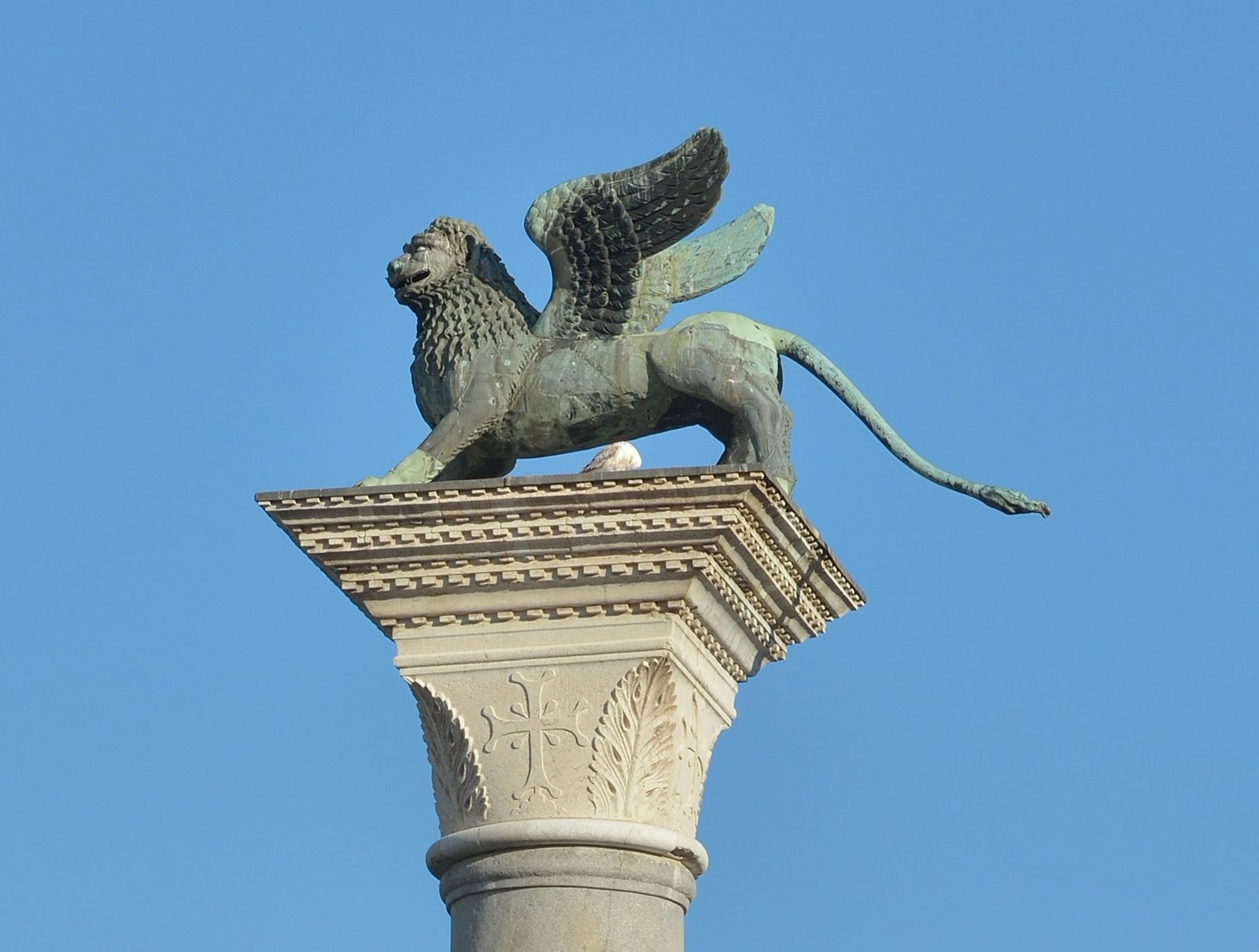
The iconic “Lion of Venice” is perhaps one of the most recognizable symbols in Italy. Perched atop a column in Piazza San Marco, the winged lion has long been a symbol of the Republic of Venice, representing its power, wisdom, and dominance over land and sea. However, recent studies have challenged the long-held assumption that this majestic bronze sculpture was crafted locally or even within Europe. Groundbreaking research suggests that the famous lion may, in fact, originate from the distant Yangtze River basin in China, making it one of the most intriguing cross-cultural artifacts in history. This new study posits that the lion, once believed to be Venetian in origin, may have been a colossal tomb guardian reassembled in its current form after being brought to Italy.

A Closer Look at the Lion of Venice

The winged Lion of Venice has been sitting atop its column since at least the 12th century, and over the centuries, it has undergone several restorations. Though it now stands proudly with its wings spread, it hasn’t always looked the way we see it today. Detailed inspections have revealed that the lion is a patchwork of different metal pieces, raising questions about its original appearance and the methods used to assemble it.

It was initially believed that the lion was crafted by local artisans, drawing inspiration from biblical and mythological traditions where winged lions symbolized evangelists, specifically Saint Mark, Venice’s patron saint. However, some experts have long noted the lion’s unusual features, which distinguish it from other European lion depictions of the period. The structure, proportions, and certain stylistic elements of the statue have led many to question its true origins.

The Discovery: Tracing the Lion’s Origins to China

The theory that the Lion of Venice might not be Italian or even European in origin has gained momentum thanks to recent scientific research. A team of art historians, archaeologists, and metallurgists conducted an extensive study of the lion, examining its metal composition and stylistic features. Using advanced dating techniques, they were able to trace the lion’s metalwork to regions in East Asia, specifically along the Yangtze River basin in China.

The research suggests that the lion may have originally been a tomb guardian or part of a funerary complex. In ancient China, particularly during the Han Dynasty (206 BC–220 AD), it was common to use stone or metal sculptures of mythical creatures to guard tombs and protect the dead in the afterlife. These tomb guardians, known as “zhenmushou” in Chinese, often depicted lions, tigers, and other fantastical beasts, some with wings or other hybrid features. The presence of wings on the Lion of Venice aligns with this tradition, suggesting that it could have originally served as a zhenmushou in China before being transported to Europe.

A Journey Across Continents: How Did the Lion Get to Venice?

If the Lion of Venice is indeed Chinese, the question arises: how did such a large and significant sculpture make its way from the Yangtze River basin to the canals of Venice? To answer this, we must look at Venice’s historical role as a major trading hub between East and West. During the height of the Venetian Republic, Venice controlled vast trade networks that extended as far as China. Venetian merchants were instrumental in transporting goods like silk, porcelain, and spices from the East to Europe, and it’s not inconceivable that artworks and cultural artifacts made the journey as well.

Some scholars speculate that the lion could have been brought to Venice as part of the lucrative trade exchanges during the Middle Ages. During this period, Venetian traders had extensive contact with the Mongol Empire, which, at its height, stretched from China to Europe. Through these trade routes, known as the Silk Road, objects of great value and cultural significance often found their way from East Asia to European cities. The lion may have been one such object, brought to Venice either as a diplomatic gift or a rare artifact for the city’s ruling elite.

Reassembly: The Lion’s Transformation in Venice

One of the most fascinating aspects of the Lion of Venice is the fact that it appears to have been reassembled after arriving in Italy. The sculpture is composed of different pieces that, upon closer inspection, do not all seem to fit together perfectly. This has led researchers to hypothesize that the lion was originally a larger, more complex statue or collection of statues that were dismantled and shipped in parts before being reassembled in Venice.

Further supporting this theory is the fact that several of the lion’s features, such as the wings, seem to have been later additions. These additions may have been made to align the sculpture with the traditional Christian symbol of Saint Mark’s winged lion, which is a common representation in Venetian iconography. The reassembly of the lion could have involved adapting the original Chinese sculpture to fit the cultural and religious context of Venice at the time.

This practice of reworking and repurposing imported artifacts was not uncommon in the Middle Ages. European artisans often modified objects from distant cultures to suit local tastes or align with specific religious or political narratives. In the case of the Lion of Venice, it is likely that local craftsmen adapted the original Chinese tomb guardian, adding wings and other elements to create a statue that would serve as both a symbol of Venice and a tribute to Saint Mark.

Impression

The Lion of Venice has long been more than just a statue; it is a potent symbol of the city’s identity, representing its power, strength, and connection to Saint Mark. The lion is a recurring figure in Venetian art and architecture, appearing on flags, coins, and monuments throughout the city. Its association with Saint Mark, whose relics were supposedly smuggled to Venice from Alexandria in 828 AD, cemented its place as the city’s most revered emblem.

If the lion’s Chinese origin is confirmed, it adds a fascinating layer of complexity to its symbolic meaning. While the lion has always been seen as a representation of Venice’s authority, its Asian origin would suggest that Venice’s identity was shaped, at least in part, by its connections to distant cultures. The idea that Venice—a city famed for its cosmopolitanism and its role as a bridge between East and West—would adopt and repurpose a Chinese tomb guardian as a symbol of its own power is a testament to the city’s ability to incorporate diverse cultural influences into its identity.

Challenges to the Chinese Origin Hypothesis

While the theory that the Lion of Venice originated in China is compelling, it is not without its challenges. Some art historians remain skeptical, arguing that the lion’s stylistic features could have been inspired by Byzantine or Islamic art, both of which had significant influence on Venetian culture. Venice’s position as a crossroads between Europe, the Middle East, and Asia means that its art and architecture often reflect a blend of different traditions.

Moreover, the lion’s material composition, while consistent with East Asian metalworking techniques, could also be explained by the influence of foreign artisans working in Venice or imported materials being used in local workshops. The possibility that the lion was crafted in Venice using imported techniques and materials cannot be ruled out, and further research will be needed to confirm its true origins.

If the Lion of Venice is indeed proven to be of Chinese origin, it would have significant implications for our understanding of cultural exchange in the medieval world. It would suggest that the connections between East and West were even more extensive and far-reaching than previously thought. The movement of such a large and significant sculpture from China to Europe would be a remarkable testament to the power of trade, diplomacy, and cultural exchange in the pre-modern world.

Furthermore, the lion’s journey from China to Venice highlights the fluidity of cultural symbols and the ways in which objects can be recontextualized and reinterpreted across different cultures. The Lion of Venice, once a tomb guardian in China, became a symbol of Venetian power and identity, illustrating the complex and dynamic nature of cultural exchange.

The Lion of Venice has long been a symbol of the city’s strength, wisdom, and dominance. If the recent research tracing its origins to China is correct, the lion’s story becomes even more fascinating, revealing it to be a relic of a globalized medieval world where objects and ideas flowed across continents, shaping the identities of the cities and cultures they touched. Whether as a Chinese tomb guardian or a Venetian emblem, the Lion of Venice embodies the spirit of cultural exchange and adaptation, standing as a reminder of the interconnectedness of human history. As more research unfolds, the lion’s true origins may finally come to light, adding a new chapter to the rich history of one of the world’s most iconic sculptures.

Related Articles

Modern data center facility with a solar-panel-clad exterior, bright green administrative offices, and secure perimeter fencing, showcasing sustainable digital infrastructure and renewable energy integration

Lombardy’s Data Center Boom: Balancing Digital Ambition with Environmental Responsible

Lombardy has emerged as Italy’s primary hub for new digital infrastructures, particularly data centers—vast complexes […]

In a highly anticipated reunion after 24 years, Adidas Originals and Coca-Cola have joined forces once again to celebrate the FIFA World Cup 2026™. The collaboration revives their iconic 2002 partnership from the Japan-South Korea tournament, now reimagined for the biggest global sporting event of 2026, co-hosted by the United States, Canada, and Mexico. Set to launch on June 6, 2026, this collection masterfully blends Adidas' streetwear heritage with Coca-Cola's timeless branding, creating a vibrant fusion of football culture, nostalgia, and modern style. The drop arrives at a perfect moment. With the World Cup kicking off on June 11, 2026, fans worldwide are gearing up for a summer of football excitement. This collaboration isn't just merch—it's a cultural statement that merges two legendary brands under the banner of "Originals are the Real Thing," a clever twist on Coca-Cola's famous slogan. Historical Context: A Reunion 24 Years in the Making Adidas and Coca-Cola first collaborated during the 2002 FIFA World Cup, producing limited-edition pieces that captured the era's energy. That partnership helped define early 2000s football-streetwear crossover culture. Fast-forward to 2026, and the brands are back with fresh energy, leveraging Adidas' deep FIFA ties (as an official partner) and Coca-Cola's long-standing sponsorship of the tournament. The 2026 edition promises to be historic as the first 48-team World Cup, spanning three countries and generating unprecedented global hype. This collab taps into that momentum, offering fans wearable pieces that celebrate both brands' legacies while looking forward to the future of football fashion. Collection Overview and Design Philosophy The Adidas Originals x Coca-Cola collection fuses 2000s street style with classic sporting aesthetics. Expect bold reds, creams, whites, and silver accents inspired by Coca-Cola's iconic packaging—think classic script logos, droplet detailing, and can-inspired motifs. The lineup spans footwear, apparel, and accessories, divided into two visual directions: one logo-heavy and graphic-forward, the other drawing from vintage advertising aesthetics. Designs pay homage to Coca-Cola's visual language while staying true to Adidas Originals' archival roots. High-quality materials, attention to detail, and versatile silhouettes make these pieces suitable for both match-day wear and everyday street style. The campaign, featuring young football star Lamine Yamal and a diverse cast in everyday scenes building anticipation for the tournament, reinforces themes of originality and shared cultural moments. Footwear Highlights Footwear takes center stage in this collaboration, with reimagined takes on iconic 2000s Adidas silhouettes: Samba and Superstar Models: These classics get Coca-Cola treatment with white/cream/red colorways and prominent script branding. The Samba blends street heritage with football roots, while the Superstar II features weathered bases and bold side panels. Expected pricing around $110–$130. Adistar Control 5: A standout with droplet detailing mimicking condensation on a cold Coke can. This model brings performance-inspired design into lifestyle territory. Predator Sala: Indoor/hybrid style with silver-and-red accents, nodding to predatory precision on the pitch and Coca-Cola's bold energy. Climacool 1: Revived with breathable tech and Coke-inspired graphics, perfect for warm summer days. Megaride F50: A highlight paying tribute to the iconic Coca-Cola glass bottle, with unique contours and refreshing design cues. Each pair incorporates thoughtful details like embroidered logos, custom insoles, and packaging that mimics vintage Coke crates or cans. These shoes are built for durability and comfort, appealing to sneakerheads, football fans, and casual wearers alike. Apparel and Accessories Beyond kicks, the collection offers a full lifestyle range: Track Tops and Jerseys: Standout jerseys fuse retro Coca-Cola advertising from different eras into cohesive football designs. Track jackets feature signature three stripes alongside Coke branding, in vibrant reds and classic whites. Shorts and T-Shirts: Relaxed fits with graphic prints, ideal for casual wear or layering. Expect motivational football motifs blended with refreshing beverage references. Accessories: A bright red airliner bag stands out as a functional statement piece. Additional items may include caps, socks, and tote bags carrying the collaborative spirit. The apparel emphasizes comfort with premium cotton blends, mesh panels for breathability, and oversized silhouettes popular in contemporary streetwear. Unisex sizing and inclusive fits make the collection accessible to a broad audience. Cultural Impact and Fan Appeal This collaboration resonates on multiple levels. For football fans, it represents national pride and global unity ahead of the 2026 tournament. Sneaker enthusiasts will appreciate the nostalgic 2000s revival mixed with modern execution. Streetwear collectors see it as a prime example of how heritage brands can innovate through partnerships. In an era where sports and fashion increasingly intersect, Adidas and Coca-Cola deliver pieces that transcend the pitch. Wear them to watch matches at home, attend watch parties, or hit the streets in any host city—New York, Los Angeles, Toronto, or beyond. The designs are versatile enough for gym sessions, festivals, or daily commutes. The timing aligns perfectly with rising interest in football in North America, boosted by the co-hosting nations. Young talents like Lamine Yamal in the campaign help bridge generational gaps, attracting newer fans while satisfying longtime supporters. Where to Buy and Release Details The collection launches globally on June 6, 2026, via: Adidas CONFIRMED app (for early access and raffles) Adidas.com Select retailers and flagship stores worldwide Some regions may see staggered drops, with Japan and other markets getting early access. Prices are expected to range from $50–$150 depending on the item, making it relatively accessible compared to ultra-limited drops. Pro Tips for Copping: Enable notifications on the CONFIRMED app. Check local stock at Adidas stores in major cities. Monitor resale platforms post-drop for exclusive colorways, but be wary of markups. Size up slightly for oversized apparel fits. Given the World Cup hype, popular items like the Sambas and jerseys are likely to sell out quickly. International shipping is available, but factor in potential customs delays. Styling Suggestions Match Day Look: Pair a collaborative jersey with classic black shorts and Samba sneakers for effortless fan style. Streetwear Rotation: Layer a track top over a graphic tee with wide-leg pants and the Megaride F50 for a bold urban ensemble. Casual Summer: White Superstar with denim shorts and the airliner bag for a refreshing, vacation-ready vibe. These pieces mix seamlessly with existing Adidas or neutral wardrobes, maximizing versatility. Broader Context in 2026 Fashion and Sports The Adidas x Coca-Cola drop is part of a larger wave of high-profile collaborations tied to the World Cup. Adidas continues its dominance in football kit design, while Coca-Cola leverages its sponsorship with collectibles, bottles, and experiential activations like the Trophy Tour. In the sneaker industry, this collab exemplifies the ongoing trend of lifestyle reinterpretations of performance silhouettes. It also highlights how global brands use major events to drive cultural conversations around unity, originality, and joy—core values for both companies. Sustainability notes (based on Adidas' broader initiatives) suggest some pieces may incorporate recycled materials, aligning with modern consumer expectations. Looking Forward: Legacy and Excitement As the countdown to kickoff continues, this collection serves as the perfect prelude to an unforgettable summer of football. Whether you're a die-hard supporter, a fashion-forward collector, or someone seeking motivation through style, the Adidas Originals x Coca-Cola FIFA World Cup 2026 lineup delivers. Expect potential restocks, special event exclusives in host cities, and continued campaign content featuring more athletes. This isn't just clothing—it's a ticket to participate in the global celebration of the beautiful game. Mark your calendars for June 6, 2026. Refresh your wardrobe, lace up those Sambas, and get ready to cheer on your team in style. The "Real Thing" meets the Originals in what promises to be one of the most talked-about releases of the year. This collaboration captures the essence of football's universal appeal: bringing people together through shared passion, iconic brands, and unforgettable moments. As the world prepares for 2026's expanded tournament, Adidas and Coca-Cola remind us that some partnerships are truly timeless.

Adidas Originals x Coca-Cola Collection: FIFA World Cup 2026

In a highly anticipated reunion after 24 years, Adidas Originals and Coca-Cola have joined forces […]

Loewe shoulder bag crafted in brown and black leather with minimalist lion face detailing and a matching fur tail charm

180 Years Unfolded: The Full Story Behind Loewe’s New Campaign

The year was 1846. Queen Victoria was on the British throne and the telephone, the […]