DRIFT AUDIO
Listen to this story
Choose a voice, then press play.
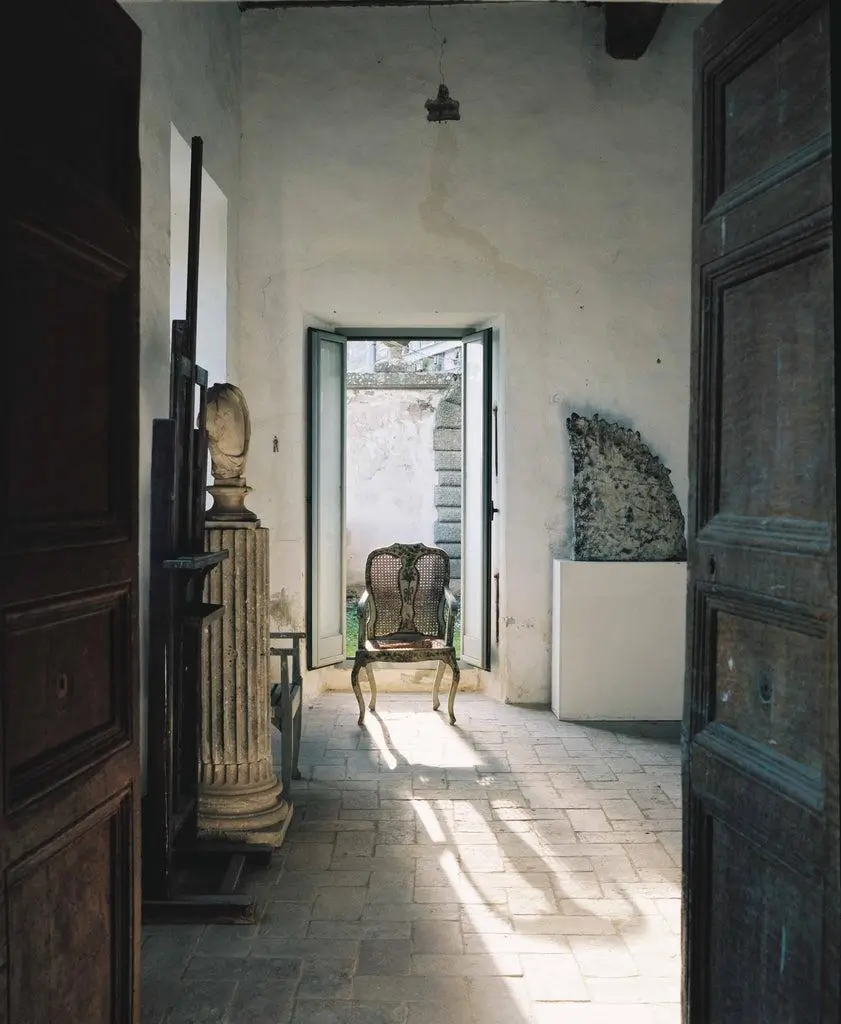
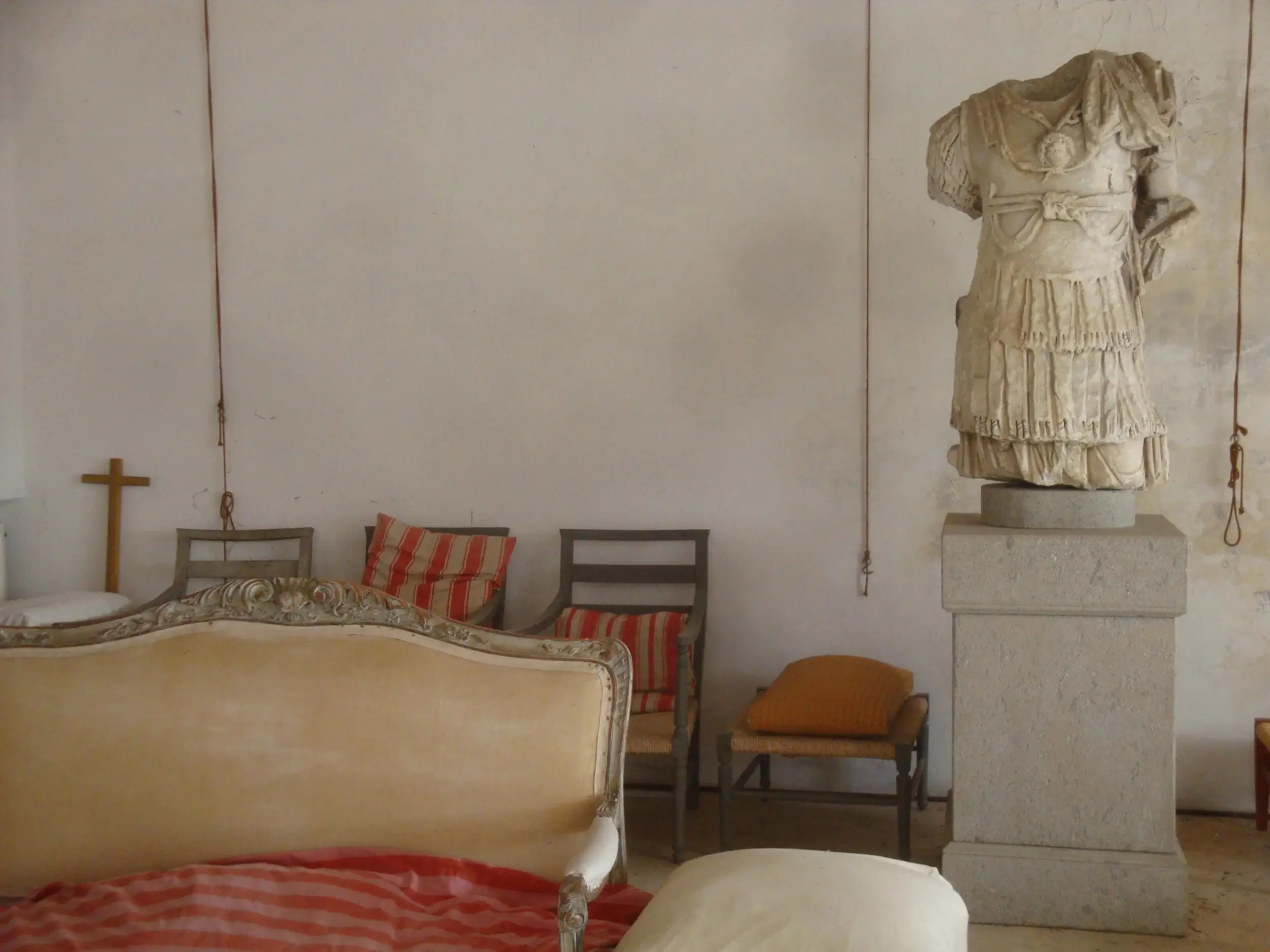
In the quiet village of Teverina, nestled in the rolling hills north of Rome, a 16th-century palazzo stands suspended in time. Its walls, fissured by age, still carry the faint scent of turpentine and oil. Easels remain upright, brushes hardened with pigment, sculptures arrested mid-gesture—thoughts interrupted but never erased. This was the sanctuary of Cy Twombly, the American painter whose gestural, poetic language redefined postwar art. He acquired the space in 1975 not as a residence, but as a laboratory—an interior world where creativity could unfold without witness.
Now, nearly half a century later, it has become something else entirely: a stage.
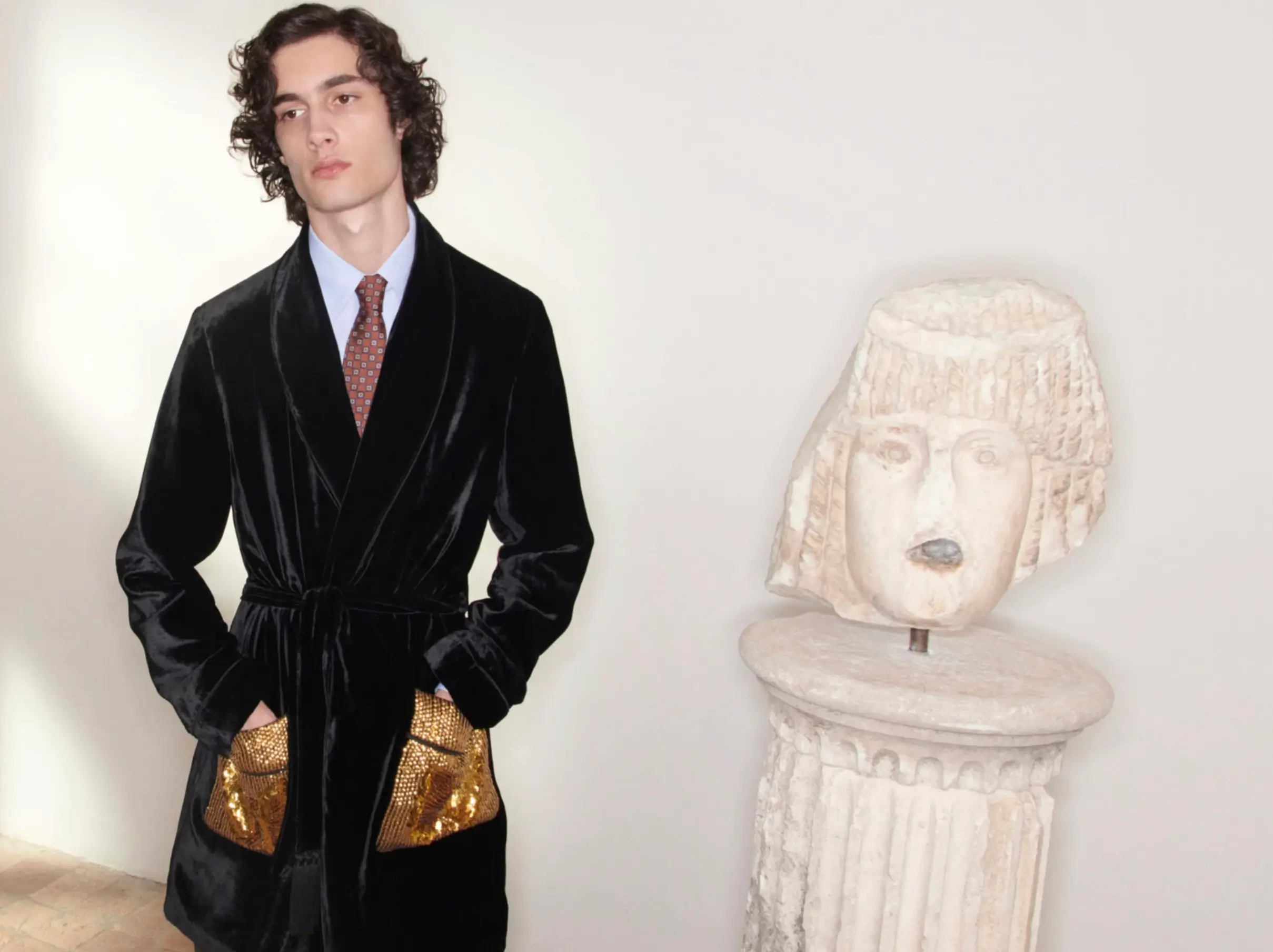
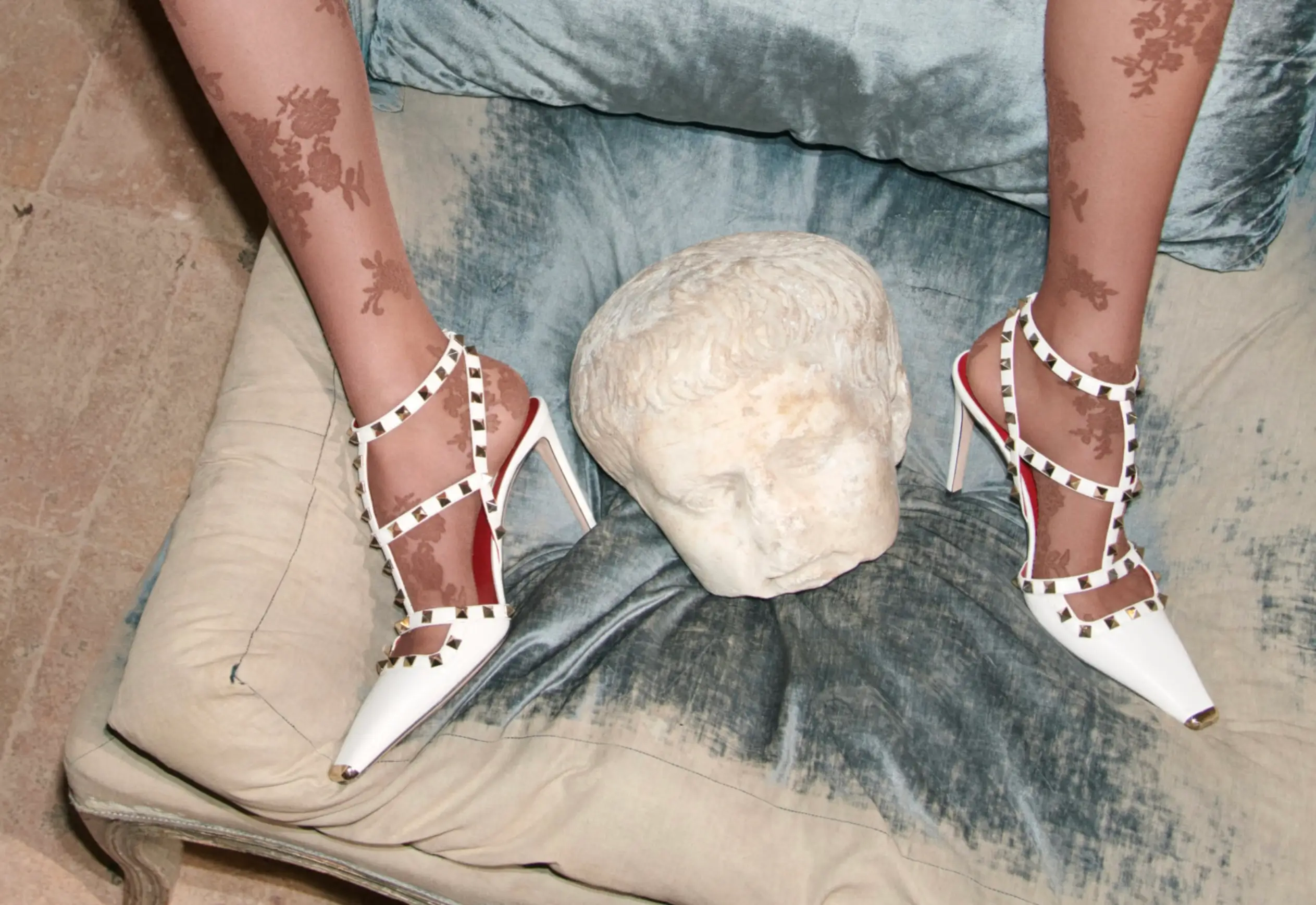
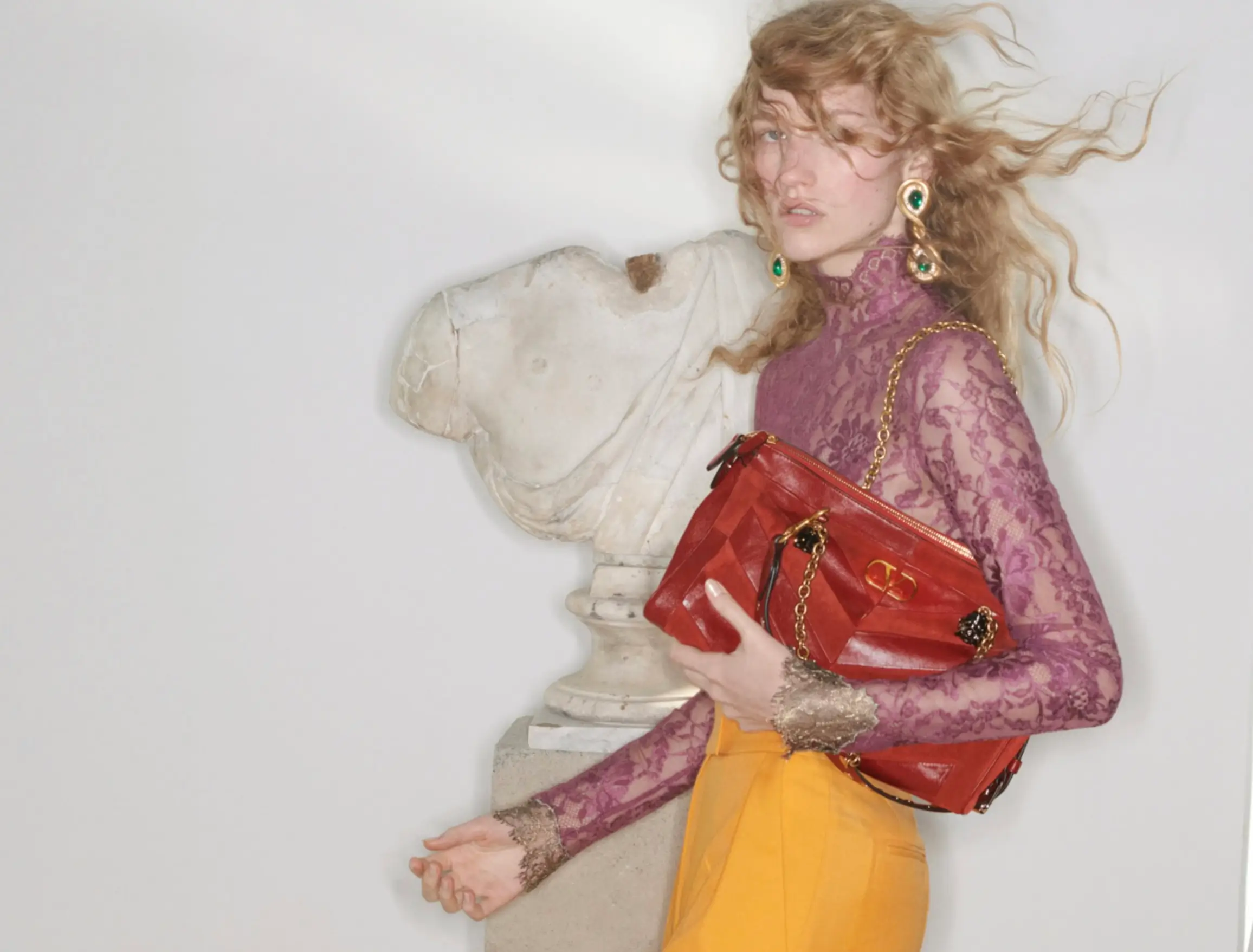
For its Pre-Fall 2026 campaign, Valentino returns to Twombly’s world—not to mine it, but to converse with it. Shot within the very rooms where the artist once worked, the campaign unfolds less as a fashion narrative and more as a meditation on memory, identity, and the quiet evolution of legacy. Starring Grammy-nominated singer Sombr alongside model Apolline Rocco Fohrer, and lensed by Johnny Dufort with styling by Jonathan Kaye, the project becomes a study in referential elegance—rooted in history, yet unburdened by it.
This isn’t nostalgia.
It is resurrection.
stir
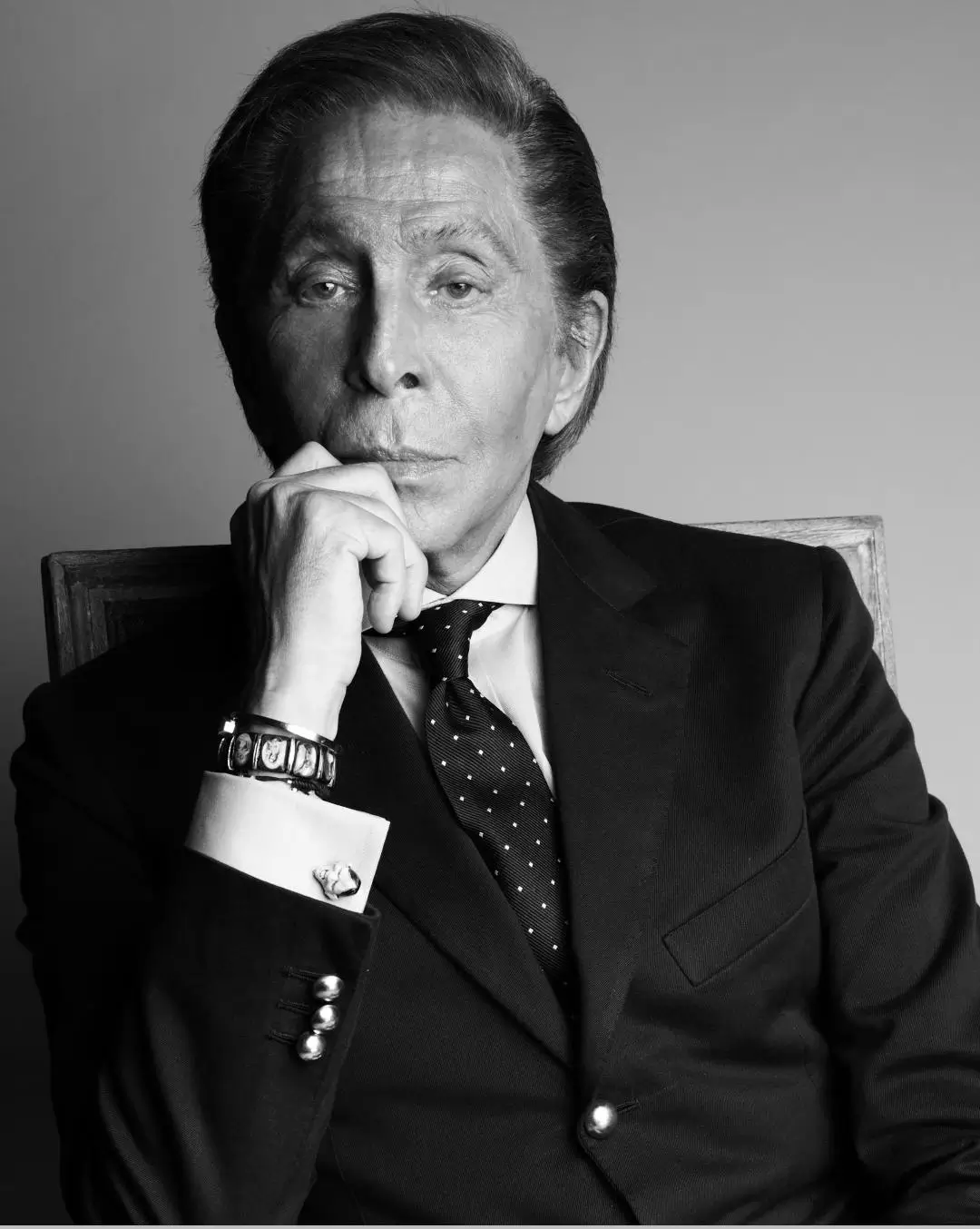
The campaign’s lineage traces back to 1968, when photographer Henry Clarke captured Valentino Garavani’s collection inside Twombly’s Roman home. Those images—refined silhouettes against a backdrop of artistic disorder—marked a rare equilibrium where fashion and art coexisted without hierarchy.
Now, under the direction of Alessandro Michele, Valentino revisits that exchange—but shifts its axis. Instead of returning to Rome, Michele moves deeper, into Teverina—a space more private, more interior, more sacred.
“Twombly didn’t just live here. He thought here. He became here.”
The choice is not repetition. It is response.
The resulting imagery feels less like a campaign and more like a suspended frame from an unfinished film—haunting, deliberate, and saturated with subtext. There are no declarations, no exaggerated gestures. Only presence. Only movement. A controlled disruption of color within stone and shadow.
archive
The Teverina palazzo resists the logic of preservation. It is not curated—it endures.
Twombly acquired it in 1975 as a retreat from the external gaze, a space where work could exist without audience. Within these walls, he produced some of his most defining cycles—the Blackboard series, Lepanto, the Four Seasons. The architecture itself became an extension of the work: light, silence, imperfection.
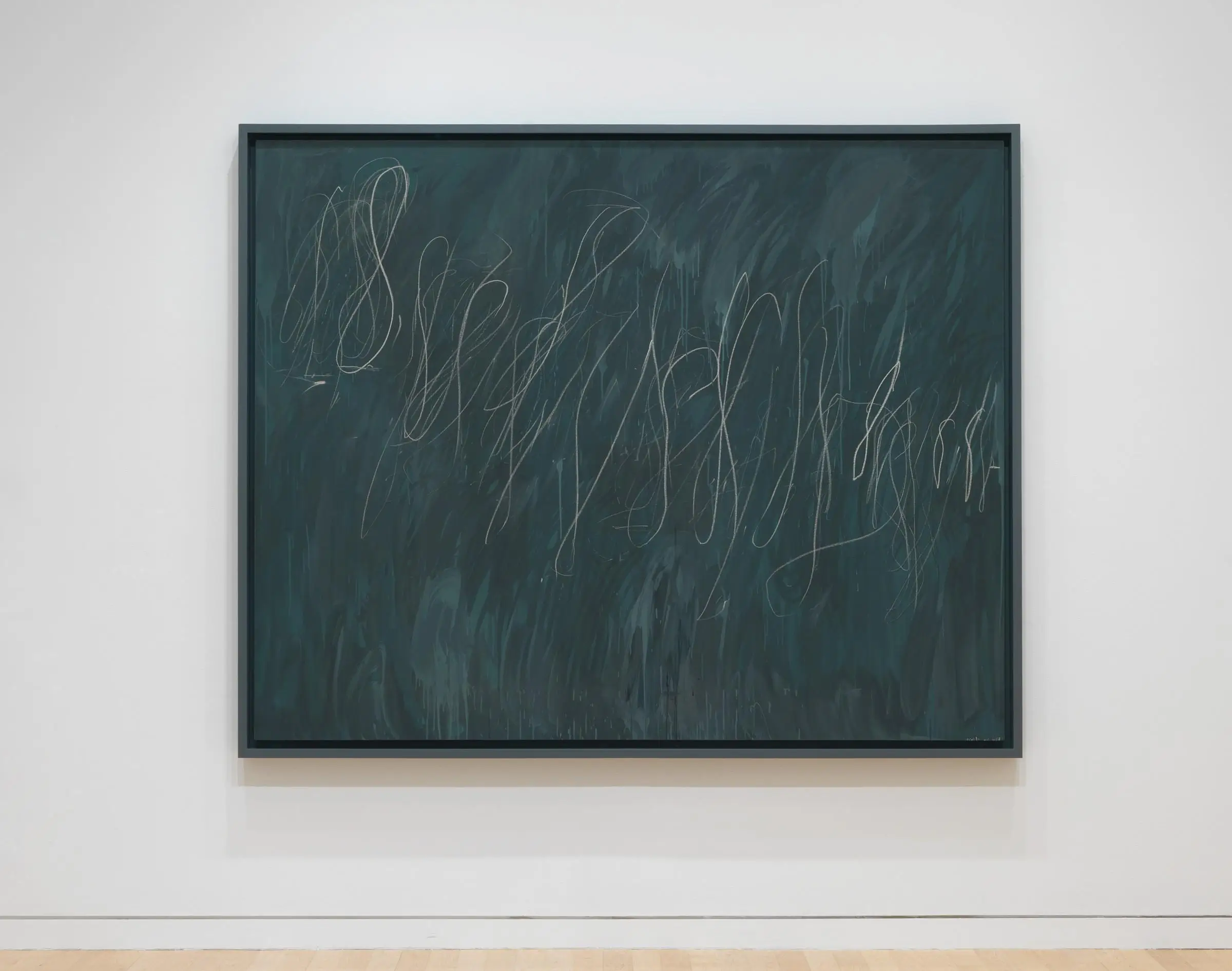
Decades later, nothing has been corrected. Sculptures—assembled from wood, stone, fragments—remain in place like silent witnesses. Canvases rest against walls, unresolved. The air holds density. Memory lingers without instruction.
Valentino does not attempt to refine this environment. It does not impose order. Instead, it accepts the decay—the dust, the fractures, the quiet erosion of time. The garments do not dominate the space. They enter it.
And in that entry, the balance shifts.
idea
Sombr and Apolline Rocco Fohrer are not static figures. They function as interruptions.
In one frame, Sombr moves through a dim corridor in a crimson velvet coat—its exaggerated collar echoing the expansive gestures of Twombly’s mark-making. The red is not decorative. It is kinetic. It disrupts the monochrome stillness like a pulse.
Elsewhere, Fohrer stands beside a jagged wooden sculpture in layered black-and-ivory lace. The fabric behaves like a palimpsest—layers written over layers, never fully erased. It mirrors Twombly’s own surfaces, where completion was never the objective.
Movement remains restrained, almost ritualistic. In the campaign film, slow-motion captures trace subtle gestures: lace brushing against stone, a hand grazing sculpture, fabric catching ambient light. There is no score—only atmosphere. Wood creaks. Air moves. Water drips.
The garments do not contrast with the space.
They activate it.
written
The collection remains distinctly Michele—velvet density, dual-toned lace, silhouettes that reconfigure vintage archetypes into something contemporary yet displaced. But within this setting, the pieces feel grounded, as though extracted from the same material reality as the palazzo itself.
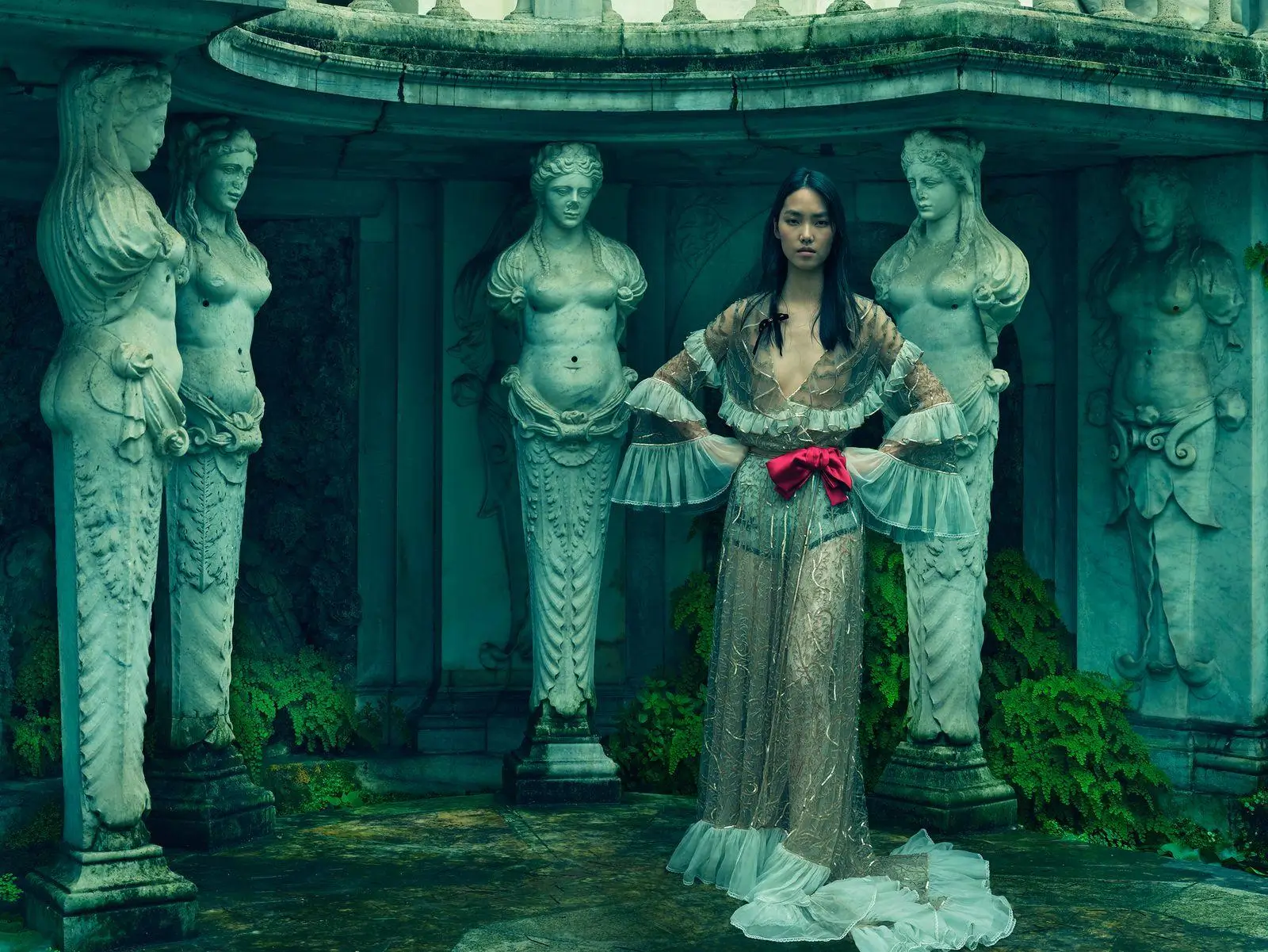
A velvet opera coat in deep red, lined with silk inscribed with gestural markings reminiscent of Twombly’s hand.
Asymmetrical tailoring—jackets disrupted by imbalance, sleeves intentionally misaligned.
Sculptural black leather boots, functioning less as footwear and more as structure.
Lace dresses fractured into panels, echoing cracked surfaces rather than smooth continuity.
The palette draws directly from Twombly’s visual language:
chalk white, charcoal black, muted rose, ochre.
Textures follow suit. Brocade mimics plaster erosion. Wool reflects the grain of aged wood. Nothing feels applied. Everything feels translated.
This is not costume.
It is conversation.
shh
While Twombly’s paintings dominate his legacy, his sculptures emerge here as quiet protagonists.
Constructed from found materials—driftwood, stone, rusted metal—they resist resolution. They exist as fragments, incomplete yet resolved in their own logic. Within the campaign, they are not background elements. They hold equal weight.
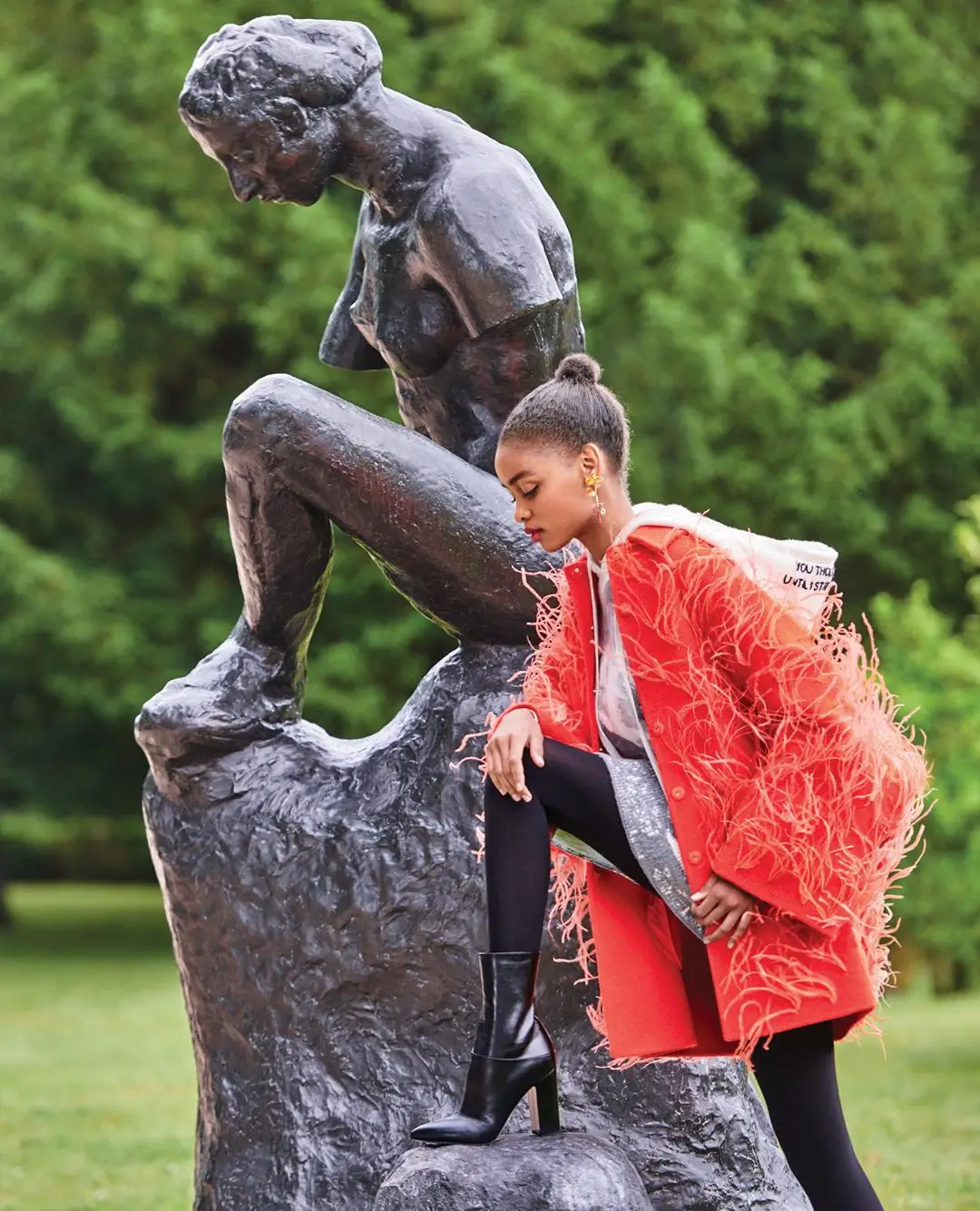
In one image, Fohrer’s hand rests on a jagged form—gesture meeting object, identity meeting material. Both remain unfixed.
Michele’s work has consistently engaged with transformation—identity as fluid, layered, unresolved. In Twombly, he encounters a parallel ethos: a practice that refused containment.
Twombly painted like he wrote.
Wrote like he sculpted.
Moved across forms without hierarchy.
So does Valentino.
view
Dufort’s photography remains disciplined. There is no excess. No imposed spectacle.
Wide compositions emphasize spatial emptiness—the scale of the palazzo, the erosion of its surfaces, the presence of silence. The models enter slowly, not as subjects but as temporary inhabitants.
Lighting is entirely natural. Afternoon light filters through fractured shutters, catching velvet surfaces, illuminating lace edges, dissolving into shadow.
The composition adheres to a strict logic:
Negative space dominates.
Color is controlled, never excessive.
Movement is suspended, not frozen.
In one frame, Sombr stands within a doorway, backlit, her form outlined by the collapse of the arch. She does not pose. She exists.
And within that stillness, the campaign resolves its central idea.
View this post on Instagram
theory
Not a slogan. Not a directive.
A condition.
Twombly’s life existed in contradiction—American, yet embedded in Italy; painter, yet writer; minimalist, yet chaotic. Identity, for him, was never singular. It accumulated.
Michele’s Valentino operates similarly. It does not preserve legacy—it reinterprets it. Archival references are not repeated; they are destabilized, recontextualized, reactivated.
The campaign does not reference Twombly.
It inhabits his logic.
Because legacy is not preservation.
It is continuation.
cont
In a culture driven by immediacy, the most radical gesture is attention—listening to what has existed, and responding without erasure.
Valentino’s Pre-Fall 2026 campaign does not function as product communication. It offers a framework.
That beauty exists within incompletion.
That identity resists fixation.
That fashion, at its most precise, becomes dialogue rather than declaration.
And within Teverina, that dialogue remains active.
fin
The palazzo will not endure indefinitely.
At some point, its structure will give way. Materials will collapse. Surfaces will fade beyond recognition.
But for now, it stands.
And within that standing, it holds a question:
What remains?
Not objects. Not images.
Echoes.
Valentino does not attempt to answer. It allows the question to persist—like a mark left unresolved, like a gesture suspended mid-air.
Some things do not require completion to be whole.
Some things exist fully in their becoming.
And in the quiet of Teverina—
a red coat cutting through grey,
lace moving against stone,
a hand resting on wood—
you register it.
Not as statement.
But as memory.
Already in motion.