DRIFT AUDIO
Listen to this story
Choose a voice, then press play.
premise
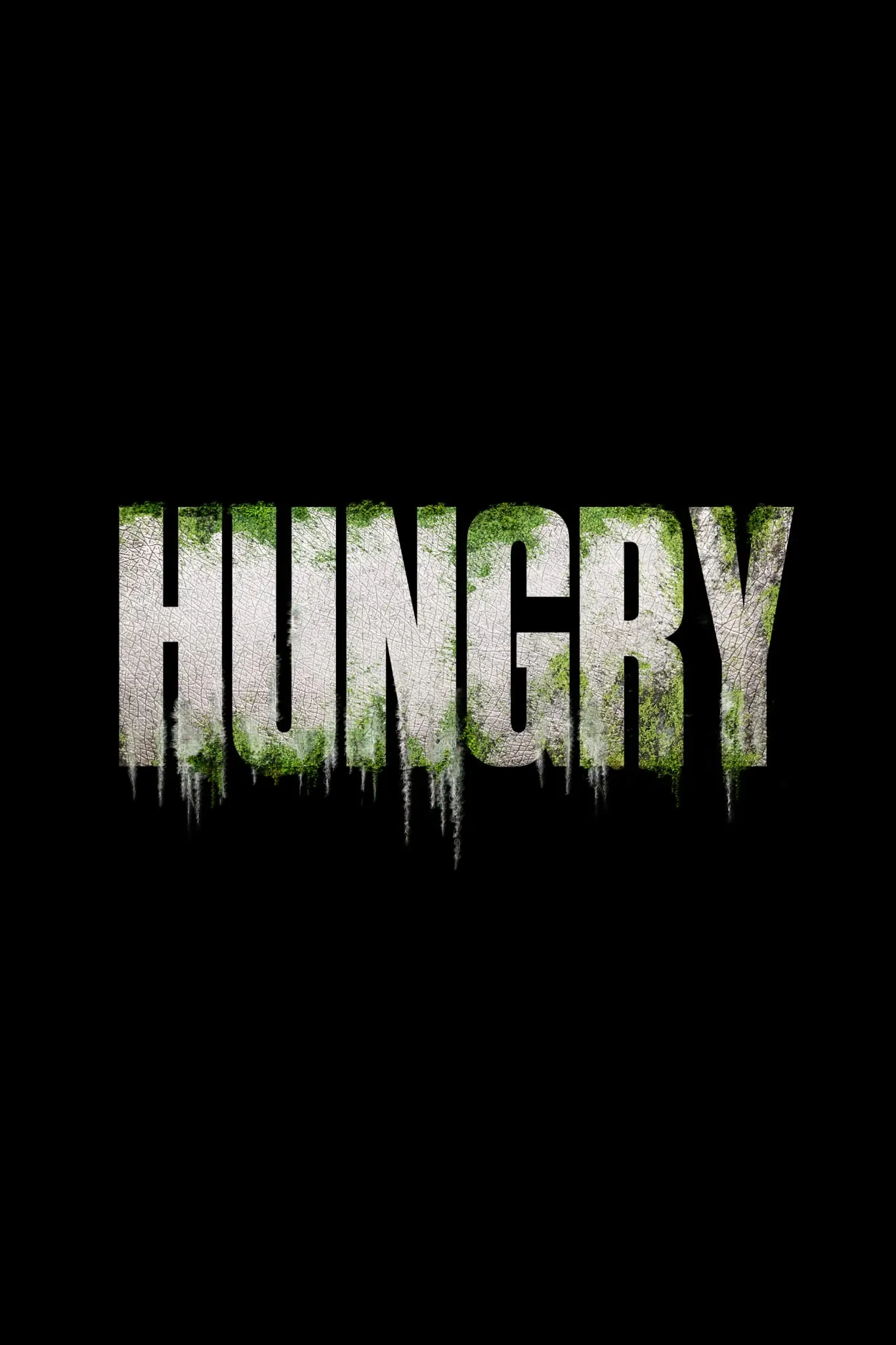
Hungry emerges not as a campy gimmick, but as a calculated exercise in psychological dread, weaponizing the innocence of childhood play. Directed by rising auteur Lena Voss (The Still Hour, Echo Room), the film centers on a group of estranged friends reunited at a remote lake house, where a nostalgic game night takes a fatal turn. The trigger: a vintage Hungry Hungry Hippos set—its cheerful design now unsettling, its plastic hippos eerily still. When one snaps shut with unnatural force, severing a finger, the group laughs—until they hear the first roar from the lake.
The film’s brilliance lies in its restraint. The hippopotamus, a real animal rather than a CGI monster, is rarely seen in full. Instead, Voss uses sound—deep, guttural breaths beneath the water, the crunch of bone in the dark—and fragmented visuals: a massive eye breaking the surface, a shadow moving through reeds. The game becomes a narrative engine: saying “Hungry!” aloud summons the beast, rolling the dice triggers an attack. The rules are not explained—they are discovered through terror.
While not officially based on the Hasbro toy, Hungry leans into its iconography with eerie precision. The four-colored hippos reappear as motifs—painted on the cabin walls, reflected in the water—suggesting the game has always been watching. The film taps into a growing subgenre of “playtime horror,” where familiar objects become conduits for trauma. But unlike The Banana Splits or Playtime, Hungry avoids cartoonish violence. Its horror is grounded, almost folkloric—a curse born from grief, passed through play.
stir
Hungry opens with a slow, deliberate rhythm—long shots of mist rising off the lake, the creak of a dock, the distant call of a loon. The camera glides through the cabin like a ghost, settling on a dusty shelf where the Hungry Hungry Hippos game sits, its box faded, one corner chewed. The friends arrive one by one: Mia, a trauma therapist trying to reconnect; Drew, the joker masking anxiety; Tasha, nostalgic to a fault; Eli, withdrawn, sketching in a notebook; and Rafe, who brought the game, claiming he found it in his late father’s attic.
The first act is steeped in unease disguised as warmth. They drink, laugh, reminisce. The game is introduced casually—“Remember how obsessed we were?”—and they play, the plastic hippos snapping at marbles with their familiar clack-clack-clack. But the sound is slightly off—too sharp, too wet. The camera lingers on the hippos’ eyes: glassy, reflective, almost aware.
That night, during a storm, the power flickers. The game lights up on its own. Rafe leans in, curious. One of the hippos turns—too slowly—and bites down. His scream is cut short. The group rushes in, finds him bleeding, the finger gone. They assume a prank, a trap. But the blood is real. And outside, the lake ripples—no wind, no animal in sight.
The next morning, Rafe is missing. His phone lies by the shore, screen cracked, still playing the game’s theme song on loop. Panic sets in. They try to leave—cars won’t start, phones have no signal. Eli finds a child’s drawing tucked in the game box: five stick figures, each marked with an X. At the bottom, in shaky crayon: “They didn’t finish the game.”
Mia, the skeptic, begins researching. She uncovers the story of Silas Grange, a toymaker who vanished in 1987 after his son was killed by a hippo on safari. His final creation? Hungry Hungry Hippos. Rumor says he cursed it: “Let them know the hunger.” The game wasn’t meant to be played. It was meant to be a warning.
As the group argues, Tasha notices the marbles are gone. But the hippos’ mouths are stained red. And from the lake, a low, guttural breath rises—inhuman, ancient. The act ends with a single shot: the game, sitting alone on the table. One of the hippos slowly turns its head—click—and stares directly into the camera.
The game has begun.
flow
The second act of Hungry shifts from psychological unease to inescapable dread, as the survivors begin to understand the game’s logic—not as a toy, but as a ritual. The attacks are not random. They are triggered by specific actions: saying “Hungry!” aloud, rolling the dice, or even touching the marbles. Each time, the hippo emerges from the lake with terrifying precision, striking fast and vanishing just as quickly.
The first full attack occurs when Drew, trying to lighten the mood, shouts “Hungry!”—a split second before the cabin window shatters and a massive jaw clamps down on his shoulder. He’s dragged into the water, screaming, before anyone can react. Panic fractures the group.
Mia insists they destroy the game, but when Eli hurls it into the fireplace, the flames turn black, and the box reappears on the table, unburned. Tasha, increasingly obsessed, begins to believe they must play to survive—that the game demands completion. She finds more clues: newspaper clippings about Silas Grange, who reportedly whispered, “They never finish the game,” before vanishing.
The film’s tension is amplified by its refusal to explain everything. There are no exposition dumps, no sudden revelations. The rules emerge through trial and error, each discovery paid for in blood. When Tasha rolls the dice “to see what happens,” the hippo attacks from beneath the floorboards, splintering wood and dragging Eli into the crawlspace. His last words: “Don’t… play…”
Mia, now the de facto leader, pieces together the pattern. The game isn’t just cursed—it’s alive. The plastic hippos are avatars, extensions of the beast’s will. The marbles, once colorful plastic, now appear stained, some cracked open to reveal small bones inside. The board itself seems to shift when unobserved, the paths rearranged, the finish line moved.
A turning point comes when Mia dreams of the game being played—not by children, but by adults in 1980s clothing, their faces blank, their movements mechanical. They chant in unison: “Hungry! Hungry! Hungry!” The screen cuts to black. She wakes to find the game set up on the table, the dice showing all sixes.
scope
The final act narrows to a suffocating confrontation: the game must be finished, and only one can survive. Mia and Tasha, the last two, sit across from each other at the blood-streaked table. The cabin groans around them, water seeping through the floorboards, the air thick with rot. The board between them is no longer plastic—it feels ancient, alive.
They understand now: the game is a vessel for Silas Grange’s grief, a curse that feeds on guilt and fear. To break it, they must play to the end. But the rules are merciless—only one winner.
With each roll, reality fractures. The cabin deteriorates, the lake rises, the world collapses inward. Tasha spirals into accusation, while Mia remains unnervingly calm. Finally, Mia breaks the cycle—not by winning, but by refusing the premise. She smashes the board. The room erupts. The lake surges, swallowing everything.
Dawn follows. Silence. Mia survives.
But beneath the water, something remains.
Weeks later, a package arrives. Inside: a pristine game. Red marbles. Warm dice. A note—“Ready for Round Two?” The cycle continues.
fin
Hungry transcends its premise through a layered cinematic language that grounds horror in psychological realism. At its core, the film explores unresolved grief and the illusion of control. The game is not merely cursed—it is a manifestation of inherited trauma, a system that forces confrontation through repetition.
In View, Lena Voss employs a muted palette of greys and deep greens, mirroring emotional stagnation. The camera lingers, forcing anticipation. Sound design replaces spectacle—breath, silence, rupture.
Ultimately, the film critiques nostalgia itself. Childhood symbols become weapons, suggesting that the past—no matter how fondly remembered—can return with consequence.
n
From the DRIFT archive: Rush Hour 4 Finds New Momentum as Paramount Circles Distribution Deal
Related Articles

Ameri Put Wrangler On Drive And Cut It To Two Denims
First Ameri × Wrangler drop. Jacket ¥30,800. Pants ¥26,400. Blue, black, pink. 29 September. Drive […]