DRIFT AUDIO
Listen to this story
Choose a voice, then press play.
Between a Philadelphia plaza and a jewel-covered Old Skool, Vans is proving that authenticity, non-collide, is the real flex.
In This Story
- A New Plaza, A New Symbol
- Skipping the Collab, Keeping the Reference
- The Jewelry Era of Shoe
- Splitting Skate and Street
- Why It’s Working
Last month, Philadelphia officially reopened a renovated plaza outside its Municipal Services Building, with city leadership on hand to mark the occasion Mayor Cherelle Parker. Alongside city officials was a local Philly skateboarder who also works as a Vans sales representative Pat Heid, credited with helping negotiate a skate-friendly section built using ledges salvaged from the plaza’s earlier iteration.
View this post on Instagram
The renovated space, often referred to informally as the city’s “Muni” plaza, has long carried symbolic weight for East Coast skateboarding. Its redesign folding in checkerboard tiles that echo Vans’ signature Slip-On pattern is the kind of detail that reads as more than coincidence, and it set the tone for an after-party a few blocks away at Lapstone & Hammer, where crowds lined up for Pearlized Old Skools and other Off The Wall (OTW) releases.
Skate media outlet Quartersnacks covered the reopening, framing it as a rare instance of city government and skate culture finding common ground after years of friction over public skating.
Taken together, the plaza opening and the party that followed function as a kind of thesis statement for where Vans sits in 2026: a brand still rooted in skateboarding, but confident enough to let that roots story spill into jewelry-adjacent product design, boutique exclusives, and citywide infrastructure projects.
stir
Shoe collisions have followed a predictable arc over the last two decades. What once began as loose, referential storytelling — colorways nodding to movies, food, or subculture in-jokes — gradual formalized into licensed partnerships as brands outside shoes recognized the marketing value of collide, and legal departments got more aggressive about protecting their intellectual property.
Vans has taken a different approach with its recent Premium collection, drawing view inspiration from classic quilted handbag silhouettes without entering a formal licensing deal.
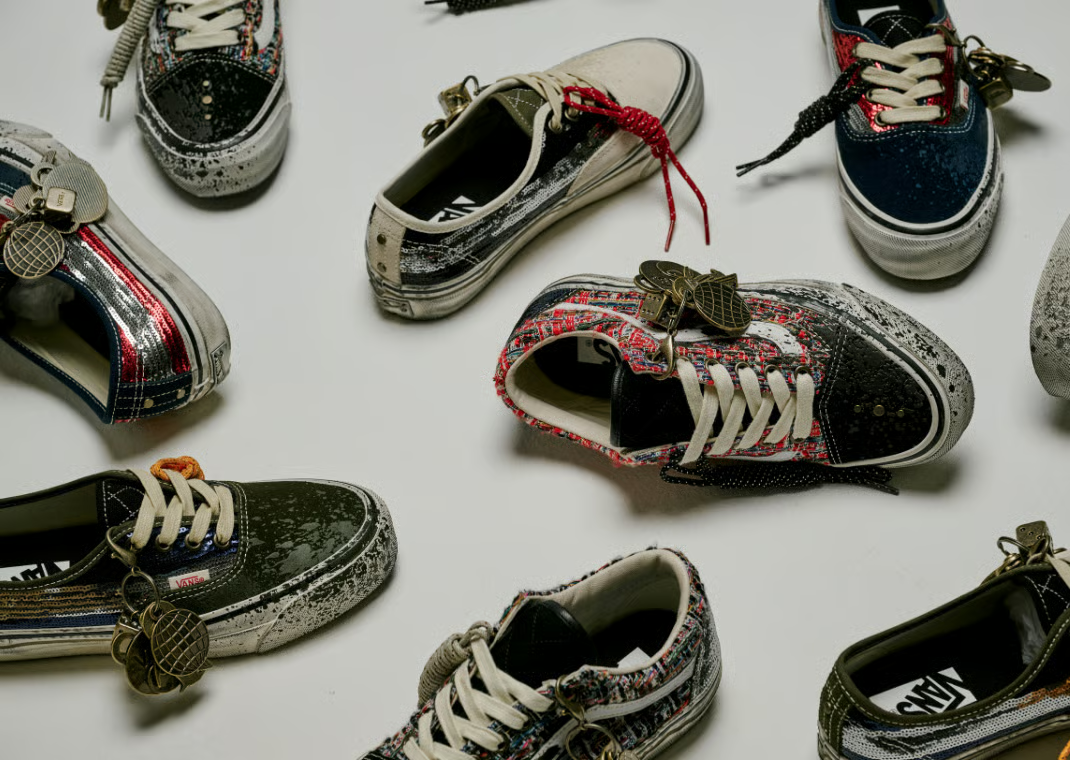
An assortment of reimagined Vans sneakers showcases handcrafted textures, distressed treatments, colorful woven fabrics, and military-inspired charm accessories for a bold, one-of-a-kind aesthetic.
The Premium Classic Slip-On Quilted Pack channels the look of the Séville, Le Boy, and Timeless Classic Flap-style handbags without directly imitating any of the specific product names — a wink rather than a licensed statement piece.
That said, Vans isn’t avoiding the traditional fashion-mere route entirely. As the recent buzz around Audemars Piguet x Swatch has renewed mainstream interest in high-low collision, Vans has its own designer swing on the board too, with a Valentino x Vans blend bringing runway pricing to a familiar silhouette.
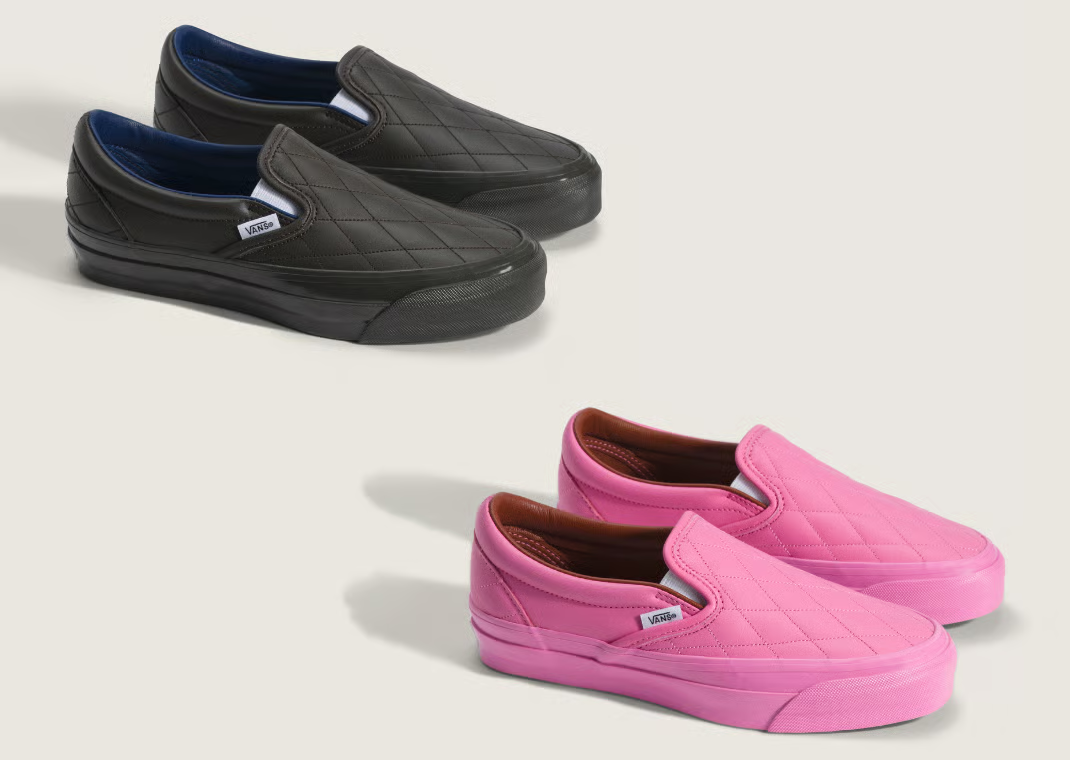
Vans reimagines the Classic Slip-On with premium quilted leather construction, offered in sleek all-black and bold monochromatic pink finishes for a refined take on the iconic silhouette.
The contrast between the referential quilted pack and the fully licensed Valentino release shows a brand comfortable working both ends of the spectrum — nodding to luxury on its own terms in one release, then partnering formally in another.
flow
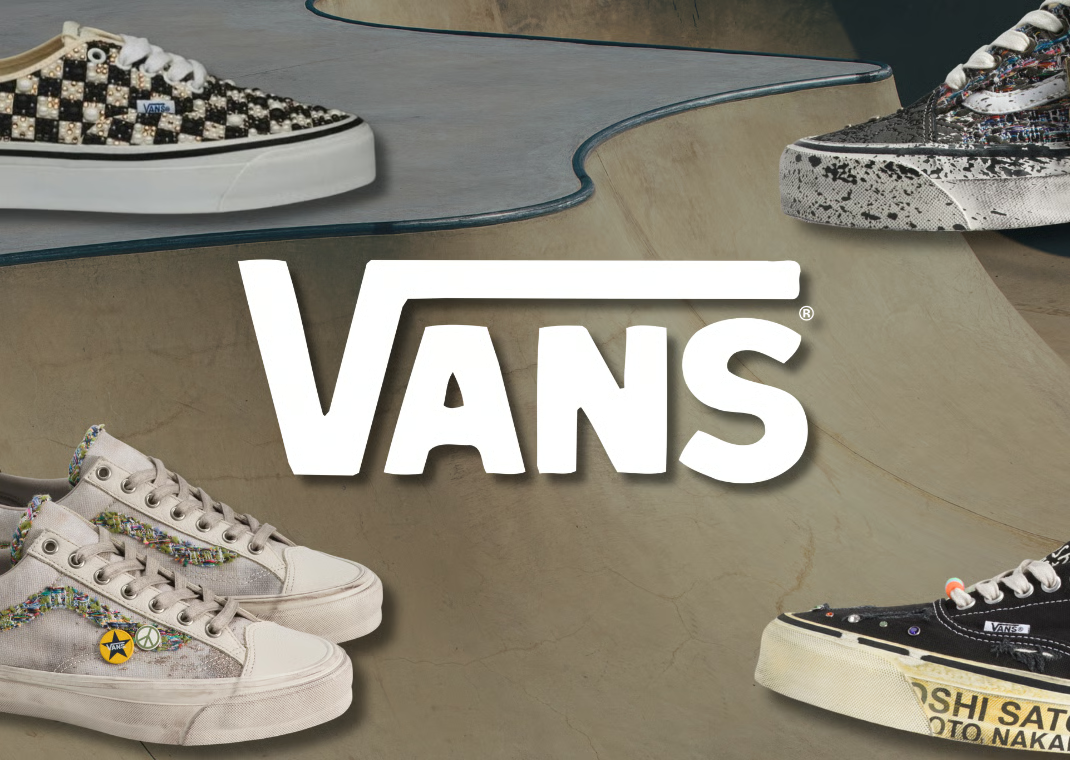
No single product line has done more for Vans’ recent momentum than the Pearlized Pack. Debuting in late 2024, the collection reworked the Old Skool with borders of set stones and faux gems, giving a decades-old skate silhouette an entirely new, jewelry-adjacent identity.
The impression has been significant enough that the aesthetic has moved beyond Vans itself. Streetwear label Satoshi Nakamoto has continued building on the gem-and-jewel concept through its ongoing Vans partnership, and competitors have taken notice. Puma‘s recent Sinclair collision, covered in silver studs, is one clear example of a rival brand borrowing from the same playbook.
Still, the general shoe-market read is that Puma’s studded take is unlikely to generate the same resale spikes or line-ups that accompany nearly every new Pearlized Pack drop — a gap that speaks to how much first-mover advantage and cultural specificity matter in this particular trend.
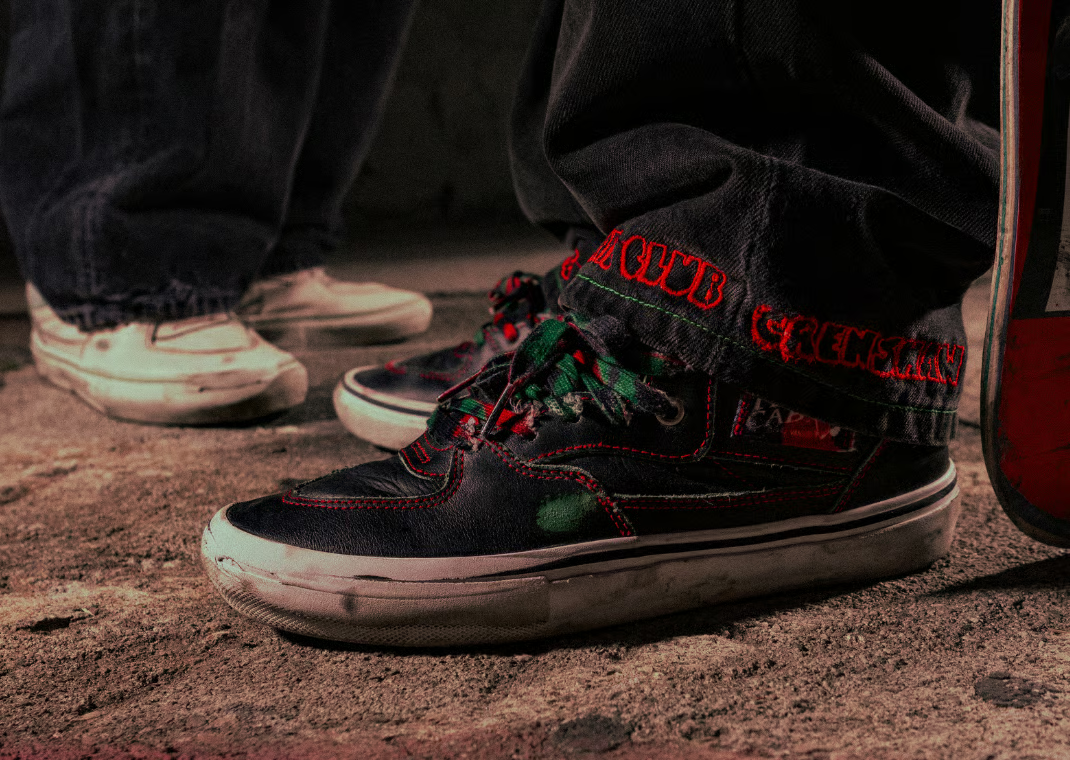
Customized Vans skate shoes with handcrafted detailing, contrast stitching, and worn-in finishes are paired with embroidered denim for a gritty streetwear look inspired by skate culture.
partition
Part of what makes Vans’ current run distinctive is how deliberately it separates its skateable product from its non-skateable, sneakerhead-facing releases. Where a brand like Nike SB tends to blend the two audiences within the same skate-shop shelf space, Vans has kept its lines more clearly divided.
On the skate side, the brand has continued experimenting with lesser-known silhouettes, including the Palace-debuted Safe Low, an Era reworked by skate brand Dime, and Half Cab colorways made for Crenshaw Skate Club.
Those Crenshaw Skate Club pairs, in particular, have largely stayed under the radar of mainstream sneaker discourse while still performing well within skate shops like Nocturnal — evidence that Vans’ skate-specific releases don’t need viral attention to succeed with their intended audience.
View this post on Instagram
Meanwhile, the Pearlized Packs and designer collision pull in an entirely different crowd, competing directly with resale-driven shoe culture. The fact that both lanes are thriving simultaneously, without diluting each other, is a large part of why Vans’ current moment feels sustainable rather than trend-chasing.
huh
Vans’ 2026 run isn’t built on a single viral moment. It’s the product of several converging strategies: a willingness to reference haute design without licensing every idea, a jewelry-driven product line that reshaped how a classic silhouette is perceived, and a clear separation between skate-first and sneakerhead-first product.
The Philadelphia plaza reopening ties those threads together in a way that a pure product drop couldn’t. Investing in physical skate infrastructure, and doing it through a local rep with actual roots in the scene, reinforces the brand’s skate credibility at a moment when much of the sneaker industry is still figuring out how to connect authentically with consumers.
As other legacy shoe brands search for their next culture moment, Vans’ 2026 approach — creativity without over-licensing, authenticity through community investment, and a clear-eyed product split between skate and street — is emerging as one of the more replicable playbooks in the industry.