DRIFT AUDIO
Listen to this story
Choose a voice, then press play.

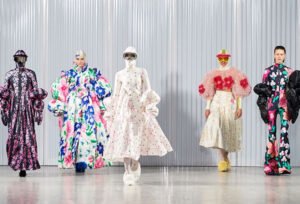
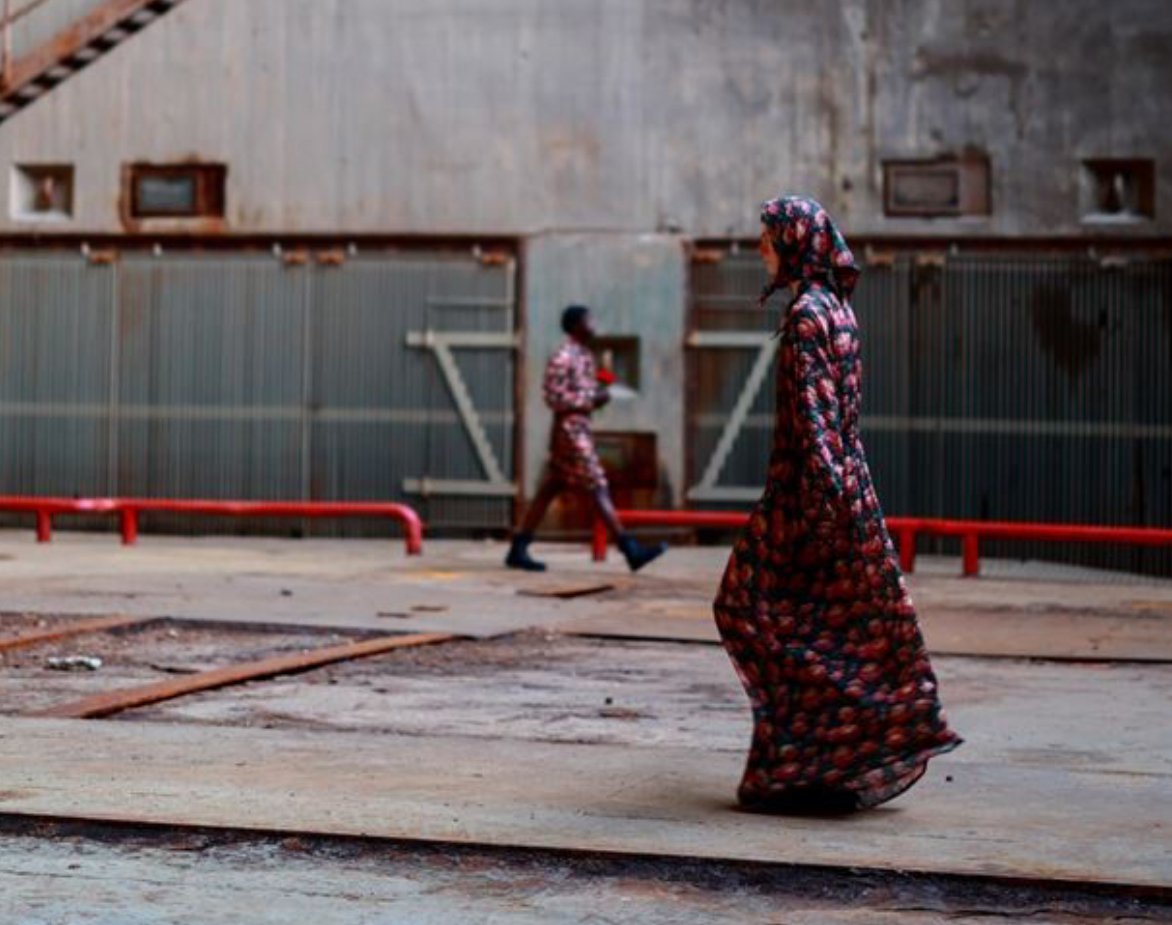
Each spring, certain cities take on a new pulse. Milan blooms with avant-garde reinvention. Paris retreats into its sacred traditions. New York surges forward into the unknown. But in May 2025, it is Helsinki — cold, crystalline Helsinki — that redefines fashion’s future, offering not commerce, but consciousness. Fashion in Helsinki (FiH), set from May 21 to May 24, invites not just spectators but witnesses to a profound transformation, where clothing ceases to be mere adornment and becomes living, breathing art.
This year’s Fashion in Helsinki is neither retrospective nor transactional. It stands instead as a manifesto: design must embrace identity, sustainability, experimentation, and break free from inherited hierarchies. It is a rare thing in the global calendar — not a trade fair disguised as culture, but a sincere symposium where brutalist architecture, experimental textiles, and performative storytelling are woven together into one continuous, urban artwork.
A Brutalist Prologue at Merihaka
The opening runway show at Merihaka, Helsinki’s iconic brutalist residential complex, is no casual choice. It is a declaration. Merihaka’s concrete sprawl, conceived as utopian social housing, becomes a stage for a new kind of collective imagination. It dares designers to think not of individuals, but of societies; not of exclusivity, but of shared futures.
Here, under heavy spring skies, names like Latimmier, Rolf Ekroth, and Sini Saavala present visions not tied to seasonal aesthetics, but to philosophical inquiry. Latimmier subverts masculine dress codes through a queer lens, unraveling the tight stitching of historic norms. Rolf Ekroth offers garments that mutate — zip, fold, refold — depending on the wearer’s inner world. Sini Saavala reanimates post-consumer waste into garments that resist fixed forms altogether. Each designer creates a conceptual dialogue with Merihaka’s massive structures — a reflection on what architectures shelter us, and what must be torn down.
Museums as Catwalks of Meaning
Fashion in Helsinki spills beyond the catwalk, infiltrating the city’s art institutions. At the Museum of Contemporary Art Kiasma, “Body Politic” examines clothing as protest. Finnish designer-activists like Fanni Lyytikäinen and Eeli Aalto present wearable statements — shields woven with embroidery, armor bearing whispered, vulnerable slogans.
Meanwhile, at the Design Museum, the “Material Futures” program unveils a radical ecology of fashion. Innovators like Aada Ihamäki present garments spun from mycelium leather, algae silks, and synthetic spider fibers — materials that refuse waste and scarcity as cornerstones of luxury. The museum exhibitions dissolve the traditional walls between fashion and fine art, presenting both as mutual acts of material storytelling.
Emerging Voices Rewriting Fashion’s Future
At the heart of FiH 2025 lies a fierce commitment to emerging voices. Student showcases, particularly from Aalto University, reveal a generation that demands fashion must provoke, interact, and evolve.
Designers like Milla Moisio develop self-healing fabrics that mend small tears like skin. Otso Lindholm envisions garments to be shared and reconfigured, rejecting the capitalist model of possession. Emmi Ranta blurs the digital and physical, offering garments that change appearance through augmented reality. This is a generation that no longer sees fashion as a static product — but as a dynamic, living organism.
Sápmi Narratives: Visibility and Reclamation
A groundbreaking element of 2025’s programming is the Sápmi Focus, highlighting indigenous Sámi designers and storytellers. In a global industry that too often plunders indigenous aesthetics for novelty, FiH instead provides a platform for reclamation and futurism.
Designers such as Kirste Paltto and Jovnnna-Máreha Eira present works that honor traditional Sámi forms — reindeer leather, naturally dyed wools — while integrating contemporary methods like 3D knitting. Their creations speak of survival, resistance, and imagination, asserting that indigenous craft is not a relic, but a vital, modern voice in the global dialogue.
Fashion here is not neutral; it becomes a battleground where erasure is countered with illumination.
The City as Living Stage
Helsinki itself becomes an extension of the event. Guerrilla performances, pop-up installations, and spontaneous runway shows ignite metro stations, parks, and abandoned storefronts. Everyday urban spaces transform into experimental arenas where the distance between artist, garment, and audience dissolves.
The city’s own stark beauty — its steel waters, pale sunlight, brutalist shadows — forms a perfect counterpoint to the radical textures of the designs. In the streets of Helsinki, fashion proves itself not within a bubble, but against the unpredictability of life itself.
A Manifesto in Motion
Fashion in Helsinki 2025 is not just a celebration but a living, breathing manifesto. It proposes that fashion must be:
- Architecture, housing shifting identities.
- Activism, asserting radical existence.
- Biology, evolving and adapting.
- Philosophy, unsettling assumptions.
- Memory, preserving erased histories.
- Future, a question still unanswered.
Clothing becomes a charged political actor, a vessel for survival, a mode of resistance, a dream of something kinder and stranger than the world we know.
Conclusion: A Radical New Center
While other fashion capitals cling to spectacle and tradition, Helsinki builds anew. It refuses to replicate the formulas of Milan or Paris. It crafts a radically different architecture for fashion — one that prizes meaning over market, transformation over transaction.
In this far northern city, against all odds, the future of fashion blooms in concrete courtyards and museum halls, along fractured pavements and under vast grey skies. As the last garments disappear into Merihaka’s labyrinth, as museums overflow with living sculptures of identity and resistance, one thing is certain: In Helsinki, fashion is no longer industry — it is uprising.
Related Articles
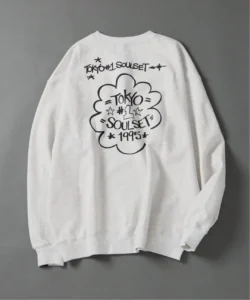
Eric Haze Stitches a Nineties Friend Into TOKYO Capsule
Five pieces carry Eric Haze's embroidered tagging for TOKYO No.1 SOUL SET, sold online and in Osaka around the band's Oct 25 BAYCREW'S FESTIVAL set.