
DRIFT AUDIO
Listen to this story
Choose a voice, then press play.
Acrylic, an isolated motor and an included cartridge give the TT-15S1 its clean appearance. Playing a record still takes a pair of hands.
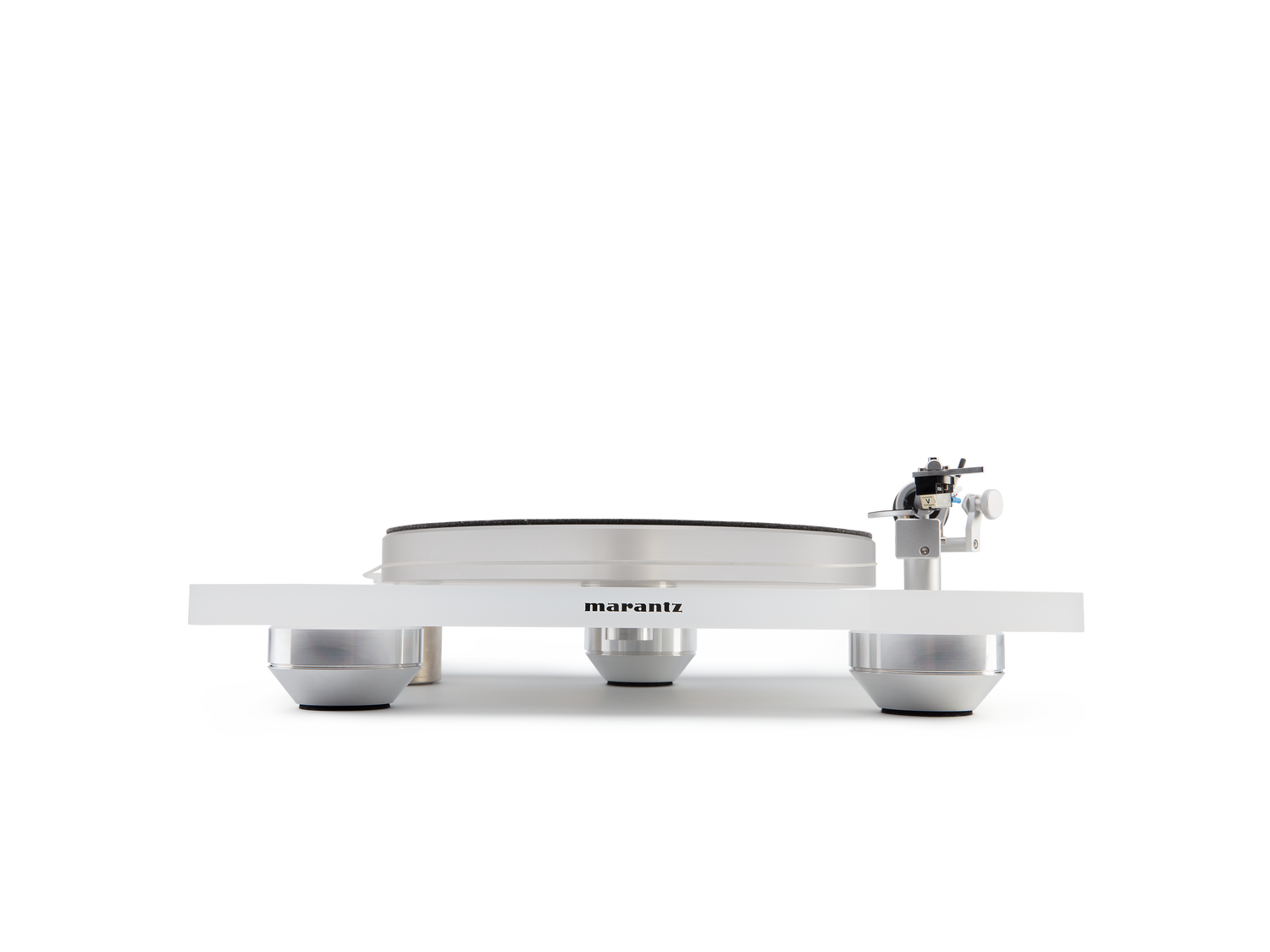
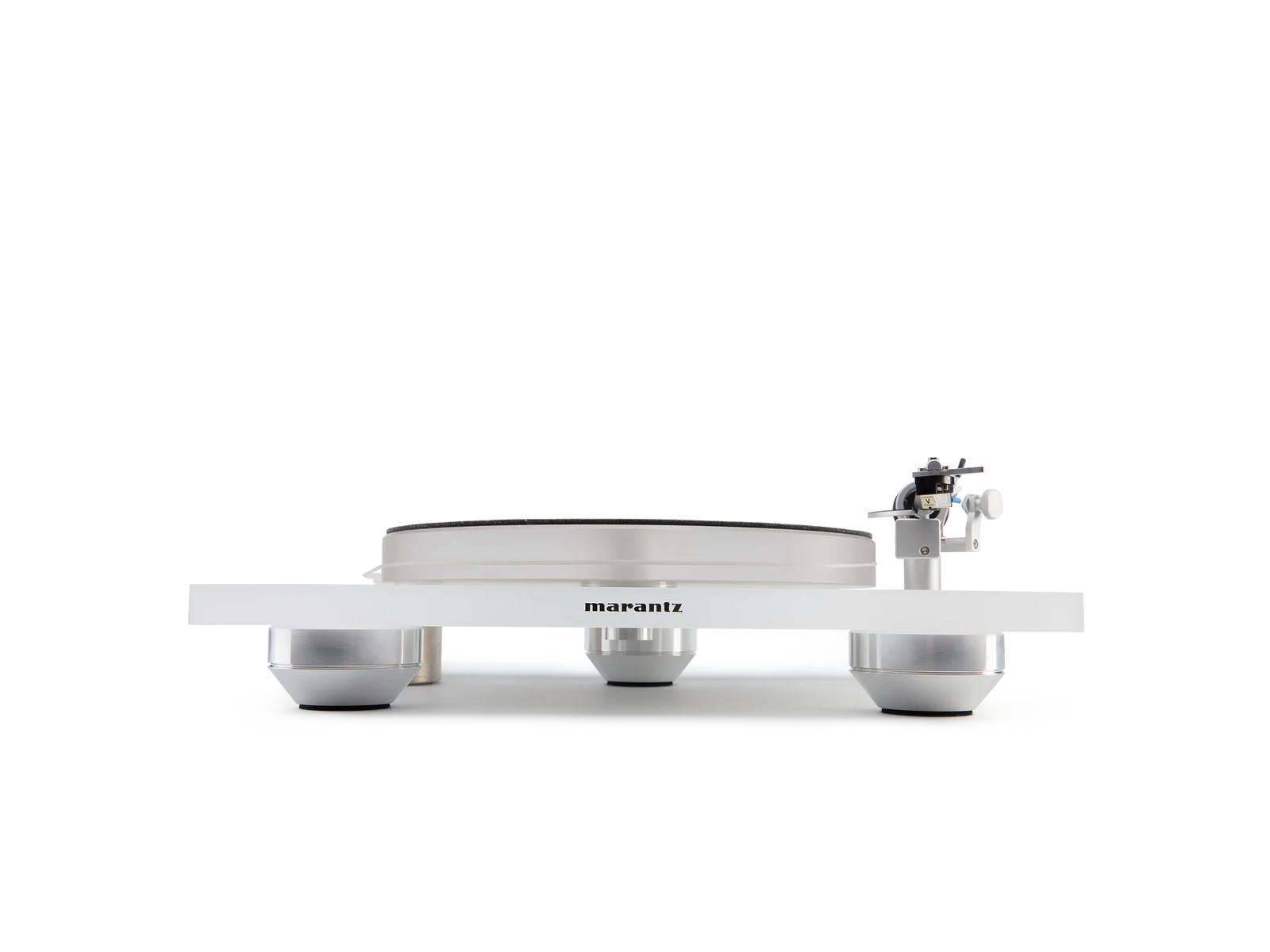
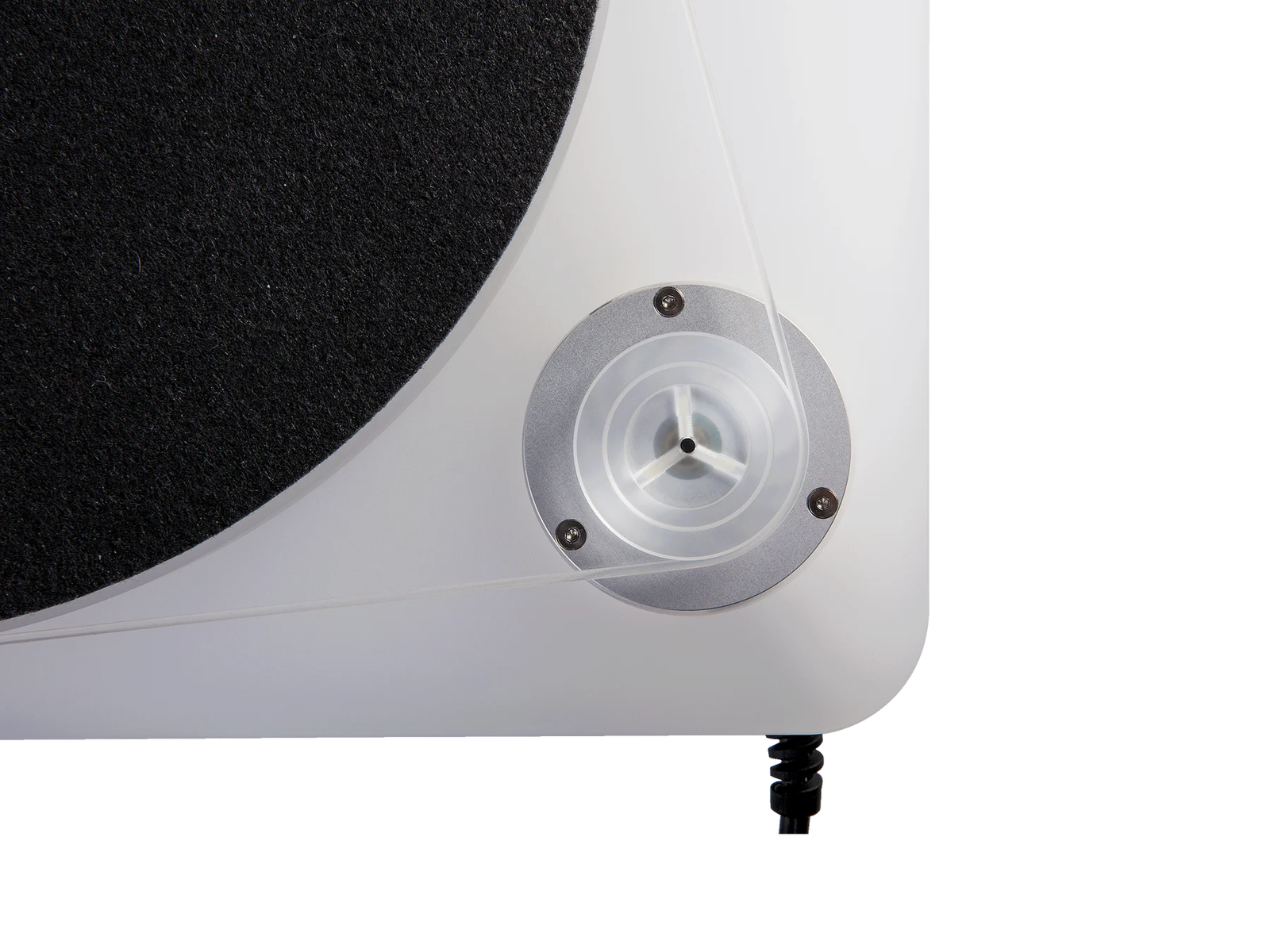
The TT-15S1 leaves very little between a record and the room around it. A pale acrylic platform sits on three substantial metal feet, while a black tonearm reaches across the open space beside the platter. In Marantz’s official photographs, the belt and motor pulley remain visible rather than disappearing inside a cabinet. Marantz The result looks less like a conventional electronic component than a collection of parts whose jobs can be followed by eye.
Marantz sells the TT-15S1 as a reference belt-drive turntable with a Clearaudio Virtuoso moving-magnet cartridge. It is manually operated and plays records at 33⅓ and 45 rpm. Marantz Those particulars matter more than the serene product photography suggests. This is a package built around the mechanics of playing records, not an appliance that removes the listener from every stage of the process.
View this post on Instagram
Signal. What happened: Marantz continues to list the TT-15S1 as a cartridge-inclusive reference turntable. Exact object: A manual operated belt-drive deck with an acrylic chassis and a Clearaudio Virtuoso moving-magnet cartridge. When and where: The US website lists $3,000 as of October 13, 2026, with individual dealer availability unconfirmed. Source: Marantz’s product page, user guide and reference catalogue. Marantz Why it matters: The package brings the playback components together without eliminating setup or the need for a phono stage.
stir
Its simplicity is therefore selective. There are fewer controls on display, but the owner still has decisions to make about assembly, cartridge adjustment and the equipment receiving its signal. The interesting question is not whether fewer buttons automatically produce better sound. It is what happens when the visible design and the operating routine both concentrate attention on the record itself.
There is a useful view contrast between the broad acrylic surfaces and the compact pieces of hardware above them. The platter reads as a second pale layer, while the dark arm draws a line across the composition. Marantz A record changes the balance again, supplying a large circle of color or black vinyl. The machine does not need a display to indicate what is playing. The label and the object resting on the platter already occupy the most prominent position.
why
The motor occupies a cutout at the rear left of the chassis without being fixed to that chassis. Marantz’s user guideexplicitly says the two must not touch. Marantz What looks like a small gap is part of the engineering, not unfinished assembly. Positioning the motor correctly preserves the separation that the design depends on.
The brand describes this arrangement as a floating motor. Its published purpose is to limit vibration reaching the acrylic base. Marantz Floating does not mean that the motor levitates. It means the drive unit is physically separated from the platform carrying the record and arm, even though a belt still connects the rotating parts. The appealing visual space has a practical explanation.
Marantz’s reference catalogue identifies an asynchronous AC motor, a silicone belt and a hardened steel platter shaft running on a ceramic bearing. Marantz These are different parts of the same task: create rotation, transmit it and support the platter. Describing them separately is more useful than treating the whole mechanism as a single promise of silence. The arrangement identifies design priorities without supplying an independent measurement of the finished system.
flow
Changing speed means moving the belt between pulley positions rather than pressing an electronic selector. Marantz That is a small operation, but an important distinction for someone whose listening moves repeatedly between albums and singles. The same exposed drive that makes the object easy to understand also becomes something the owner handles. Visibility and convenience are not necessarily the same quality.
The design also suggests why installation deserves more attention than choosing an attractive surface. A gap that matters mechanically must survive ordinary use. Reaching for a control should not become an excuse to push components out of position. The turntable asks for a clear working area, not simply enough shelf space to contain its outline.
show
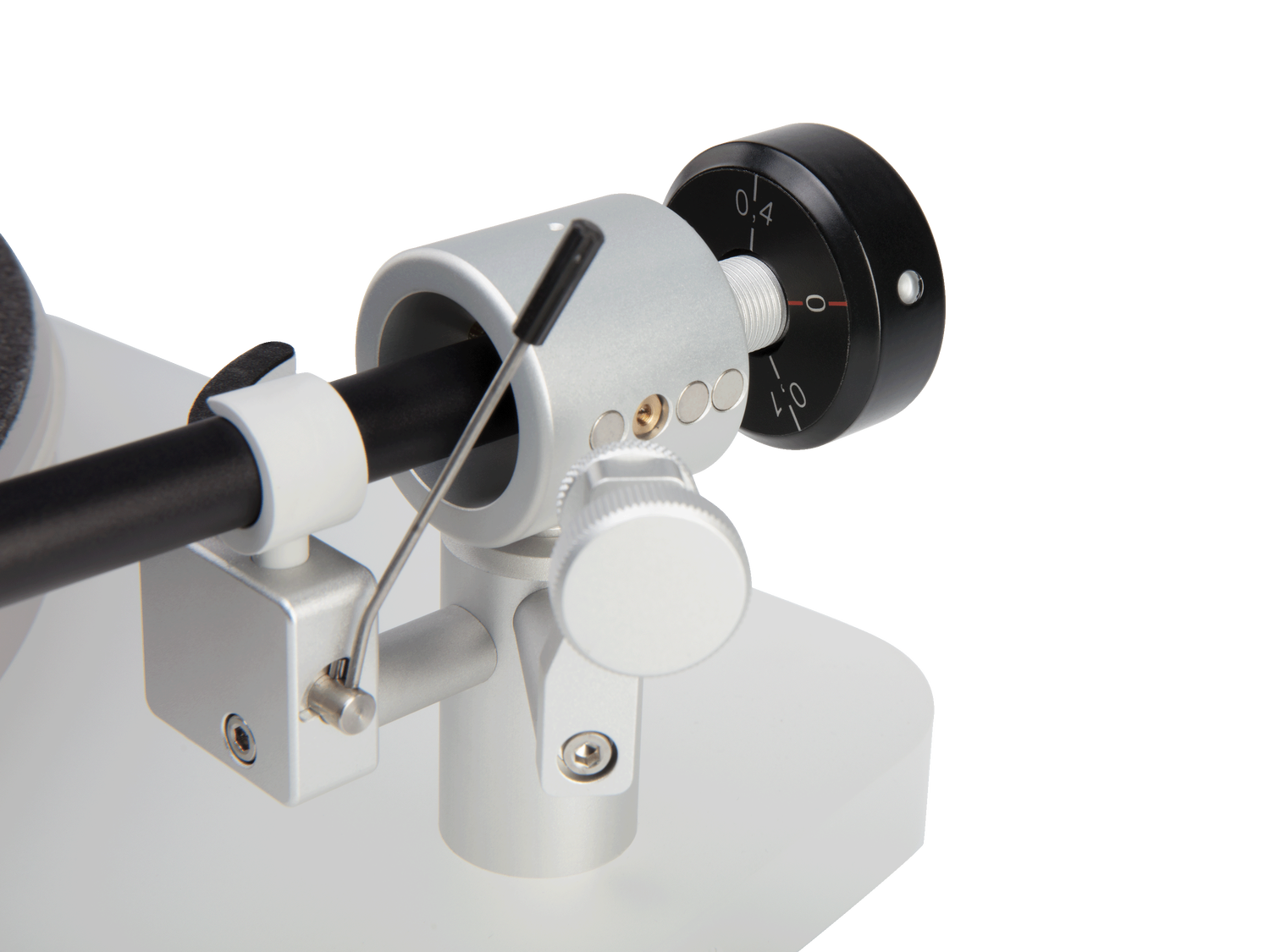
The cartridge sits at the end of an anodized aluminum arm with magnetic anti-skating adjustment and an adjustable counterweight. Marantz also lists an ebony cartridge body and three aluminum support feet. Marantz The contrast is deliberate in material terms: acrylic establishes the broad platform, while metal handles support and adjustment. The small cartridge is visually modest beside the platter, despite its central place in retrieving the record’s signal.
Including these components reduces the number of separate choices required to assemble a playback system. It does not make setup irrelevant. A cartridge can be supplied in the box without arriving mounted and adjusted for immediate use. The distinction is easy to miss when a product photograph shows a complete deck, but it separates a coordinated package from a fully prepared installation.
Marantz lists a cartridge output of 3.6 millivolts, a reminder that the smallest component is producing a very small electrical signal. Marantz The figure helps explain why the equipment immediately following the turntable deserves attention. The cartridge is neither a speaker nor a complete source at ordinary line level. Including it settles one purchase, but not the entire system. The practical benefit is a defined starting combination, with fewer matching decisions before attention turns toward installation and the records themselves.
scope
The TT-15S1’s manual covers mounting the arm and cartridge, connecting the cartridge’s four small wires, balancing the arm and setting tracking force. It specifies 2.2 grams for the supplied cartridge. Marantz These are not cosmetic adjustments. They establish how the pickup meets the record, so the correct reference is the documentation accompanying the actual cartridge rather than an attractive position for the counterweight.
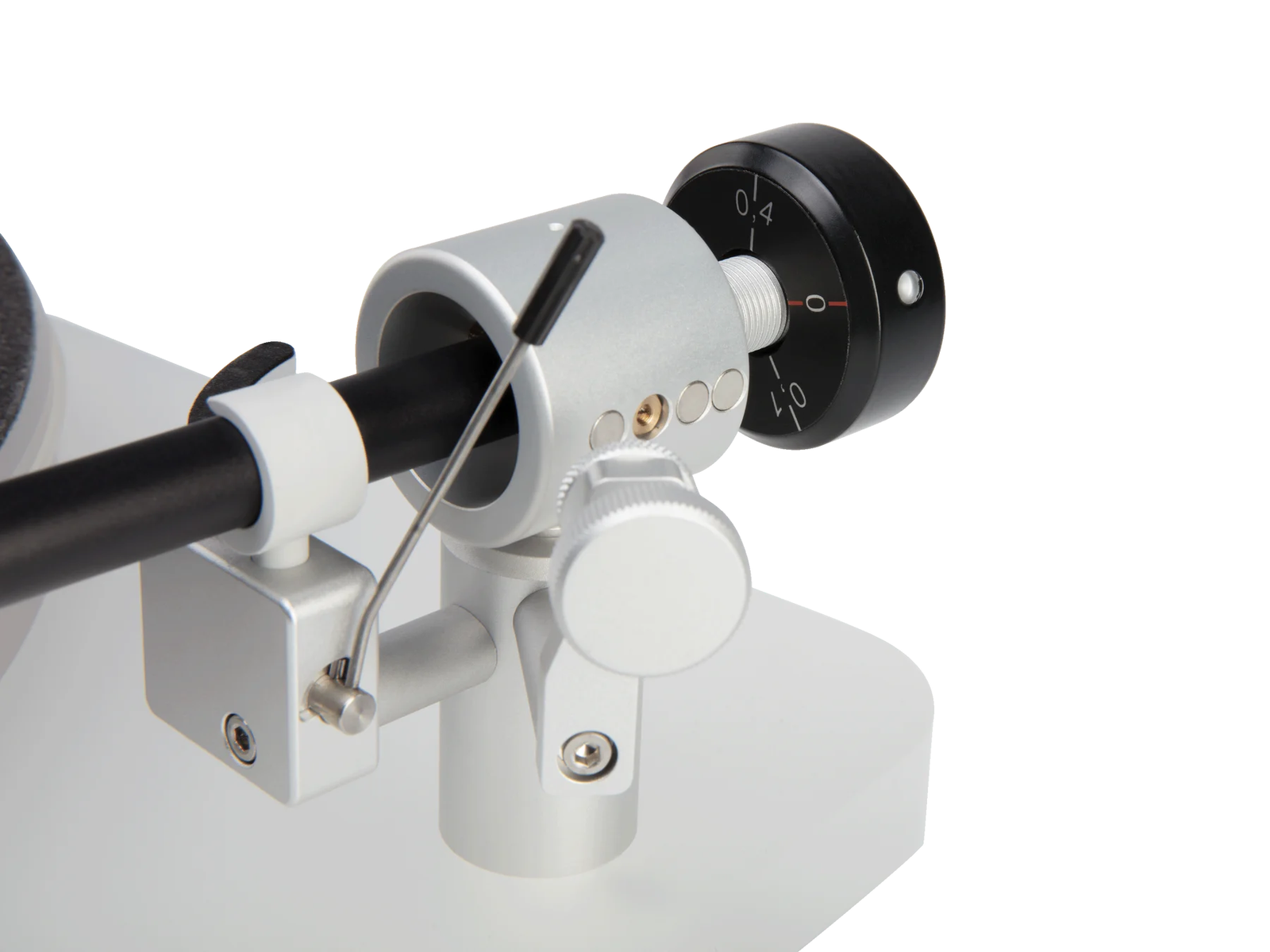
The visible adjusters explain why this product feels different from a closed electronic box. Marantz’s close-up shows a numbered counterweight, a cueing lever and accessible hardware around the arm support. Marantz A photograph makes those details look satisfyingly precise, but precision is something the settings must achieve. A machined surface and a correctly adjusted mechanism are related ideas, not interchangeable evidence.
The supplied accessories include a spare belt, a platter mat, a record clamp, gloves and bearing oil. Marantz That assortment describes a product expected to be handled and maintained. It also means the box deserves attention before the packaging is discarded: a small accessory can look expendable until the day the owner needs the function it supplies.
The presence of a clamp is especially revealing. It gives the record another physical relationship with the platter, while the arm introduces a separate set of adjustments above it. The visually quiet deck is not empty of interaction. Its controls are distributed around the mechanism rather than gathered into a prominent front panel, changing how the owner approaches the object.
For a first installation, the sensible question is whether the retailer delivers an assembled, checked system or a sealed box requiring that work at home. Neither arrangement should be assumed from the product name. A careful dealer handover would establish what has been adjusted, which cartridge is fitted and what the owner still needs to connect. That conversation is more useful than calling the process effortless without defining who performs it.
stage
The manual directs the TT-15S1 into an amplifier’s phono input, with the included cartridge using the moving-magnet setting. Marantz The turntable does not supply a complete amplified listening system. An appropriate phono stage must exist downstream, whether inside a compatible amplifier or as a separate component. That requirement belongs in the description just as clearly as the included cartridge does.
A phono preamplifier performs two jobs: raising the cartridge’s small electrical output and applying the playback equalization used for records. That equalization reverses the bass reduction and treble boost applied during mastering. Audio-Technica Simply turning up an ordinary auxiliary input does not provide the missing correction. The extra stage is functional, not an optional decorative box added to make a system look more serious.
Powered speakers do not automatically resolve this requirement. Their built-in power amplification drives the speaker units, but a phono-level source still needs the appropriate preamplification before a normal line input. Audio-Technica A system can be compact and correctly configured, or physically elaborate and incorrectly connected. Counting boxes is less informative than identifying the job performed at each point between the stylus and the speakers.
This is also why the cartridge-inclusive description should not be confused with an all-inclusive price for listening. The existing equipment determines what else is needed. A listener with a suitable amplifier faces a different installation from someone starting with a pair of line-input speakers. The turntable remains the same object, but the cost and complexity of completing its surroundings can change substantially.
extend
Marantz identifies the chassis and platter as high-density acrylic chosen for low resonance. Marantz The material also creates the TT-15S1’s most obvious visual identity: a pale, substantial base that does not resemble a metal receiver or a veneered cabinet. Its functional and aesthetic roles can be discussed together without claiming that an attractive finish guarantees a particular tonal balance.
The published specification sheet lists speed variation of ±0.2 percent, an 80-decibel signal-to-noise ratio and channel separation above 30 decibels. Marantz Those are manufacturer figures, not measurements made for this article. They identify the performance being claimed, but they cannot substitute for knowing how a particular unit behaves after assembly in a particular room.
Speed accuracy, background noise and channel separation describe different aspects of reproduction. A single favorable number does not explain everything a listener may notice, and specifications from different products require comparable measurement conditions before they become meaningful rankings. Without that context, the figures cannot supply descriptions of cymbals, bass lines or voices. Those observations belong to a listening session, not an assessment assembled from specifications and photographs.

The same restraint applies to the idea of vinyl warmth. A material list cannot establish how every pressing will sound, and a belt does not supply an automatic aesthetic advantage over another drive arrangement. What can be examined here is the allocation of functions and the practical consequences of those decisions. A listening assessment would require records, a complete system and an actual audition.
The belt is also a service item rather than a permanent visual detail. Clearaudio’s general care advice notes that ageing and finger oils can reduce its grip, affecting rotation. Clearaudio That makes careful handling relevant even when the turntable is used infrequently. An exposed part can be easy to inspect, but visibility does not prevent deterioration. Keeping the appropriate replacement available is a different kind of ownership preparation from collecting optional accessories, because it concerns the mechanism that turns the record.
est
The TT-15S1 appears in Marantz’s 2010 reference catalogue, so this is not a newly announced 2026 release. Marantz Its continuing presence makes a different kind of story: a mechanical product whose identity remains understandable without a new software feature or a seasonal redesign. Longevity provides context, not proof that every component has remained unchanged or that age alone establishes quality.
The wider company story began with the Audio Consolette, a home preamplifier, before Saul Marantz turned the project into a New York business in 1953. Marantz That history is relevant here because the turntable still belongs to a system of specialized tasks. The record player, phono stage and amplifier do not have to occupy one enclosure to form a coherent listening arrangement.
As checked on October 13, 2026, the US product page lists the TT-15S1 at $3,000 and offers retailer finding and a stock-notification form. Marantz That establishes a current advertised price, not immediate availability at every dealer. It also prevents older reviews from quietly supplying today’s budget, particularly when their conclusions about value were formed around a different asking price.
At the end of a side, the owner raises the cueing lever, returns the arm to its rest and switches off the motor. Marantz The final physical movement is still performed beside the record, where the mechanism has been visible from the beginning.
Related Articles
Seventy-Four Years After the Little Tree, New Grey’s Halo Redraws the Car Freshener
A ring of ABS, silicone and aluminum that wakes when the car moves and sleeps after five still minutes.