DRIFT

A Reflection on the Piracy PSA’s Typographic Controversy

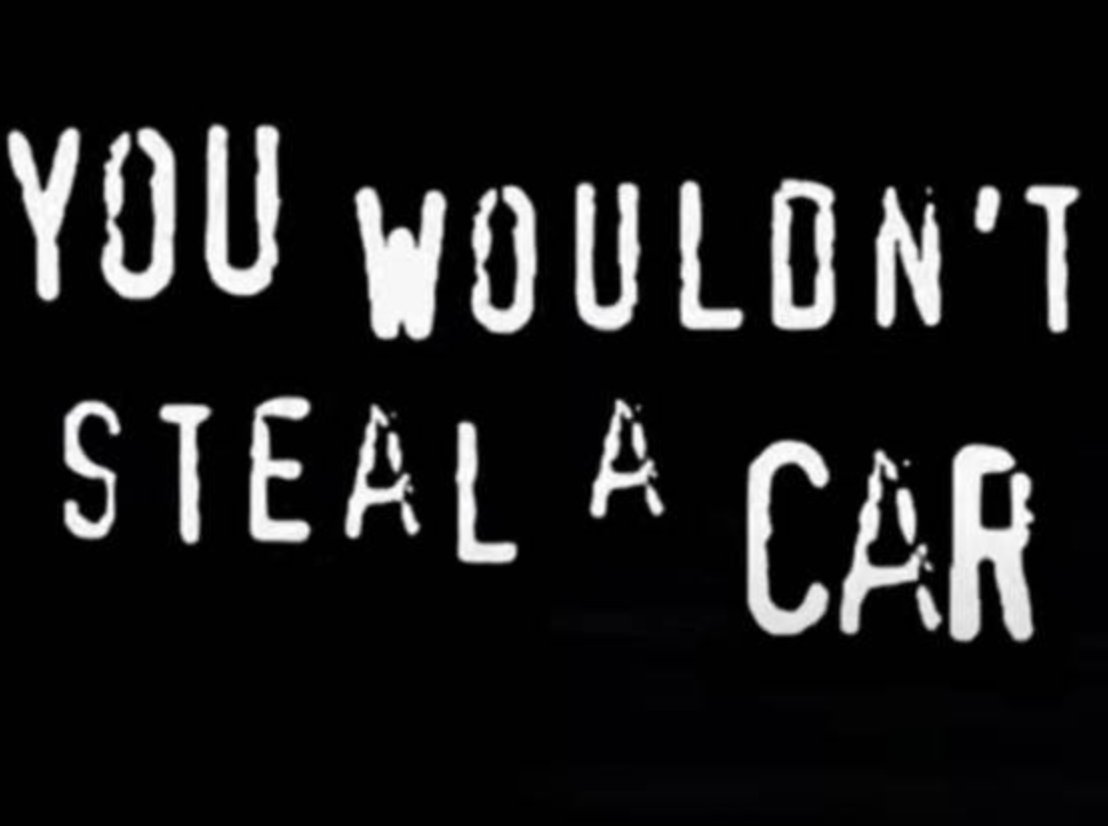
In the peculiar theatre of internet irony, there are few scenes more richly layered than the resurgence of public ridicule aimed at the Motion Picture Association of America’s infamous anti-piracy campaign. More than two decades after it first flickered across movie screens and DVD menus—backed by pulsing synths and moralistic declarations like “You wouldn’t steal a car”—the campaign has once again captured public attention. But this time, the campaign’s own rhetorical weapon has turned against it. The font used in the campaign materials? A pirated knockoff of a commercial typeface.

The revelation, unearthed by a curious user on Bluesky and later confirmed by Sky News, opens a wormhole of contradictions. The PSA that sought to vilify theft in the digital age now appears to have committed the very crime it condemned—albeit with serifs instead of software. It is an almost poetic twist in the annals of digital media ethics: the font believed to be FF Confidential, a moody, noir-esque typeface released in 1992 by Dutch designer Just van Rossum, was not the official version but a bootleg mimic from 1996.

Van Rossum’s reaction? Amused. “I find it hilarious,” he told TorrentFreak. And rightly so. The moment is rich with satirical flavor, not simply because of its hypocrisy but because of what it reveals about the unstable terrain of intellectual property itself.

The Piracy PSA: A Cultural Flashpoint

To understand why this news feels so resonant, one must revisit the cultural context in which the MPAA’s campaign was born. The early 2000s were the Wild West of digital content. Platforms like Napster, LimeWire, and BitTorrent transformed college dorm rooms and suburban bedrooms into hubs of unauthorized downloads. Music labels and film studios panicked, scrambling for ways to stem the tide. What emerged was a series of moralistic campaigns intended to guilt, shame, and warn consumers.

Among them, none was more memorable—or memeable—than the “You Wouldn’t Steal a Car” PSA. It was heavy-handed and melodramatic, juxtaposing street crime with digital downloading. “Downloading pirated films is stealing. Stealing is against the law. Piracy. It’s a crime.” The voiceover’s self-serious tone and the dramatic montage of criminal acts made it a cultural punchline even then. The PSA was spoofed endlessly—in comedy sketches, parodies, remixes, and even modified DVD rips that mocked the message they were forced to precede.

Yet for all its theatricality, the campaign reveals an underlying anxiety: cultural institutions were grappling with the erosion of physical ownership. The MPAA saw piracy not just as a threat to profits, but as a threat to control—over distribution, over access, over perception. The PSA wasn’t just warning against illegal downloads; it was trying to assert moral clarity in an increasingly ambiguous digital world.

Typeface as Trojan Horse

The irony that the campaign’s materials were created using an illegally cloned typeface is almost too rich to script. Fonts, after all, are one of the most overlooked territories in intellectual property. They are everywhere, shaping our visual world, yet most consumers give them little thought—until a controversy like this arises.

FF Confidential, the typeface in question, was never a blockbuster font. Its aesthetic called to mind crime dramas and pulp thrillers—appropriate, then, for a campaign that aimed to dramatize piracy as a cinematic offense. Released in 1992 by Just van Rossum, the typeface carried the distinct fingerprint of a designer steeped in both visual and code-based innovation. (His brother, incidentally, created the Python programming language—a curious familial synergy of design and syntax.)

By 1996, however, a knockoff of FF Confidential had begun circulating freely online. Whether the MPAA’s designers knowingly chose the clone or simply grabbed what was most accessible is unclear. What is clear is that the same ethos the campaign was trying to extinguish—free, frictionless access to copyrighted content—was operating within the walls of its own production.

The Legal Fog of Fonts

Fonts exist in a strange liminal zone of intellectual property law. In the U.S., the visual representation of a typeface—the design itself—is generally not protected by copyright. Instead, font creators rely on software licensing, trademark protections, and end-user agreements to enforce rights. This makes them vulnerable to cloning and unauthorized use.

This is precisely what happened to FF Confidential. Despite being a commercial typeface, the existence of free imitations blurred the lines between original and duplicate. In that sense, the MPAA’s mistake was not entirely surprising. They weren’t the first to assume a freely available file was fair game—and they won’t be the last.

Yet the timing of this revelation—unfolding in the era of hyper-vigilant design attribution, digital fingerprinting, and license-conscious creative culture—makes it especially resonant. What was once a fringe concern of typographers has become a battleground for legitimacy, especially in an age where brands are expected to “know better.”

The Aesthetic of Authority

Why does this matter? Because fonts are not neutral. They carry cultural weight. They signal tone, intent, legitimacy. A campaign that aims to lecture the public on legal behavior must project an air of authority and refinement. Every visual element, including typography, becomes a vessel of that authority.

In using a pirated font—wittingly or not—the MPAA inadvertently destabilized its own rhetorical structure. It’s the visual equivalent of a lawmaker caught plagiarizing a speech on copyright. It undermines the very ethos the message is built upon.

It also reveals how design elements, often dismissed as cosmetic, are in fact integral to the scaffolding of persuasion. In using FF Confidential (or its knockoff), the campaign sought a specific atmosphere: menace, suspense, consequence. The typeface was chosen precisely because it carried cultural memory—like the titles of Scream movies—that the audience would subconsciously recognize.

Digital Irony as Cultural Literacy

This isn’t the first time a moral campaign has been hoisted by its own design petard. In 2023, Shake Shack was sued for its use of a custom font allegedly based on a licensed design. The suit failed, but the case drew public attention to a world of rights management few knew existed. And in many ways, this growing awareness is a byproduct of digital irony culture—the same meme-fueled reflex that revived interest in the MPAA campaign.

The internet is not a kind place for sanctimony. Campaigns that come across as preachy, outdated, or technically hypocritical are quickly dismantled by the forensic wit of digital users. What would have once gone unnoticed—an obscure font file uploaded to a DVD menu in 2004—can now become a viral spectacle.

In that sense, the revival of this controversy isn’t just about a pirated font. It’s about power, accountability, and the way our cultural institutions navigate their own contradictions. The MPAA’s anti-piracy video wasn’t mocked merely for being hypocritical—it was mocked because it underestimated its audience. In an era of aesthetic literacy and media skepticism, design decisions are no longer invisible.

The Piracy Paradox Revisited

There’s an even deeper irony here: the internet culture that the MPAA once saw as a threat has become its archivist. The only reason this story persists is because the PSA—intended to disappear into the pre-roll ether of DVD menus—was ripped, remixed, and preserved by the very pirates it was meant to suppress.

Its legacy lives on in YouTube parodies, TikTok edits, meme formats, and, now, forensic typographic takedowns. What began as a tool of moral enforcement has become a totem of internet humor, endlessly deconstructed and reassembled.

This is the central paradox of digital enforcement: in trying to suppress piracy, the MPAA inadvertently created a viral cultural object. And in doing so, it ceded control of its own narrative. Today, the PSA is remembered not as a deterrent but as a relic—one that speaks more to the anxieties of a bygone media era than to present-day realities.

Conclusion: Who Owns the Message?

In the final analysis, the question isn’t merely whether the MPAA used a pirated font. It’s about who gets to define legitimacy in the digital age. Who owns a typeface? Who controls the message? Who polices the boundaries between theft and tribute, between inspiration and infringement?

The “You Wouldn’t Steal a Car” saga has, in its ironic revival, offered more than just a laugh at the MPAA’s expense. It has reopened critical questions about design ethics, legal ambiguity, and the performative dimensions of authority. It reminds us that the things we overlook—fonts, credits, visuals—are often the most telling indicators of institutional ethos.

And it leaves us with one final, delicious inversion: if downloading a movie is theft, then what do we call using a stolen font to tell people not to steal?

Perhaps, at long last, the tables have turned—serif by serif.

Related Articles
In a highly anticipated reunion after 24 years, Adidas Originals and Coca-Cola have joined forces once again to celebrate the FIFA World Cup 2026™. The collaboration revives their iconic 2002 partnership from the Japan-South Korea tournament, now reimagined for the biggest global sporting event of 2026, co-hosted by the United States, Canada, and Mexico. Set to launch on June 6, 2026, this collection masterfully blends Adidas' streetwear heritage with Coca-Cola's timeless branding, creating a vibrant fusion of football culture, nostalgia, and modern style. The drop arrives at a perfect moment. With the World Cup kicking off on June 11, 2026, fans worldwide are gearing up for a summer of football excitement. This collaboration isn't just merch—it's a cultural statement that merges two legendary brands under the banner of "Originals are the Real Thing," a clever twist on Coca-Cola's famous slogan. Historical Context: A Reunion 24 Years in the Making Adidas and Coca-Cola first collaborated during the 2002 FIFA World Cup, producing limited-edition pieces that captured the era's energy. That partnership helped define early 2000s football-streetwear crossover culture. Fast-forward to 2026, and the brands are back with fresh energy, leveraging Adidas' deep FIFA ties (as an official partner) and Coca-Cola's long-standing sponsorship of the tournament. The 2026 edition promises to be historic as the first 48-team World Cup, spanning three countries and generating unprecedented global hype. This collab taps into that momentum, offering fans wearable pieces that celebrate both brands' legacies while looking forward to the future of football fashion. Collection Overview and Design Philosophy The Adidas Originals x Coca-Cola collection fuses 2000s street style with classic sporting aesthetics. Expect bold reds, creams, whites, and silver accents inspired by Coca-Cola's iconic packaging—think classic script logos, droplet detailing, and can-inspired motifs. The lineup spans footwear, apparel, and accessories, divided into two visual directions: one logo-heavy and graphic-forward, the other drawing from vintage advertising aesthetics. Designs pay homage to Coca-Cola's visual language while staying true to Adidas Originals' archival roots. High-quality materials, attention to detail, and versatile silhouettes make these pieces suitable for both match-day wear and everyday street style. The campaign, featuring young football star Lamine Yamal and a diverse cast in everyday scenes building anticipation for the tournament, reinforces themes of originality and shared cultural moments. Footwear Highlights Footwear takes center stage in this collaboration, with reimagined takes on iconic 2000s Adidas silhouettes: Samba and Superstar Models: These classics get Coca-Cola treatment with white/cream/red colorways and prominent script branding. The Samba blends street heritage with football roots, while the Superstar II features weathered bases and bold side panels. Expected pricing around $110–$130. Adistar Control 5: A standout with droplet detailing mimicking condensation on a cold Coke can. This model brings performance-inspired design into lifestyle territory. Predator Sala: Indoor/hybrid style with silver-and-red accents, nodding to predatory precision on the pitch and Coca-Cola's bold energy. Climacool 1: Revived with breathable tech and Coke-inspired graphics, perfect for warm summer days. Megaride F50: A highlight paying tribute to the iconic Coca-Cola glass bottle, with unique contours and refreshing design cues. Each pair incorporates thoughtful details like embroidered logos, custom insoles, and packaging that mimics vintage Coke crates or cans. These shoes are built for durability and comfort, appealing to sneakerheads, football fans, and casual wearers alike. Apparel and Accessories Beyond kicks, the collection offers a full lifestyle range: Track Tops and Jerseys: Standout jerseys fuse retro Coca-Cola advertising from different eras into cohesive football designs. Track jackets feature signature three stripes alongside Coke branding, in vibrant reds and classic whites. Shorts and T-Shirts: Relaxed fits with graphic prints, ideal for casual wear or layering. Expect motivational football motifs blended with refreshing beverage references. Accessories: A bright red airliner bag stands out as a functional statement piece. Additional items may include caps, socks, and tote bags carrying the collaborative spirit. The apparel emphasizes comfort with premium cotton blends, mesh panels for breathability, and oversized silhouettes popular in contemporary streetwear. Unisex sizing and inclusive fits make the collection accessible to a broad audience. Cultural Impact and Fan Appeal This collaboration resonates on multiple levels. For football fans, it represents national pride and global unity ahead of the 2026 tournament. Sneaker enthusiasts will appreciate the nostalgic 2000s revival mixed with modern execution. Streetwear collectors see it as a prime example of how heritage brands can innovate through partnerships. In an era where sports and fashion increasingly intersect, Adidas and Coca-Cola deliver pieces that transcend the pitch. Wear them to watch matches at home, attend watch parties, or hit the streets in any host city—New York, Los Angeles, Toronto, or beyond. The designs are versatile enough for gym sessions, festivals, or daily commutes. The timing aligns perfectly with rising interest in football in North America, boosted by the co-hosting nations. Young talents like Lamine Yamal in the campaign help bridge generational gaps, attracting newer fans while satisfying longtime supporters. Where to Buy and Release Details The collection launches globally on June 6, 2026, via: Adidas CONFIRMED app (for early access and raffles) Adidas.com Select retailers and flagship stores worldwide Some regions may see staggered drops, with Japan and other markets getting early access. Prices are expected to range from $50–$150 depending on the item, making it relatively accessible compared to ultra-limited drops. Pro Tips for Copping: Enable notifications on the CONFIRMED app. Check local stock at Adidas stores in major cities. Monitor resale platforms post-drop for exclusive colorways, but be wary of markups. Size up slightly for oversized apparel fits. Given the World Cup hype, popular items like the Sambas and jerseys are likely to sell out quickly. International shipping is available, but factor in potential customs delays. Styling Suggestions Match Day Look: Pair a collaborative jersey with classic black shorts and Samba sneakers for effortless fan style. Streetwear Rotation: Layer a track top over a graphic tee with wide-leg pants and the Megaride F50 for a bold urban ensemble. Casual Summer: White Superstar with denim shorts and the airliner bag for a refreshing, vacation-ready vibe. These pieces mix seamlessly with existing Adidas or neutral wardrobes, maximizing versatility. Broader Context in 2026 Fashion and Sports The Adidas x Coca-Cola drop is part of a larger wave of high-profile collaborations tied to the World Cup. Adidas continues its dominance in football kit design, while Coca-Cola leverages its sponsorship with collectibles, bottles, and experiential activations like the Trophy Tour. In the sneaker industry, this collab exemplifies the ongoing trend of lifestyle reinterpretations of performance silhouettes. It also highlights how global brands use major events to drive cultural conversations around unity, originality, and joy—core values for both companies. Sustainability notes (based on Adidas' broader initiatives) suggest some pieces may incorporate recycled materials, aligning with modern consumer expectations. Looking Forward: Legacy and Excitement As the countdown to kickoff continues, this collection serves as the perfect prelude to an unforgettable summer of football. Whether you're a die-hard supporter, a fashion-forward collector, or someone seeking motivation through style, the Adidas Originals x Coca-Cola FIFA World Cup 2026 lineup delivers. Expect potential restocks, special event exclusives in host cities, and continued campaign content featuring more athletes. This isn't just clothing—it's a ticket to participate in the global celebration of the beautiful game. Mark your calendars for June 6, 2026. Refresh your wardrobe, lace up those Sambas, and get ready to cheer on your team in style. The "Real Thing" meets the Originals in what promises to be one of the most talked-about releases of the year. This collaboration captures the essence of football's universal appeal: bringing people together through shared passion, iconic brands, and unforgettable moments. As the world prepares for 2026's expanded tournament, Adidas and Coca-Cola remind us that some partnerships are truly timeless.

Adidas Originals x Coca-Cola Collection: FIFA World Cup 2026

In a highly anticipated reunion after 24 years, Adidas Originals and Coca-Cola have joined forces […]

Loewe shoulder bag crafted in brown and black leather with minimalist lion face detailing and a matching fur tail charm

180 Years Unfolded: The Full Story Behind Loewe’s New Campaign

The year was 1846. Queen Victoria was on the British throne and the telephone, the […]

Interior view of H.Lorenzo’s new West Hollywood flagship illuminated in vivid green lighting, featuring sculptural metal display structures, minimalist furnishings, and an immersive futuristic retail environment

H.Lorenzo Opens a New Flagship in West Hollywood, Uniting Four Decades of Avant-Garde Fashion Under One Roof

For more than four decades, H.Lorenzo has occupied a singular and irreplaceable position within the […]