Nike’s Tech Runner Revive For Nike’s Zoom Vomero 5 Translucent Jelly

August 6, 2026
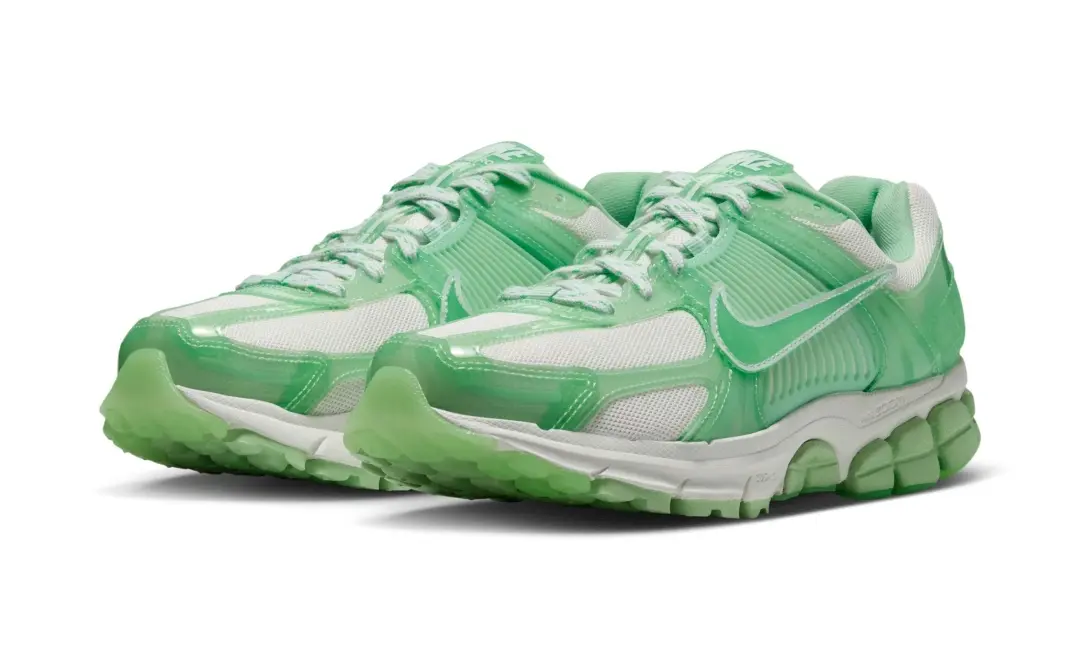
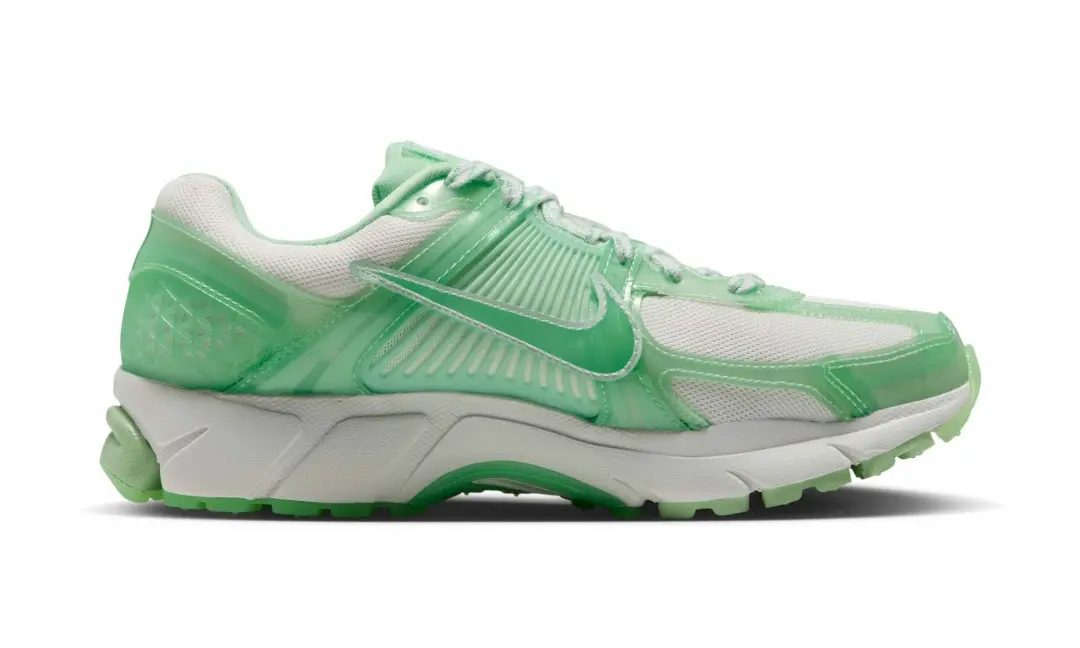
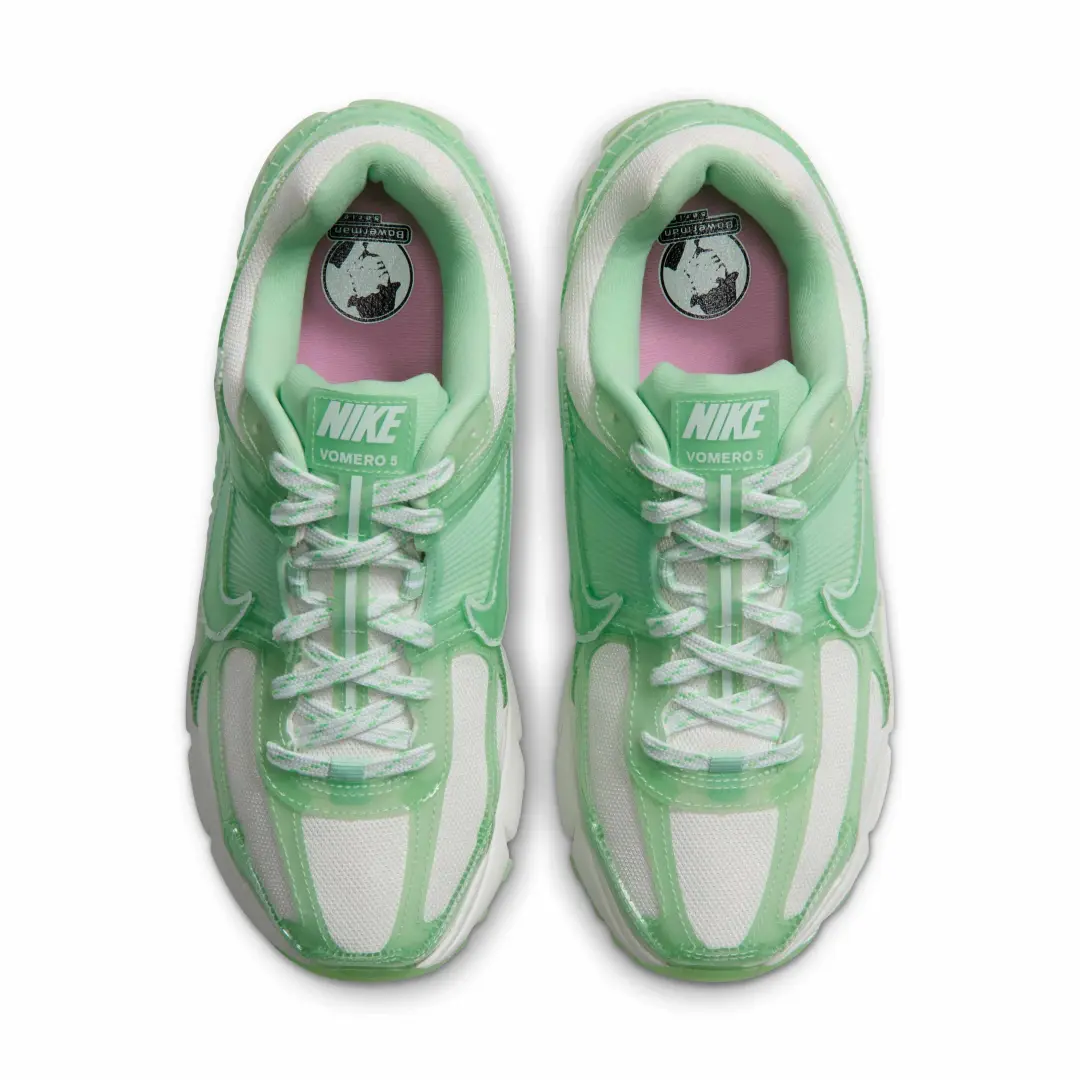
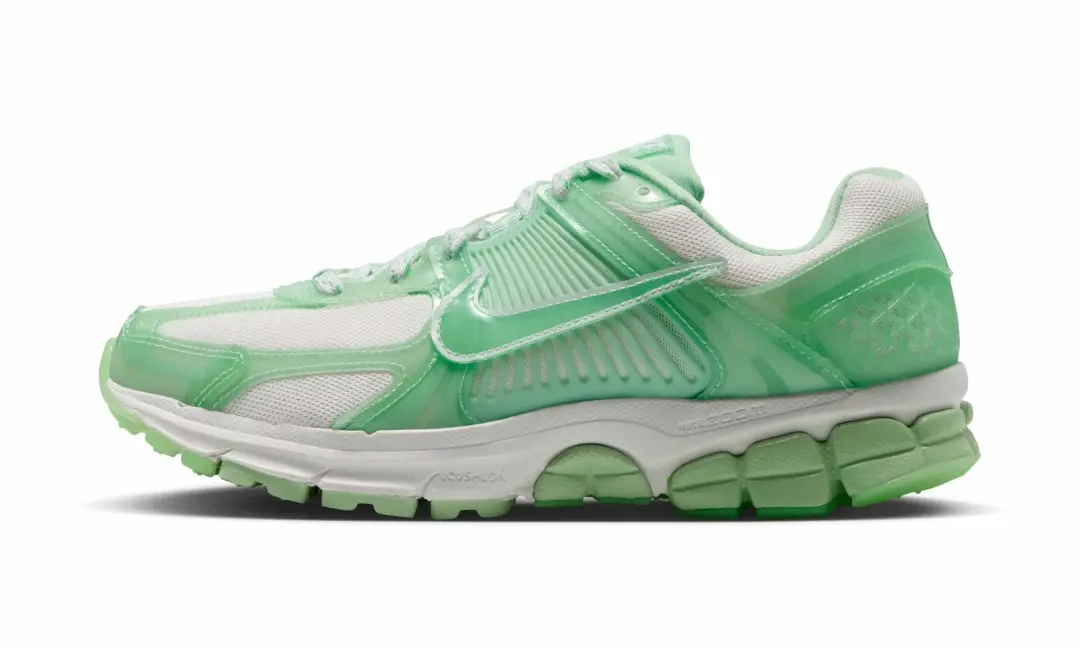
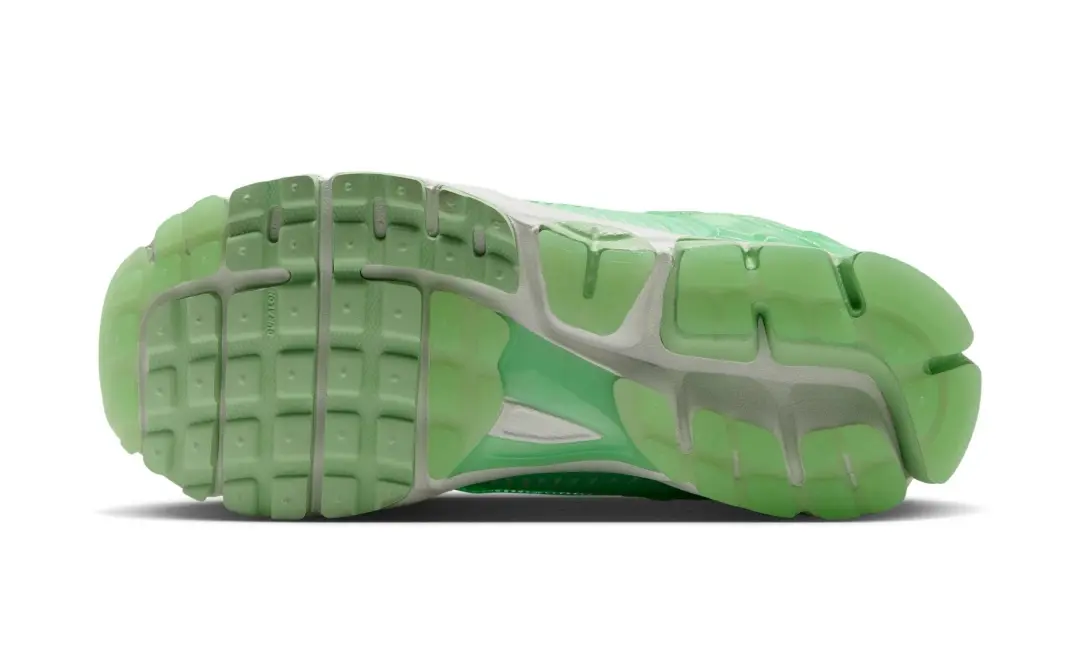
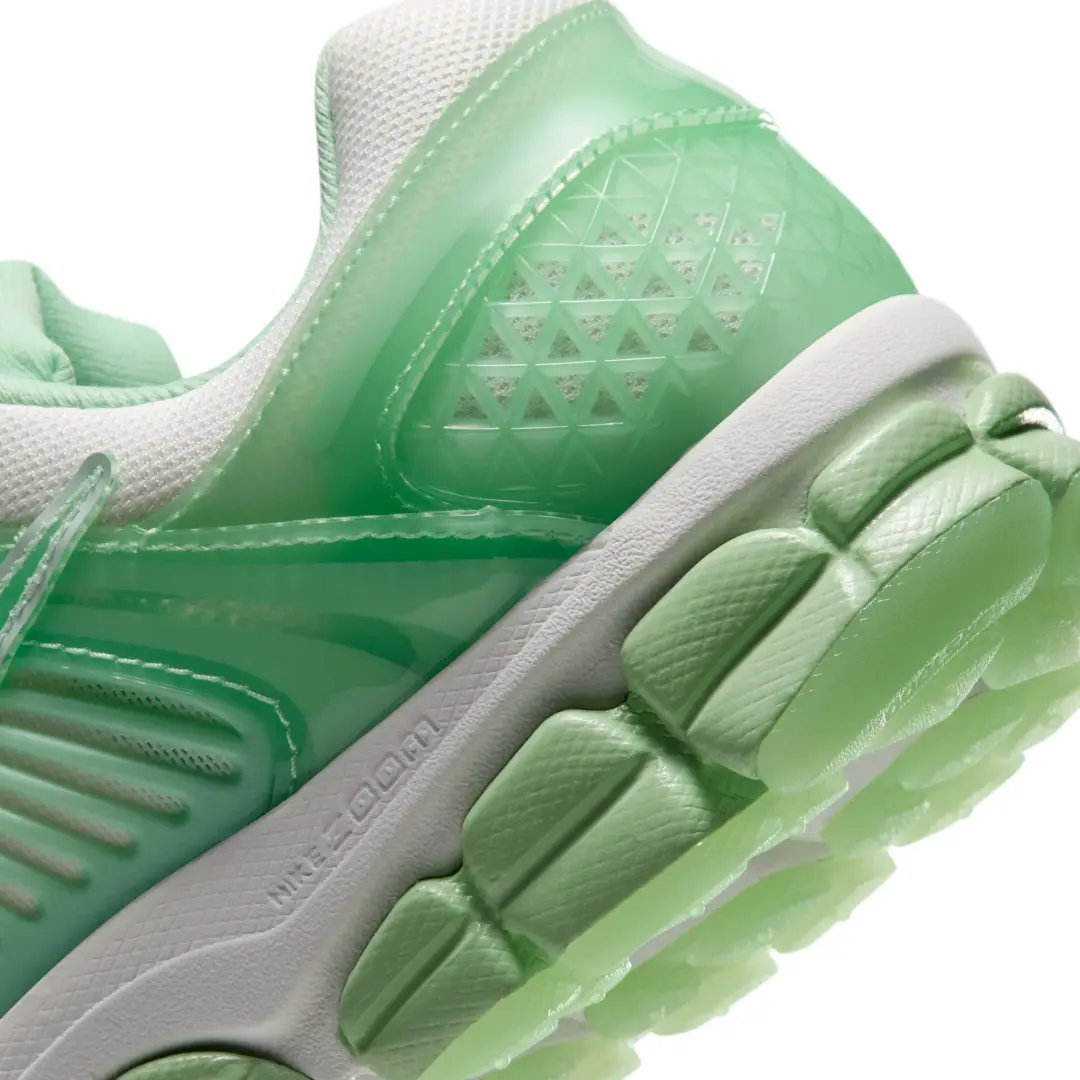
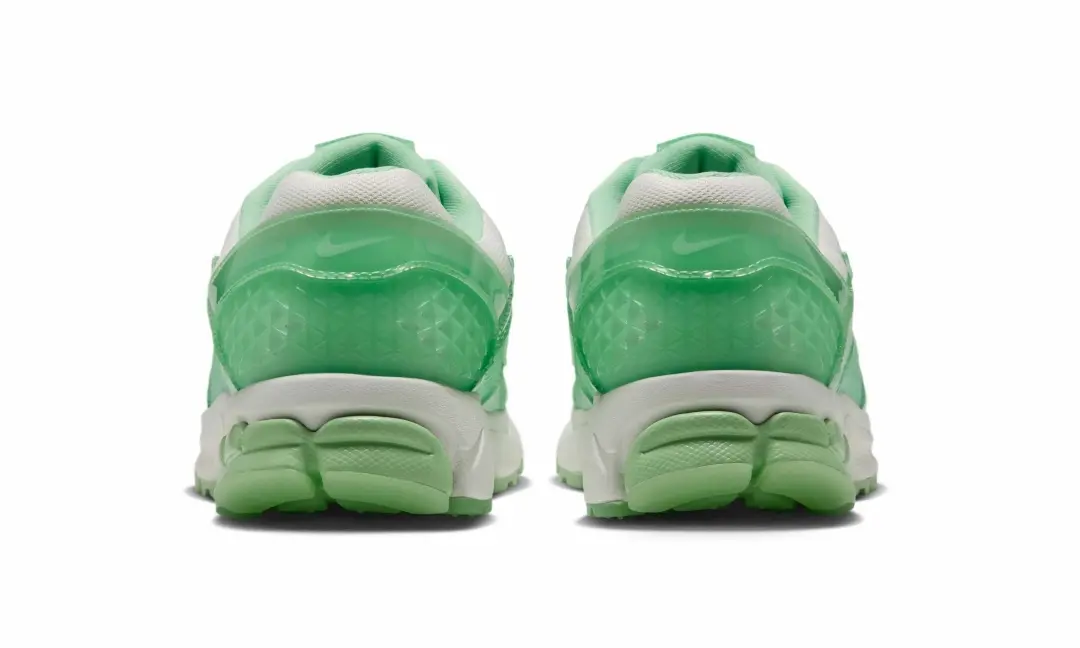
The “Sail/Barely Green” runner swaps its usual mesh and suede for see through TPU, part of a women’s pack that leans harder into candy color than the model’s tech runner roots.
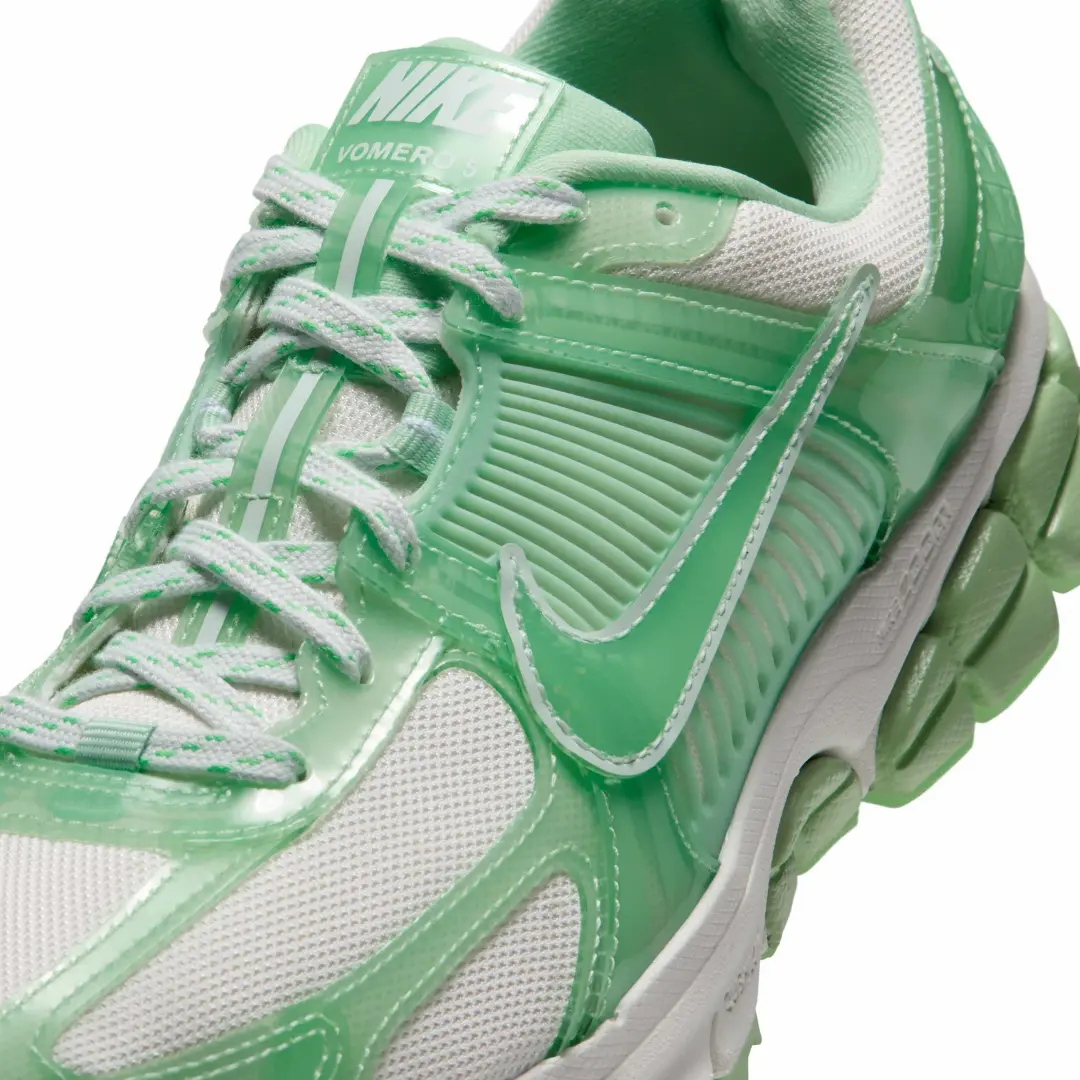
Nike’s Zoom Vomero 5 has spent the last few years shapeshifting into whatever the moment asks of it, leather one season, chrome accents the next, tonal minimal after that. The newest version asks something stranger of the sil. Styled IV5738-133 and named “Sail/Barely Green,” the shoe trades its usual mesh and synthetic panel for tinted, semi transparent TPU that runs across the Swoosh, the tongue branding, and most of the upper. It looks less like a running shoe and more like something poured into a mold and left to set.
tech
The full colorway reads “Sail/Barely Green/Pink Rise/Cucumber Calm,” a soft emerald wash over the shoe’s usual view engine, the layered overlays and structure stitch that made the Vomero 5 a favorite of the mid 2000s in the first place. What is different is the material itself. Instead of opaque leather or suede, the panels are cast in a jelly like plastic that lets the shoe’s internal construction show through, an aesthetic choice more than a performance one. A pink insole nods toward the pack’s companion release, a detail meant to tie the two shoes together as a matched set rather than standalone drops.
That companion is the Nike P-6000, released in “Sail/Pink Foam/Fierce Green/Pink Rise” and built from the same translucent treatment at a lower price point. Where the Vomero 5 retails at 180 dollars, the P-6000 comes in around 125, positioning it as the more accessible entry into the same visual idea. Both are exclusive to women’s sizing, and both appear to be timed for release around the same week, which has led some coverage to read the pairing as a deliberate two shoe moment rather than a coincidence of scheduling.
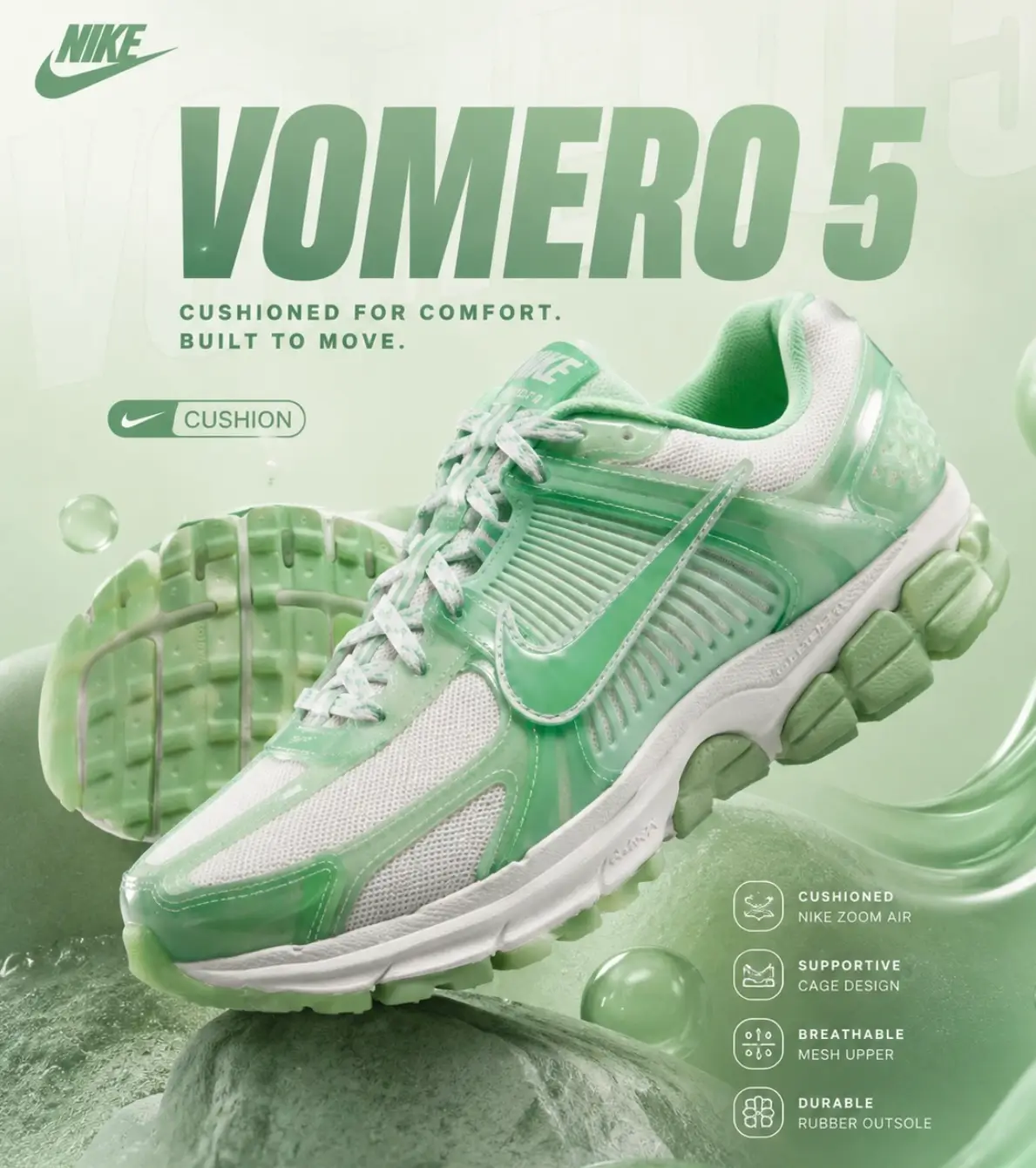
Mint Green Nike Vomero 5 promotional artwork emphasizing translucent overlays, responsive cushioning, and retro-inspired performance styling.
flow
None of this would land the same way if the Vomero 5 did not already carry the cultuel weight it has built up since 2011, when Nike released it as the fifth entry in a running line that dates back to 2006, the brainchild of former Nike designer Aaron Cooper. The shoe was designed for comfort first, built around a proprietary Zoom Air unit in the heel and forefoot and a Cushlon foam midsole, and it found a following among long distance runners before fading out as newer models replaced it through the following decade. It sat largely dormant until 2018, when British designer Samuel Ross and his label A COLD WALL* reworked the silhouette with an exaggerated heel block, a collaboration that split opinion on release but pulled the shoe back into relevance. The reaction was strong enough that fans began removing the oversized heel piece on their own pairs, a workaround that made clear how badly people wanted a cleaner general release version.
General release colorways followed within a year, and even Drake was photographed in a personal blacked out pair with orange accents, the kind of moment that tends to accelerate a shoe’s climb from niche revival to genuine cultural fixture. That momentum has held. The Vomero 5 has stayed in steady rotation since, evolving from a comeback story into one of Nike’s most consistently reworked archival runners, a status that made it the natural test bed for the current wave of retro tech runners that includes the ASICS GEL series and New Balance’s 1906 line.
That evolution has taken the shoe through a wide range of treatments, tonal neutrals built for quiet luxury dressing, a full grain leather Quickstrike edition that reframed it as a lifestyle object rather than a performance one, and now this. The jelly treatment fits into that pattern of reinterpretation, though it pushes further into novelty than most of the shoe’s recent runs, treating the upper as a surface for material experimentation rather than another exercise in restraint. It is a reminder that the Vomero 5’s appeal was never really about running in the first place, at least not anymore, but about the shoe’s willingness to keep being reshaped into whatever a given season wants it to look like.
fin
Coverage of the release has leaned on a specific comparison, noting that the green and pink palette across the two shoes calls to mind Cosmo and Wanda, the fairy godparent characters from the animated series The Fairly OddParents. Nike has not framed the release as any kind of licensed tie in, and nothing in the shoe’s marketing or packaging points to an official pair up. The resemblance appears to be coincidental, or at most a loose visual echo rather than a stated reference, and it is worth treating it that way rather than reading intent into a color palette.
Exact release timing has not been confirmed through Nike’s own channels. Trade coverage has pointed to a Fall or Winter 2026 window as the likely landing point, though that remains an estimate rather than a confirmed date, and official Nike product pages had not listed the SKU with a live release date at the time of writing. Retail price is set at 180 dollars for the Vomero 5 across the pack, consistent with recent premium colorways of the model.
The construction itself is worth dwelling on a little longer, since it marks a real departure from how the Vomero 5 has typically been built. Past colorways have leaned on mesh for breathability and layered synthetic overlays for structure, the visible engineering that made the shoe recognizable in the first place. Swapping that for cast TPU changes the shoe’s hand feel and its visual depth at once, letting light pass through sections of the upper in a way no prior Vomero 5 has attempted at this scale. Either that construction holds up to regular wear the way mesh and leather have is not something available reporting has addressed, and it is a fair question for anyone weighing the shoe as more than a shelf piece.