DRIFT AUDIO
Listen to this story
Choose a voice, then press play.
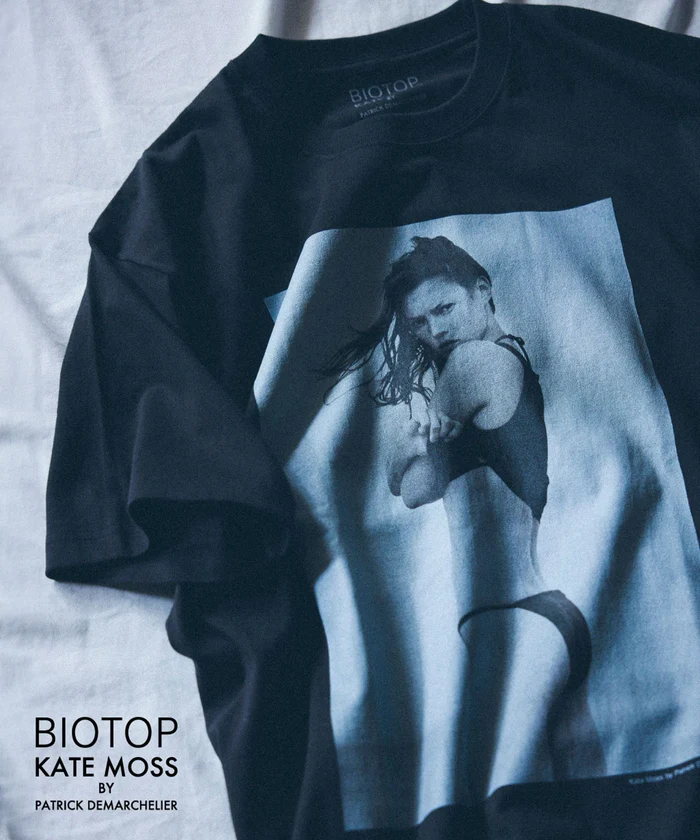
BIOTOP’s Kate Moss tee returns July 31 with a new Patrick Demarchelier frame, following the sellout spring debut.
In This Story
- A Second Print, A New Photograph
- What BIOTOP Actually Is
- Patrick Demarchelier’s Enduring Fashion Legacy
- Why Kate Moss Remains the Perfect Subject
- Looking Back at BIOTOP’s First Kate Moss Release
- Fin
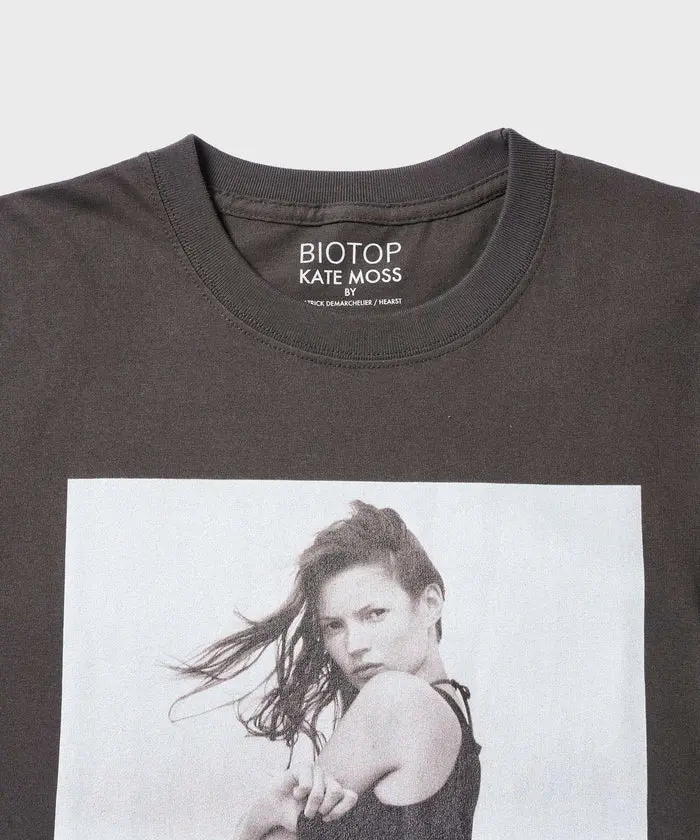
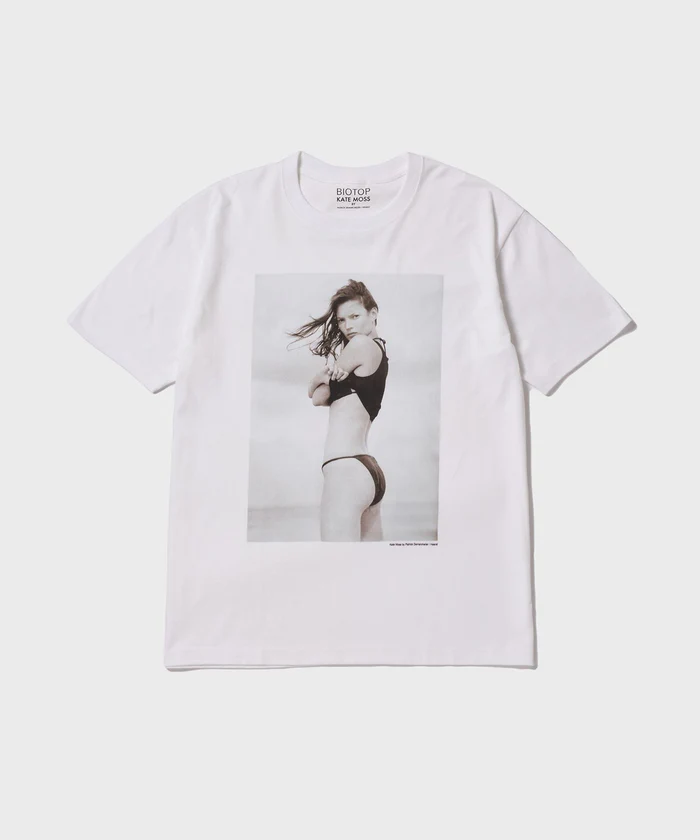
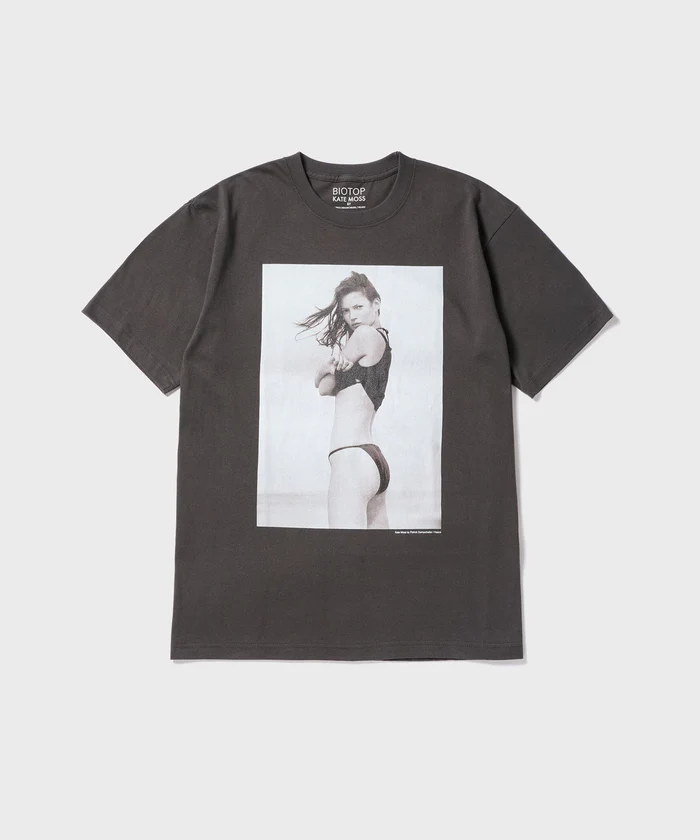
BIOTOP is going back to the same well, and given how fast the first shirt moved, it is hard to blame them. The Tokyo select shop, run by apparel company JUN, is releasing a second Kate Moss photo tee on July 31, following up on a spring launch that sold through its four stores and online shop within weeks.
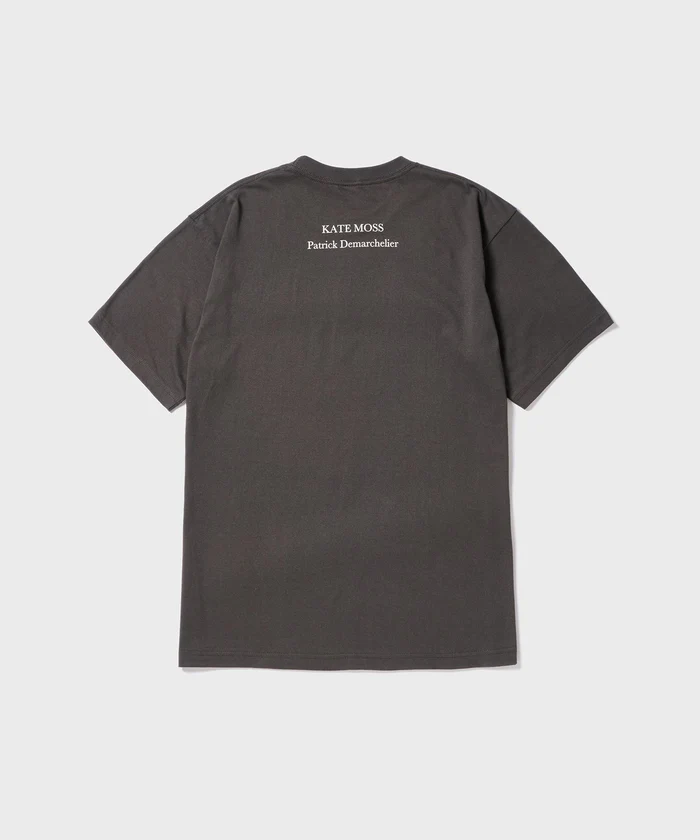
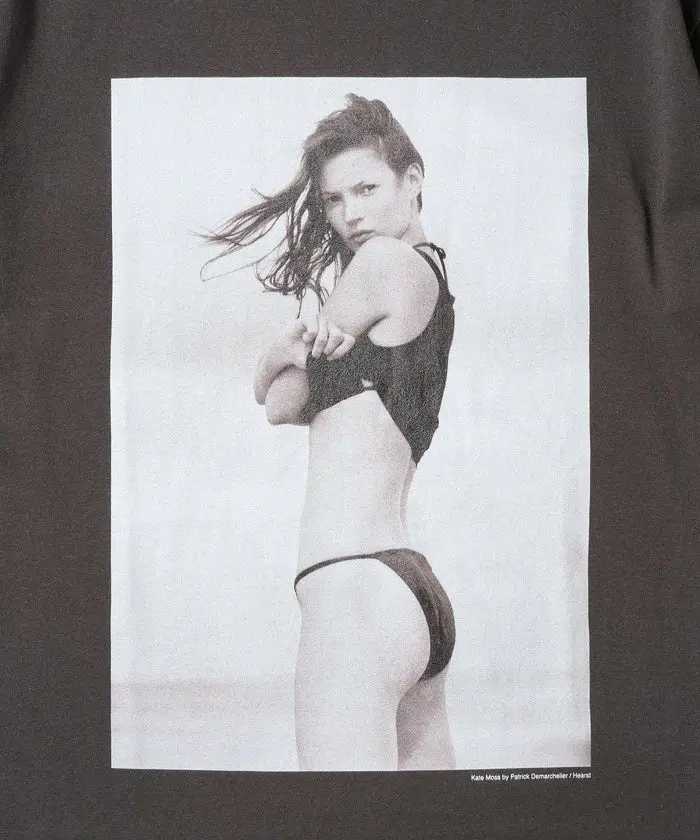
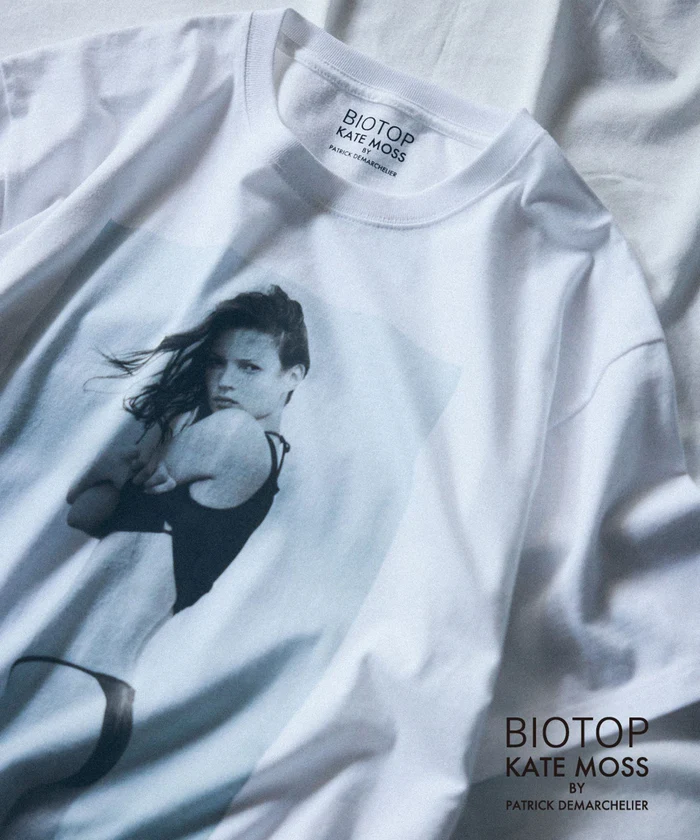
Where the March release pulled from an early 1990s campaign shoot, this one reaches for something more specific: a Patrick Demarchelier portrait of Kate Moss taken for Harper’s Bazaar in 1998. Reporting from Japanese fashion outlet Mastered describes the image as catching a fresh, fleeting quality in Moss at the time, the kind of frame that reads as effortless precisely because so much craft sits underneath it. BIOTOP is printing it across the same simple canvas as before, a plain crew tee in white and black, keeping the shirt itself out of the way so the photograph can do the talking.
There is a reason a Japanese select shop keeps returning to a photograph taken decades ago on another continent. Moss and Demarchelier both occupy a specific spot in how the 1990s get remembered in fashion circles, particularly in Japan, where archival Americana and European editorial imagery from that decade has never really gone out of style among the kind of shopper BIOTOP tends to attract. Pairing that nostalgia with a wearable object rather than a poster or a print run for collectors is part of what made the first shirt disappear so quickly.
Neither photograph is a new commission. Both come from Demarchelier’s existing archive, licensed and reproduced for this release rather than shot fresh for BIOTOP, which puts these tees closer to a museum print program than a typical brand collision. That distinction shapes how the shirts get talked about in Japanese fashion coverage, less as merchandise tied to a season’s trend cycle and more as a small, wearable piece of magazine history that happens to be for sale at a select shop rather than framed on a gallery wall.
View this post on Instagram
stir
It opened in Shirokanedai, a shh, green residential pocket of Tokyo, in March 2010, built around a genuinely odd premise for a clothing retailer: a complex that mixes fashion with a botanical shop, a cafe, and a small nursery, organized around the idea of a biotope, an ecological term for a region where the environment and its living things exist in balance. The original store still centers on a courtyard treehouse built from camphor wood, alongside a cafe and restaurant that looks out over the greenery rather than a shop floor.
BIOTOP operates under JUN, the same Japanese apparel group behind brands like Adam et Rope, and it expanded slowly and deliberately rather than chasing rapid retail growth. A second location opened in Osaka in 2014, a third in Fukuoka in 2019, and a fourth in Kobe, with Sapporo joining the roster this spring. Each store carries a curated mix of opulent labels and smaller, harder to find brands from around the world, alongside the natural cosmetics and lifestyle goods that have been part of the concept since day one.
That context matters here because a store built around slow living and considered curation is an unusual home for what amounts to a fashion merchandise drop. The Kate Moss tees work precisely because BIOTOP treats them less like fast moving product and more like small, occasional releases worth pausing on, the same way the store treats a rare plant or an obscure Scandinavian ceramic brand.
flow
Patrick Demarchelier was, for a long stretch of the late twentieth century, one of the handful of photographers who could define how a decade of fashion looked. Born in Le Havre in 1943, he moved to Paris in his twenties, worked alongside Henri Cartier-Bresson early on, and relocated to New York in 1975 to build a career shooting magazine covers and advertising campaigns. He became the lead photographer at Harper’s Bazaar before an exclusive arrangement pulled him over to Conde Nast, where his work ran across Vogue, Vanity Fair, Allure, and Teen Vogue.
His client list read like a survey of the entire luxury industry: Chanel, Dior, Louis Vuitton, Calvin Klein, Ralph Lauren, Yves Saint Laurent, Revlon, and Lancome all put him behind the camera at one point or another. In 1989 he became the first non British photographer hired to shoot Britain’s royal family, taking on the role of Princess Diana’s personal photographer, a relationship that produced some of the most reproduced portraits of her. France recognized him as an Officier de l’Ordre des Arts et des Lettres in 2007, and a retrospective of his work opened at the Petit Palais in Paris the following year.
Demarchelier died in 2024 at the age of 78. Tributes from models he had photographed across four decades followed quickly, a reminder of how central he had been to the view lang of that era of fashion. His final years were complicated by sexual harassment allegations made public around 2018, which led Conde Nast to cut ties with him, though the accounts of his career that followed his death still treated the scale of his archive and his influence on 1990s fashion photography as undeniable.
The 1998 image BIOTOP is printing this time comes specifically from his run at Harper’s Bazaar, where he served as lead photographer through much of the decade before moving to Conde Nast titles. That Bazaar era is where some of Demarchelier’s most referenced covers came from, including a widely cited 1992 shot of Linda Evangelista, and it is generally considered the period where his soft, unfussy approach to portraiture was most fully formed. Pulling this particular tee’s photograph from that specific chapter of his career, rather than from his later advertising work for houses like Dior or Chanel, puts the shirt closer to the editorial, magazine facing side of his output than the campaign photography of the first release.
why
The other half of the print is, of course, Kate Moss, and the choice makes sense given how tightly her early career is tied to exactly the era Demarchelier’s Bazaar work belongs to. Moss emerged in the early 1990s as the face of a shift away from the polished, athletic supermodel look of the prior decade, toward a thinner, more waifish presentation that fashion writers at the time labeled heroin chic, a term that followed her for years and that she has since pushed back against in interviews. Whatever the label, her collaborations with the era’s leading photographers, Demarchelier included, are widely credited with helping define how 1990s fashion imagery actually looked.
That specific pairing, Moss in front of Demarchelier’s camera in the 1990s, is part of why a Japanese retailer built around slow curation keeps returning to it more than two decades later. Archival American and European editorial photography from that decade has held steady appeal among a certain segment of Japanese fashion consumers for years, the kind of audience that treats a magazine tear sheet from 1998 as seriously as a current runway look. BIOTOP is essentially betting that a well chosen frame from that era, printed cleanly on a plain tee, still carries enough weight to sell on its own.
huh
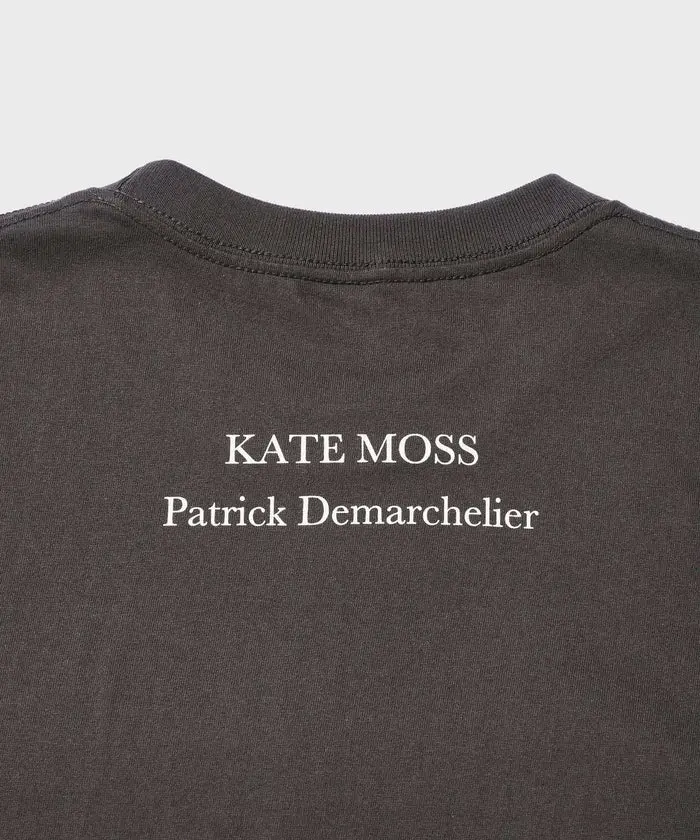
The original Kate Moss by Patrick Demarchelier tee launched on March 14, following a preorder window that opened February 27 through BIOTOP’s online store. That shirt used a black and white campaign photograph from the early 1990s, printed large across the front, with both Moss’s name and Demarchelier’s credited on the back in plain type. It came in the same white and black colorway BIOTOP is sticking with for the second release, priced at 19,800 yen.
View this post on Instagram
The shirt found its way into stores across BIOTOP Tokyo in Shirokanedai, BIOTOP Osaka, BIOTOP Fukuoka, and BIOTOP Kobe, along with bonjour records Daikanyama, a record shop and lifestyle store that has long shared retail space with BIOTOP’s more music leaning stock. When BIOTOP Sapporo opened in April, the store marked the occasion with a genuinely rare version of the same shirt: twenty white tees hand signed by Kate Moss herself, sold exclusively at the new location.
That signed run says something about how BIOTOP is treating this collide. It is not a one off print job stapled onto a t-shirt blank. The brand has built a small, ongoing relationship around Demarchelier’s Kate Moss photography, one release at a time, with just enough scarcity and just enough of a story behind each shirt to keep a fairly niche piece of merchandise selling out.
The scale of that first release also matters for context. Four physical stores and one online shop is a genuinely small footprint compared to how most fashion collisions get distributed today, where a single drop might run through dozens of stockists internationally or lean entirely on a hype driven online queue system. BIOTOP kept things close, selling almost exclusively through its own retail network and one long standing partner in bonjour records Daikanyama, a shop that has operated alongside BIOTOP’s Tokyo footprint for years and shares a similar sensibility toward music, print culture, and considered retail. That tight distribution is part of why a shirt priced at a relatively accessible 19,800 yen still managed to feel scarce rather than mass produced.
Japanese fashion press coverage at the time of the March launch leaned heavily on the emotional pull of the photograph itself rather than treating the release as a straightforward product announcement. Coverage from outlets including Doctorbook’s lifestyle desk framed the shirt within a broader narrative about how the 1990s reshaped fashion and advertising, moving away from the more polished, maximalist presentation of the 1980s toward something leaner and more minimal, with Moss positioned as one of the defining faces of that shift. That kind of framing, treating a t-shirt release as an entry point into a larger cultural story about a decade of fashion photography, is fairly typical of how BIOTOP and the outlets that cover it tend to talk about the brand’s collision.
View this post on Instagram
fin
The second Kate Moss by Patrick Demarchelier Photo Tee goes up for preorder on BIOTOP’s online store starting July 17, with general release following on July 31 across BIOTOP’s four physical locations, bonjour records Daikanyama, and BIOTOP Online. Pricing has not been confirmed for this release at the time of writing, though the March tee sold for 19,800 yen and industry reporting has not indicated a change.
Anyone who missed the spring release, or the Sapporo signed exclusive, gets a second chance here, albeit with a different photograph and presumably a similarly tight window before it sells through. Given the pace of the first drop, moving on the July 17 preorder rather than waiting for the July 31 general release is probably the safer bet for anyone who wants one.
It is worth noting that BIOTOP has not, as of this writing, announced any store specific exclusives or signed units for the second release along the lines of the Sapporo drop, though that could still change closer to launch. The brand has also not indicated whether this will become a recurring seasonal series built around Demarchelier’s archive of Moss photographs, though two releases within the same year suggests the shop sees enough demand to keep the format going. For a small, indie run Japanese retailer, turning a licensed archival photograph into a repeatable, collectible product line is a fairly efficient way to keep a niche audience checking back in without needing to chase an entirely new collision each season.
Related Articles

A Tiger On The Denim / Human Made
HUMAN MADE Shinsaibashi PARCO, full renewal 17 October 2026. Tiger jacket, hoodie, keyholder. Wasted Youth popup, two days. App lottery 10:00 to 17:00.