A Forgotten Y2K Shoe Resurfaces: Supreme Reportedly Reviving the Nike Air Max 2000

July 23, 2026
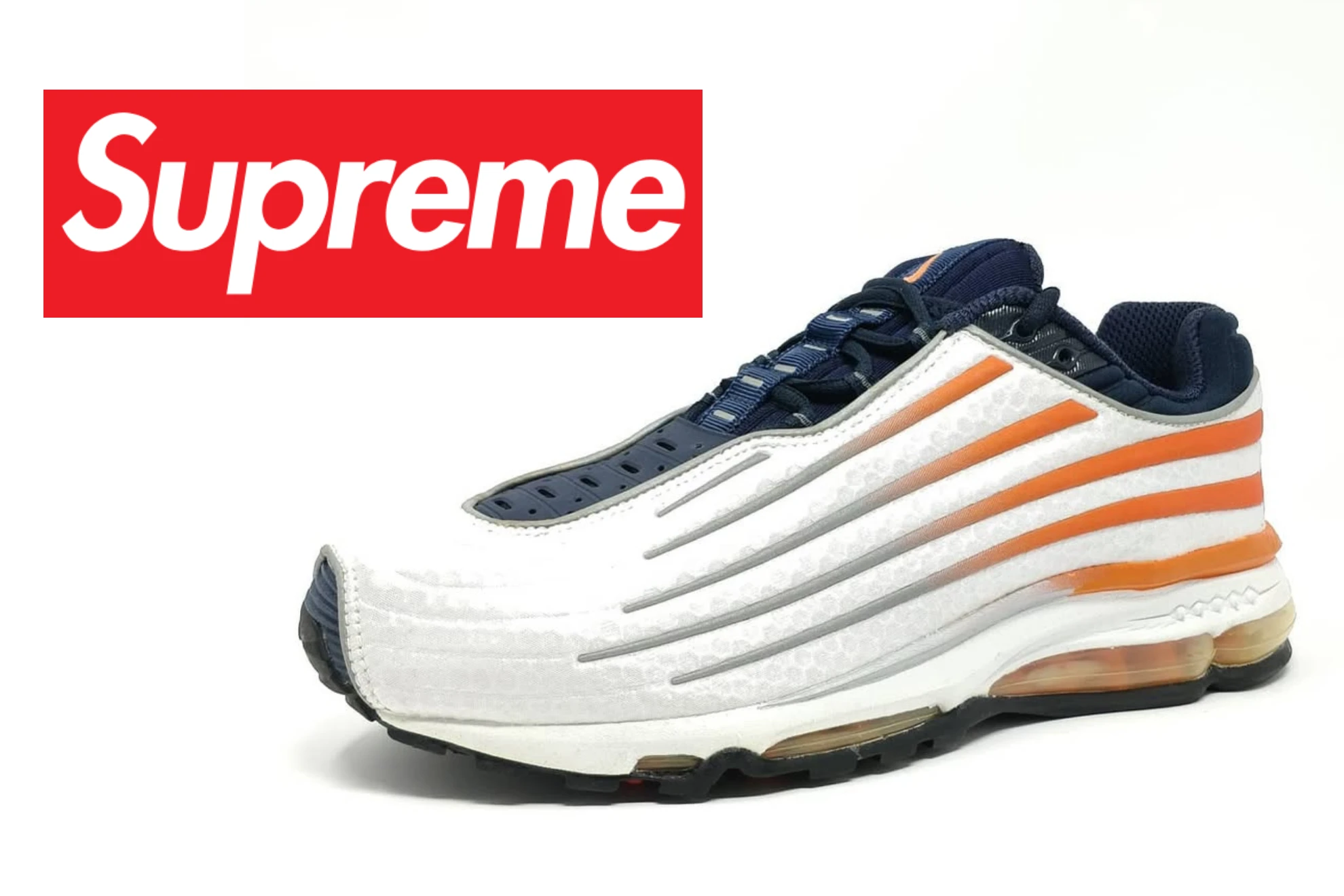
An obscure turn of the millennium Nike model is rumored to return this fall, this time wearing a Supreme box logo.
The tip surfaced shh, the way most of these things do now: a single Instagram post from an account with a track record for early Air Max intel. The source, known online as bubblekoppe, floated that Supreme and Nike are lining up a collective version of the Air Max 2000 for the back half of 2026. No colorway details, no confirmed drop date, no pricing. Just the model name and the pairing, which was enough to send a certain corner of the sneaker world into a familiar kind of scramble.
Nothing here is official yet. Neither brand has issued a statement, and the leak traces back to a single social post rather than a retailer listing or brand press kit. That matters, because Supreme connection tend to stay locked down until close to rel, and this one appears to be following the same script. Still, the timing lines up with something bigger that has been happening across Nike’s back catalogue this year: a quiet, deliberate mining of its Y2K era archive for shapes nobody expected to see again.
View this post on Instagram
stir
For a shoe carrying the brand’s most recognizable running nameplate, the Air Max 2000 has spent most of its life in obscurity. It arrived in the year 2000 as part of a wave of Nike running silhouettes built around visible Air units front and back, an aesthetic that read as almost alien next to the Air Max 90s and 95s that had defined the line before it. The upper leaned on molded mesh panels reinforced with TPU overlays, a rubberized shell wrapping the base of the lacing system, and a spine running down the midfoot that gave the whole shoe a segmented, almost exoskeletal look.
It never sold in the volumes of its siblings. Limited retail distribution and a design language that was arguably ahead of the moment kept it a footnote rather than a fixture, the kind of shoe that shows up in deep cut archive threads more often than on feet. Original colorways, including a white and comet red pairing that has become something of a benchmark among collectors of the model, are now scarce enough that clean deadstock pairs rarely surface for sale at all.
That obscurity is exactly what makes it interesting now. Nike’s recent retro strategy has increasingly favored the shoes that never got their due the first time around, betting that collectors bored of Air Max 1s and 90s will respond to something genuinely unfamiliar. It’s a pattern that has already played out with other turn of the century names this year, as the brand works through a backlog of running silhouettes that were technically ambitious but commercially overlooked when they first shipped. The Air Max 2000, with its unusually pronounced heel bag and layered forefoot units, fits that description about as well as anything in Nike’s catalogue.
leg
The Air Max 2000 didn’t emerge in isolation. It came out of Alpha Project, an experimental performance division that operated out of Nike’s Beaverton headquarters in the late 1990s, tasked with pushing footwear construction somewhere well outside the company’s established playbook. Every Alpha Project release carried a small, cryptic five dot marking tucked somewhere into the design, a quiet signature that separated these shoes from the rest of the lineup.
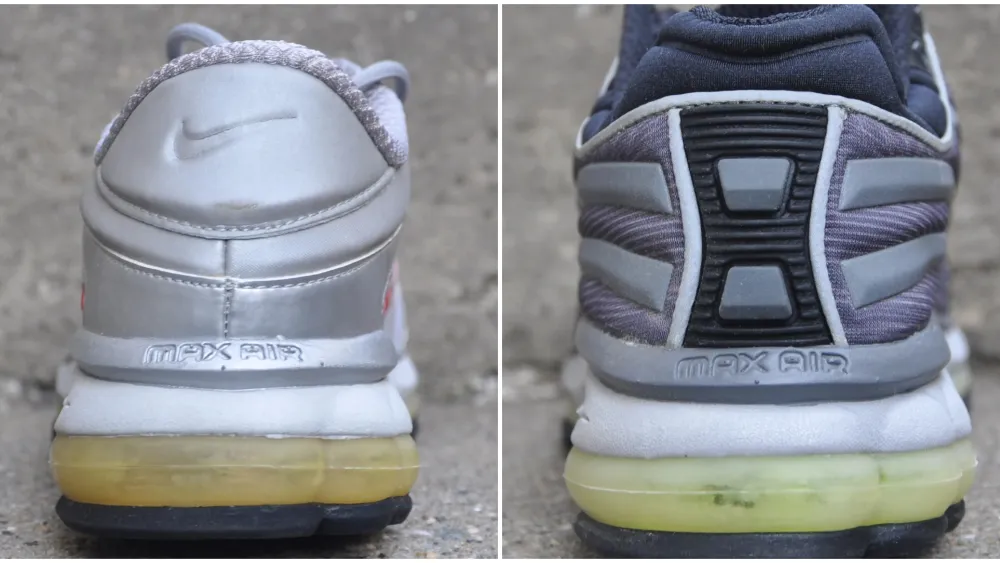
Rear view comparison showing two distinct Air Max 2000 heel constructions, contrasting a cleaner leather execution with a more structured, performance-inspired design.
The division’s output reads today like a highlight reel of Nike’s most forward thinking work: the sock like Air Presto, the water shoe inspired Air Kukini, and a handful of other sil that leaned harder into concept than convention. Some of those shoes eventually found cult audiences years after release, which is part of why Nike keeps returning to the Alpha Project well. The Air Max 2000 is arguably the least known name from that group, which gives a Supreme link up unusual weight. Supreme has built a long running habit of pulling deep, slightly odd picks out of Nike’s archive rather than the obvious hits, and this would fit that pattern precisely.
There’s also a practical angle worth noting. Sneakers built around visible, oversized Air units have been trending back into favor over the past couple of seasons, as collectors and casual buyers alike drift away from cleaner, low profile silhouettes. A shoe like the Air Max 2000, with its exposed heel bag and stacked forefoot units, sits comfortably inside that shift. Timing wise, reviving it now reads less like nostalgia for its own sake and more like a brand reading where tastes are already heading.
It also helps that Supreme’s relationship with Nike has always leaned toward the archival rather than the obvious. Where other collaborators tend to gravitate toward the Air Force 1 or the Dunk, Supreme has spent years pulling shapes that even dedicated Nike collectors sometimes forget exist, treating the brand’s back catalogue less like a museum and more like a working parts bin. That approach has produced some of the more talked about links in recent memory, and it’s part of why a name as buried as the Air Max 2000 surfacing through this particular partnership doesn’t feel like a stretch, even without a single confirmed detail attached to it yet.
fin
As of this writing, the only confirmed detail is a rough release window: the back half of 2026, likely aligning with Supreme’s fall and winter season drops as it typically does with its Nike collaborations. Colorways, materials, and pricing remain unconfirmed. Given how tightly Supreme controls its release information, official word is unlikely to arrive far ahead of the actual rel.
What’s clear is that the Air Max 2000 is finally getting a second look after 26 years largely spent out of circulation, and that Alpha Project, once a footnote in Nike’s history, keeps proving to have more depth than the brand’s own marketing ever gave it credit for at the time.
Related Articles
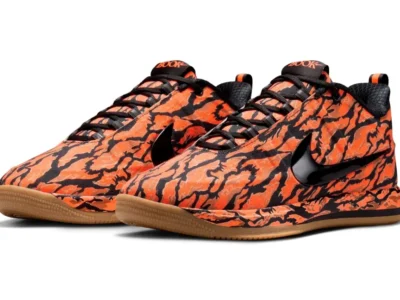
Devin Booker’s Book 2 Keeps Chasing Camouflage, and the Pattern Isn’t Slowing Down
Another camouflage colorway of the Nike Book 2 is set to land on July 30, […]