Air Jordan 3 “Mocha”: The Grail That Spoke Without Saying a Word

April 19, 2026
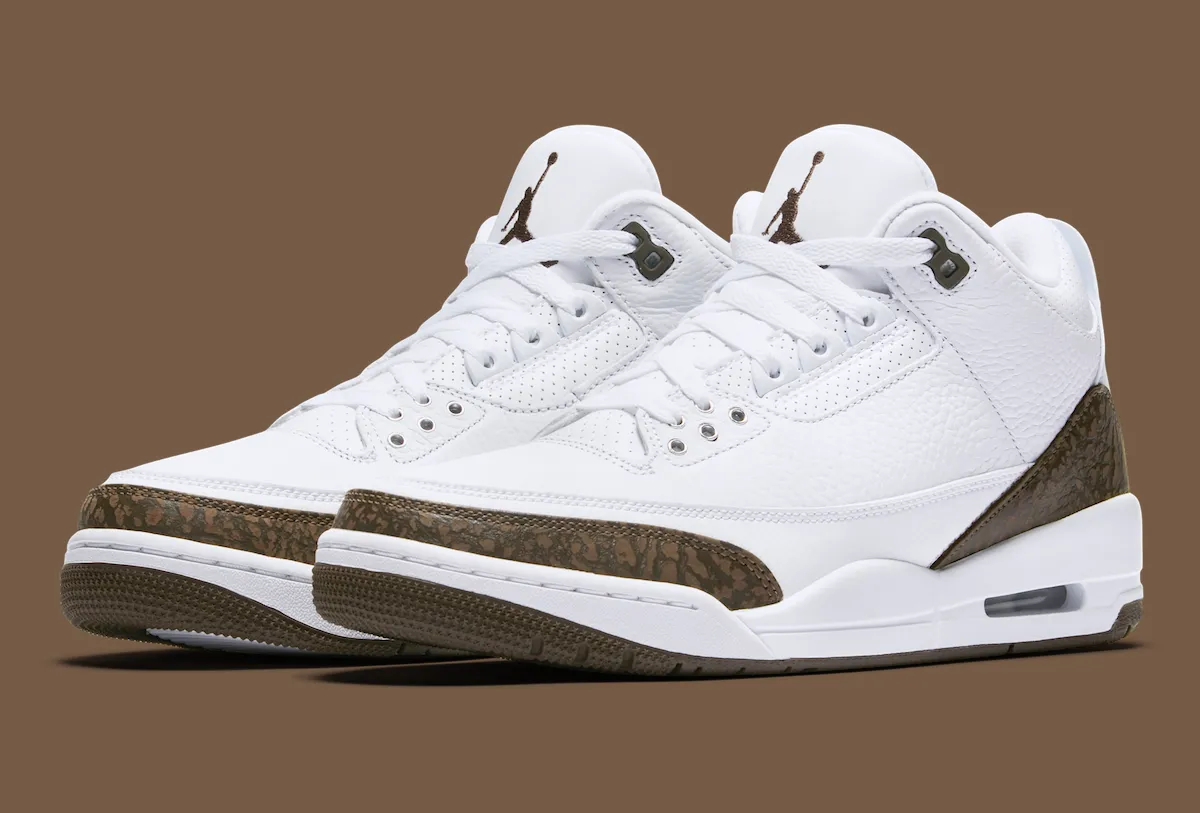
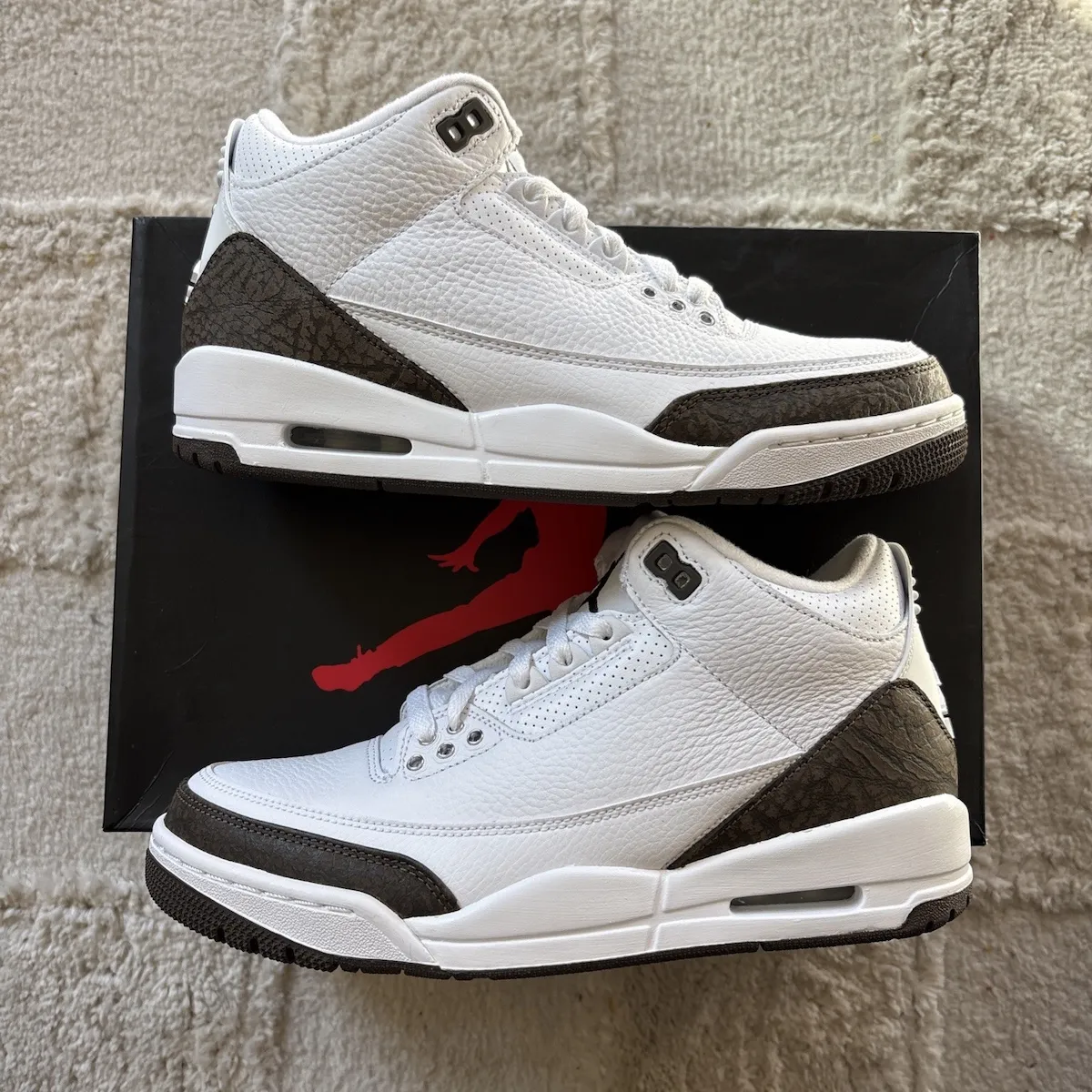
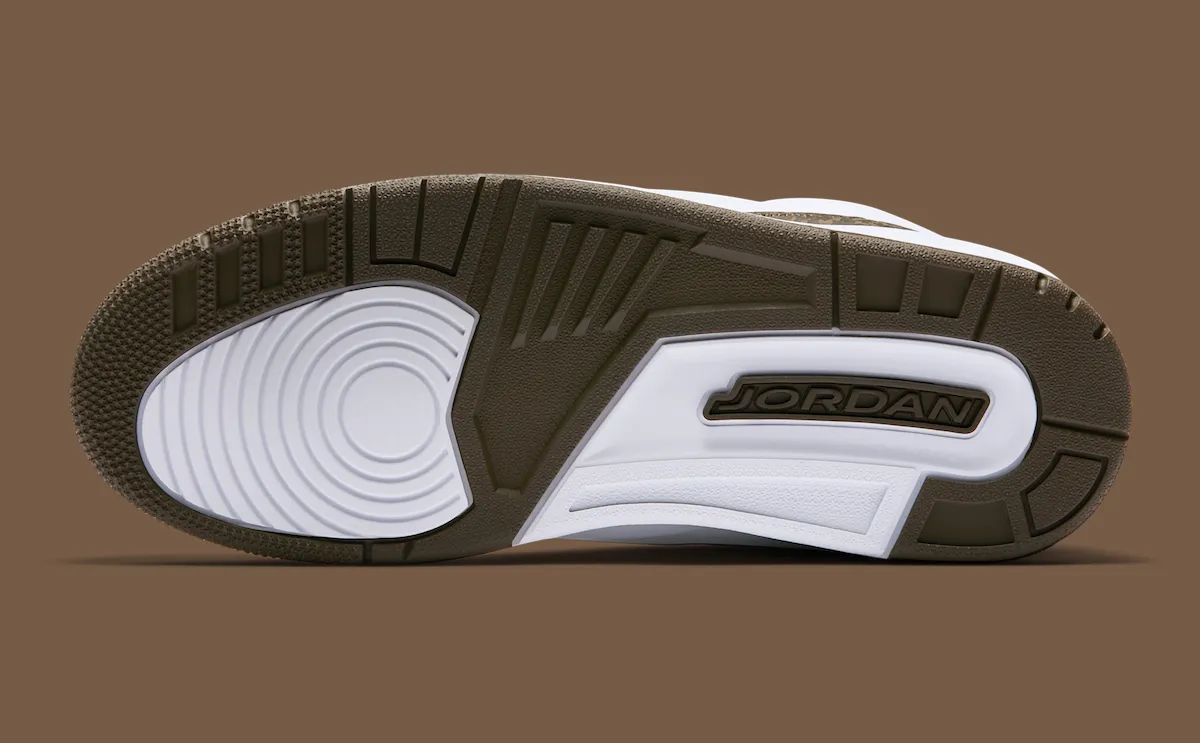
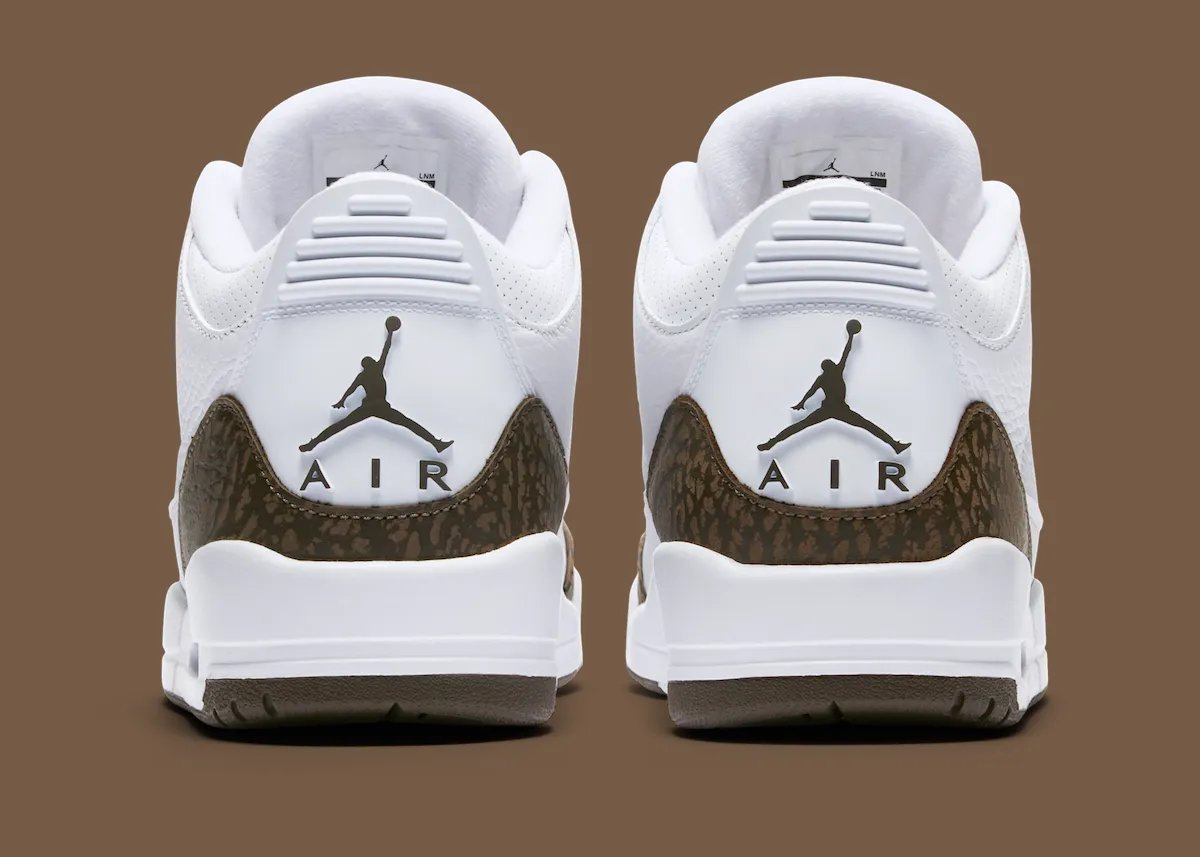
In an era where shoe culture thrives on hype, countdowns, and viral drops, the Air Jordan 3 “Mocha” reads like a quiet rebellion. It did not arrive with a celebrity launch event, a social media blitz, or a limited-city rollout. Instead, it slipped onto shelves in September 2001 with little fanfare, overlooked by many and quietly absorbed into the wardrobes of those who valued substance over spectacle. Today, it is revered not because it demanded attention, but because it never needed to. The “Mocha” stands as a testament to understatement, a grail that earned its status not in a single explosive moment, but across two decades of steady appreciation.
View this post on Instagram
rel
At the time of its debut, Jordan Brand was navigating a different kind of future. Michael Jordan had retired for good, and the line was no longer anchored by an active icon dominating the court. The early 2000s marked a transitional period, with the brand experimenting through retros and new colorways for a collector base that was still growing, but far from the global machine it would later become. The “Mocha” entered that landscape not as a provocation, but as a continuation.
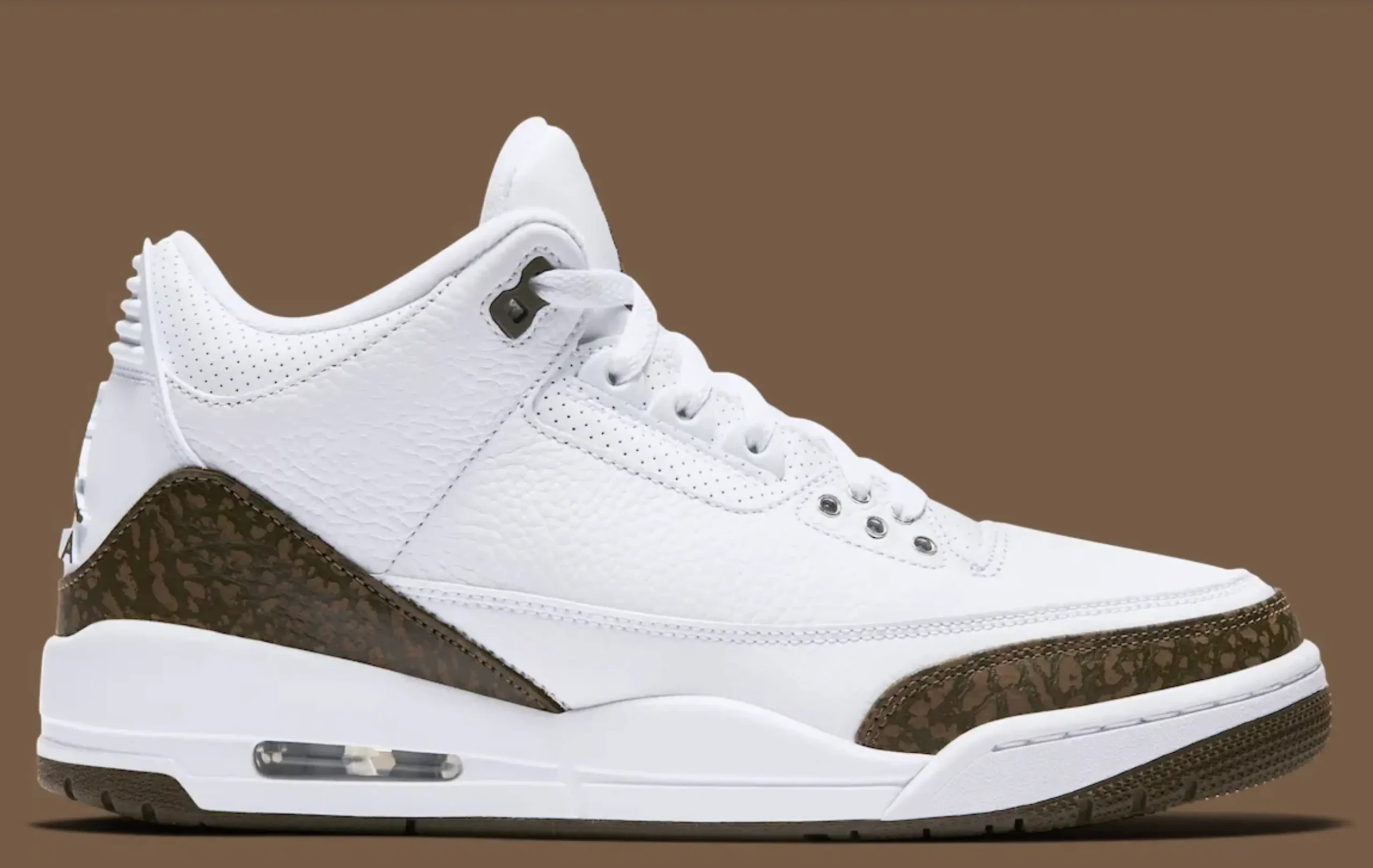
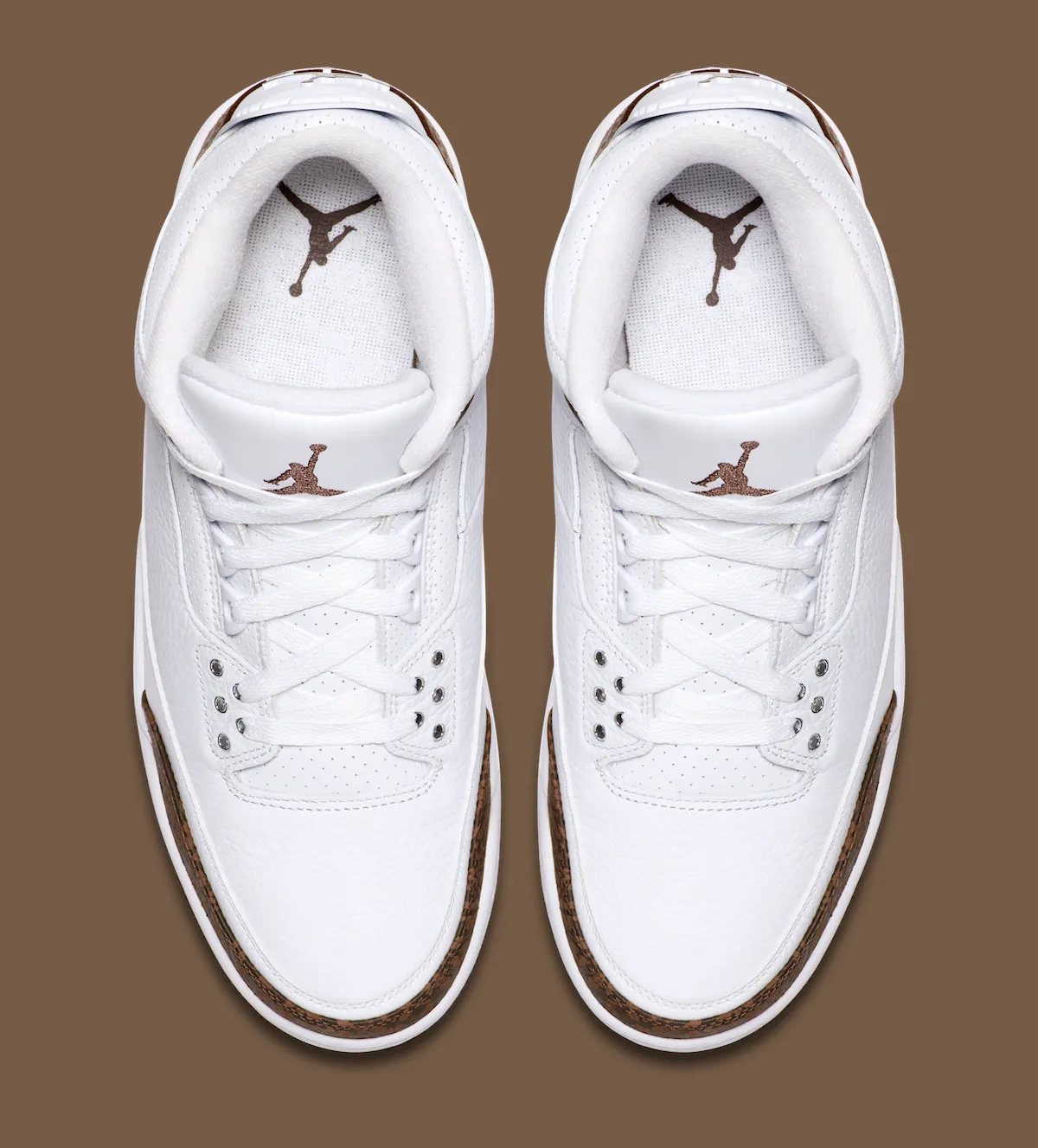
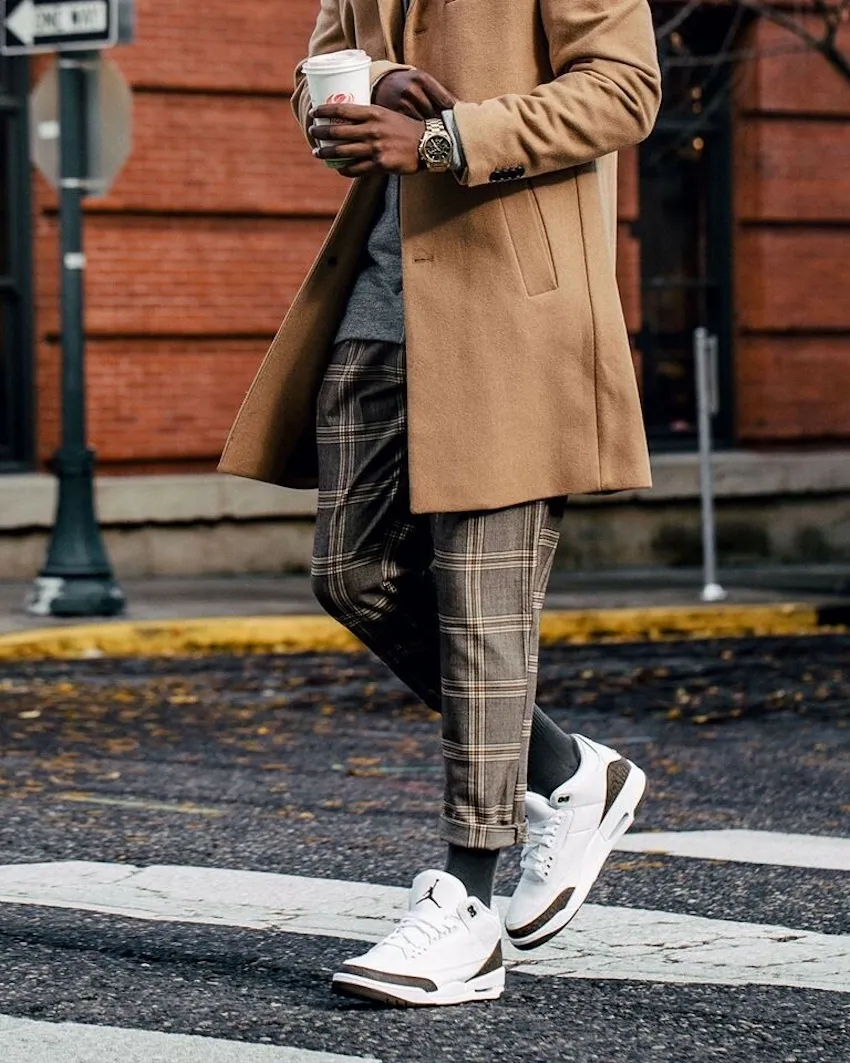
It did not attempt to reinvent the Air Jordan 3. Instead, it offered a respectful evolution of it. With white tumbled leather as its foundation, the shoe presented a clean, premium surface that wore beautifully over time. Its Dark Mocha elephant print, wrapping the toe and heel, acted as a muted counterpoint to the original “Black Cement” formula. The effect was familiar without being derivative, grounded in heritage without becoming trapped by it.
discip
What made the “Mocha” memorable was never excess. It was restraint. Brown accents on the outsole, tongue branding, and heel Jumpman formed an earth-toned palette that felt cohesive rather than decorative. Nothing looked added for effect. Nothing strained for novelty. There were no metallic distractions, no loud color pops, no collaboration hardware, no needlessly inflated backstory. It was simply a well-resolved shoe.
Its silhouette remained faithful to Tinker Hatfield’s 1988 original, preserving the lines that made the Air Jordan 3 one of the most enduring designs in sneaker history: the visible Air unit, the sculpted midsole, the elephant print panels, the balance of sport and sophistication. In a category increasingly addicted to escalation, the “Mocha” made a case for timelessness. It was not trying to be the future. It was confident enough to remain itself.
stir
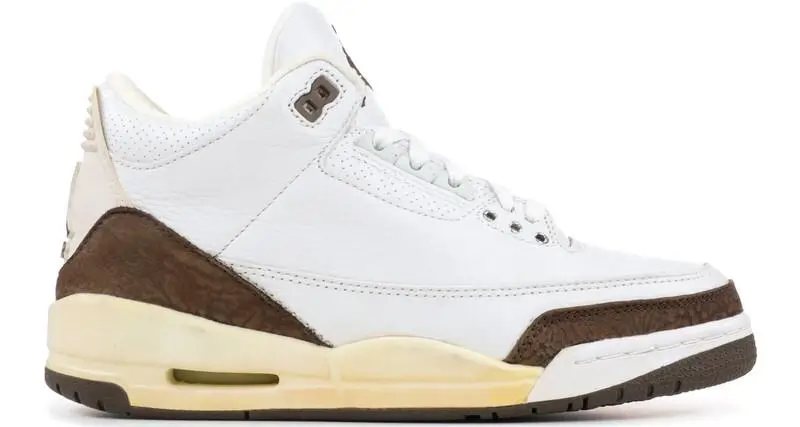
And yet, that confidence was not immediately rewarded. In 2001, the market leaned toward louder retros and more instantly legible classics. Buyers gravitated toward headline colorways such as the “White Cement” and “Black/Red,” leaving the “Mocha” to sit longer than it deserved. It was not misunderstood because it lacked quality. It was overlooked because it asked for a slower kind of attention.
That initial indifference would eventually become part of its mythology. The pairs that lingered on shelves in 2001 became the same pairs collectors would later search for with urgency. Over time, as sneaker culture matured and memory sharpened, the “Mocha” was reappraised not as an afterthought, but as one of the most elegant non-original Air Jordan 3 colorways ever released.
a return
When the Air Jordan 3 “Mocha” returned on December 15, 2018, it did not arrive with a heavily manufactured spectacle. There was no elaborate campaign, no celebrity co-sign push, no limited-city activation designed to dramatize availability. It simply returned, quietly and confidently, and allowed the design to speak again.
This time, though, the audience had changed. The sneaker world had matured. Collectors had become more attentive to nuance, more aware of the releases that had once slipped past them. The “Mocha” was no longer just another retro. It had become a second chance, a recovery of something people had failed to properly value the first time around.
The 2018 reissue stayed faithful to what mattered: the tumbled leather, the Dark Mocha elephant print, the brown detailing across the outsole and branding. Even the packaging remained stripped-back and classic. Jordan Brand did not overexplain it or attempt to artificially dramatize its importance. They simply brought it back, trusting the shoe’s integrity to do the work.
show
That trust paid off. The response was not explosive, but it was real. The “Mocha” did not need to produce a frenzy to prove its relevance. Instead, demand built gradually, the way it always had. Resale prices climbed not because of a manipulated scarcity narrative, but because more people began to understand what the shoe offered: wearability, texture, balance, and permanence.
This is what separates the “Mocha” from many of the releases that dominate sneaker discourse for a season and disappear by the next. Its cultural rise did not depend on the heat of launch week. It was built through long-term conviction. People who had once passed on it began to recognize what they had missed. What had looked understated in 2001 now looked exact.
why
What gave the “Mocha” renewed power was not nostalgia alone. It was relevance. In an era increasingly crowded by maximalist design, glow-heavy tooling, oversized branding, and connect fatigue, the “Mocha” felt like a reset. It reminded people that elegance in shoes does not require theatricality.
It works with denim, with chinos, with cargos, with tailored trousers. It moves easily across seasons and settings. It is one of the rare retros that can feel equally at home in a casual rotation or in a more considered, fashion-literate wardrobe. That versatility helped expand its afterlife. Stylists began pulling it for editorial shoots. Fashion observers embraced it as a kind of stealth statement. It became the shoe equivalent of an insider’s choice: view, but never loud.
That may be its greatest strength. The “Mocha” does not force itself into a look. It completes one.
grad
Over time, the Air Jordan 3 “Mocha” moved beyond the boundaries of simple shoe nostalgia and entered the realm of design object. It appeared in street style roundups, fashion editorials, and collector conversations not because it was rare in the loudest sense, but because it represented a particularly refined design language. Its appeal was tactile as much as view: the grain of the leather, the richness of the brown print, the contrast between softness and structure.
For creatives, that mattered. Photographers responded to its texture. Stylists appreciated its neutrality. Wearers valued the fact that it never felt trapped in a single era. The “Mocha” did not just survive the cycles of footwear fashion. It transcended them by refusing to participate too aggressively in any one of them.
day
The influence of the “Mocha” is easier to trace now than it was at release. Its earth-toned, heritage-driven minimalism anticipated a much wider movement in footwear and fashion. Later Jordan releases built around taupes, sails, muted browns, and understated neutrals all exist within a climate that shoes like the “Mocha” helped normalize. More broadly, it aligns with the rise of what fashion now describes as quiet focus: pieces that do not announce their value, but communicate it through material, proportion, and consistency.
That influence is not always direct or literal. It is cultural. The “Mocha” helped prove that a sneaker could become iconic without relying on collaboration mythology, celebrity endorsement, or shock-value design. Sometimes, the shape is enough. Sometimes, the palette is enough. Sometimes, discipline is what lasts.
leg
In a culture obsessed with immediacy, the Air Jordan 3 “Mocha” exists on another timeline. It did not need a celebrity courtside moment, a shock-drop strategy, or a myth built around being nearly impossible to get. Its legacy formed the slower way, through repeated wear, accumulated respect, and the gradual realization that some designs do not age out.
That is what makes the “Mocha” so compelling. It proves that not all classics are born as obvious classics. Some become legendary because they never stop making sense. They remain relevant not by chasing the mood of the moment, but by outlasting it.
The “Mocha” is a shoe for those who value design over drama, wearability over performance, and substance over spectacle. In shoe culture, as in fashion more broadly, the loudest statement is not always the most lasting. Sometimes, endurance belongs to the pieces that stay composed.
fin
And so the Air Jordan 3 “Mocha” remains exactly what it has become over time: not a flashpoint, but a slow burn. Not a product of noise, but of continuity. It is a reminder that real legacy does not need to be declared on arrival. It can be built patiently, one wearer at a time, until the culture catches up.
That may be the most powerful thing about the “Mocha.” It never changed its terms. It never asked to be seen as louder than it was. It simply stayed good long enough to become undeniable.
Related Articles
Mizuno Reworks Wave Prophecy 13.2 Into a Four Colorway Street Drop
Three gen release colors and a fourth limited to select stockists arrive Friday, July 24, […]