YESEYESEE x Clarks Originals Desert Trek (2026): Heritage Reimagined Through a Korean Lens

April 19, 2026
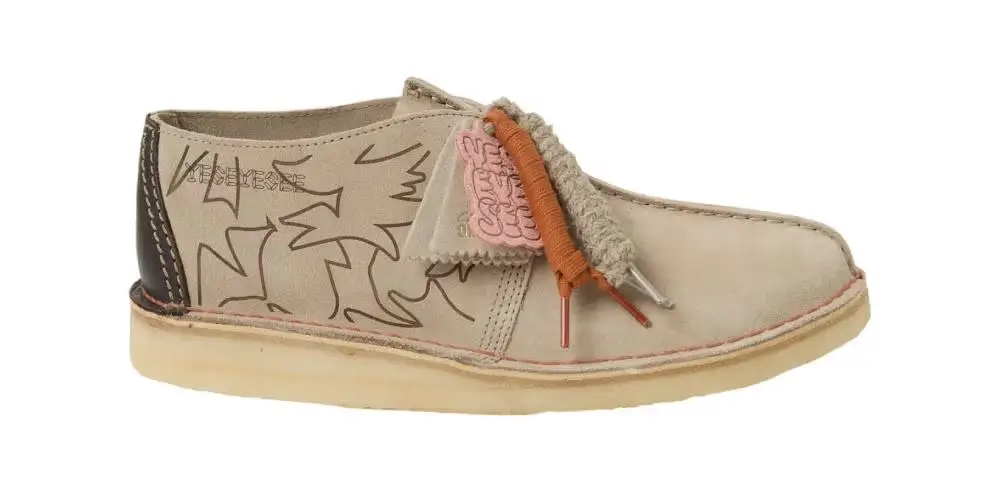
The 2026 collab between YESEYESEE, the South Korean imprint known for its free-spirited, youth-driven aesthetic, and Clarks Originals, the British heritage shoemaker behind the iconic Desert Trek, marks more than a product drop—it signals a cultural dialogue. Priced at $283 USD (≈268,000 KRW) and released on April 15, 2026, this limited-edition reimagining of the classic silhouette is available exclusively through YESEYESEE’s retail channels, including its online store and physical YeseyeC locations. This editorial explores how the partnership honors Clarks’ legacy while asserting YESEYESEE’s identity, resulting in a hybrid design that feels both timeless and distinctly contemporary.
regard
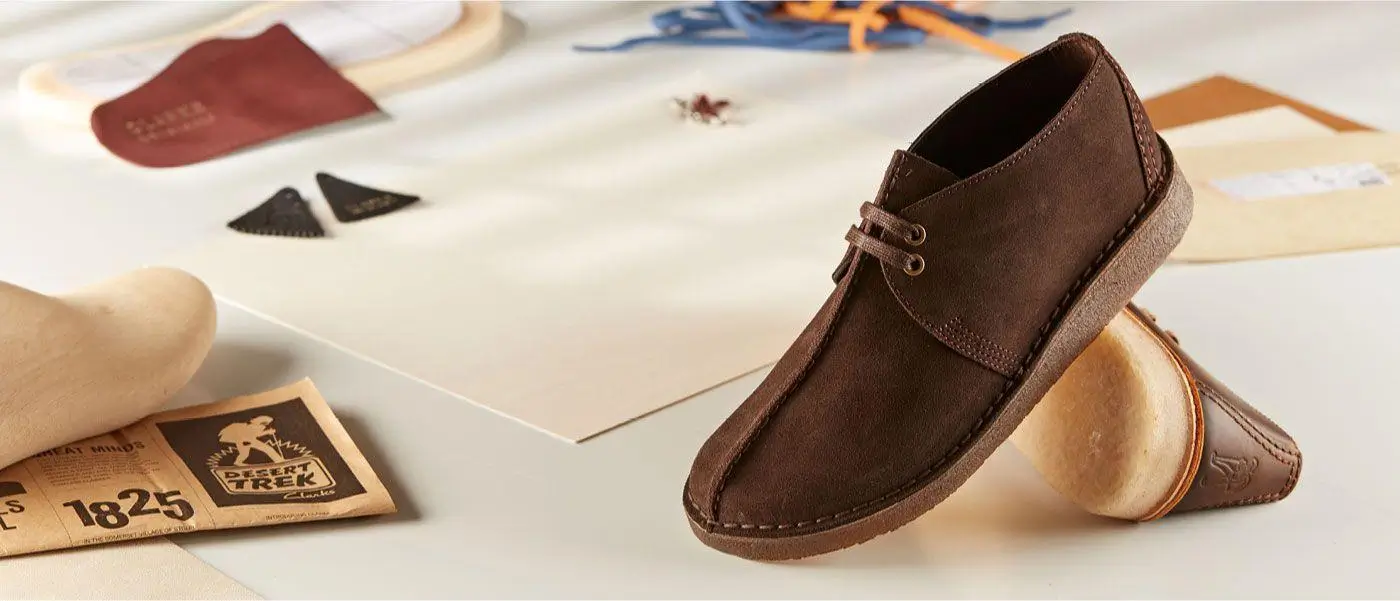
At its core, the Desert Trek is a study in functional elegance—a shoe born from utility, refined through decades of wear. YESEYESEE’s approach to the collaboration is rooted in a deliberate respect for this DNA. The silhouette retains its signature relaxed last and everyday comfort, ensuring that the shoe remains wearable and anchored in Clarks’ tradition of craftsmanship. This fidelity to form is essential: it establishes trust with purists while providing a stable foundation for creative intervention.
By resisting the urge to over-engineer or distort the original shape, YESEYESEE signals intent. This is not an exercise in deconstruction, but a measured evolution. The design acknowledges that the strength of the Desert Trek lies in its restraint—its ability to function as both object and uniform, equally suited to movement and stillness.
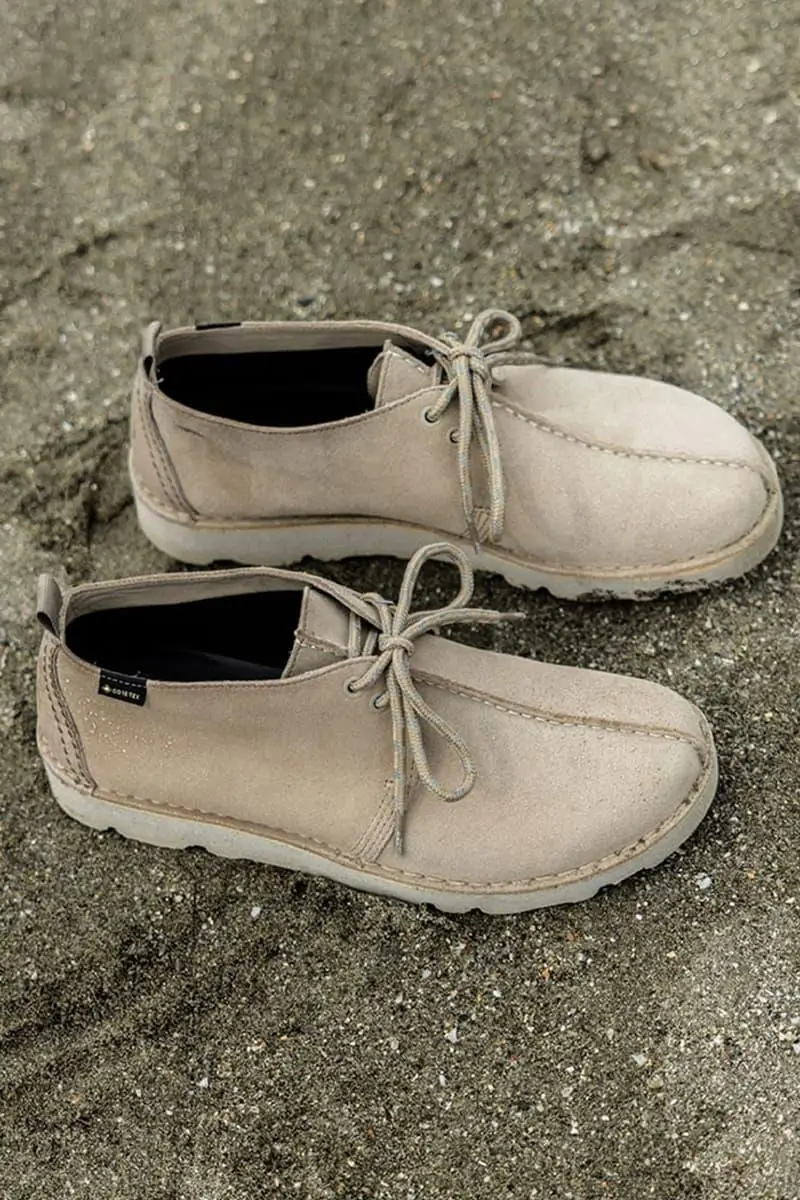
The use of suede across both the Sand and Black colorways further reinforces this connection to heritage. Suede, with its soft nap and muted luster, has long defined Clarks’ visual identity. Here, it operates as a tactile bridge, linking the rugged practicality of the original Desert Boot lineage with the elevated sensibility of contemporary streetwear. The material does not simply decorate the shoe—it situates it within a lineage of wear, use, and continuity.
View this post on Instagram
embue
Where the collab asserts its individuality is in the details. YESEYESEE does not overwrite the shoe; it reframes it through its own visual language. Subtle modifications to the side panels suggest a recalibration of proportion—small shifts that introduce a contemporary cadence without disrupting the silhouette’s equilibrium.
The updated lacing system adds another layer of authorship. Whether through texture, tone, or material contrast, it encourages closer inspection, drawing attention to the shoe as an object of design rather than mere utility.
Yet the defining intervention is unmistakable: the voluminous pink fob. This addition disrupts the otherwise restrained palette, injecting a note of irreverence and youth. It is playful without being frivolous, assertive without overwhelming the composition.
The fob functions as a signature—an accent that repositions the shoe within YESEYESEE’s universe. Small in scale yet dominant in effect, it becomes a visual hinge between heritage and experimentation. It signals authorship with precision: this is not simply a Clarks shoe; it is a YESEYESEE interpretation. The gesture is controlled, intentional, and highly legible.
craft
This collab operates as more than a design exercise; it is a cultural exchange. Clarks represents a lineage of British industrial design—rooted in practicality, durability, and global accessibility. YESEYESEE emerges from South Korea’s dynamic streetwear landscape, where identity is fluid and expression is paramount.
In this meeting, the Desert Trek is recontextualized. Once a symbol of understated British cool, it becomes a site of reinterpretation through a Korean lens—one that embraces both discipline and play. The collaboration reflects a broader shift in fashion, where heritage is no longer static but continuously re-authored across geographies.
The distribution strategy reinforces this dynamic. While Clarks operates at a global scale, restricting availability to YESEYESEE’s channels reframes the release as selective rather than universal. It transforms the shoe into a cultural object—something to be discovered, not simply purchased. This controlled access enhances its resonance, positioning it within a network of brand loyalty and subcultural awareness.

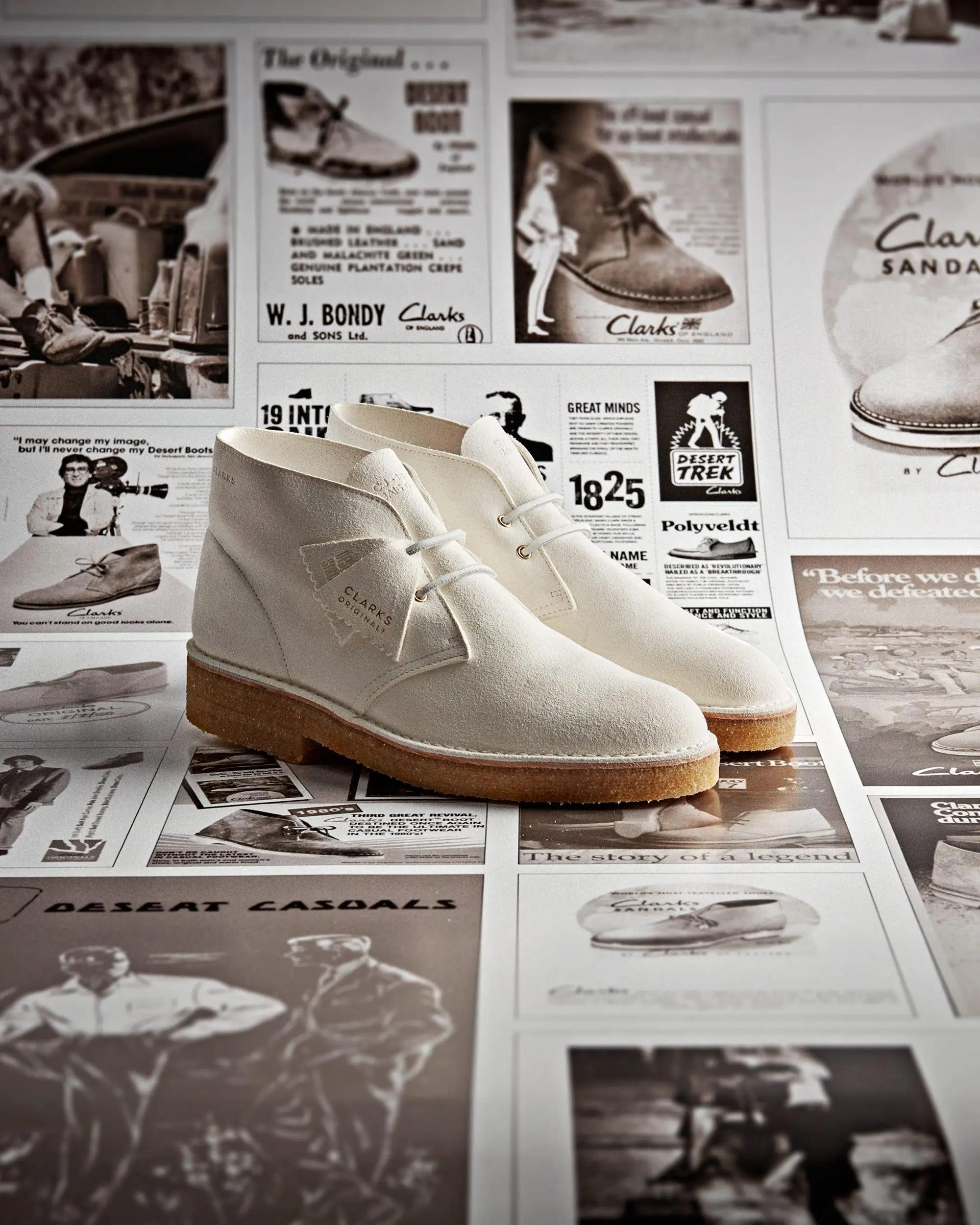
show
At $283 USD, the connect occupies a considered premium tier—one that reflects both Clarks’ heritage and YESEYESEE’s cultural currency. In a market saturated with hype-driven releases, this project distinguishes itself through restraint. It does not rely on spectacle or endorsement. Instead, it builds value through coherence.
The design resists excess. It prioritizes proportion, material, and detail over overt branding or narrative overload. This approach lends the shoe a quiet authority, allowing it to exist beyond the churn of seasonal trends.
For critics and scholars, the collaboration presents a compelling case study in design ethics. It raises essential questions: how can a legacy silhouette be reinterpreted without dilution? What constitutes meaningful intervention versus superficial change? And how does one balance innovation with respect?
The YESEYESEE x Clarks Originals Desert Trek answers these questions not through declaration, but through execution. Its strength lies in its calibration—in knowing precisely how far to push, and where to hold back.
fin
The YESEYESEE x Clarks Originals Desert Trek stands as a measured example of contemporary collaboration done with intent. It demonstrates that meaningful partnerships do not require volume—they require alignment.
By anchoring the design in Clarks’ enduring silhouette and allowing YESEYESEE to articulate its identity through targeted interventions, the project achieves equilibrium. It feels familiar, yet reoriented; classic, yet responsive to present conditions.
In a landscape where collaborations often operate as transactions, this release reads instead as dialogue—between brands, between cultures, between histories. It suggests that the future of connective design lies not in disruption for its own sake, but in continuity shaped through perspective.
For a collegial critique, the work extends beyond its material form. It invites reflection on authorship, on heritage, and on the evolving language of design. What does it mean to update a classic? Who holds the authority to reinterpret it? And how can design function as a bridge—linking past and present, origin and iteration, without erasing either?
Related Articles

Mizuno Reworks Wave Prophecy 13.2 Into a Four Colorway Street Drop
Three gen release colors and a fourth limited to select stockists arrive Friday, July 24, […]