Kering’s Strategic Recalibration at Alexander McQueen

June 6, 2026
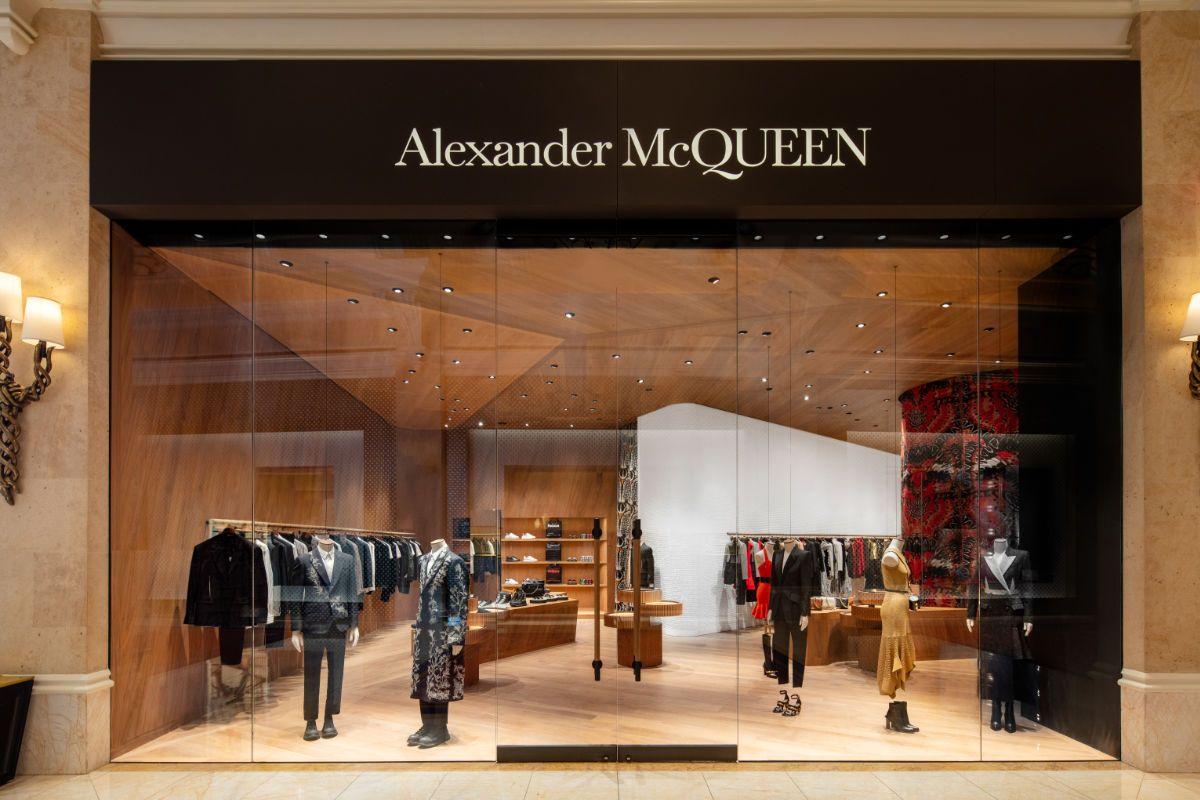
In the rarefied world of luxury fashion, where spectacle and heritage often collide with commercial imperatives, few moves signal a brand’s recalibration as starkly as widespread store closures paired with a deliberate return to its sartorial roots. For Alexander McQueen, under the stewardship of Kering, this dual strategy is not merely cost-cutting—it represents a profound repositioning. It seeks to honor the house’s legacy of dramatic British tailoring while forging a path to sustainable profitability in an era of tempered luxury demand.
The narrative unfolding in 2026 captures the tension between creative ambition and operational reality. As Kering’s CEO Luca de Meo steers the group through its “ReconKering” initiative—emphasizing true luxury, disciplined execution, and long-term desirability—McQueen stands as a pivotal case study. The brand is shedding excess retail footprint and recentering on women’s ready-to-wear, sculptural tailoring, and eveningwear, hallmarks of its founder Lee Alexander McQueen’s visionary craft.
stir
Alexander McQueen’s story is one of radical creativity. Founded by the late Lee McQueen, the house became synonymous with theatrical runway presentations that blended romantic gothicism, sharp tailoring, and technical mastery. From the razor-sharp suits that defined his early collections to the intricate corsetry and featherlight yet structured gowns, tailoring was never just construction—it was narrative armor. Sarah Burton’s tenure extended this DNA with poetic femininity, while Seán McGirr, appointed creative director, has explored softer interpretations of the dandy’s radical spirit alongside enduring sharpness.
Yet, as the luxury sector navigated post-pandemic shifts, McQueen’s trajectory mirrored broader challenges. Sneakers once accounted for up to 80% of sales in certain periods, a commercial pivot that masked underlying vulnerabilities when demand for casual luxury softened. With a network that ballooned to around 135 directly operated stores, the brand had expanded beyond its market position, leading to inefficiencies.
Kering’s response, articulated through de Meo’s leadership, is a return to fundamentals. “McQueen is not for sale,” the group has emphasized. Instead, it is undergoing a holistic strategic review aimed at restoring profitability within three years while preserving—and elevating—its core identity.
flow
Central to this overhaul is a significant contraction of McQueen’s physical retail presence. Plans call for closing approximately 50% of worldwide stores by the end of 2026, focusing on less strategic markets. In these locations, the brand will transition to a wholesale-led model, allowing it to maintain accessibility without the fixed costs of flagship operations.
This aligns with Kering’s broader retail pruning. The group net-closed dozens of stores in 2025 and has signaled further reductions in 2026, targeting underperforming locations across its portfolio. For McQueen, the move is about concentration: prioritizing high-impact flagships in key cities where the brand’s artistic narrative resonates most powerfully with its core clientele.
Critics might view store closures as a retreat, but in luxury’s current climate—marked by cautious consumer spending, especially in Asia and the U.S.—they represent prudent curation. A leaner network enhances exclusivity, reduces inventory drag, and allows for more immersive, storytelling-driven retail experiences. Imagine redesigned boutiques that foreground tailoring ateliers, perhaps with live demonstrations of hand-finishing or archival displays that echo McQueen’s infamous “Highland Rape” or “Widows of Culloden” collections. Such spaces would transform shopping into cultural pilgrimage, reinforcing brand equity in an age where discernment trumps ubiquity.
The closures also free up resources for digital innovation and wholesale partnerships. E-commerce, already vital, can be optimized with virtual try-ons for tailored pieces, while select department stores and multi-brand retailers carry diffusion elements. This hybrid approach balances heritage prestige with broader reach, mitigating the risks of over-expansion seen in prior years.
scope
Parallel to retail contraction is a sharpened product focus. Kering’s strategy explicitly highlights “women’s ready-to-wear, tailoring and eveningwear at the core,” supported by coherent leather goods, shoes, and accessories. This is a deliberate pivot from sneaker-heavy commercialization toward the house’s historic strengths in sculptural silhouettes, precise construction, and high-craftsmanship details.
Tailoring at McQueen has always been revolutionary—think razor-sharp suiting with exaggerated shoulders, nipped waists, and meticulous patterning that flatters while subverting norms. Under the new model, expect collections that amplify this: perhaps elevated day-to-evening suiting in luxurious wools and silks, evening gowns with architectural draping, and accessories that echo the tailoring motif (structured bags, precise hardware). Men’s offerings may see reduced emphasis on runway, redirecting energy to womenswear where the brand’s emotional and technical resonance is strongest.
View this post on Instagram
This refocus is not nostalgic regression but evolutionary refinement. In a market saturated with athleisure and logo-driven casualwear, McQueen’s tailoring offers differentiation: pieces that demand attention, reward investment, and age with grace. It speaks to a maturing consumer who values craftsmanship amid economic uncertainty—one who seeks “quiet luxury” infused with dramatic flair rather than fleeting trends.
De Meo has framed these changes as “consistent with the Maison’s new operating model.” By streamlining collections—fewer, more focused drops—the brand can invest deeply in quality, storytelling, and exclusivity. This mirrors successful repositionings elsewhere in luxury, where heritage houses have thrived by doubling down on savoir-faire.
straddle
Recent developments underscore the human and operational dimensions of this transformation. In early June 2026, Kering appointed Gianfranco D’Attis as CEO of Alexander McQueen, effective June 3. A veteran with deep luxury expertise from Prada, D’Attis brings “strategic vision, operational discipline,” according to de Meo. His mandate: refine identity while driving execution in the refocused model.
This leadership infusion comes amid ongoing labor negotiations. In Italy, McQueen’s production and logistics hub in Scandicci witnessed protests and strikes in May 2026 over planned staff reductions. Of the brand’s roughly 181 Italian employees, 54 roles—about one-third—were targeted, prompting unions Filctem CGIL, Femca CISL, and Uiltec UIL to demand dialogue and social safety nets.
On June 4, following a strike on May 20, Kering reached an agreement postponing layoffs until September. The pact, supported by McQueen employees, avoids unilateral action and opens avenues for incentives or redeployment. De Meo acknowledged the difficulty: “It was necessary… consistent with the Maison’s new operating model and with the strategic review of its activities at a global level, aimed at restoring the business to sustainable profitability.”
View this post on Instagram
The uncertainty around creative director Seán McGirr’s future adds another layer. While his collections have garnered praise for blending heritage with modernity, the brand’s pivot may necessitate alignment with the tailoring-centric vision. Kering’s approach—decisive yet collaborative—reflects a broader commitment to responsible restructuring within the luxury ecosystem, where talent retention and supply chain stability remain paramount.
broad
McQueen’s overhaul is emblematic of Kering’s “ReconKering” strategy: prioritizing Gucci’s recovery, launching a dedicated jewelry division, and applying financial discipline across the portfolio. After years of sales declines, the group is rightsizing to reignite growth by 2026–2027. Store optimizations, product clarity, and operational excellence are the watchwords.
For the luxury industry at large, this case highlights evolving dynamics. The era of unchecked expansion has yielded to selectivity. Brands are reevaluating physical retail in favor of experiential and digital hybrids. Consumer preferences are shifting toward pieces with lasting cultural and artisanal value—tailoring fits perfectly here, evoking permanence in a fast-fashion-fatigued world.
Challenges persist: geopolitical tensions, fluctuating demand in key markets, and the need to attract new generations without diluting prestige. Success for McQueen will hinge on execution—delivering collections that captivate on runway and rack, fostering emotional connections through storytelling, and leveraging D’Attis’s expertise for seamless operations.
fin
As Alexander McQueen navigates this chapter, the focus on tailoring and store rationalization promises a return to its rebellious yet refined essence. Lee McQueen’s spirit—dramatic, precise, unapologetically British—endures not in volume but in intensity. Kering’s investment in this reset, despite short-term pain, positions the house for long-term resonance.
The coming seasons will be telling. Will sculptural suiting redefine modern power dressing? Can eveningwear recapture the house’s theatrical magic in a more intimate retail context? With new leadership and a disciplined framework, McQueen has the tools to not only survive but to redefine its place in the luxury pantheon.
In fashion, as in life, pruning often precedes the most vibrant growth. For Alexander McQueen, the closure of stores and embrace of tailoring may well mark the beginning of a bolder, more authentic era—one where heritage fuels innovation, and exclusivity restores desirability. The industry watches closely, as does a global clientele drawn to the enduring allure of a perfectly cut garment that tells a story as sharp as its seams.
Related Articles

France Just Banned Social Media for Kids Under 15, and the Fight Over Anonymity Is Only Getting Started
France becomes the first EU nation to bar under 15s from social platforms, and critics […]