DRIFT AUDIO
Listen to this story
Choose a voice, then press play.
leg
To understand the weight of this casting, one must first understand the legacy of BLEU DE CHANEL itself.
Launched in 2010 under the creative direction of Jacques Polge, BLEU DE CHANEL was not just a new fragrance — it was a redefinition of modern masculinity in scent form. At a time when men’s fragrances leaned brash, synthetic, and overtly performative, BLEU DE CHANEL introduced something quieter. More deliberate. A composition built on balance and restraint.
It opened with citrus and pink pepper — clean, immediate — before settling into a mid of nutmeg, jasmine, and sandalwood. Warm, composed, grounded. The base, marked by vetiver, patchouli, and incense, carried a smoky depth — something unresolved, something lingering.
It didn’t announce itself. It revealed itself.
And then there was Gaspard Ulliel.
Ulliel did not sell the fragrance. He embodied it. His presence — sharp, internal, unforced — aligned perfectly with the scent’s architecture. He was not loud, not performative. He was simply there. Seen without effort.
His passing in 2022 left more than absence. It left a question.
Who carries something like this forward?
View this post on Instagram
an evolve
And now, Jacob Elordi steps into that space.
Not as a replacement. Not as a continuation. But as a shift.
If Ulliel represented a European interiority — the intellectual, the artist, the quiet observer — Elordi reflects something more globally dispersed. A masculinity shaped across cultures, platforms, and emotional registers. Physically imposing, yes. But increasingly defined by nuance.
He carries presence differently. Less romanticized distance, more psychological openness. Stillness remains, but it feels recalibrated.
Not mystery for its own sake — but awareness.
show
Elordi’s rise has resisted simplicity.
Introduced through The Kissing Booth, he could have remained fixed within that frame — a surface-level archetype. Instead, he stepped away. Waited. Repositioned.
Then came Euphoria. As Nate Jacobs, he stripped the character of caricature and replaced it with something more unsettling: internal fracture. Control masking vulnerability. Silence doing more than dialogue ever could.
His performance relied not on excess, but on containment.
In Priscilla, under Sofia Coppola, he approached Elvis not as myth, but as erosion. Fame without intimacy. Power without grounding.
Then Saltburn, directed by Emerald Fennell, extended that tension further. His presence became almost architectural — occupying space with precision, control, and quiet menace.
Across these roles, a pattern emerges.
He doesn’t project.
He holds.
a convince
The new campaign from Chanel follows that same principle.
Minimal. Reduced. Intentional.
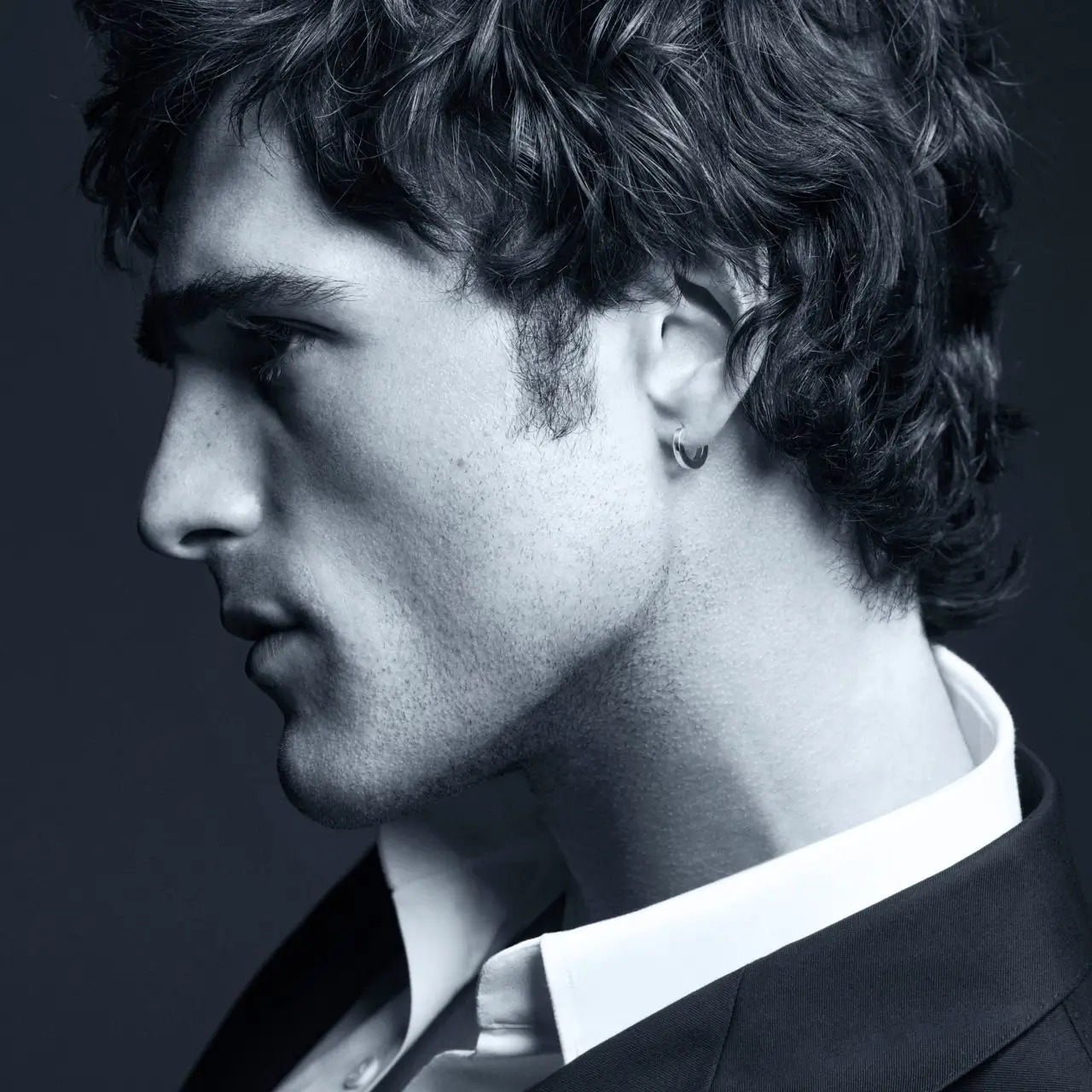
Shot in monochrome with faint blue undertones, it avoids spectacle. Elordi stands within a corridor — framed, observed, unmoving. The camera circles, but he remains centered. Anchored.
No voiceover. No narrative exposition.
Only presence.
A single drop of fragrance falls in slow motion — catching light, landing on skin.
The campaign doesn’t attempt persuasion. It removes it entirely.
What remains is atmosphere.
a transition
This casting is not incidental. It reflects a broader recalibration.
Masculinity — particularly within luxury — is no longer anchored in dominance or projection. The shift is quieter, but more definitive. Toward self-possession. Toward awareness. Toward restraint as power.
BLEU DE CHANEL has always suggested this, but now it aligns more directly with it.
Elordi does not perform confidence. He suggests it.
He does not assert identity. He inhabits it.
This is not the man proving himself.
This is the man already resolved.
scope
In the final frame, Elordi turns and walks away. No hesitation. No glance back.
The corridor remains. Empty, but not absent. Then the name appears.
BLEU DE CHANEL. Jacob Elordi.No tagline. No directive. Nothing added.
Because nothing needs to be.
Related Articles

American Horror Story Opens the Vault for a Thirteen-Episode Reunion of Its Own Ghosts
Three half-hour episodes land September 24 on FX and Hulu, with Jessica Lange, Sarah Paulson […]