DRIFT AUDIO
Listen to this story
Choose a voice, then press play.
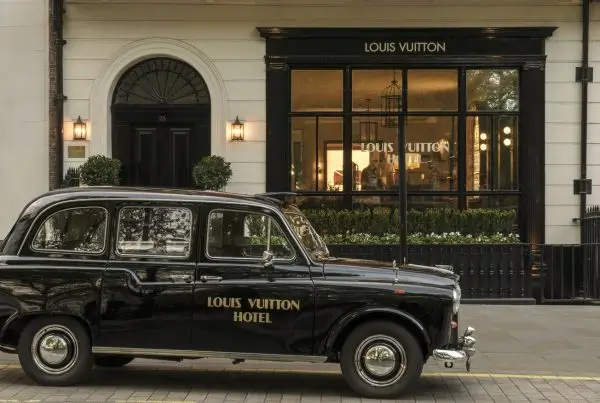
In the quiet elegance of Mayfair, where Georgian townhouses stand like sentinels of old-world refinement, a new kind of luxury has taken residence. For two months only, Louis Vuitton has transformed a historic London home into a living, breathing homage to its 130-year legacy—a pop-up hotel that is less about accommodation and more about immersion. This is not retail. This is ritual. Not commerce, but culture.
From the moment you step inside, you are no longer a guest. You become a traveler through time, a participant in a story that began in 1896 with a trunk and has since evolved into a global language of desire, craftsmanship, and movement. The Louis Vuitton pop-up is not selling bags. It is selling moments—carefully curated, deeply felt, and impossible to replicate.
stir
Louis Vuitton’s 130th anniversary is not marked by spectacle in its traditional form. There is no runway, no singular announcement. Instead, there is presence—an invitation to step inside the brand’s world, not as a consumer, but as a witness.
Open from April 24 to June 24, 2026, the London pop-up functions as both celebration and experiment. It follows the announcement of the brand’s permanent Parisian hotel, set to open in 2026, and acts as a prototype—testing how heritage can be translated into a multi-sensory, time-bound experience. London, with its balance of tradition and modernity, becomes the ideal stage.
“This is about storytelling,” a brand insider notes. “We’re not here to sell. We’re here to connect.”
And the connection is immediate.
flow
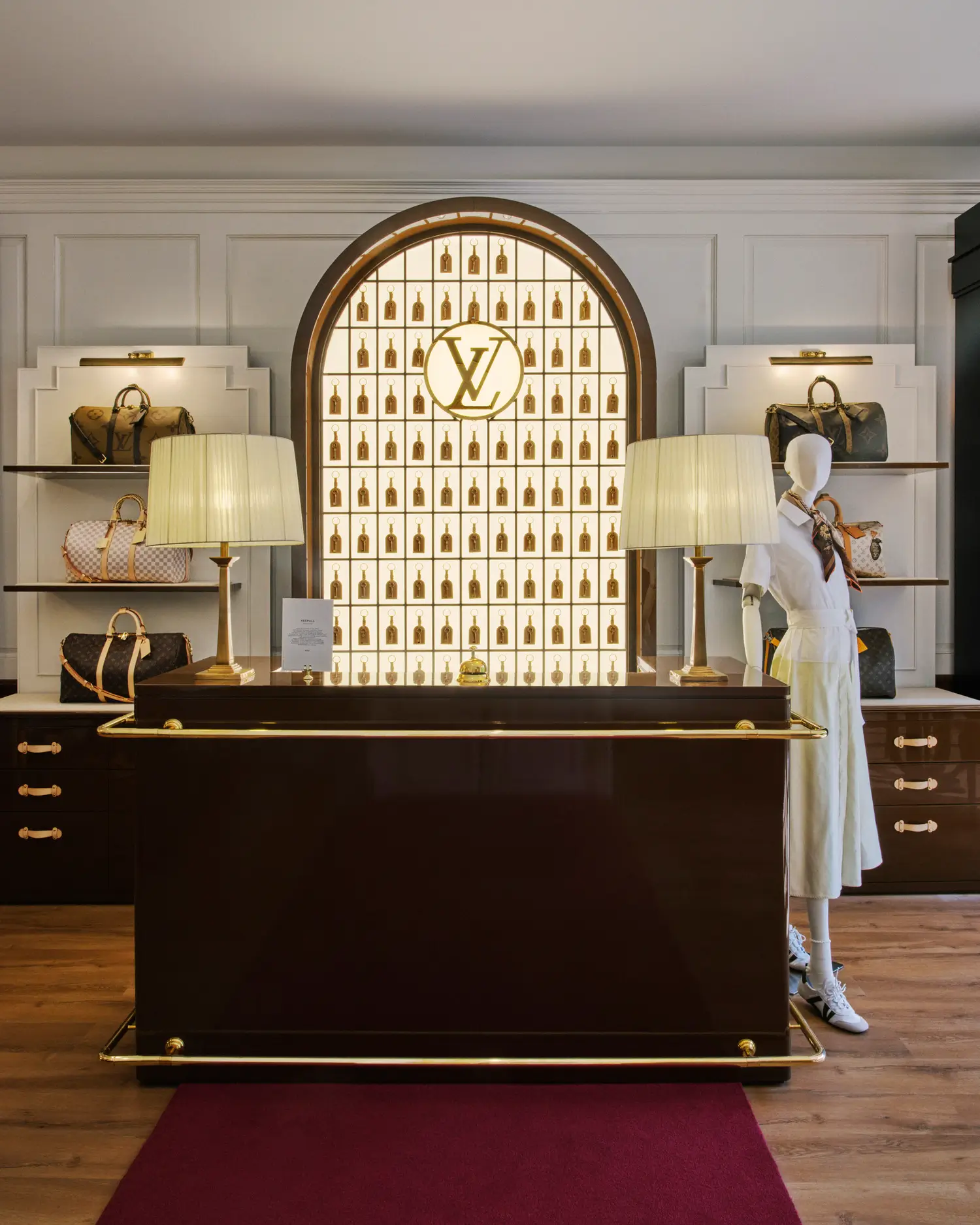
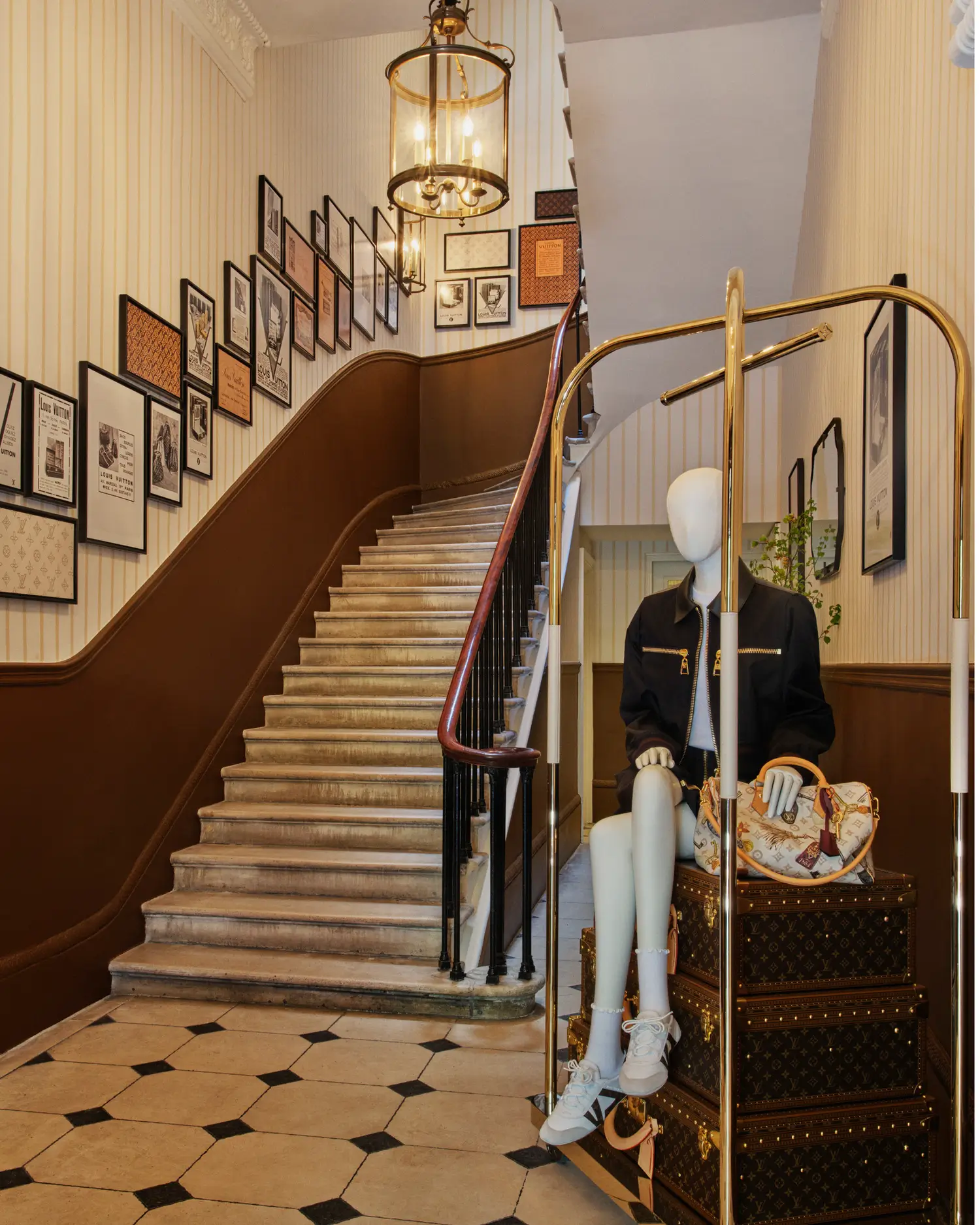
Entry begins in the Keepall Lobby, named after the iconic travel bag introduced in 1950. The space evokes the romance of departure: a worn wooden staircase, softly creaking underfoot, framed archival photographs lining the walls like a view record of movement and memory.
A faint scent of leather and polish lingers in the air—subtle, deliberate. Mannequins dressed in current collections stand in quiet dialogue, their silhouettes tracing the brand’s evolution from mid-century structure to contemporary fluidity.
The message is clear: Louis Vuitton is not merely a fashion house. It is a travel house. And travel, in its truest sense, is about transformation.
The Keepall is not displayed here as product—it is positioned as artifact, as origin point.
interior
Upstairs, the narrative shifts inward. Two rooms are dedicated to the Speedy, one of the brand’s most enduring forms. Introduced in 1930 as the “Express,” and later renamed in 1965 at the request of Audrey Hepburn, the Speedy represents a recalibration of travel—smaller, personal, urban.
The first room is restrained. Light filters through sheer curtains, settling across cream-toned walls and minimal furnishings. A low chair, a vintage desk, a quiet sense of habitation. It feels less like a showroom and more like a lived-in Parisian interior.
Next door, the Speedy P9 Safe Room presents its inverse. Gold surfaces envelop the space—walls, ceiling, floor—creating a metallic environment that feels both futuristic and ceremonial. At its center, reworked versions of the original Speedy sit alongside Pharrell Williams’ 2024 reinterpretation.
The gold is intentional, not excessive. It reframes the Speedy as more than utility—as cultural object. A symbol of transition from function to meaning.
wellness
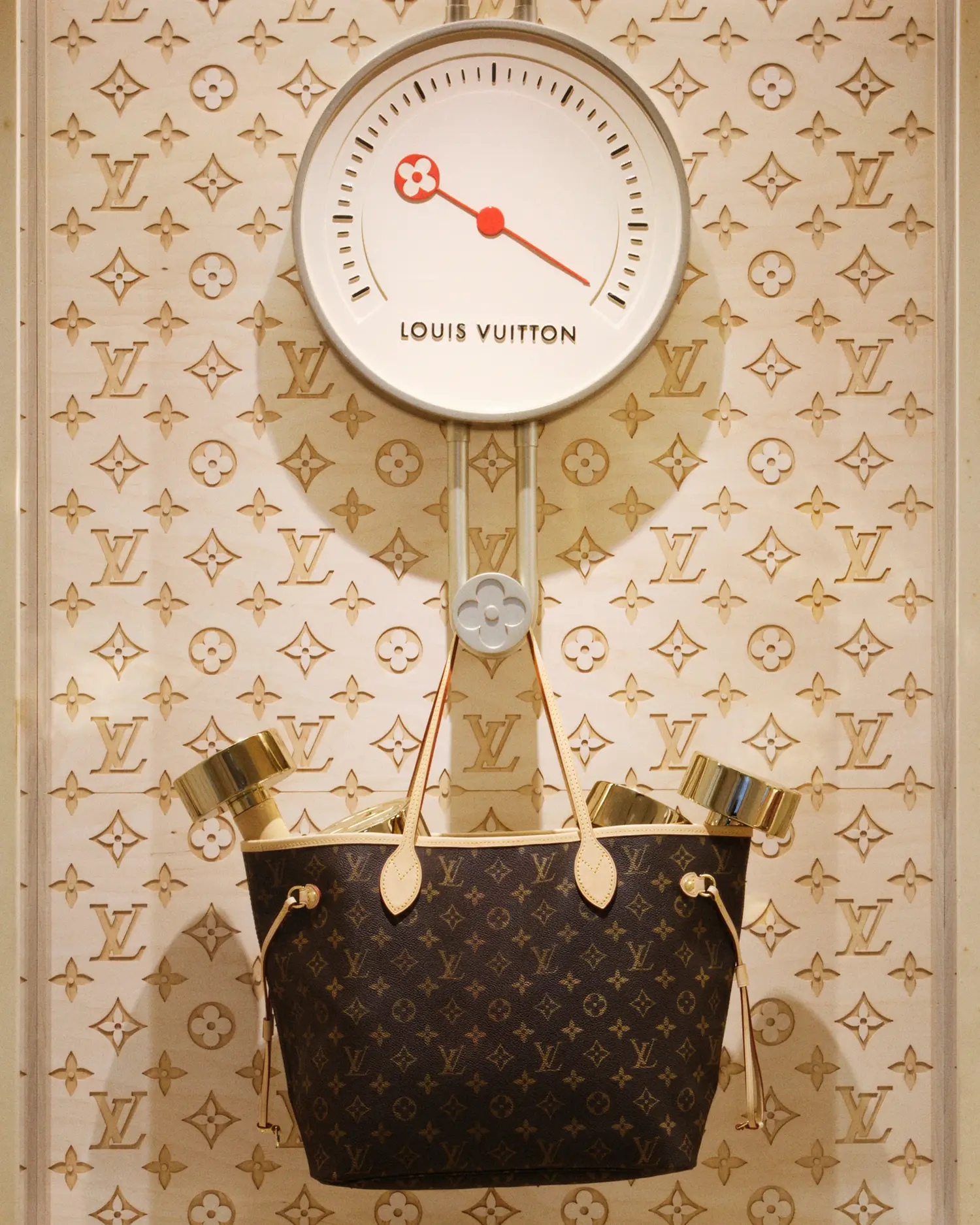
At the top floor, the Neverfull Gym reframes the concept of utility through the lens of contemporary wellness. Introduced in 2007, the Neverfull was designed for capacity—structure without limitation. Here, it becomes a vessel for self-maintenance.
The environment is controlled and cohesive: cream-and-brown striped walls, soft rubber flooring in muted taupe, leather-wrapped dumbbells resting on polished wood. Every element aligns with the brand’s material language.
tempo
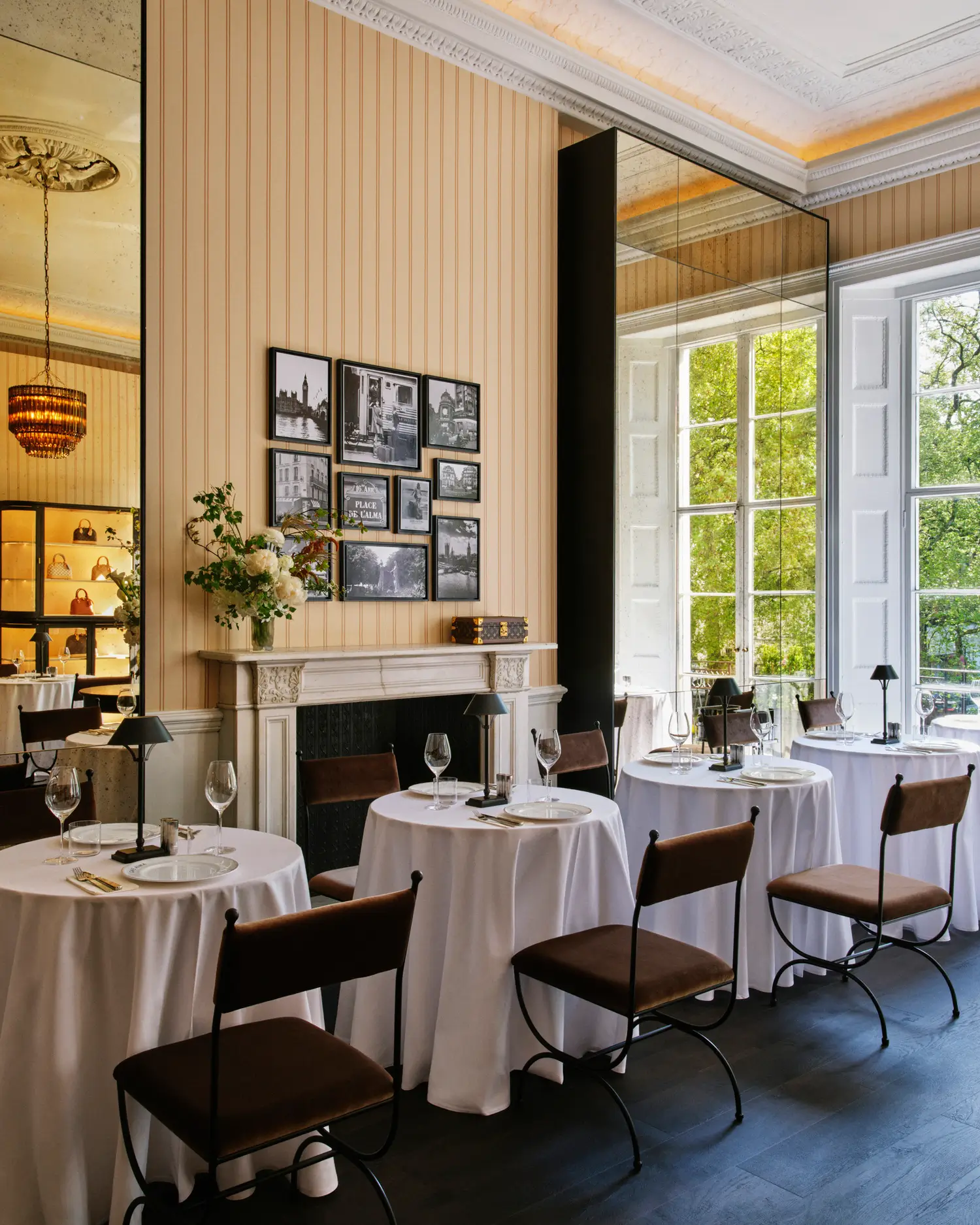
Named after Place de l’Alma in Paris, the café operates as a bridge between geographies and sensibilities. The Alma bag, introduced in 1971, informs the space’s structure—precise, architectural, composed.
From late morning through afternoon, the café shifts in tone. A seasonal luncheon gives way to a refined tea service—scones, éclairs, and delicate pastries presented on monogrammed porcelain. Tea arrives in silver pots, handles wrapped in leather. Even the smallest details carry intention.
Here, French identity meets British ritual. Not as contrast, but as alignment.
The café does not rush. It invites pause.
a trope
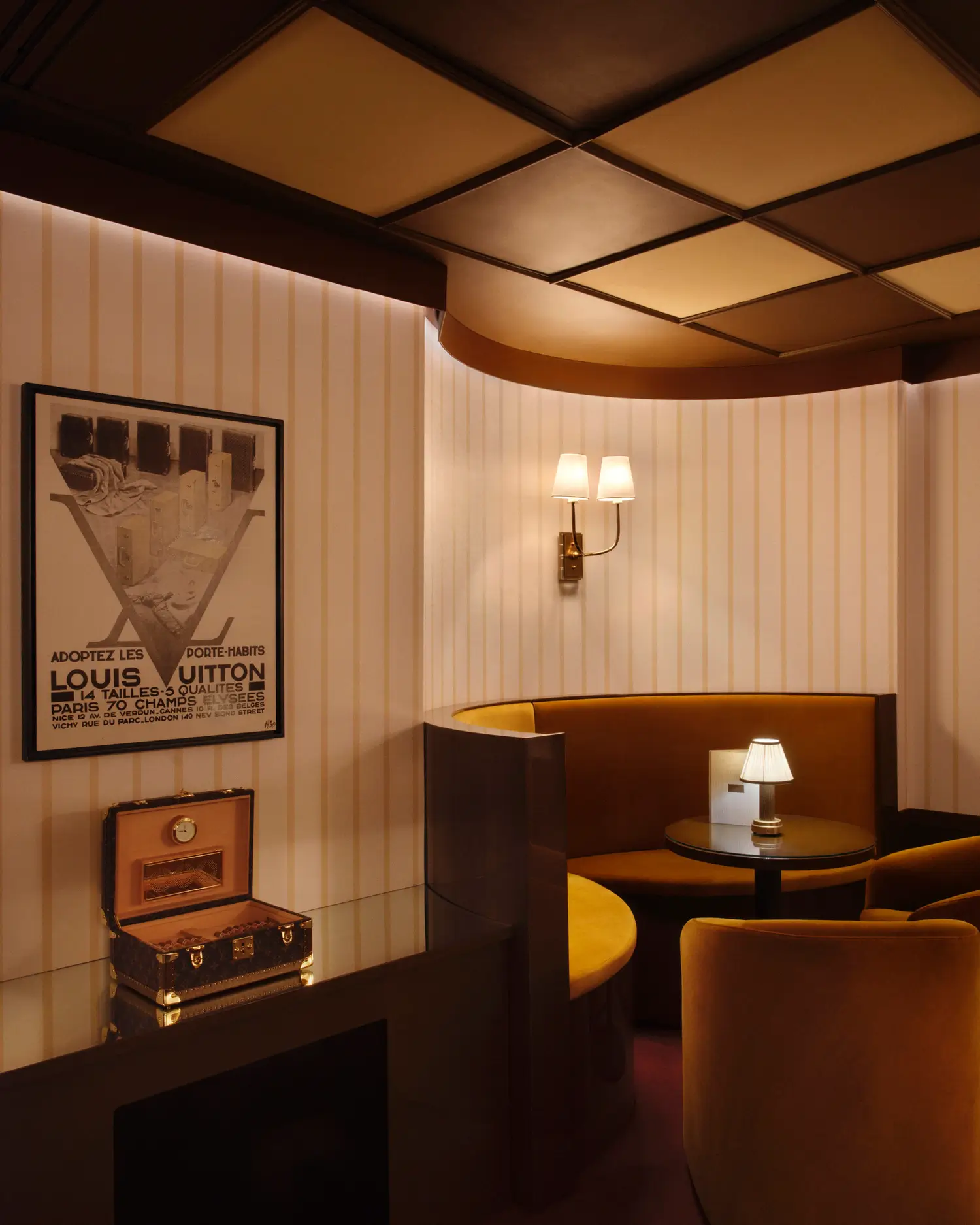
Below ground, Bar Noé introduces a different register. Dimly lit, enclosed, and atmospheric, it draws from the legacy of the Noé bag—originally designed in 1932 to carry champagne bottles upright.
The bar retains that association. Champagne flows. Cocktails reference the brand’s visual language. Music—French house, ambient electronica, soft jazz—fills the room without overwhelming it.
This is not nightlife in its conventional sense. It is a salon—controlled, curated, conversational.
Haute here is not loud. It is precise.
show
The London installation is not isolated. It exists within a broader shift in luxury—away from transactional retail and toward experiential immersion.
In a landscape defined by digital saturation, Louis Vuitton introduces something slower. Physical, sensory, intentional. A space where the brand is not viewed, but inhabited.
This pop-up functions as both test and thesis. A preview of the Paris hotel, but also a statement about where luxury is moving.
rarity
The two-month duration is deliberate. Scarcity creates tension. It heightens awareness. It transforms presence into urgency. Access remains limited. Invitations are controlled. There are no casual entries. This is not accessibility—it is curation.
The experience becomes not just something to attend, but something to have been part of.
fwd
Louis Vuitton has long positioned itself beyond product. Identity, aspiration, narrative—these have always been central.
This installation extends that philosophy. It is no longer about what is worn, but how one moves, where one exists, what one experiences.
The brand becomes environment.
clue
As evening settles over Mayfair and Bar Noé begins to fill, the intention becomes unmistakable.
Louis Vuitton is not in the business of selling bags.
It is in the business of constructing meaning.
This pop-up is not a temporary gesture. It is a declaration—of pace, of presence, of perspective. In a world defined by speed, it creates stillness. In a market driven by visibility, it builds atmosphere.
The most valuable elements here are not objects.
They are moments.
And they do not last.
n
From the DRIFT archive: Inside the World’s Most Iconic Ski Experiences · Studious Interior: Officine Universelle Buly’s Octagonal Ritual of Scent
Related Articles
Miffy Gets Her Ceremony Best: United Arrows Dresses Dick Bruna’s Rabbit for KIDDY LAND’s 80th
A Miffy mascot in United Arrows’ formal-occasion wardrobe, and a pouch where she peeks out […]