DRIFT AUDIO
Listen to this story
Choose a voice, then press play.
Fifty points on an April night in St. Louis gave the Hawks their only title. The man who scored them, the NBA’s first MVP, away Wednesday in Metairie.
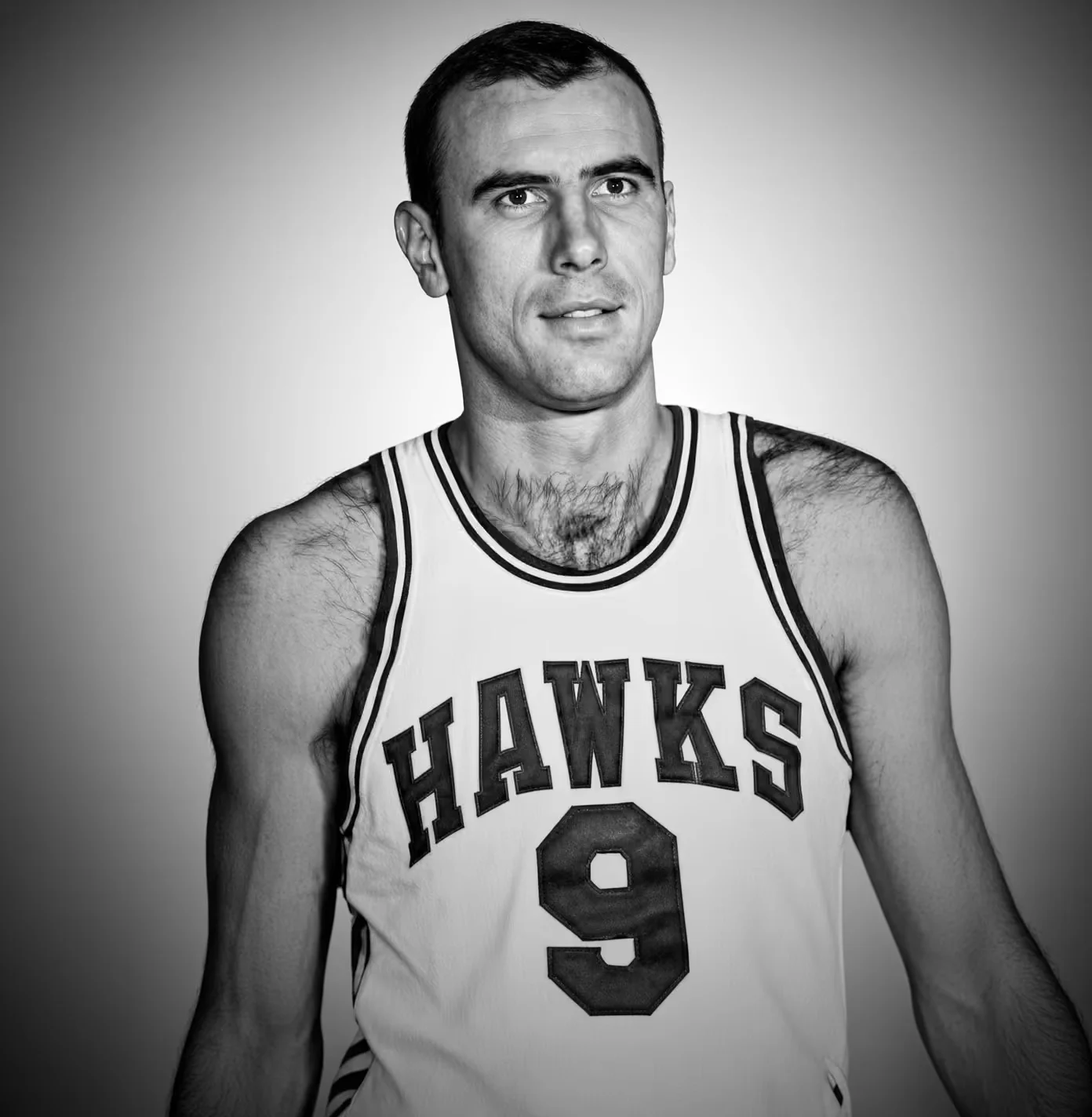
Bob Pettit away on Wednesday, September 23, at his home in Metairie, Louisiana, a few miles outside New Orleans. He was 93. His alma mater, Louisiana State University, announced the news on Thursday without giving a cause, and his family, in a statement reported by Field Level Media, remembered him as “the most kind, humble and gentle soul.” Within hours the NBA issued its own tribute, recall a player who “raised the bar for excellence” as the league’s first MVP, its first 20,000-point scorer and its first four-time All-Star Game MVP. The statement closed with thoughts for his family, his friends and the entire Hawks organization.
Signal. What happened: Bob Pettit, the first winner of the NBA’s Most Valuable Player award and the defining player in Hawks franchise history, pass at 93. Exact object: Robert Lee Pettit Jr., born December 12, 1932, in Baton Rouge, a Naismith Basketball Hall of Famer, two-time NBA MVP and member of all four NBA Anniversary Teams. When and where: he died Wednesday, September 23, 2026, at home in Metairie, Louisiana; LSU announced his death Thursday, September 24, and funeral arrangements are pend. Source: the NBA’s official obituary and statement, LSU’s announcement and a statement from the Pettit family. Why it matters: Pettit set the league’s first indie benchmarks for scoring and honors, and his 50 points in Game 6 of the 1958 Finals delivered the only championship the Hawks franchise has ever won.
View this post on Instagram
stir
Nothing about Pettit’s early years pointed toward inevitable. Born in Baton Rouge, he did not make the varsity team at Baton Rouge High School until his junior season, a late start revisited this week in ESPN’s obituary. By his senior year he had grown into the game, leading the school to a state championship and collecting more than a dozen college offers. He chose to stay home.
He later said that state title game was one of only two games he could still recall clearly. The other came in the spring of 1958, in a building 700 miles up the Mississippi. For a teenager in Louisiana in the early 1950s, though, the high school crown carried a weight that he never quite let the professional one replace.
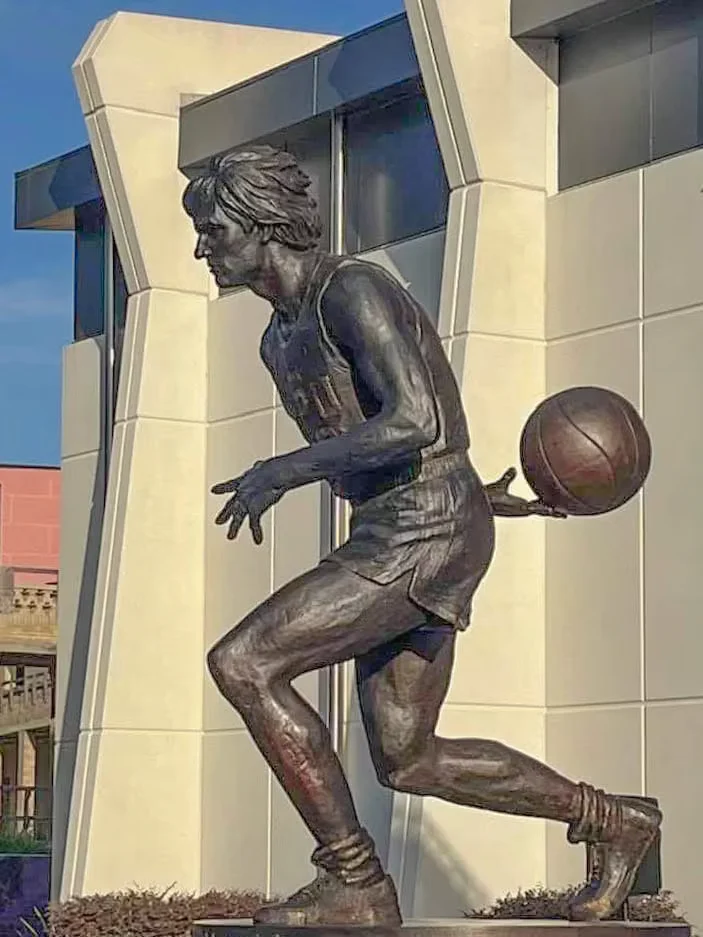
At LSU, Pettit kept growing, adding five inches of height by his senior season, and his production rose with him. He was a two-time All-American, averaged 27.4 points across his college career and led the Tigers to their first NCAA Final Four in 1953. The school retired his No. 50. He is one of only three LSU players enshrined in the Naismith Hall of Fame, alongside Pete Maravich and Shaquille O’Neal, and a bronze statue of Pettit stands outside the Pete Maravich Assembly Center, the Tigers’ home arena.
The Milwaukee Hawks selected him with the second overall pick in the 1954 NBA Draft. He arrived in a league that had just introduced the 24-second shot clock, and he was named Rookie of the Year in 1955, the franchise’s final season in Milwaukee before it relocated to St. Louis. In his second season the NBA handed out a Most Valuable Player award for the first time. Pettit won it, leading the league in scoring at 25.7 points per game.
score
The Hawks and the Boston Celtics met in the Finals four times in five seasons, and the first of those meetings ended in heartbreak for St. Louis. In Game 7 of the 1957 series, in double overtime, a Pettit tip-in attempt in the final seconds circled the rim and fell out. Boston won its first championship. That seventh game is still cited among the finest in Finals history, and for Pettit it became the loss that framed everything that followed.
A year later the two teams were back. St. Louis took Game 1 by two points, Boston evened the series, and in Game 3 the Celtics lost Bill Russell to an ankle injury. The Hawks won that night, dropped Game 4, then edged Game 5, 102-100, to move within a single win of the title.
Game 6 was played on April 12, 1958, at Kiel Auditorium in downtown St. Louis. Russell tried to play through the ankle and was limited. Pettit was not. He had 31 points through three quarters, then took over the fourth, scoring 19 of his team’s last 21 points, according to the historical record of the 1958 Finals. His final basket, a tip-in with 15 seconds left, put St. Louis ahead 110-107. Boston scored once more and ran out of time. Final: Hawks 110, Celtics 109.
Pettit finished with 50 points and 19 rebounds. At the time it was a playoff scoring record, and it stood as the most points ever scored in a Finals-clinching game until Giannis Antetokounmpo matched it for the Milwaukee Bucks in 2021, a symmetry that ran through the city where Pettit’s own career began. It was also the highest-scoring performance in any Finals game up to that point, and nearly seven decades later it still ranks among the top single-game totals the Finals have produced. It remains the only championship in Hawks franchise history.
The result stands out in Boston’s history too. The Celtics won nine titles in ten seasons over that era, and the 1958 series was the only one they lost across the stretch. Russell, who became Pettit’s friend as well as his rival, kept praising him for the rest of his life, saying in remarks recirculated by Yahoo Sports that Pettit “worked harder than almost any player I’ve ever seen.” Tommy Heinsohn, the Celtic assigned to guard him for most of the series, said coach Red Auerbach never let him forget that night.
St. Louis kept winning in the regular season, finishing atop the Western Division in each of the next three years, but the Finals rematches went Boston’s way. The Celtics beat the Hawks in seven games in 1960 and in five in 1961.
scope
The league’s statement pointed to something beyond the records: Pettit, it said, helped transform the power forward position. The Naismith Basketball Hall of Fame makes the same case in its own profile, describing a lean, graceful, well-conditioned big man who was among the first to play facing the basket. In an era when tall players were expected to set up with their backs to the rim, Pettit could catch the ball out on the floor, square up and shoot or drive. It handed defenders a problem they had not been asked to solve before, and it sketched an early outline of the modern stretch forward.
The Hall’s profile also locates his edge in effort as much as talent, noting that he simply would not be outworked. That showed most clearly on the glass. Pettit called rebounding the thing he did best, and his career average of 16.2 rebounds per game remains third all time, behind only Wilt Chamberlain and Russell, the two centers who defined the decade he played in.
That context matters when measuring his reputation today. Pettit was a star in a league that rarely appeared on national television, competing for attention with Oscar Robertson, Elgin Baylor, Chamberlain and Russell. Much of what survives of his career is box scores, wire photographs and the testimony of the men who had to guard him, which is part of why the league’s tribute leaned so heavily on the word “first.”
quant
Pettit played 11 NBA seasons, all with the Hawks, and was an All-Star in every one of them. He won his second MVP in 1959, leading the league in scoring at 29.2 points per game and finishing second to Russell in rebounding at 16.4. He averaged 26.1 points the following season and 27.9 the season after that. He was named MVP of the All-Star Game four times, a total matched only by Kobe Bryant.
He retired after the 1964-65 season, at 32, citing a troublesome knee and an opportunity in banking. He left as the NBA’s career scoring leader with 20,880 points, the first player ever to pass 20,000, and second on the career rebounding list with 12,849. His career averages were 26.4 points and 16.2 rebounds per game.
The honors followed. He was enshrined in the Naismith Memorial Basketball Hall of Fame in 1971 and named to the NBA’s 25th, 35th, 50th and 75th Anniversary Teams, one of the few players to appear on all four. The Hawks, who moved to Atlanta in 1968, three years after his last game, retired his No. 9, and it still hangs at State Farm Arena. In a statement on Thursday, the franchise called him an ambassador for the sport and noted that the jersey remains a reminder of what he gave the organization.
fin
Pettit went home to Baton Rouge after basketball and built a second career in banking and financial consulting. He never skewed far from the game. In recent years he was a regular at LSU games and at New Orleans Pelicans games, a familiar figure to fans who knew the name mostly from the record books.
His wife, Carole, pass in 2010. The couple had three children. In their statement, the family said his go had gone very peacefully and that they felt blessed to have had him in their lives.
The Hall of Fame, in its own statement, remembered a sleek, skilled big man who revolutionized the forward position and retired as the leading scorer in NBA history. LSU has said funeral arrangements are pending. His No. 50 remains retired in Baton Rouge, and his bronze likeness still stands outside the arena on the campus he chose over a dozen others as a teenager.
Related Articles

Jung Kook Lets a Zipper Count In the Final Chapter of Calvin Klein’s Fall Denim Story
Renell Medrano directs the third Feel the Fit film, where a zipper cues the beat […]