DRIFT AUDIO
Listen to this story
Choose a voice, then press play.
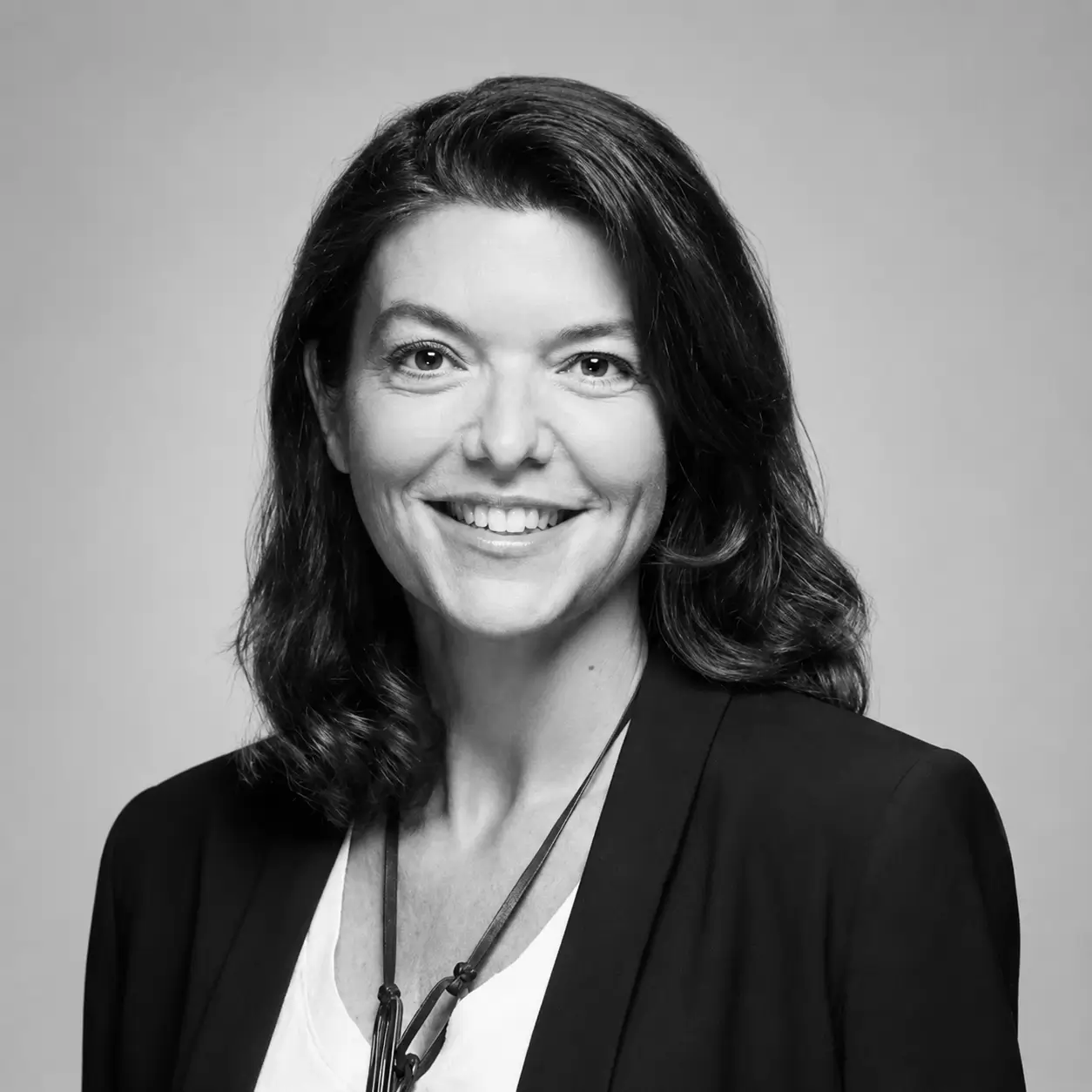
Chanel has named Hélène de Tissot, a 23 year Pernod Ricard finance veteran, as its next global CFO, arriving in October and taking the seat in January.
The email went out on a Wednesday afternoon, the kind of understated corporate statement that haute houses tend to favor over splashy press events. Chanel confirmed it would appoint Hélène de Tissot as its new chief financial officer, a move first reported by Reuters and quickly picked up across the trade press. There was no runway, no campaign imagery, just a name, a date, and a reporting line. De Tissot arrives at the house in October, spends a few months in transition, and formally takes over as CFO in January, based in London.
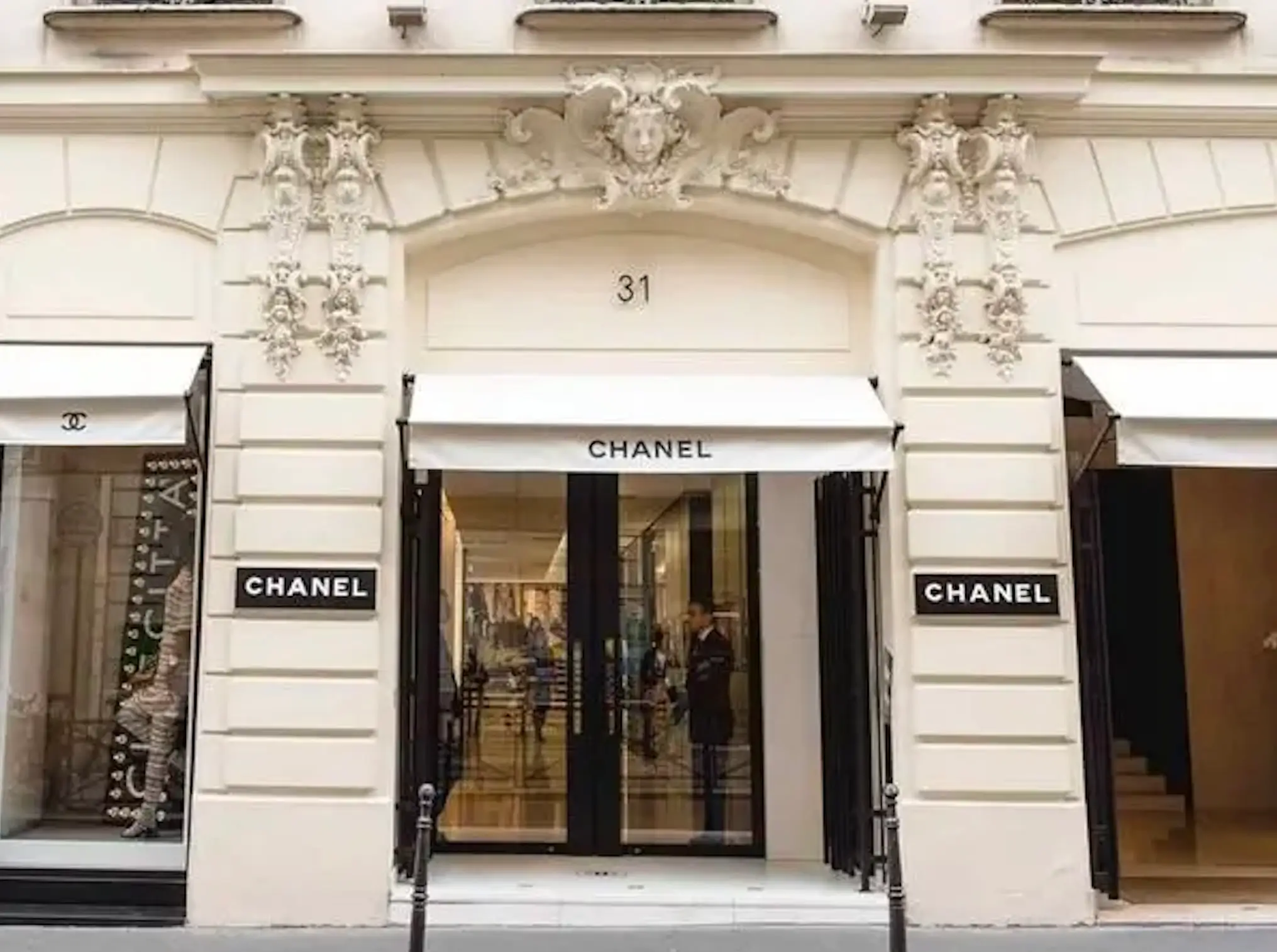
Chanel’s historic flagship boutique at 31 Rue Cambon in Paris, a landmark that has served as the spiritual home of the French fashion house for more than a century.
She replaces Philippe Blondiaux, who has held the role for fifteen years, a tenure long enough to have steered the house’s finances through a pandemic, a lead overhaul, and a run of record revenue years. Fifteen years at the top of finance for a company of Chanel’s scale is unusual. Most CFOs at houses this size rotate through in five to seven. Blondiaux’s departure, framed by the company as a retirement at the end of 2026, closes out one of the longer tenures in modern luxury finance.
who
De Tissot is not a name most fashion desks had on file before this week, and that is precisely the point. She spent more than two decades at Pernod Ricard, the French spirits group behind Absolut, Jameson, and Martell, joining in 2002 and working her way through a series of increasingly senior finance postings. She spent six years based in Hong Kong as CFO for the company’s Asia region starting in 2010, then moved into a Group Strategy and M&A director role in 2016, before being named executive vice president of finance, IT, and operations in 2018, a post she has held for the past eight years. She also sat on Pernod Ricard’s executive committee, putting her inside the room for the group’s biggest calls.
Her fingerprints are on some of the defining acquisitions in the spirits business. She was involved in guiding the finance side of Pernod Ricard’s absorption of Seagram, Allied Domecq, and Absolut, three deals that reshaped the company from a regional player into one of the largest drinks groups in the world. That background, heavy on cross border integration and currency exposure across dozens of markets, maps unusually well onto what a company like Chanel actually needs from its finance function. Chanel does not report quarterly earnings the way a listed company does, but it runs a genuinely global retail and manufacturing footprint, with more than 500 boutiques and tens of thousands of employees spread across regions with wildly different currency and regulatory conditions. Someone who spent years untangling those same problems for bottles of Scotch is not an obvious hire, but she is a defensible one.
At 56, de Tissot is stepping into a role with a wider brief than a traditional CFO title might suggest. Her portfolio at Pernod Ricard combined finance with IT oversight, and industry watchers have already floated the idea that her arrival signals Chanel wants a finance chief who also thinks about digital infrastructure, not just the ledger. She will report directly to global chief executive officer Leena Nair.
quant
Pernod Ricard is not walking away from this cleanly. The company confirmed that Mauve Croizat will step into de Tissot’s vacated CFO role there come October, a same day symmetry that made for tidy headlines but also underscores how tightly the announcement was coordinated between the two companies. Losing a two decade finance veteran who sat on the executive committee is not a small hole to fill, and the timing suggests both firms wanted the transition handled without an awkward interim period.
For Pernod Ricard, the loss comes at a moment when the broader spirits industry has been dealing with softer demand in several key markets and currency headwinds that have squeezed margins. De Tissot’s departure removes a finance leader who had institutional memory going back to the company’s major acquisition era, someone who understood not just the current balance sheet but the deals that built it.
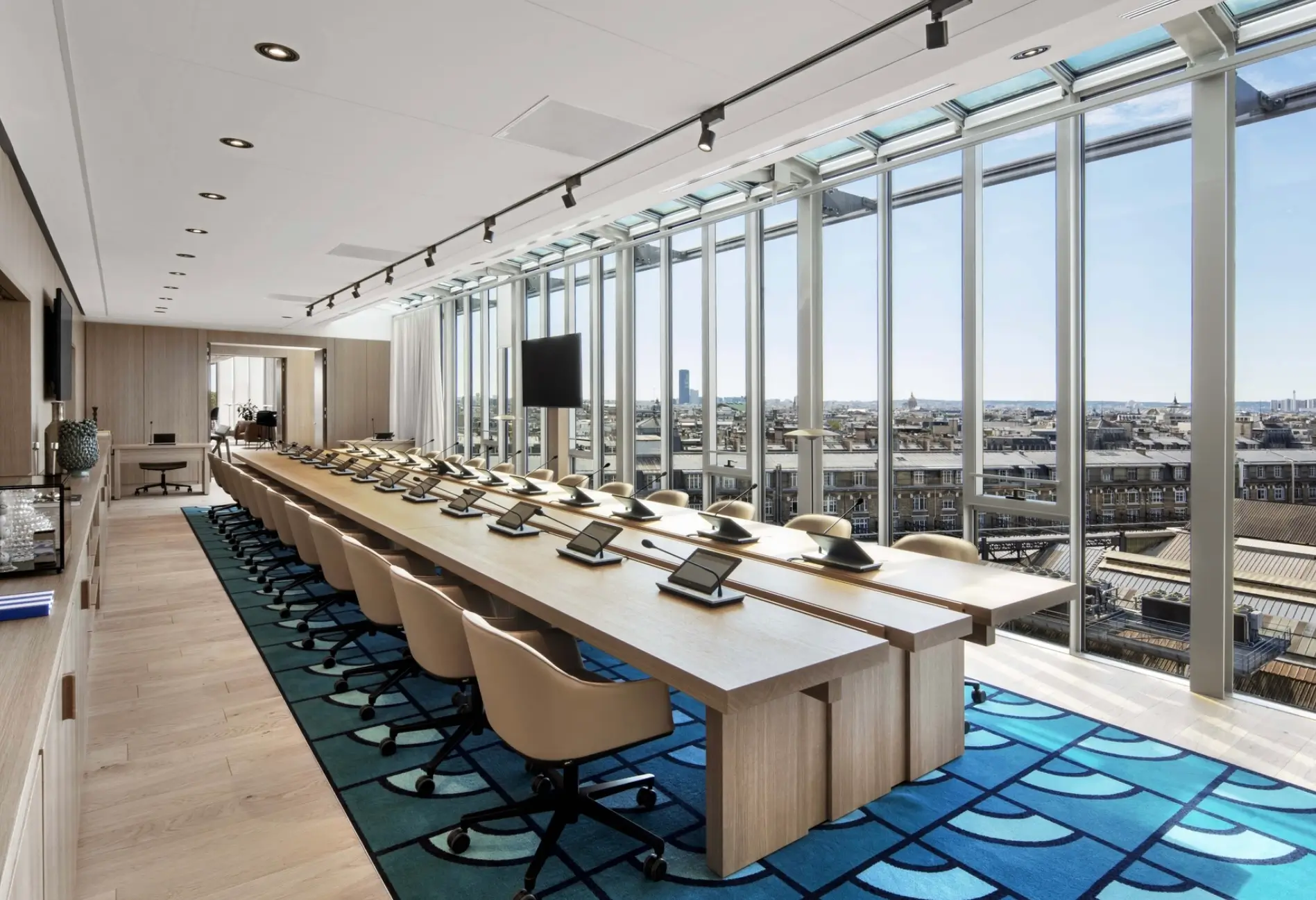
The executive boardroom at Chanel’s Paris headquarters combines understated luxury with panoramic views over the city’s historic skyline.
why
Blondiaux’s fifteen year run at Chanel is worth sitting with for a second, because it says something about how the house prefers to operate. Chanel is privately held, controlled by brothers Alain and Gérard Wertheimer through the holding company Chanel Limited, and private ownership tends to produce longer, steadier executive tenures than you see at publicly traded rivals answering to quarterly analyst calls. Blondiaux held the finance seat through the death of Karl Lagerfeld, the appointment and eventual exit of Virginie Viard as artistic director, and the arrival of an outsider CEO in Leena Nair. Retiring at the end of 2026 gives him a clean handoff window, and gives de Tissot three full months of overlap before she formally assumes the title in January.
That overlap period matters more than it might first appear. Chanel is, structurally, a complicated business to hand off. It manufactures at a level of vertical integration few luxury houses attempt, owns its own ateliers and specialty craft houses under the Métiers d’Art umbrella, and runs fragrance and beauty operations that behave more like a consumer packaged goods business than a fashion one. A finance chief walking in cold, without months to absorb how all of that fits together, would be at a real disadvantage.
chanel
De Tissot’s hire fits a pattern that has been building at Chanel since Leena Nair took the global CEO seat in January 2022. Nair arrived from Unilever, where she spent nearly three decades, most recently running global human resources, and her appointment was notable at the time for bringing an outsider, and specifically an outsider from consumer packaged goods rather than fashion, into the top job at one of the most tradition bound houses in luxury. She has been open about wanting to bring a broader operational lens to Chanel’s leadership, and de Tissot’s hire reads as a continuation of that instinct: another senior executive pulled from outside the fashion industry entirely, this time from spirits rather than home and personal care.
It also lands only months after Chanel filled its other most consequential leadership vacancy. In Matthieu Blazy, the house named a new artistic director for fashion activities, succeeding Virginie Viard and taking on responsibility for haute couture, ready to wear, and accessories. Blazy came over from Bottega Veneta, where his tenure had been closely watched by critics and, notably, had never touched Chanel’s own aesthetic vocab of quilting and bouclé. His debut collections have reportedly been well received, and Chanel disclosed in May that revenues were climbing in the high single digits, with the company crediting demand for Blazy’s early work under the house’s codes.
So the picture forming under Nair looks like this: a creative director hired from outside the house but from within fashion, and now a chief financial officer hired from entirely outside fashion altogether. Two very different kinds of outsider, brought in within roughly a year of each other, both reporting into a CEO who is herself an outsider to the industry she now runs one of its most storied names within.
View this post on Instagram
mid
De Tissot does not walk into a company in crisis. Chanel’s May update pointed to renewed growth after a softer 2024, and the company has framed the current period as one of investment rather than retrenchment. In a statement accompanying the announcement, Chanel said the incoming CFO would continue to strengthen the finance function in a way that lets the house make further long term investments in creation, craftsmanship, client experience, and its people, language that reads as fairly standard corporate messaging but that also signals the company does not see this hire as a cost cutting mandate.
That framing matters because CFO appointments often arrive with an implicit brief, tightening the belt, preparing for a sale, managing a downturn. Nothing in how Chanel has presented this move suggests any of that. Instead, de Tissot inherits a business with genuine momentum behind a new creative direction, uneven demand across regions that is typical of the current luxury environment, and an investment agenda that the company appears intent on funding rather than pulling back from. Her background overseeing finance and IT together at Pernod Ricard, across a portfolio of brands operating in dozens of currencies and regulatory regimes, is arguably better suited to that kind of complexity than a more conventional retail finance résumé would be.
fin
Chanel remains a private company and will not suddenly start publishing quarterly results because a new CFO has taken the job. What is likely to shift is less visible from the outside: how the house allocates capital across its ateliers, retail expansion, and fragrance and beauty operations, and how it manages the currency exposure that comes with running boutiques on nearly every continent. De Tissot’s Hong Kong years, in particular, gave her direct experience with the Asia market dynamics that remain central to opulent demand, even as spending patterns across the region have shifted in recent years.
There is also a symbolic dimension worth naming plainly. A private, insular company built around the mytho of one designer, Coco Chanel, and shaped for decades by Karl Lagerfeld’s singular creative view, is now being run day to day by two executives, in Nair and de Tissot, who spent the bulk of their careers well outside fashion altogether, at Unilever and Pernod Ricard respectively. Whether that produces a genuinely different Chanel or simply a more professionally managed version of the same one is not something a single appointment announcement can answer. What it does confirm is that the house’s leadership, three years into Nair’s tenure, has settled into a recognizable shape: bring in proven operators from adjacent industries, pair them with a fashion insider in Blazy for the creative side, and let the results speak over the next several collections and fiscal years.